Source
Archive URL:
https://airwars.org/source/bnfsj-net-%d8%b9%d9%86-%d8%a8%d9%86%d9%81%d8%b3%d8%ac-2025-05-23-113600/
Captured Post Date: 2025-05-23 11:36:00
Translated Author: About Violet
Author: عن بنفسج
Translated Content:
"The assassination of the leader Khaled Abu Daqqa..." She reread the news again and again until she reached ten, repeating it with trembling hands as if she were memorizing it. The phone fell, and she heard a shattering sound, but it was only the sound of her wounded heart. Her legs wouldn't carry her to her feet to embrace her child, who was sitting in front of her watching cartoons. He noticed her muffled sobs and asked gently, "Mama, what's wrong?" She hugged him, and her wailing grew louder. He repeated the question, "Did Daddy get martyred?" Between her sobs, she asked, "Do you know what that means?" He replied, "It means he went to heaven, and we'll join him later." She fell silent, and all she wanted at that moment was to cry, but in the arms of her life partner, Khaled, who had been the best husband and friend to a girl battling cancer, her first and only support.
Today, Bara’a al-Raqab recounts the story of the leader, engineer Khaled Abu Daqqa, whom she married knowing his fate would be martyrdom, being pursued, or imprisonment. During the war, she expected his assassination but consoled herself with the hope of reuniting. She tells us about another side of him—in his home with his child—about receiving the news of his martyrdom, and her forced departure due to severe illness, leaving Khaled alone in Gaza, longing for one last embrace.
The Day Khaled Was Taken
On November 20, 2024, while battling cancer in Cairo hospitals with her five-year-old son, Baraa was scrolling through social media when she saw her brother-in-law post the news of his death. She says, "It was a terrible moment. I was far from home, longing for my husband, fighting my illness alone, when suddenly I received the news of his assassination. I knew he was a target, but I still had hope for his survival and our reunion. The days after his passing were bitter, alive but without a soul, and I still live through them."
Before leaving, Baraa and her son had been displaced, living in Nasser Hospital in Khan Younis, southern Gaza. One bloody night, Khaled arrived, his head bleeding. The little boy was terrified, and his hair began to turn gray from the horror of what he had witnessed.
Baraa adds to Banafsej: “My health deteriorated due to cancer, and no treatment was available in Gaza. Khaled asked me to travel before my condition worsened. I refused to leave him, and he refused to abandon his resistance work. After his insistence, my son Ahmed and I traveled, only to endure further pain on top of our unhealed suffering.”
Read also: Journalist Ibrahim Al-Sheikh Ali: Death by Burning, the Price of Truth
Two hours before his assassination, he called her to tell her how much he loved her. Her heart trembled as she replied, “I love you too… Stay well for our sake… We can’t live without you.” He advised her to be patient at the initial shock, and Baraa sensed her impending death. His voice kept echoing in her ears; she tried to commit his words to memory, not knowing why, but she didn’t want to forget him. Even after his assassination, she remembered his last words and said, “O God, reward me for my affliction and replace it with something better.”
Her son, Ahmed, wept with her. Since the day he passed away, he asks every night to see his pictures with Khaled. Banafsej adds, "He keeps repeating all day, 'May God have mercy on you, Dad,' and he takes a pen and paper and draws a picture of a grave. He tells me, 'The Day of Judgment will come soon, and we will meet Dad.'"
"Daddy Khaled"
Bara'a interrupts her account of the moment she received the news of his passing and saw the pictures of his funeral without being able to give him a final farewell kiss. Her memory takes her back to 2017 when Khaled saw her giving a lecture in dentistry and said, "There she is." He proposed to her, and she accepted immediately. They were blessed with a son, Ahmed, whom she gave birth to under very difficult circumstances. They shared both good times and bad. Speaking to Banafsej, her voice hoarse from crying, she said, "I had to give birth to Ahmed prematurely in my seventh month because of a pituitary tumor. Khaled was the best husband and father I've ever known. I consider myself lucky to have married him. He would drop everything and stay by my side for days, despite his demanding work and the sensitive nature of his position."
Wiping away her tears, she continued, "Every time my health deteriorated, he supported me wholeheartedly. I fought the illness for him. When I was working, he would bring me food during my shift and drive me home. He would bring me flowers if I failed an exam or a task, and he would choose gifts I loved. He was an ideal man, and everyone who knew him knows it. He is a great loss to Gaza."
Khaled was a loving father who took his young son with him on every outing. Bara'a says with a smile, "Ever since Ahmed was a month old, he'd take him everywhere. I'd say, 'Hey, the boy's so young, why are you taking him around here and there?' And he'd reply, 'I'm so happy! I'm finally a dad! Let me be happy with him!'"
Read also: Aya Abu Sakheel: When Memories Turn into Elegies
Little Ahmed remembers his father Khaled well. He lists the toys Khaled brought him and the promises he received from him. After Khaled's passing, Ahmed asks, "Who will bring me toys and birds? Who will drive us? Who will keep their promise and bring me the rabbit I want?"
Baraa and Khaled were planning to move to a new house with a garden, and their friend promised to plant it himself, so it would be their paradise on earth. But he departed as a martyr, facing death without hesitation, having sought martyrdom since a young age until he attained it at the age of thirty-six. This is what comforts his friend and beloved, who has never known a man as tender as him.
She concludes her conversation with Banafsej: "Khaled always advised me to have a pure heart, to forgive and not hold grudges against anyone, and to make sure Ahmed memorizes the Quran. I will remain true to that promise until my last breath."
Today, Bara’a al-Raqab recounts the story of the leader, engineer Khaled Abu Daqqa, whom she married knowing his fate would be martyrdom, being pursued, or imprisonment. During the war, she expected his assassination but consoled herself with the hope of reuniting. She tells us about another side of him—in his home with his child—about receiving the news of his martyrdom, and her forced departure due to severe illness, leaving Khaled alone in Gaza, longing for one last embrace.
The Day Khaled Was Taken
On November 20, 2024, while battling cancer in Cairo hospitals with her five-year-old son, Baraa was scrolling through social media when she saw her brother-in-law post the news of his death. She says, "It was a terrible moment. I was far from home, longing for my husband, fighting my illness alone, when suddenly I received the news of his assassination. I knew he was a target, but I still had hope for his survival and our reunion. The days after his passing were bitter, alive but without a soul, and I still live through them."
Before leaving, Baraa and her son had been displaced, living in Nasser Hospital in Khan Younis, southern Gaza. One bloody night, Khaled arrived, his head bleeding. The little boy was terrified, and his hair began to turn gray from the horror of what he had witnessed.
Baraa adds to Banafsej: “My health deteriorated due to cancer, and no treatment was available in Gaza. Khaled asked me to travel before my condition worsened. I refused to leave him, and he refused to abandon his resistance work. After his insistence, my son Ahmed and I traveled, only to endure further pain on top of our unhealed suffering.”
Read also: Journalist Ibrahim Al-Sheikh Ali: Death by Burning, the Price of Truth
Two hours before his assassination, he called her to tell her how much he loved her. Her heart trembled as she replied, “I love you too… Stay well for our sake… We can’t live without you.” He advised her to be patient at the initial shock, and Baraa sensed her impending death. His voice kept echoing in her ears; she tried to commit his words to memory, not knowing why, but she didn’t want to forget him. Even after his assassination, she remembered his last words and said, “O God, reward me for my affliction and replace it with something better.”
Her son, Ahmed, wept with her. Since the day he passed away, he asks every night to see his pictures with Khaled. Banafsej adds, "He keeps repeating all day, 'May God have mercy on you, Dad,' and he takes a pen and paper and draws a picture of a grave. He tells me, 'The Day of Judgment will come soon, and we will meet Dad.'"
"Daddy Khaled"
Bara'a interrupts her account of the moment she received the news of his passing and saw the pictures of his funeral without being able to give him a final farewell kiss. Her memory takes her back to 2017 when Khaled saw her giving a lecture in dentistry and said, "There she is." He proposed to her, and she accepted immediately. They were blessed with a son, Ahmed, whom she gave birth to under very difficult circumstances. They shared both good times and bad. Speaking to Banafsej, her voice hoarse from crying, she said, "I had to give birth to Ahmed prematurely in my seventh month because of a pituitary tumor. Khaled was the best husband and father I've ever known. I consider myself lucky to have married him. He would drop everything and stay by my side for days, despite his demanding work and the sensitive nature of his position."
Wiping away her tears, she continued, "Every time my health deteriorated, he supported me wholeheartedly. I fought the illness for him. When I was working, he would bring me food during my shift and drive me home. He would bring me flowers if I failed an exam or a task, and he would choose gifts I loved. He was an ideal man, and everyone who knew him knows it. He is a great loss to Gaza."
Khaled was a loving father who took his young son with him on every outing. Bara'a says with a smile, "Ever since Ahmed was a month old, he'd take him everywhere. I'd say, 'Hey, the boy's so young, why are you taking him around here and there?' And he'd reply, 'I'm so happy! I'm finally a dad! Let me be happy with him!'"
Read also: Aya Abu Sakheel: When Memories Turn into Elegies
Little Ahmed remembers his father Khaled well. He lists the toys Khaled brought him and the promises he received from him. After Khaled's passing, Ahmed asks, "Who will bring me toys and birds? Who will drive us? Who will keep their promise and bring me the rabbit I want?"
Baraa and Khaled were planning to move to a new house with a garden, and their friend promised to plant it himself, so it would be their paradise on earth. But he departed as a martyr, facing death without hesitation, having sought martyrdom since a young age until he attained it at the age of thirty-six. This is what comforts his friend and beloved, who has never known a man as tender as him.
She concludes her conversation with Banafsej: "Khaled always advised me to have a pure heart, to forgive and not hold grudges against anyone, and to make sure Ahmed memorizes the Quran. I will remain true to that promise until my last breath."
Content:
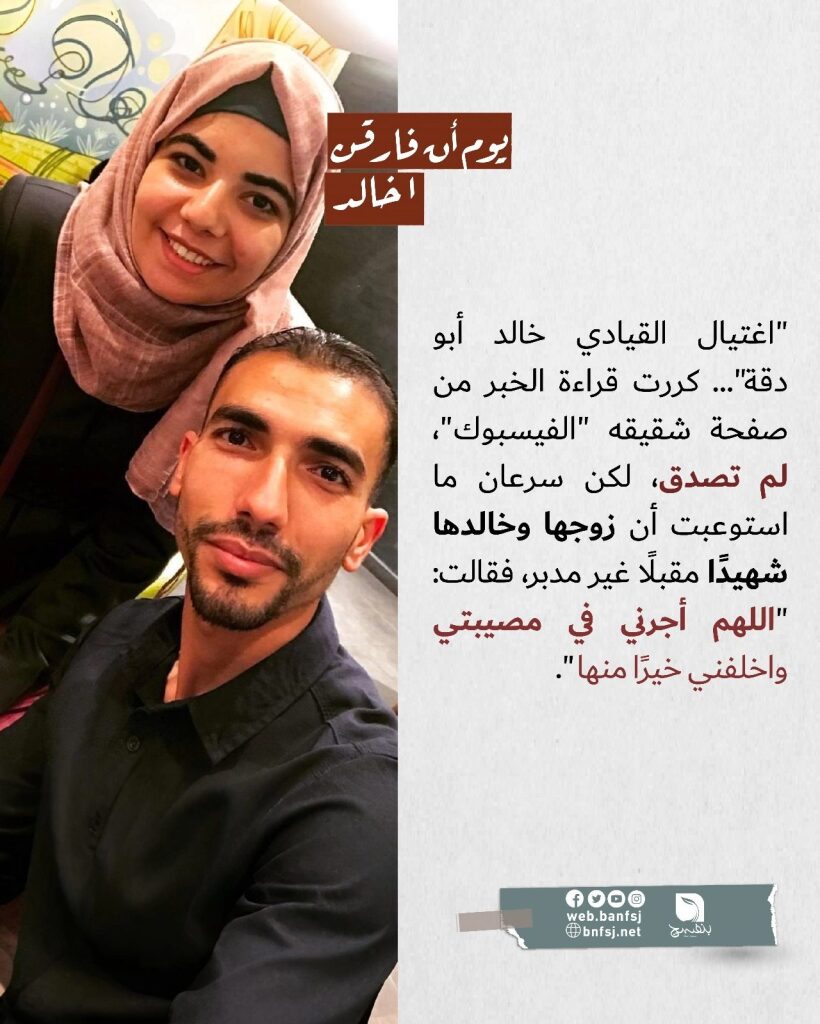
"اغتيال القيادي خالد أبو دقة".. أعادت قراءة الخبر مرة واثنتين حتى وصلت العاشرة، تردده ويديها ترتجفان وكأنها تحفظه، سقط الهاتف فسمعت صوت تهشم لكنه لم يكن إلا صوت قلبها المجروح، لم تسعفها قدمها للنهوض لاحتضان طفلها الجالس أمامها يتابع الكرتون، فانتبه على صوت بكائها المكتوم، فقال بنبرة رقيقة: "ماما مالك؟" فعانقته وارتفع صوت النحيب، فأعاد السؤال: "بابا استشهد"؟ فسألته من وسط شهقاتها: "بتعرف شو يعني"؟ فرد: "يعني راح على الجنة واحنا بنلحقه بعدين". فصمتت وكان كل ما توده بتلك اللحظة أن تبكي ولكن بين أحضان رفيق الدرب خالد الذي كان نعم الزوج والصديق لفتاة طالها مرض السرطان فكان داعمها الأول والأبدي.
اليوم تروي براءة الرقب عن القيادي المهندس خالد أبو دقة، الذي تزوجته رغم علمها أن مصيره سيكون شهيدًا أو مطاردًا أو أسيرًا، وفي الحرب توقعت اغتياله ولكنها أصبرت نفسها بأمل باللقاء، تخبرنا عن وجه الرجل الآخر في بيته ومع طفله، عن تلقيها نبأ استشهاده، وسفرها قسرًا لمرضها الشديد، ليظل خالد وحيدًا في غزة مشتاقًا لعناق أخير.
يوم ترجل الخالد
في 20 نوفمبر/تشرين الثاني 2024، وبينما تكافح براءة السرطان في مشافي القاهرة رفقة طفلها البالغ من العمر 5 سنوات، كانت تتصفح مواقع التواصل الاجتماعي، لتجد شقيق زوجها يكتب الخبر ويتلوه بنعي، تقول: "كانت لحظة قاسية أنا في الغربة مشتاقة لزوجي، أقاتل مرضي وحدي، وفجأة يأتيني خبر اغتياله، كنت أعلم أنه مستهدف ولكني كان لدي أمل بنجاته الحتمية وباللقاء الأكيد، عشت أيامًا بعد رحيله مريرة، على قيد الحياة ولكن دون روح، وما زلت أعيشها".
قبل السفر عاشت براءة وطفلها نازحين في مشفى ناصر في خانيونس جنوبي غزة، وفي ليلة دامية، جاء خالد مصابًا يقطر رأسه دمًا، فارتعب الصغير وبعدها ظهرت شعيرات شيب في رأسه من هول ما عاش.
تضيف براءة لبنفسج: "ساءت حالتي الصحية إثر السرطان، ولم يكن أي علاج متاح في غزة، فطلب مني خالد السفر قبل أن تتدهور حالتي أكثر، لم أقبل أبدًا أن أتركه، وهو لم يقبل ترك عمله الجهادي، وبعد إصرار منه سافرنا أنا وابني أحمد، لنعيش ألمًا آخر فوق آلامنا التي لا تندمل".
اقرأ أيضًا: الصحفي إبراهيم الشيخ علي: الموت حرقًا ثمن الحقيقة
قبل اغتياله بساعتين هاتّفها ليخبرها بمدى حبه، فارتعش قلبها لترد عليه: "وأنا بحبك.. ضلك بخير عشانا.. بنقدرش بدونك". فأوصاها بالصبر عند الصدمة الأولى، لتشعر براءة بقرب الأجل، بقي صوته يتردد في أذنها تحاول تثبيت حديثه في عقلها لا تعلم لماذا ولكنها لا تود نسيانه، حتى الاغتيال فتذكرت وصيته وقالت: "اللهم أجرني في مصيبتي واخلفني خيرًا منها".
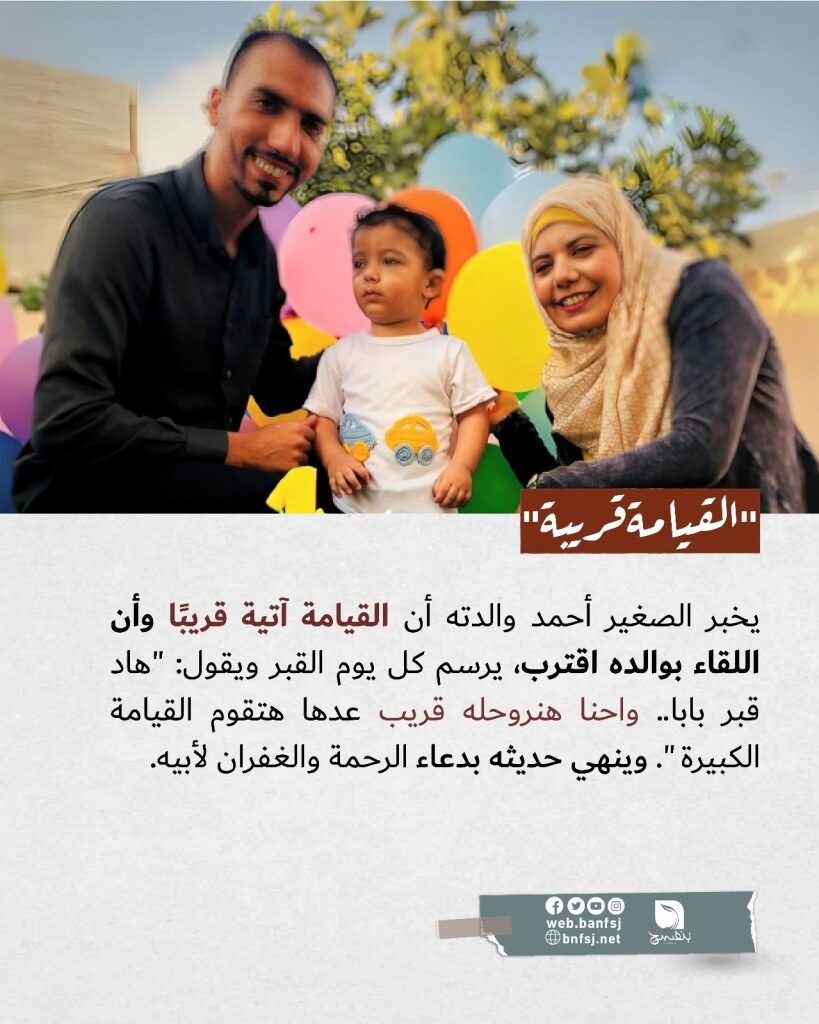
أما طفلها أحمد بكى برفقتها، ومن يوم فراقه يطلب كل ليلة أن يرى صوره مع خالد، تردف لبنفسج: "بضل يردد طول اليوم الله يرحمك يا بابا ويمسك ورقة وقلم ويرسم شكل القبر، وبحكيلي القيامة رح تقوم عن قريب وهنلتقي ببابا".
"بابا خالد"
تقطع براءة حديثها عن لحظة تلقيها نبأ الرحيل، ومشاهدتها لصور جنازته دون أن تحظى بقبلة وداع أخيرة، لتعود بالذاكرة إلى العام 2017 حين رآها خالد خلال إلقائها محاضرة في مجال طب الأسنان، فيقول: "ها هي". ويتقدم لخطبتها لتوافق على الفور، رزقا بأحمد لاحقًا لتنجبه في ظروف صعبة جدًا، وعاشا معًا على الحلوة والمرة تقول لبنفسج بصوتها المبحوح من بكائه: "اضطررت لإنجاب أحمد في الشهر السابع بسبب إصابتي بورم في الغدة النخامية، فكان خالد نعم الزوج والأب آنذاك، لأغبط نفسي على ما حظيت من حظ بزواجي به، إذ كان يترك كل شيء ويبقى بجانبي بالأيام على الرغم من انشغاله بعمله وحساسية منصبه".
تكمل وهي تمسح دموعها: "في كل مرة كانت تتدهور حالتي الصحية كان يدعمني بقوة، فأحارب المرض لأجله، وحين كنت أعمل يأتيني بالطعام خلال دوامي، ويصطحبني في طريقه إلى البيت، يجلب لي الورود أن أخفقت في امتحان أو عمل، وينتقي الهدايا التي أحب، كان رجلًا مثاليًا وكل من عرفه يعلم هذا، هو خسارة فادحة لغزة".
كان خالد أبًا حنونًا، يصطحب صغيره معه في كل المشاوير، تقول براءة مبتسمة: "كان أحمد منذ أن كان عمره شهرًا، يأخده معه كل مشوار أقله يا زلمة الولد صغير شو بدك فيه تضل تلفلف هان وهان، فيرد أنا طاير من الفرحة أخيرًا صرت بابا سيبني أفرح عليه".
اقرأ أيضًا: آية أبو سخيل: حين تتحول الذكريات إلى مراثي
يذكر الصغير أحمد والده خالد جيدًا، ويعدد لوالدته الألعاب الذي أحضرها، والوعود الذي حصل عليها من خالد وبعد رحيله يسأل أحمد: "من سيجلب لي الألعاب والعصافير؟ من سيقود السيارة بنا؟ من سيفي بوعده ويأتي بالأرنب الذي أريد".
براءة وخالد كانا يخططا النقل إلى بيت جديد مع حديقة، ووعدها الرفيق أن يزرعها بنفسه، لتكون جنتهم على الأرض، لكنه رحل شهيدًا مقبلًا غير مدبر، طالبًا للشهادة منذ عمر مبكر حتى نالها بعمر السادسة والثلاثين، وهذا ما يواسي صديقته وحبيبته التي لم تر في حياتها رجلًا في حنانه.
تختم حديثها لبنفسج: "كان خالد يوصيني دائمًا أن أكون بقلب أبيض، أسامح ولا أحمل ضغينة لأحد، وأن أجعل أحمد من حفظة كتاب الله،وأنا على العهد حتى الرمق الأخير".
اليوم تروي براءة الرقب عن القيادي المهندس خالد أبو دقة، الذي تزوجته رغم علمها أن مصيره سيكون شهيدًا أو مطاردًا أو أسيرًا، وفي الحرب توقعت اغتياله ولكنها أصبرت نفسها بأمل باللقاء، تخبرنا عن وجه الرجل الآخر في بيته ومع طفله، عن تلقيها نبأ استشهاده، وسفرها قسرًا لمرضها الشديد، ليظل خالد وحيدًا في غزة مشتاقًا لعناق أخير.
يوم ترجل الخالد
في 20 نوفمبر/تشرين الثاني 2024، وبينما تكافح براءة السرطان في مشافي القاهرة رفقة طفلها البالغ من العمر 5 سنوات، كانت تتصفح مواقع التواصل الاجتماعي، لتجد شقيق زوجها يكتب الخبر ويتلوه بنعي، تقول: "كانت لحظة قاسية أنا في الغربة مشتاقة لزوجي، أقاتل مرضي وحدي، وفجأة يأتيني خبر اغتياله، كنت أعلم أنه مستهدف ولكني كان لدي أمل بنجاته الحتمية وباللقاء الأكيد، عشت أيامًا بعد رحيله مريرة، على قيد الحياة ولكن دون روح، وما زلت أعيشها".
قبل السفر عاشت براءة وطفلها نازحين في مشفى ناصر في خانيونس جنوبي غزة، وفي ليلة دامية، جاء خالد مصابًا يقطر رأسه دمًا، فارتعب الصغير وبعدها ظهرت شعيرات شيب في رأسه من هول ما عاش.
تضيف براءة لبنفسج: "ساءت حالتي الصحية إثر السرطان، ولم يكن أي علاج متاح في غزة، فطلب مني خالد السفر قبل أن تتدهور حالتي أكثر، لم أقبل أبدًا أن أتركه، وهو لم يقبل ترك عمله الجهادي، وبعد إصرار منه سافرنا أنا وابني أحمد، لنعيش ألمًا آخر فوق آلامنا التي لا تندمل".
اقرأ أيضًا: الصحفي إبراهيم الشيخ علي: الموت حرقًا ثمن الحقيقة
قبل اغتياله بساعتين هاتّفها ليخبرها بمدى حبه، فارتعش قلبها لترد عليه: "وأنا بحبك.. ضلك بخير عشانا.. بنقدرش بدونك". فأوصاها بالصبر عند الصدمة الأولى، لتشعر براءة بقرب الأجل، بقي صوته يتردد في أذنها تحاول تثبيت حديثه في عقلها لا تعلم لماذا ولكنها لا تود نسيانه، حتى الاغتيال فتذكرت وصيته وقالت: "اللهم أجرني في مصيبتي واخلفني خيرًا منها".
أما طفلها أحمد بكى برفقتها، ومن يوم فراقه يطلب كل ليلة أن يرى صوره مع خالد، تردف لبنفسج: "بضل يردد طول اليوم الله يرحمك يا بابا ويمسك ورقة وقلم ويرسم شكل القبر، وبحكيلي القيامة رح تقوم عن قريب وهنلتقي ببابا".
"بابا خالد"
تقطع براءة حديثها عن لحظة تلقيها نبأ الرحيل، ومشاهدتها لصور جنازته دون أن تحظى بقبلة وداع أخيرة، لتعود بالذاكرة إلى العام 2017 حين رآها خالد خلال إلقائها محاضرة في مجال طب الأسنان، فيقول: "ها هي". ويتقدم لخطبتها لتوافق على الفور، رزقا بأحمد لاحقًا لتنجبه في ظروف صعبة جدًا، وعاشا معًا على الحلوة والمرة تقول لبنفسج بصوتها المبحوح من بكائه: "اضطررت لإنجاب أحمد في الشهر السابع بسبب إصابتي بورم في الغدة النخامية، فكان خالد نعم الزوج والأب آنذاك، لأغبط نفسي على ما حظيت من حظ بزواجي به، إذ كان يترك كل شيء ويبقى بجانبي بالأيام على الرغم من انشغاله بعمله وحساسية منصبه".
تكمل وهي تمسح دموعها: "في كل مرة كانت تتدهور حالتي الصحية كان يدعمني بقوة، فأحارب المرض لأجله، وحين كنت أعمل يأتيني بالطعام خلال دوامي، ويصطحبني في طريقه إلى البيت، يجلب لي الورود أن أخفقت في امتحان أو عمل، وينتقي الهدايا التي أحب، كان رجلًا مثاليًا وكل من عرفه يعلم هذا، هو خسارة فادحة لغزة".
كان خالد أبًا حنونًا، يصطحب صغيره معه في كل المشاوير، تقول براءة مبتسمة: "كان أحمد منذ أن كان عمره شهرًا، يأخده معه كل مشوار أقله يا زلمة الولد صغير شو بدك فيه تضل تلفلف هان وهان، فيرد أنا طاير من الفرحة أخيرًا صرت بابا سيبني أفرح عليه".
اقرأ أيضًا: آية أبو سخيل: حين تتحول الذكريات إلى مراثي
يذكر الصغير أحمد والده خالد جيدًا، ويعدد لوالدته الألعاب الذي أحضرها، والوعود الذي حصل عليها من خالد وبعد رحيله يسأل أحمد: "من سيجلب لي الألعاب والعصافير؟ من سيقود السيارة بنا؟ من سيفي بوعده ويأتي بالأرنب الذي أريد".
براءة وخالد كانا يخططا النقل إلى بيت جديد مع حديقة، ووعدها الرفيق أن يزرعها بنفسه، لتكون جنتهم على الأرض، لكنه رحل شهيدًا مقبلًا غير مدبر، طالبًا للشهادة منذ عمر مبكر حتى نالها بعمر السادسة والثلاثين، وهذا ما يواسي صديقته وحبيبته التي لم تر في حياتها رجلًا في حنانه.
تختم حديثها لبنفسج: "كان خالد يوصيني دائمًا أن أكون بقلب أبيض، أسامح ولا أحمل ضغينة لأحد، وأن أجعل أحمد من حفظة كتاب الله،وأنا على العهد حتى الرمق الأخير".
Images:
Additional Details
Captured Date
2026-06-24 13:51:42
Captured Post ID