Incident Code
Incident Date
Location
Geolocation
Geolocation
Airwars Assessment
At least 46 civilians, including at least 12 women and 13 children, were killed by a declared Israeli strike on displaced persons tents called the Kuwaiti Peace Camp near a UNRWA warehouse in the Tel al-Sultan area of Rafah on May 26, 2024. Hundreds more were reported injured.
The IDF spokesman Avichay Adraee announced that the IDF and Shin Bet had eliminated “Yassin Rabie, head of Hamas’s West Bank office, as well as terrorist Khaled Najjar, a Hamas leader and head of the West Bank office” adding that the strike occurred “in the Tel al-Sultan area northwest of Rafah”. The statement went on to say that “Yassin Rabie managed all of Hamas’s West Bank office’s military formations, transferred funds intended for terrorist purposes, and directed terrorist attacks by Hamas operatives in the West Bank” and that “Khaled Najjar, an official in Hamas’s West Bank office… directed shooting attacks and other terrorist acts in the Judea and Samaria area and transferred funds intended for Hamas terrorist targets in the Gaza Strip.” The statement also mentioned that “There were reports that a number of uninvolved civilians were injured as a result of the raid and a subsequent fire. The details of the incident are under investigation.” As of time of publication of this assessment in September 2025 no details of the conclusions of the IDF’s investigation have been published.
Safa News referred to the attack as a “hideous massacre,” reporting at 22:14 that “about” 25 people had been killed and dozens had been wounded in the Israeli bombing of displaced persons tents in Rafah. Journalist Mohammed Awad mentioned that the attack occurred “behind the agency’s barracks” in Tel al-Sultan killing more than 50 people, including children and women, and injuring a large number of people. Genocide in Gaza clarified that “agency” referred to UNRWA, stating that they were UNRWA warehouses. The highest injury toll was provided by @Abozed33 who stated that 45 people had been killed, including 23 children and a woman, and 249 others had been injured while Genocide in Gaza provided a similar death toll of 45 but an injury toll of 200.
Airwars’ researchers were able to identify the names and identities of 46 civilians killed in this incident, in addition to two men who have been identified as militants and one who has been classified as a contested civilian/militant based on local sources, including posts from family and friends.
Ahmed Alzmaily offered condolences to the al-Absi family for the loss of Abdul-Moneim Mohammed al-Absi (Abu Ghassan), his wife Umm Ghassan, his brother’s wife 47-year-old Samah Mahmoud al-Absi (Umm Abdullah) and her daughter 17-year-old Rahaf [Ismail Mohammed] al-Absi, his sister 43-year-old Hala Mohammed al-Absi (Umm Muhammad) and her husband (likely 48-year-old Jabr Abdel-Qader al-Absi/Abu Salam) and their daughter, his niece Suha. A Facebook post from Saja Omar added additional names from the al-Absi family who were killed in the “Mawasi massacre, north of the American Hospital”: Rabab Hussam Abdel al-Absi, Jabr’s sibling 54-year-old Elham Abdel-Qader al-Absi (Abu Salam), his daughters 10-year-old Leen Jabr Abdel-Qader al-Absi (Abu Salam), 13-year-old Noura Jabr Abdel-Qader al-Absi (Abu Salam), and 17-year-old Duaa Jabr Abdel-Qader al-Absi (Abu Salam), and Samah’s sister 43-year-old Fatima Mahmoud al-Absi.
Yazid al-Attar mourned his cousin, 35-year-old Hamada Muhammad al-Attar, his wife 32-year-old Maysaa Suhail al-Attar, 29-year-old Hindawi Suhail al-Attar, 45-year-old Samira Ghanem al-Attar, and 23-year-old Mayada Hisham al-Attar. Alaa K Attar provided a list of the names of those killed in the Attar family, adding the name 29-year-old Wissam al-Attar. Hindawi was also remembered by his “friend, brother, and beloved” Abdullah Al who included an image of Hindawi, pictured wearing a black quarter-zip and brown blazer with his hands folded.
Mohammed Zuhair Tantish mourned his “displaced friend” 36-year-old Ahmed Saadi Zayed (Abu Fares Ahmed), from Beit Lahia, who was killed in the “Rafah tent fire”. Rawan M Ali felt the “bitterness of loss and sadness” of the loss of his sister’s husband Ahmed, describing him as “one of the best and most beautiful young men”.
Condolences were offered to Ibrahim Saleh al-Hamas by their cousin Mohammed Eid Abu Ramzi for the loss of Ibrahim’s children seven-year-old Bisan Ibrahim Saleh al-Hamas and five-year-old Saleh Ibrahim Saleh al-Hamas in the bombing of “Mawasi area”.
Wail Warshagha announced the death of his brother Mourid Saadi Warsh Agha’s wife Amani Warsh Agha (Umm Al-Saadi) and offered prayers to her father.
The former prisoner Mustafa Ahmed Abdel Hamid al-Astal (Abu Moaz) was mourned by Rabea Jameel who stated that Mustafa had spent 17 years of his life in Israeli prisons and “dedicated most of his life to God, jihad, and the mosques”. Other family members such as Hatem Khalil and the al-Astal family Facebook page further mourned Mustafa, referring to him as a “sheikh” and adding that “He is known for his good taste and morals, his refined manners, his inextinguishable smile, and his sincere work for the sake of God”. References to the term ‘jihad’ can reflect both commitment to religion, and commitment to an armed struggle. Due to the dual nature of this term and the ambiguity in its use in this context, Airwars has accounted for Mustafa as both a civilian in our upper casualty range and a potential militant in our upper combatant range.
Moath Abu Samra wished sympathy and condolences to their cousin Umm Anas Abu Rabie for the loss of her daughter Shahd Hamza Abu Rabie who joined her father and brother in the afterlife, reflecting the scale of loss already felt by this family.
13-year-old Aya Adel Hamad, a young memoriser of the Quran, was among those killed and was mourned by her cousin Mahmoud Alrantisi. The post included an image of Aya in a celebration of her achievements with the Quran – she is seen wearing a black hijab and smiling.
Genocide in Gaza provided a list of 43 names which included two-year-old Falastin Harbi Saleh Abu Shahma, his father 43-year-old Harbi Saleh Ahmed Abu Shahma, five-year-old Nisma Hassan al-Baba, 48-year-old Yasser Arbi’, 40-year-old Mahmoud Nafez Mahmoud Hammad, Rahaf Nassar, Sahar Nassar, Amir Ashraf Nassar, Amir Ibrahim al-Ghafri, Abdul Aziz Abdul Qader Abu al-Kas, Samar Mahmoud Abu al-Kas, and Ashraf Muhammad Ali.
Palestine TV published a video originally from @hani.alshaer showing a father mourning his three-year-old son Jumaa al-Ashi who was killed in the “Rafah massacre” – in the video the father can be seen rubbing the head and face of his deceased child and crying.
Salah al-Ajouri reported on the “Black Sunday massacre” which killed his daughter Dr. Rasha Salah al-Ajouri (al-Hila) and her husband Shadi al-Dasouki, and injured his son (Rasha’s brother), his grandchildren (Rasha’s children) and “relatives”. The post mentioned that Rasha and Shadi left behind four children, all under the age of six, and others mentioned that she had been displaced from the Shuja’iyya neighborhood east of Gaza City at the beginning of the war. Rasha, who according to Genocide in Gaza was a medical laboratory technician, is pictured in a tan outfit and hijab smiling at the camera. Journalist Hani Mansour also mourned his friend Shadi, posting a screenshot showing that even just hours before his death, Shadi had been checking on his and reassuring him. Genocide in Gaza identified Shadi’s occupation as medical analysis.
Relas Moataz mourned the loss of his brother’s wife Faten Mohammed al-Hila and their children, Hoda Abdel Najjar (13 years old), Arkan Abdel Najjar (8 years old) and Ahmed Abdel Najjar (1.5 years old). The three young children were pictures in formal wear and every day clothing, posing in a residential setting. A post from Ahmed Amin added that Latifiya Saleh al-Hila (Umm Hani), mother of Faten, was also among those killed.
Mahmoud Jamal Zidan (Abu Iyad) was memorialised by Mohamed Mouner who prayed for his friend and brother – the memorial included an image of Mahmoud posing in front of a beach.
The al-Nafees Medical Laboratory offered prayers for a “son” of the al-Nuseirat camp, Hazem al-Shorbaji, for a speedy recovery. The post included an image of Hazem, a young man pictured wearing a blue checkered button up shirt.
A Facebook post from Atef Alnuami confirmed Khaled al-Najjar to have been a militant, writing about his activities as a “resistance fighter” and stating that he was a freed prisoner deported to Gaza. Other local sources including Tana on Facebook confirmed Yassin Rabie to be a “Hamas leader”. Therefore, both men have been counted as militants and excluded from the civilian harm toll. However, Amnesty International reported that Khaled al-Najjar wasn’t actually killed but injured. It reported that Khuweiled Ramadan, commander of Hamas’ militant wing the al-Qassam Brigades, was also killed, along with “at least two other Hamas fighters whose identities Amnesty International was able to verify” but were not mentioned. As such, Airwars has recorded the number of militants killed as between two and four.
In a graphic video posted by Taysir Abd and credited to Yousef Hamada, flames can be seen raging behind a fence and a group of men pull what appears to be a charred body from the flames. A video published by Ghada Shubietah shows a similar scene from a different angle, with the caption mentioned that Civil Defense crews were working to try to put out the fire. At least one injured woman can be seen being loaded into an ambulance.
A graphic video from Aljazeera @ajmubasher also showed the remains of multiple victims bring brought from out of the flames and from out of tents, the bodies of many victims young and old visible. Another video from Aljazeera, @AJA_Egypt, documented a men who was killed while praying in his tent.
Multiple sources described the location as being in Mawasi while source Alaa K Attar identified the location as “near the Third Saudi Neighbourhood, northwest of Rafah” while Le Monde and other sources specified that the site was “Al-Salam Camp 1” by the Kuwaiti NGO Al-Salam. According to Digital Echo, some of the killed and injured were taken to Tel Sultan clinic while @Rachael_Swindon mentioned that some of the injuries were taken to Kuwaiti Hospital, which was forces to closed the day after due to Israeli attacks on the hospital reportedly.
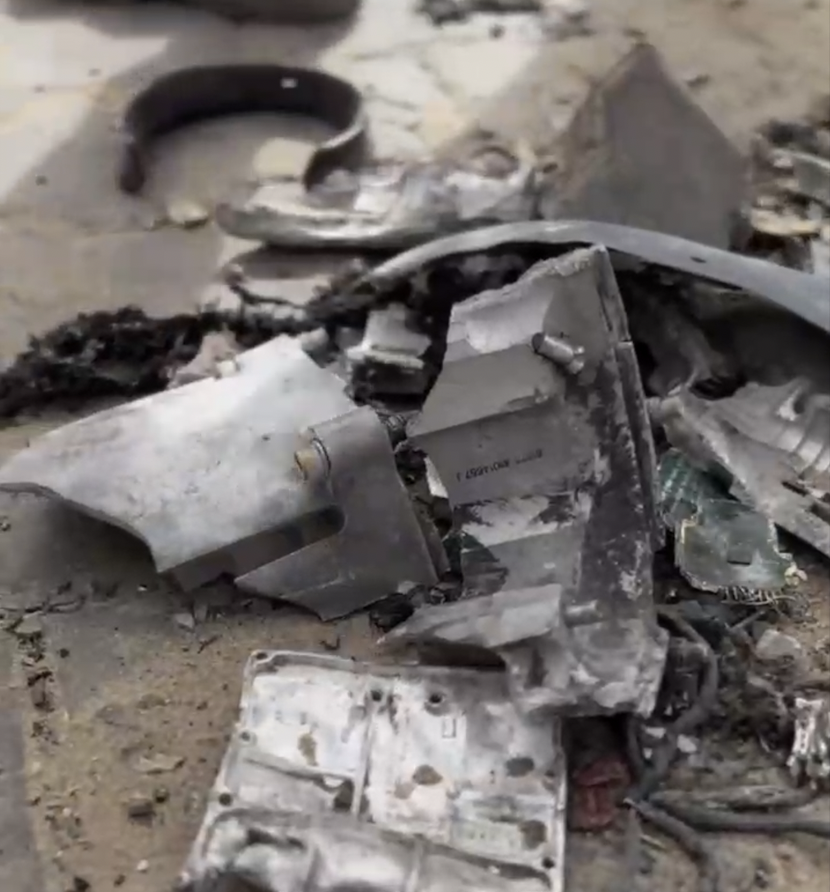
According to @ShehabAgency, the area was bombed with eight missiles. The New York Times, Responsible Statecraft, Sky News and other English-language sources analysed footage from Alam Sadeq, a Palestinian journalist, from where the strike happened and further cited @Easybakeovensz who concluded that the bomb used was a GBU-39. The images from Alam Sadeq were also analysed by Airwars’ partner project the Open Source Munition Portal (OSMP), which assessed the fragments belonged to a “Small Diameter Bomb (SDB) I variants (GBU-39 series)”. The OSMP also pointed out that “Amongst the remnants in this image is part of a Small Diameter Bomb actuator assembly, marked with text that includes the Commercial and Government Entity (CAGE) Code ‘81873’—a U.S. Government-assigned identifier for Woodward, Inc. Woodward, a Colorado-based company, produces control systems for aircraft and guided weapons, including the actuator assembly for the GBU-39.”
The bomb included a visible marking of “81873” on the weapon fragment, a unique identifier code assigned to Woodward, an aerospace manufacturer based in Colorado. Journalist @SMArikat asked the State Department spokesperson on May 30th whether the weapon was a US-made weapon and his response was “It’s not for us to speak to, the IDF will investigate.”
Two days after the strike, on May 28th, IDF Spokesperson RAdm. Daniel Hagari said in a press briefing that “Sadly, following the strike, due to unforeseen circumstances, a fire ignited tragically taking the lives of Gazan civilians nearby. Despite our efforts to minimise civilian casualties during the strike the fire that broke out was unexpected and unintended….As you can see in our aerial surveillance from the time of the strike we targeted a closed structure away from the tent area. As you can see there are no tents in the immediate vicinity of the structure that we targeted.” In response to a question on the type of munition used, Hagari said that: “The strike was conducted using two munitions with small warheads suited for this targeted strike. We’re talking about a munition with 17 kilos of explosive material. This is the smallest munition that our jets can use.”
The same statement went on to mention the possibility that secondary explosions may have occurred from weapons stored nearby but did not provide any evidence of this claim. This was refuted by munitions specialist Trevor Ball on Twitter/X (@Easybakeovensz) who said that “No, there’s been nothing to suggest there was a weapons cache present. Even the SDB variant with the smallest area of effect (less primary fragmentation) is pretty large.” Le Monde mentioned that while they could not find any evidence of weapons in the bombed area, videos did show the presence of seven gas cylinders, one of which was gutted during the attack and if exploded could have caused fire.
On March 3, 2026, Hamas’ armed wing – Al-Qessam Brigades – announced that a man named Mustafa Abd al-Hameed al-Astal had been a “Qessam fighter” and was killed. The tribute did not include the individual’s grandfather’s name, but it did include an image of the individuals’ face, as well as a date of death – September 26, 2024. Reviewing the image Airwars determined that he did not match any of the family members killed in this incident. As such, the civilian fatality numbers recorded in this incident remain unchanged. This will be updated should additional information become available.
Assessment Updates
Victims
Family members (2)
Family members (13)
Family members (2)
Family members (6)
Family members (5)
Family members (5)
Individuals
Geolocation Notes
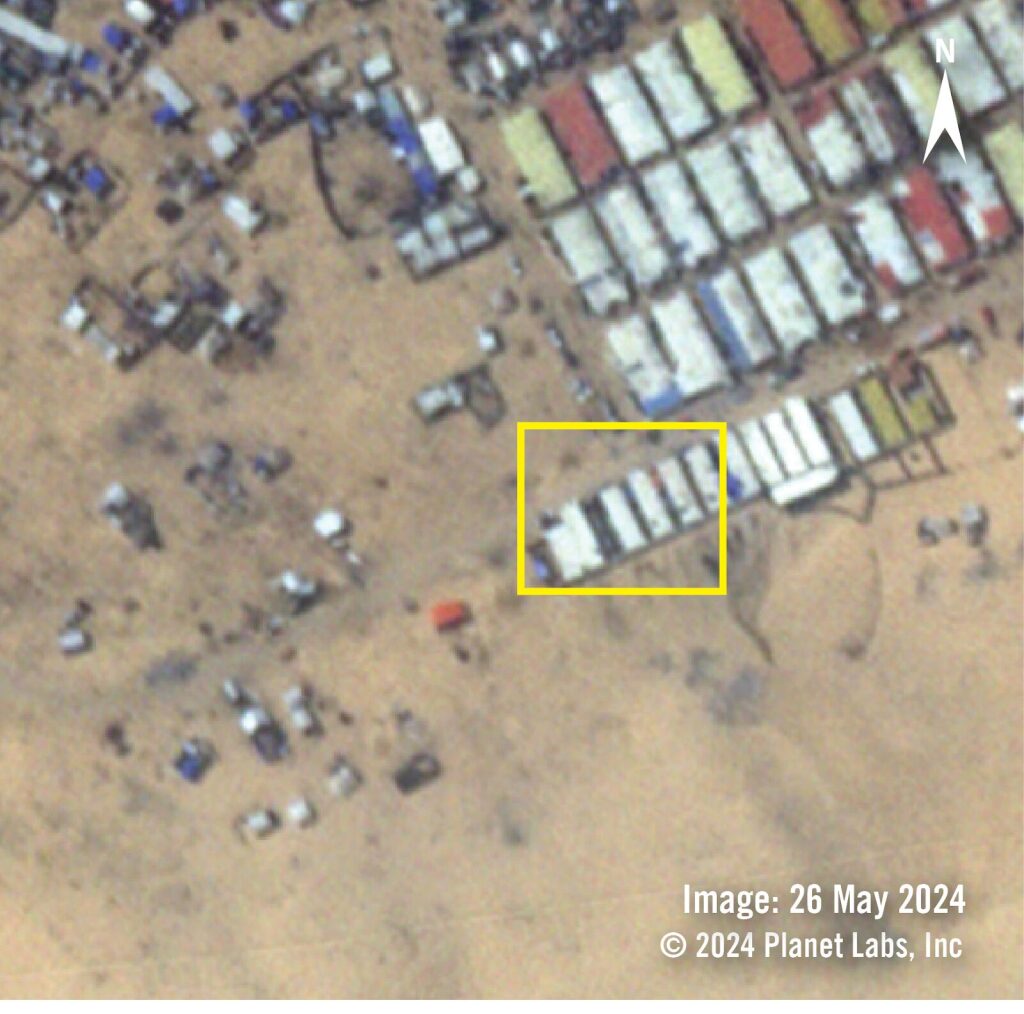
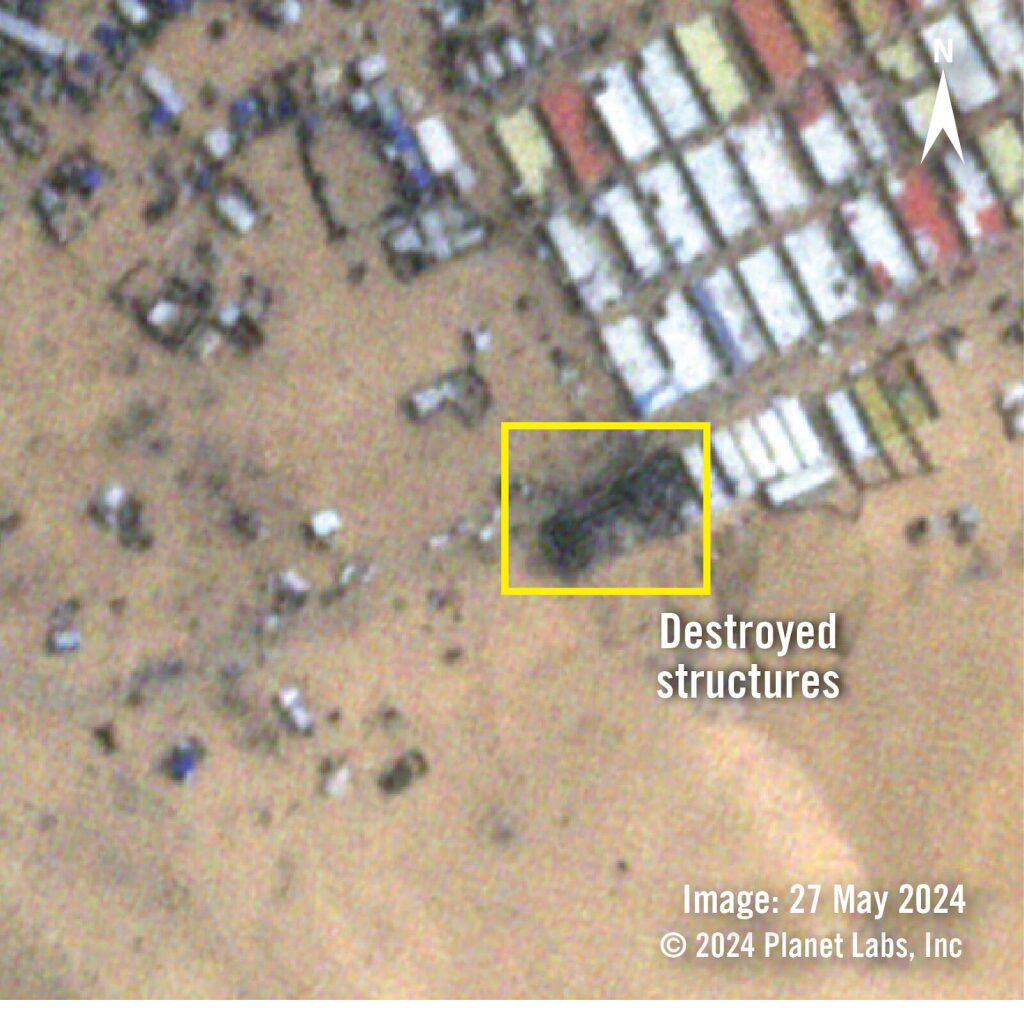
Reports of the incident mention a strike in the vicinity of the UNRWA warehouses (المخازن الرئيسية وكالة الامم المتحدة) to the north of the Tal al-Sultan neighbourhood (تل السلطان) in Rafah (رفح). This incident was independently geolocated by Amnesty International. Satellite imagery shows the strike location at the following exact coordinates: 31.319322, 34.251494.
Imagery: Amnesty International Report
Imagery: Amnesty International Report
Munition
Images of a munition remnant found at the location of this incident were shared by Palestinian journalist Alam Sadeq and have been identified as a Small Diameter Bomb (SDB) I variants (GBU-39 series) by munitions experts at the Open Source Munitions Portal (OSMP), a joint project between Airwars and the Armament Research Services (ARES), and can be viewed here (OSMP537).
Tentative Model