Incident Code
Incident Date
Location
Airwars Assessment
(Previous Incident Code: YEM195 )
Photo: US government
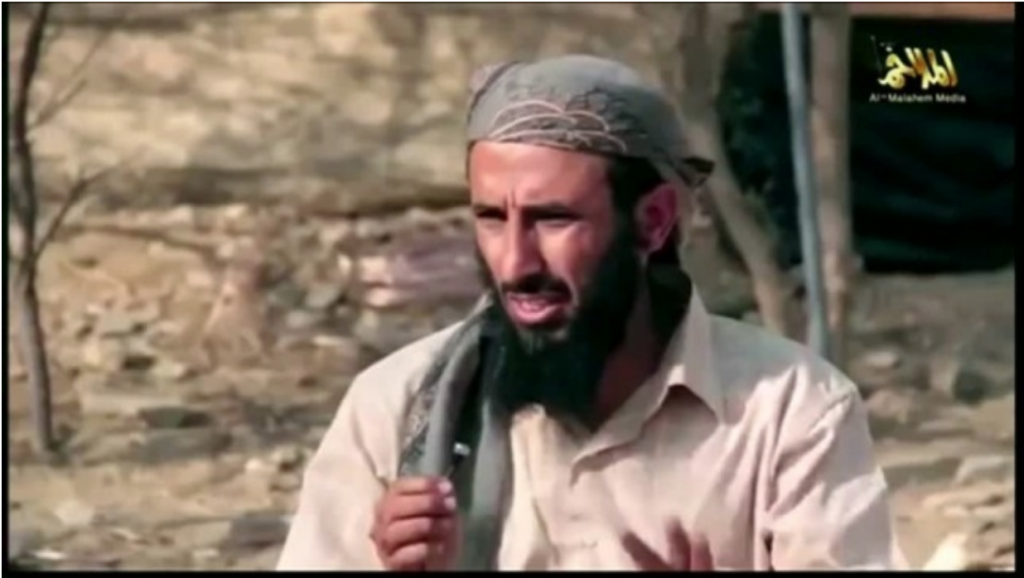
A suspected signature strike by CIA drones killed the leader of AQAP, Nasser al Wuhayshi (right). His death was confirmed in a White House statement and a eulogy video released a week after this strike.
Days after the strike, AQAP executed four men it accused of spying for Saudi Arabia and the US. Two of them were reportedly crucified on a bridge – one, Human al Hamid, was accused of calling in the drone strike that killed Wuhayshi. Two others were reportedly shot in front of a large crowd of Mukalla residents.
Initial reports said two or three alleged AQAP members were killed on the sea-front in Mukalla, the capital of Hadramout. A “leading figure” in AQAP was reportedly among the dead.
This appeared to have been Wuhayshi. CNN first reported his death in English, citing two unnamed Yemeni officials and tweets from “known al Qaeda operatives”. His deputy and AQAP’s military commander, Qasim al Raymi, was named as the group’s new leader.
Al Qaeda confirmed his death in June 15 video statement read by Khaled Omar Batarfi. He said: “We in al Qaeda in the Arabian Peninsula mourn to our Muslim nation… that Abu Baseer Nasser bin Abdul Karim al Wuhayshi, may God have mercy on his soul, passed away in an American strike which targeted him along with two of his mujahideen brothers”. Wuhayshi’s death would not halt AQAP’s efforts, he added “Did jihad end? Did its pulse stop? Did the will of resistance and fighting die among Muslims? No, the death of this [leader] leads to more determination.”
The US did not immediately confirm reports of Wuhayshi’s death, saying it was reviewing its intelligence on the strike. However on June 16 the White House confirmed his death. In a statement, the White House said his “death strikes a major blow to AQAP, al Qaeda’s most dangerous affiliate, and to al Qaeda more broadly”. The administration cautioned that AQAP “will remain persistent in their efforts to threaten the United States, our partners, and our interests” before saying Wuhayshi’s death “brings us closer to degrading and ultimately defeating these groups”.
The original reticence to confirm Wuhayshi’s death suggested the US was treating al Qaeda’s proclamation with caution. The group has been known for declaring its fighters dead only for them to reappear years later.
However reporting by the Washington Post confirmed it was a signature strike and the US had not known Wuhayshi was among the targets. Signature strikes are attacks that are carried out based on a targets’ observed patterns of behaviour rather than their actual identity. Unnamed officials told the Washington Post the CIA had been unaware they were targeting Wuhayshi in the strike.
Officials said President Obama had relaxed rules governing drone strikes, allowing the CIA and military to resume signature strikes in Yemen. This shift away from a 2013 policy declaration came earlier in 2015 when Yemen plunged into a civil war, depriving the US of much of its on-the-ground intelligence, gleaned from the Yemeni intelligence services.
However, Bloomberg reported this was a personality strike. The CIA built “a methodical case on [Wuhayshi’s] whereabouts over months from information collected through” drones and satellites.
Wuhayshi had led AQAP since it was formed in 2009 out of the remnants of al Qaeda in Saudi Arabia and al Qaeda in Yemen, which he led since 2007 after the death of Fawaz al Rabii, Osama bin Laden‘s hand picked leader sent to the country in 2001, according to the book The Last Refuge. In 2013, Wuhayshi was reportedly named the second-in-command of al Qaeda overall.
He was born in Abyan province in Yemen on October 1 1976. He graduated from a private religious school in Yemen in 1998 and traveled to Afghanistan where he attended an al Qaeda training camp near Khost. He quickly swore allegiance to al Qaeda and became bin Laden’s personal secretary and apprentice – a role he filled for the next four years.
Wuhayshi fought with bin Laden in the battle for Tora Bora. When the al Qaeda leader fled Wuhayshi took his small group of men into Iran. Tehran had him arrested and after two years in prison before being sent back to Yemen. He served a further two years of jail time before escaping Yemeni custody in 2006 with several other terrorists under dubious circumstances.
The US added Wuhayshi to its list of al Qaeda terrorists in 2010 and put out a reward of $10m for information on his location.
This the second strike to reportedly hit the Corniche in Mukalla. A strike on April 22 killed 5-7 people, including one of AQAP’s key ideologues, Nasser al Ansi, and its chief spokesman, Mohanned Ghallab.