Source
Captured Post Date:
2026-04-27
Author:
Time Magazine
Content:
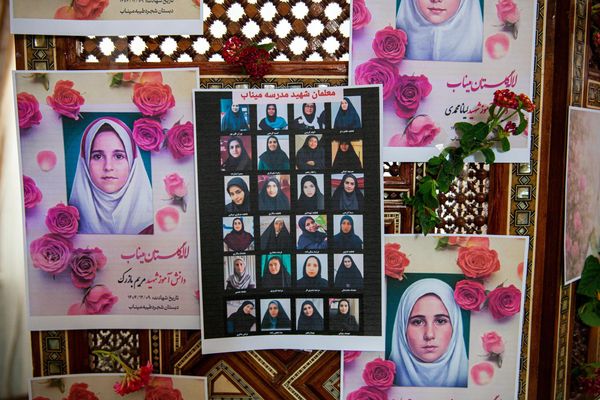
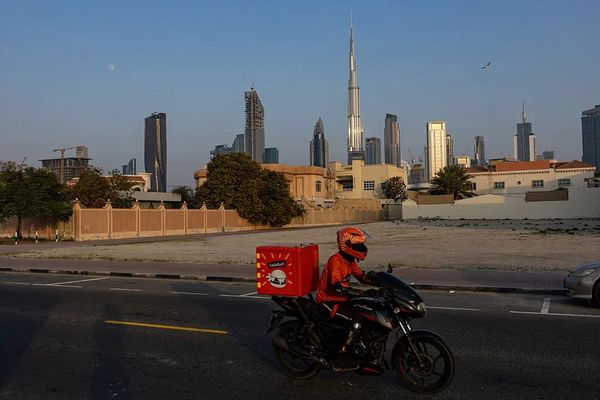
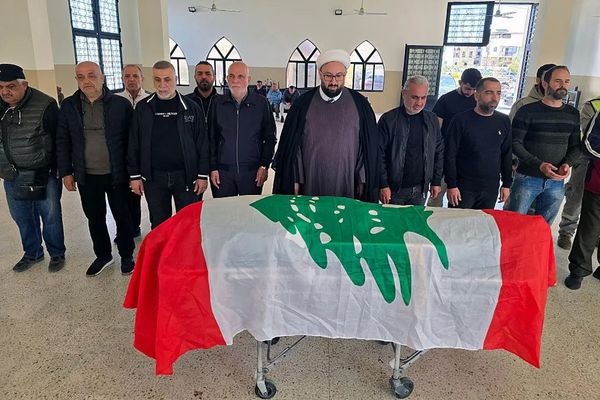
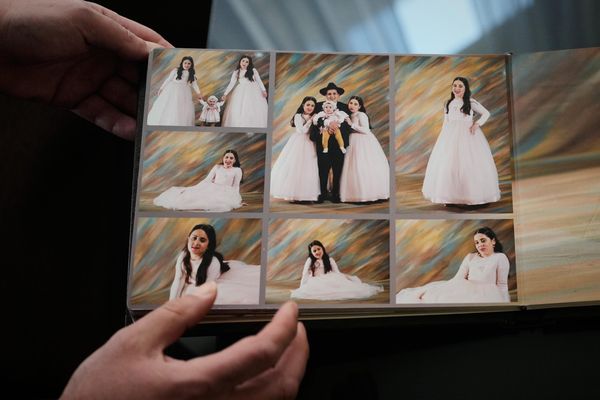
Thousands of civilians have been killed across the Middle East since the United States and Israel launched a surprise attack against Iran on Feb. 28. An exact number has been difficult to ascertain due to restricted access to affected areas, but figures compiled from government statements, health ministries, and human rights reports indicated that at least 2,100 civilians have died as a result of the war—the vast majority by U.S.-Israeli airstrikes. In Iran, the Human Rights Activists News Agency (HRANA) has documented 1,701 civilian deaths, as part of a broader total of more than 3,400 people killed since the start of the conflict.Across Lebanon, the Lebanese health ministry said that the death toll from Israeli strikes has risen to 2,496 people since March 2. It did not provide a complete breakdown between civilians and Hezbollah fighters, but said that nearly a quarter of those killed were women, children and medics, underscoring the heavy civilian toll from the fighting.Among the totals across the region are at least 503 women: 251 in Iran, 248 in Lebanon, and four in the Israeli-occupied West Bank, who died from Iranian missile fire, according to rights groups and health authorities.At least 413 children have been killed in the Iran war, including 248 in Iran and 165 in Lebanon, with no confirmed child fatalities reported in other affected countries.Nine journalists have also been killed in Israeli strikes in Lebanon since fighting escalated in early March. Medical workers and aid groups have described overwhelmed hospitals in Beirut and other cities, where mass casualty surges have strained emergency rooms and depleted medical supplies during repeated waves of airstrikes. Iranian missile and drone fire has also killed dozens of civilians across the region. Some 23 people were killed in Israel by Iran and Hezbollah strikes, according to Israel's ambulance service. At least 10 have been killed in the United Arab Emirates, among them several migrant workers. Numerous deaths due to Iranian fire have been reported across other Gulf countries, including Saudi Arabia, Oman and Bahrain. Overall, hostilities have eased after Iran and the United States agreed to a two-week cease-fire on April 8, but the casualty figures continue to rise as authorities and aid groups update their counts across the region.Here is what we know about just a few of the civilians killed during this conflict. Hassan Badawi, 31, a paramedic in southern LebanonHassan Badawi, a Lebanese Red Cross paramedic, was killed in an Israeli strike on Sunday, April 12, in the town of Beit Yahoun in southern Lebanon. Badawi, who had been working with the Red Cross since 2012, was reportedly carrying a patient out of an ambulance on a stretcher when an Israeli strike injured him. The father of two later died from his wounds.He was one of 91 health workers killed since the start of Israel's deadly bombardment and invasion of Lebanon.“Hassan carried out his humanitarian duty,” his father, Ali Badawi, told Al Jazeera. “In every war, he used to be among the first to go, but at a cost,” his mother, Ahlam Badawi, added. “This time, God took him from me.”Al Jazeera reported that Badawi called his wife on the eve of his death, telling her that bombing was “everywhere,” but that he could not leave the wounded behind.When asked about Badawi’s death, the Israeli military told reporters that it had targeted “a Hezbollah terrorist who operated adjacent to IDF soldiers in the Bint Jbeil area in southern Lebanon. Reports were received regarding a Red Cross team injured in the strike.”Raha Zerai, 7, a schoolgirl in Minab, IranRaha Zerai was among the 165 people killed when a suspected U.S. air strike hit the Shajareh Tayyebeh Primary School in Minab, in Iran’s Hormozgan province, in the opening barrage of the war on Feb. 28. She was found in the rubble by her father, Reza Zerai, 47, in the minutes after the attack. “She was silly, full of energy, always laughing, singing, making up little poems,” Bastami, Raha’s aunt, told Foreign Policy. “Together we were always up to mischief. She loved school, and especially her teacher, and she kept telling us she wanted to study to become a dentist.”She had thick curly hair and a contagious laugh, according to relatives interviewed by Foreign Policy. Her room was decorated with Hello Kitty wallpaper and she carried a unicorn-patterned backpack.Several young gymnasts were also among the dead, according to Iran’s Gymnastics Federation and state media, including Reza Habashi, 7, Arina Arab-Kish, Atena Ahmadzadeh, Makan Nasiri, and Araz Ahmadi-Zadeh. According to Human Rights Watch, the school was on the interior border of an Islamic Revolutionary Guard Corps (IRGC) Naval Forces compound, but the school is walled off and in a separate compound.Shiva Amelirad, the international representative of the Coordinating Council of Iranian Teachers’ Trade Associations, told TIME that the school was announced as closed when the war began, “but the time between the announcement of the school’s closure and the moment of the explosion was very short, and many families had not yet arrived to pick up their children.”“The principals and teachers stayed to get the children out. Most of them were killed,” Amelirad said. Saleh Ahmed, 55, a migrant worker in the UAEJust one month into the war, Human Rights Watch warned that migrant workers in Gulf countries face “additional risks” to their lives because of the conflict. Drivers, delivery workers, security guards, chefs, and cleaners have been required to continue working despite not being able to afford basic necessities and amid heightened risks.The majority of civilian deaths across the Gulf during the war have been migrant workers. Among them is Saleh Ahmed, a Bangladeshi national, who was killed in Ajman, UAE, on the first day of war by debris that fell from an intercepted Iranian missile, according to the Bangladeshi Foreign Ministry. He was delivering water when he was struck. Ahmed was the sole breadwinner of his household and a hardworking man, his son Abdul Haque told Sky News in early March, just days after his father’s death. He had been living in the UAE for 25 years, sending his earnings home to his wife and four children in Bangladesh every week.“At the beginning, my father really struggled and did a lot of different work…he washed cars, cut grass, he did everything,” he said. “And for the last seven or eight years, he had a good position at the water company. He did a good job; it was in the service of people, delivering drinking water to people.”Ghada Dayekh, 59, a journalist in Tyre, LebanonRadio journalist Ghada Dayekh was killed on April 8 by an Israeli airstrike that hit her apartment building in Tyre, a city in southern Lebanon, completely destroying it. Dayekh worked for the privately owned radio station Sawt al-Farah since it began in the 1980s, the station said in a tribute to her, and she had been on air for 37 years. She hosted a morning show that discussed current events, sports and culture happening in Tyre, where she lived. She had been working from home since the radio station’s headquarters had been destroyed at the beginning of the conflict. Alwan Charafeddine, owner and director of the station, said she was “full of life and loved to joke,” according to local news outlet L’Orient Le Jour. At least nine journalists have been killed in Israeli strikes in Lebanon since fighting escalated in early March. On April 22, Amal Khalil, a reporter with the daily Al-Akhbar newspaper, was killed in an Israeli airstrike after being targeted numerous times over several hours, and despite a ceasefire between Israel and Hezbollah. Lebanon’s Health Ministry said that a drone strike initially hit a car she was traveling behind with a colleague, forcing them to take cover in a nearby building. Rescue workers tried to reach her for several hours but were fired upon by Israeli forces, the ministry said. Zeinab Faraj, a photographer who was accompanying Khalil and barely survived the strikes, told the UAE-based The National newspaper that they were stuck for hours in the building, whole severely injured from the first strike: “I saw Amal like that, burning, telling me, 'Zeinab, I’m burning,'" Ms Faraj said. “She told me: ‘Don’t fall asleep, don’t leave me’”. A separate airstrike then hit the building in al-Tiri where she was taking shelter, and her body was found hours later beneath the rubble.Israel denied that it prevented rescue workers from reaching the scene, or that it deliberately targeted civilians, and said the incident was under review. But Lebanon’s President Joseph Aoun said after Khalil’s death that Israel “aimed at concealing the truth of its aggressive acts against Lebanon.”Three of the journalists were killed on March 28 when an Israeli airstrike hit a clearly marked press vehicle traveling near the southern town of Jezzine, according to witnesses and the Committee to Protect Journalists (CPJ).Those killed included Ali Shoaib, a correspondent for Hezbollah-affiliated Al-Manar TV, Fatima Ftouni of Al-Mayadeen TV, and her brother Mohamad Ftouni, a freelance photojournalist. The Israeli military acknowledged carrying out the strike that killed the journalists, claiming that Shoaib and "Mohammad Fatouni" [sic] were members of Hezbollah’s military wing. "For many years, Shaib [sic] operated to aid Hezbollah in various ways while working as a journalist, and in 2020, he officially joined Hezbollah’s military wing," an Israeli Defense Forces (IDF) spokesperson told TIME. "The IDF takes all operationally feasible measures to mitigate harm to civilians, including journalists. The IDF has never, and will never, deliberately target journalists as such," the spokesperson added. It provided no evidence to support its claims that Shoaib and Ftouni were Hezbollah combatants. Two other journalists were killed earlier in the month, including Mohammad Sherri in a strike in central Beirut on March 18, and Hussain Hamood, who was killed while filming in the southern city of Nabatieh on March 25. Helma Ahmadizadeh, 10, a volleyball player in Lamerd, Iran Helma Ahmadizadeh, 10, was killed in a strike that hit a sports facility in the town of Lamerd while it was being used by a women’s volleyball team, killing at least 21 people.Her death, along with at least four other children killed in the attack, was first reported by Negin Bagheri, an Iranian journalist and women’s rights activist based in Tehran.Bagheri interviewed Helma’s uncle, who said that she survived the initial explosion and walked into the ambulance herself, telling her coach, "It feels like something went into my body." Helma later died in the hospital due to a piece of shrapnel that pierced her heart. She was killed alongside her friend Elaheh, who was in the grade above her, and who also played volleyball.U.S. Central Command released a statement, claiming that Iran may have been responsible for the strike in Lamerd, adding that “U.S. forces do not target civilians, unlike the Iranian regime, which has attacked civilian locations in neighboring countries more than 300 times.”However, both the BBC and the New York Times have reported on evidence that the missile used was a Precision Strike Missile manufactured by Lockheed Martin for the U.S. military.Yaakov Briton, 16, Avigail, 15, and Sarah, 13, siblings in Beit Shemesh, Israel. Nine people were killed and 65 were hospitalized when an Iranian missile struck in the city of Beit Shemesh on March 1, destroying a synagogue and several homes. It was the deadliest attack against Israel since the war began. Among the victims were three children from the same family. Yaakov Briton, 16, Avigail, 15, and Sarah, 13, were all killed near the bomb shelter beneath a synagogue they had gone to seek refuge in. It took their mother, Tamar Biton, 24 hours to identify their bodies. She survived along with her husband and one other child, four-year-old Rachel. Tamar said Yaakov was a natural-born leader in an interview with the Associated Press. He studied at a Jewish seminary and was known for encouraging his friends to be more observant. Avigail was smart and thoughtful, she told the AP, and Sarah was “always helping around the house.” Yitzhak Biton, the children’s father, said he hopes to open a Jewish seminary in their honor. “They sanctified God’s name with their life, and also after their death, they continue sanctifying his name,” he told the AP.
Images: 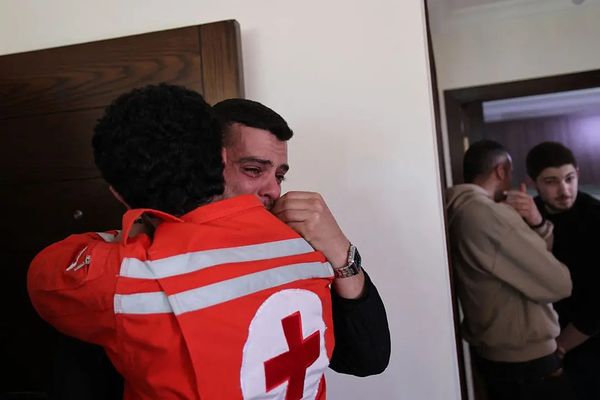

Additional Details
Captured Date
2026-04-27T15:17:53.000Z
Language
English
Incident