Source
Captured Post Date:
2026-06-13 01:25
Author:
Santiago Andrés Venera Salazar, Ana María Rodríguez Brazón
Translated Content:
News: Secretary of War Pete Hegseth confirmed that the operation took place earlier this week in Venezuelan territory. INTERNATIONAL JOURNALIST 06/12/2026 8:25 PM Updated: 06/13/2026 4:45 PM EL TIEMPO CORRESPONDENT IN CARACAS 06/12/2026 8:25 PM Updated: 06/13/2026 4:45 PM
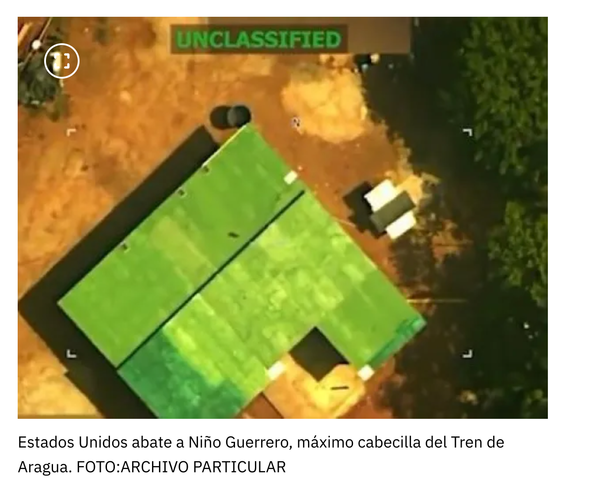
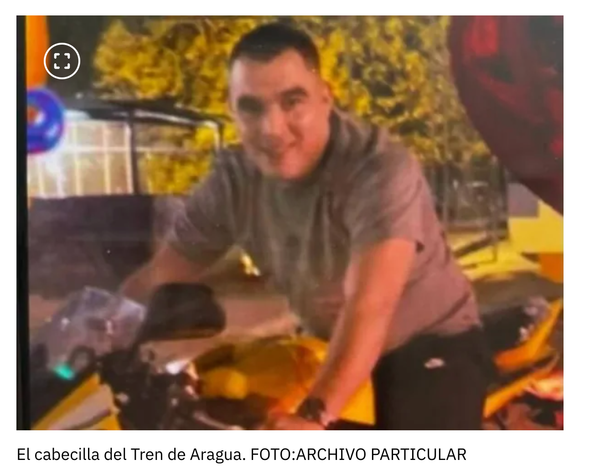
US President Donald Trump announced that, under his direction, Southern Command executed a “swift and lethal” operation that culminated in the death of Héctor Rusthenford Guerrero Flores, alias Niño Guerrero, identified as the leader of the transnational criminal organization Tren de Aragua, for whom Washington had offered a $5 million reward. In a message posted on his Truth Social account, the Republican president stated that the alleged drug trafficker led one of the organizations “The most bloodthirsty terrorists on the planet.” READ ALSO The leader of the Tren de Aragua. Photo: Private archive. The president assured that this military action was carried out in close coordination with Venezuela, a country with which, after the capture of Nicolás Maduro and the rise of Delcy Rodríguez as acting head of state, Washington maintains—according to Trump—"an excellent relationship." After the announcement, the US Secretary of War, Pete Hegseth, gave more details of the operation. According to the official, the attack took place earlier this week on Venezuelan territory. "The operation underscores the shared commitment of the United States and Venezuela to take the fight to narco-terrorists and deny them any safe haven in our hemisphere. We will continue to work closely with security partners, such as Venezuela—and countries in the Americas Cartel Coalition (A3C)—to take the fight to our enemies," Hegseth added. Born in Maracay, in the state of Aragua, alias Niño Guerrero built a network of trust early on, along with his brother, Cheison Rover Guerrero—captured in Spain in 2024—and his brother-in-law, Neomar Antonio Aldana. His criminal career began in the 2000s, a period during which he was linked to crimes such as illegal possession of firearms, drug trafficking, and homicide. He was incarcerated several times in Tocorón prison, although he managed to regain his freedom by evading prison controls. In 2018 he was sentenced to 17 years in prison for homicide, drug trafficking, identity theft and concealment of weapons of war. However, at the end of 2023, he escaped from prison, and since then, authorities had information placing him in the border area between Venezuela and Brazil. He was also wanted under the RICO Act, which combats organized crime, and was accused of providing material support to terrorism, as well as participating in assaults, kidnappings, and murders. An operation in the mines of Bolívar preceded the attack. While the specific location of the attack has not yet been officially reported, it coincides with an intense military operation that has been underway for a week in the mines of Bolívar state, in the south of the country, where Venezuelan criminal groups, as well as paramilitary and guerrilla structures, including the ELN, operate, as human rights and environmental organizations have denounced for years. In this regard, unofficial sources told EL TIEMPO that these operations were precisely aimed at locating alias Niño Guerrero and Johan Petrica, another leader of the Tren de Aragua gang, whose capture was sought. The United States is offering a $4 million reward. READ ALSO: Initially, it was speculated that the U.S. military was involved in the operation, but authorities from both countries did not confirm the rumors. Videos shared by citizens in the area showed Venezuelan forces flying over the zone. The United States kills Niño Guerrero, top leader of the Tren de Aragua gang. Photo: Private archive. Trump's message is accompanied by a video of what appears to be the moment of the bombing of the hideout where 'Niño Guerrero' was located. The recording, which lasts about 10 seconds, shows a house surrounded by vegetation in an unknown area, which, seconds later, is hit by a projectile. Then, a huge cloud of smoke rose several meters into the air. "As a result, the Tren de Aragua terrorists no longer have safe haven in Venezuela or anywhere else," added Trump, who sent a message to the other members of this and other armed groups. Trump also used the announcement to defend his security policy and once again attack his predecessor, Democrat Joe Biden. In his post, the president asserted that during Biden's term (2021-2025), the United States "opened" the southern border to "millions of illegal criminals" and maintained that these policies allowed the entry of members of foreign criminal organizations. He also stated that during his campaign he promised to expel those responsible for these crimes from the country and "bring justice" to the victims of crimes attributed to undocumented migrants. Héctor Rusthenford Guerrero Flores, alias Niño Guerrero. Photo: Courtesy. In that context, Trump mentioned the cases of Jocelyn Nungaray, a 12-year-old girl murdered in Texas (USA) in June 2024, and Laken Riley, a 22-year-old nursing student murdered while jogging near the University of Georgia campus in February of that same year. Both cases gained significant relevance in the US political debate on migration and border security, as authorities linked the crimes to Venezuelan citizens who were allegedly members of the 'Tren de Aragua' gang. READ ALSO "With this action, the United States Armed Forces have done justice for them, their families, and their loved ones," the president stated. The president also highlighted that one of his first decisions after returning to the White House was to designate the Tren de Aragua as a foreign terrorist organization. According to Trump, this measure was part of a broader strategy to combat transnational criminal organizations and drug cartels—including Colombian criminal structures—that, in his words, "have been fighting" against U.S. citizens for years. Weapons seized by the U.S. against the Tren de Aragua. Photo: U.S. Department of Justice / Courtesy. Since then, his administration has pursued a policy of increased pressure against criminal structures in the region, including bombings and maritime interdiction operations targeting vessels linked to drug trafficking in the Caribbean and the Pacific. These operations have been criticized by experts and organizations as extrajudicial killings. A blow to one of the region's most violent criminal organizations. The Tren de Aragua is considered by the organization InSight Crime to be "the most powerful criminal structure in Venezuela and the only local group that has managed to establish itself abroad." According to the research center specializing in organized crime, the Tren de Aragua went from being a gang that emerged in the Tocorón prison, in the Venezuelan state of Aragua, to becoming a transnational criminal network with a presence in several South American countries and a broad portfolio of illicit activities. READ ALSO The group took advantage of the self-governance conditions that for years characterized some Venezuelan prisons and gradually expanded its operations outside the penitentiary. Over time, it expanded its activities to include crimes such as extortion, kidnapping, human trafficking for sexual exploitation, migrant smuggling, smuggling, illegal mining, drug micro-trafficking, robbery, and cybercrime. InSight Crime maintains that the organization found opportunities to infiltrate migration corridors and illegal economies associated with population flows. Between 2018 and 2023, the group established cells in Colombia, Peru, and Chile, in addition to registering sporadic presences in countries such as Ecuador, Bolivia, and Brazil. Follow all the International news on Facebook and Twitter, or in our weekly newsletter.
EL TIEMPO NEWSLETTERS: Sign up for our newsletters and receive news in your email according to your interests. Stay informed about what really matters to you. EL TIEMPO GOOGLE NEWS: Follow us on GOOGLE NEWS. Stay up-to-date with the latest news, coverage, stories, and analysis directly on Google News. EL TIEMPO WHATSAPP Join the El Tiempo WhatsApp channel to stay informed with the most relevant news. EL TIEMPO APP Stay informed with the EL TIEMPO app. Receive the latest news, coverage, stories, and analysis directly on your device. SUBSCRIBE TO THE DIGITAL Reliable information for you. Subscribe to EL TIEMPO and access our journalistic content without limits.
Includes Video:
Yes
Content:
NoticiaEl secretario de Guerra, Pete Hegseth, confirmó que el operativo se llevó a cabo a principios de esta semana en territorio venezolano.PERIODISTA INTERNACIONAL12.06.2026 20:25 Actualizado: 13.06.2026 16:45 CORRESPONSAL DE EL TIEMPO EN CARACAS12.06.2026 20:25 Actualizado: 13.06.2026 16:45
El presidente de Estados Unidos, Donald Trump, anunció que, bajo su dirección, el Comando Sur ejecutó una operación “rápida y letal” que culminó con la muerte de Héctor Rusthenford Guerrero Flores, alias Niño Guerrero, señalado como el líder de la organización criminal transnacional Tren de Aragua y por quien Washington ofrecía una recompensa de 5 millones de dólares.En un mensaje publicado en su cuenta de Truth Social, el mandatario republicano afirmó que el presunto narcotraficante lideraba una de las organizaciones terroristas “más sanguinarias del planeta”. LEA TAMBIÉN El cabecilla del Tren de Aragua. Foto:Archivo particularEl mandatario aseguró que esta acción militar fue efectuada en coordinación estrecha con Venezuela, país con el que, tras la captura de Nicolás Maduro y el ascenso de Delcy Rodríguez como jefa encargada, Washington mantiene -dice Trump- "una excelente relación".Tras el anuncio, el secretario de Guerra estadounidense, Pete Hegseth, dio más detalles del operativo. Según el funcionario, el ataque se llevó a cabo a principios de esta semana en territorio venezolano."La operación subraya el compromiso compartido de Estados Unidos y Venezuela de llevar la lucha a los narcoterroristas y negarles cualquier refugio seguro en nuestro hemisferio. Continuaremos trabajando estrechamente con socios de seguridad, como Venezuela —y países en la Coalición Contra Carteles de las Américas (A3C)— para llevar la lucha a nuestros enemigos", agregó Hegseth.Nacido en Maracay, en el estado Aragua, alias Niño Guerrero construyó desde temprano una red de confianza junto a su hermano, Cheison Rover Guerrero -capturado en España en 2024-, y su cuñado, Neomar Antonio Aldana. Su trayectoria en el mundo delictivo comenzó en la década de 2000, período desde el cual fue vinculado con delitos como porte ilegal de armas, narcotráfico y homicidio.Fue recluido en varias ocasiones en la cárcel de Tocorón, aunque logró recuperar su libertad burlando los controles penitenciarios. En 2018 fue condenado a 17 años de prisión por homicidio, tráfico de drogas, usurpación de identidad y ocultamiento de armas de guerra. Sin embargo, a finales de 2023 se fugó del penal y desde entonces las autoridades manejaban información que lo ubicaba en la zona fronteriza entre Venezuela y Brasil.Además, era perseguido bajo la Ley RICO, que combate las organizaciones criminales, y estaba acusado de brindar apoyo material al terrorismo, así como de participar en asaltos, secuestros y asesinatos.Un operativo en las minas de Bolívar antecedió el ataqueSi bien hasta el momento no se ha informado de manera oficial el lugar específico del ataque, este coincide con un intenso operativo militar que se desarrolla desde hace una semana en las minas del estado Bolívar, al sur del país, donde operan grupos delincuenciales venezolanos, así como estructuras paramilitares y guerrilleras, entre ellas el Eln, según han denunciado durante años organizaciones de derechos humanos y ambientales.Al respecto, fuentes extraoficiales le señalaron a EL TIEMPO que estos operativos tenían precisamente como objetivo dar con el paradero de alias Niño Guerrero y de Johan Petrica, otro de los cabecillas del Tren de Aragua, por cuya captura Estados Unidos ofrece una recompensa de 4 millones de dólares. LEA TAMBIÉN En un principio se especuló que el Ejército estadounidense estaba involucrado en la operación, pero las autoridades de ambos países no confirmaron los rumores. Videos de difundidos por ciudadanos en la zona mostraban a fuerzas venezolanas sobrevolando la zona.Estados Unidos abate a Niño Guerrero, máximo cabecilla del Tren de Aragua. Foto:Archivo particularEl mensaje de Trump va acompañado de un video de lo que sería el momento del bombardeo al escondite donde se encontraba 'Niño Guerrero'. La grabación, que dura alrededor de 10 segundos, muestra una vivienda rodeada de vegetación ubicada en una zona desconocida que, segundos después, es impactada por un proyectil. Luego, una enorme nube de humo se eleva varios metros en el aire."Como resultado, los terroristas del Tren de Aragua ya no tienen refugio seguro en Venezuela ni en ningún otro lugar", agregó Trump, quien envió un mensaje a los demás miembros de esta y otras estructuras armadas.Trump también aprovechó el anuncio para reivindicar su política de seguridad y volver a arremeter contra su antecesor, el demócrata Joe Biden. En su publicación, el mandatario aseguró que durante el mandato de Biden (2021-2025), Estados Unidos “abrió” la frontera sur a “millones de delincuentes ilegales" y sostuvo que esas políticas permitieron el ingreso de miembros de organizaciones criminales extranjeras. Asimismo, afirmó que durante su campaña prometió expulsar del país a los responsables de estos delitos y "hacer justicia" para las víctimas de crímenes atribuidos a migrantes en situación irregular.Héctor Rusthenford Guerrero Flores, alias Niño Guerrero. Foto:CortesíaEn ese contexto, Trump mencionó los casos de Jocelyn Nungaray, una niña de 12 años asesinada en Texas (EE. UU.) en junio de 2024, y de Laken Riley, una estudiante de enfermería de 22 años asesinada mientras corría cerca del campus de la Universidad de Georgia en febrero de ese mismo año.Ambos casos adquirieron una gran relevancia en el debate político estadounidense sobre migración y seguridad fronteriza, debido a que las autoridades vincularon los crímenes con ciudadanos venezolanos y que serían miembros del 'Tren de Aragua'. LEA TAMBIÉN "Con esta acción, las Fuerzas Armadas de los Estados Unidos han hecho justicia para ellos, sus familias y sus seres queridos", afirmó el presidente.El mandatario también destacó que una de sus primeras decisiones tras regresar a la Casa Blanca fue designar al Tren de Aragua como una organización terrorista extranjera.Según Trump, esa medida formó parte de una estrategia más amplia para combatir a organizaciones criminales transnacionales y cárteles de la droga -entre las que también se encuentran estructuras criminales colombianas- que, en sus palabras, "han estado combatiendo" contra ciudadanos estadounidenses durante años.Armas incautadas por EE. UU. contra el Tren de Aragua Foto:Departamento de Justicia de EE. UU. / CortesíaDesde entonces, su administración ha impulsado una política de mayor presión contra estructuras criminales de la región, incluyendo bombardeos y acciones de interdicción marítima dirigidas contra embarcaciones vinculadas al narcotráfico en el Caribe y el Pacífico. Estos operativos han sido criticados por expertos y organizaciones como ejecuciones extrajudiciales.Un golpe a una de las organizaciones criminales más violentas de la regiónEl Tren de Aragua es considerado por la organización InSight Crime como "la estructura criminal más poderosa de Venezuela y el único grupo local que ha logrado afianzarse en el extranjero". De acuerdo con el centro de investigación especializado en crimen organizado, el Tren de Aragua pasó de ser una banda surgida en la prisión de Tocorón, en el estado venezolano de Aragua, a convertirse en una red criminal transnacional con presencia en varios países de Sudamérica y un amplio portafolio de actividades ilícitas. LEA TAMBIÉN El grupo aprovechó las condiciones de autogobierno que durante años caracterizaron a algunas prisiones venezolanas y expandió gradualmente sus operaciones fuera del centro penitenciario. Con el tiempo, amplió sus actividades hacia delitos como extorsión, secuestro, trata de personas con fines de explotación sexual, tráfico de migrantes, contrabando, minería ilegal, microtráfico de drogas, robo y ciberdelincuencia.InSight Crime sostiene que la organización encontró oportunidades para infiltrarse en corredores migratorios y economías ilegales asociadas a los flujos de población. Entre 2018 y 2023, el grupo estableció células en Colombia, Perú y Chile, además de registrar presencias esporádicas en países como Ecuador, Bolivia y Brasil. Sigue toda la información de Internacional en Facebook y Twitter, o en nuestra newsletter semanal.
BOLETINES EL TIEMPORegístrate en nuestros boletines y recibe noticias en tu correo según tus intereses. Mantente informado con lo que realmente te importa.EL TIEMPO GOOGLE NEWSSíguenos en GOOGLE NEWS. Mantente siempre actualizado con las últimas noticias coberturas historias y análisis directamente en Google News.EL TIEMPO WHATSAPPÚnete al canal de El Tiempo en WhatsApp para estar al día con las noticias más relevantes al momento.EL TIEMPO APPMantente informado con la app de EL TIEMPO. Recibe las últimas noticias coberturas historias y análisis directamente en tu dispositivo.SUSCRÍBETE AL DIGITALInformación confiable para ti. Suscríbete a EL TIEMPO y consulta de forma ilimitada nuestros contenidos periodísticos.
Images: 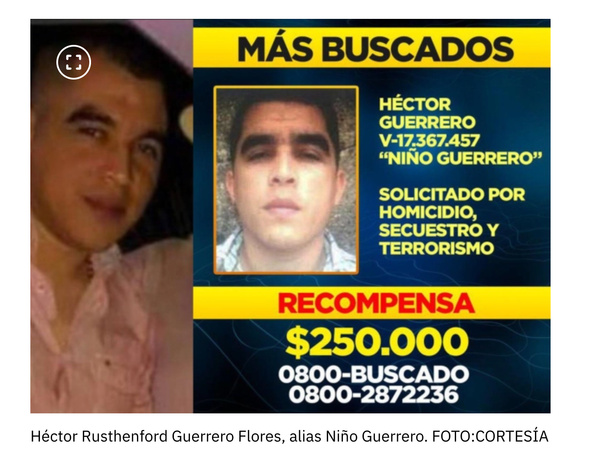
Additional Details
Captured Date
2026-06-21T00:49:49.000Z
Language
Spanish
Incident