Source
Captured Post Date: 2026-03-10 12:00:00
Translated Author:
Author: Sayed Fadhel
Translated Content:
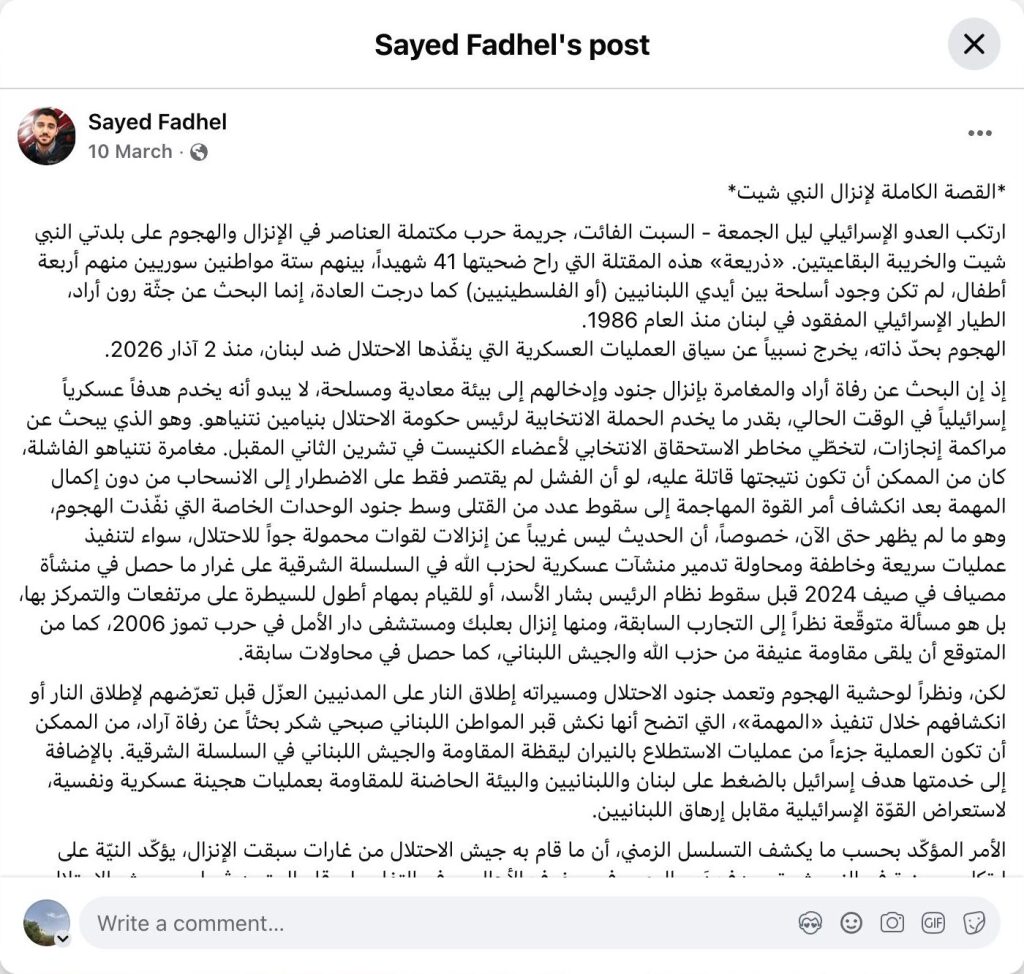
*The Full Story of the Nabi Sheet Incursion*
On Friday night, the Israeli enemy committed a full-fledged war crime by launching an incursion and attack on the Bekaa Valley towns of Nabi Sheet and Khraibeh. The pretext for this massacre, which claimed the lives of 41 martyrs, including six Syrian citizens, four of whom were children, was not the presence of weapons in the hands of Lebanese (or Palestinians), as is usually the case, but rather the search for the body of Ron Arad, the Israeli pilot missing in Lebanon since 1986. The attack itself is relatively different from the military operations carried out by the occupation against Lebanon since March 2, 2016. Searching for Arad's remains and risking the deployment of soldiers into a hostile and armed environment does not appear to serve any Israeli military objective at present, but rather serves the election campaign of the head of the occupation government, Benjamin Netanyahu. He is seeking to accumulate achievements to overcome the risks of the upcoming Knesset elections in November. Netanyahu's failed adventure could have had fatal consequences for him had the failure not been limited to the forced withdrawal without completing the mission after the attacking force was exposed, and the casualties among the special forces soldiers who carried out the attack—which has not yet been revealed. This is especially significant given that airborne landings by the occupation forces are not uncommon, whether for quick, lightning operations to destroy Hezbollah military installations in the eastern mountain range, similar to what happened at the Masyaf facility in the summer of 2004 before the fall of President Bashar al-Assad's regime, or for longer missions to seize and establish positions on high ground. Such operations are expected, based on past experiences, including the landings in Baalbek and at Dar al-Amal Hospital during the July 2006 war. Furthermore, fierce resistance from Hezbollah and the Lebanese army is anticipated, as has been the case in previous attempts.
However, given the brutality of the attack and the deliberate targeting of unarmed civilians by the occupation soldiers and their drones before they were fired upon or exposed during the execution of the "mission"—which turned out to be the exhumation of the grave of Lebanese citizen Subhi Shukr in search of Arad's remains—it is possible that the operation was part of a reconnaissance-by-fire campaign to test the vigilance of the resistance and the Lebanese army in the eastern mountain range. Furthermore, it served Israel's objective of pressuring Lebanon, the Lebanese people, and the resistance's support base through hybrid military and psychological operations, showcasing Israeli power while exhausting the Lebanese population.
What is certain, according to the chronology, is that the raids carried out by the occupation army prior to the landing confirm the intention to commit a massacre in Nabi Sheet in order to instill terror among the residents. In detail, on Friday afternoon, the spokesperson for the occupation army issued "evacuation orders" for the towns of Nabi Sheet, Sar'in al-Tahta, Sar'in al-Fawqa, and al-Khader. Then, more than twenty raids were launched, including more than ten raids on Nabi Sheet alone, and the rest on the surrounding villages, with the aim of removing the residents from the eastern neighborhood and the town in general. This led to the death of about 11 martyrs (other sources confirm that the number of martyrs was close to 14) in a building that housed families from the Al-Mousawi and Al-Shukr families at the time of breaking the fast, after the targeted building collapsed on them. At about 10:50 before midnight, three enemy helicopters landed at a point in the Sarghaya mountains, opposite the Nabi Sheet mountains, with a total of 12 personnel on board, while a fourth helicopter remained in the sky monitoring the atmosphere from above. It is most likely that the vehicles used by the group to enter the town of Nabi Chit (three vehicles, two resembling those of the Lebanese Army and one resembling those of the Islamic Health Authority) were obtained from inside Syria, either through agents who delivered them beforehand to the meeting point, or they were dropped from another helicopter that was not within range of the Lebanese Army's observation posts. The Lebanese Army's positions had received orders to fire flares to illuminate the location of the attacking force.
It is probable that the newly established Fifth Border Regiment's observation posts were the first to detect the attacking force, but they lacked the means to engage them due to their distance, especially since these observation posts are relatively new and were established with British support in response to potential threats from the Syrian side and the military movements of forces loyal to the Syrian interim president, Ahmed al-Sharaa. Around 11:30, the enemy force successfully reached the Al-Shukr cemetery in the town of Nabi Sheet. Three or four soldiers began digging using a small, remotely controlled tractor. (It was later revealed that, while en route to the cemetery, the force fired from a small drone at paramedics from the Palestinian Health Authority who were recovering the bodies of martyrs from a building destroyed hours earlier.) The noise from the digging attracted the attention of a woman living in a neighboring building, who went out onto her balcony. An Israeli sniper then shot and killed her with a silenced weapon. He did the same to a man who tried to inspect the cemetery.
When the woman's son tried to move her from the building to the car, a drone targeted them, killing him. The sound of the explosion alerted everyone, and the drones quickly began firing at anything that moved in the surrounding area, including residents of the eastern neighborhood. Among the victims was a Syrian family consisting of a mother, father, and four children. Bullet holes in the back wall of the cemetery near the Husseiniya showed that the enemy force was under fire and besieged until 12:25 PM, and that they were only able to dig a hole approximately 90 centimeters to one meter deep.
The force also fired on a car containing two young men, likely who had come to confront them, and on another young man who was firing back at the invading force. The force's encirclement in the cemetery prompted helicopter intervention, as well as intense airstrikes by warplanes. One such strike targeted the town center, creating a crater fifty meters in diameter and twenty meters deep, resulting in martyrs and wounded. The aim of these attacks was to isolate the town and secure a withdrawal to the eastern mountains towards the town of Khraiba. The residents of Khraiba also put up a heroic resistance against the enemy force, despite being outgunned, resulting in six martyrs from the town and raising the total death toll from the attack to 41 martyrs and approximately 40 wounded.
Around 2:00 AM, a helicopter was spotted landing on the Syrian side of the border, though the exact location was unknown. The warplanes and helicopters then disappeared before resuming their attack on Wadi Buday around 2:30 AM. Information suggests that the recovery operation also took place in the Sarghaya mountains, after the army found the remains of the vehicles used in the attack. The occupying forces had detonated them, then left them and moved to the recovery point. *full story of downloading Prophet Shit*
The Israeli enemy committed a war crime last Friday night/Saturday morning, complete with elements descending and attacking the two cities of Prophet Shit and Al-Baqayi. This "Gruesome" murderer, whose victims left 41 martyrs, including six Syrian nationals and four children, was not carrying weapons as usual. However, the search for the body of Ron Arad... See more
· Hide Original
· Rate this translation
On Friday night, the Israeli enemy committed a full-fledged war crime by launching an incursion and attack on the Bekaa Valley towns of Nabi Sheet and Khraibeh. The pretext for this massacre, which claimed the lives of 41 martyrs, including six Syrian citizens, four of whom were children, was not the presence of weapons in the hands of Lebanese (or Palestinians), as is usually the case, but rather the search for the body of Ron Arad, the Israeli pilot missing in Lebanon since 1986. The attack itself is relatively different from the military operations carried out by the occupation against Lebanon since March 2, 2016. Searching for Arad's remains and risking the deployment of soldiers into a hostile and armed environment does not appear to serve any Israeli military objective at present, but rather serves the election campaign of the head of the occupation government, Benjamin Netanyahu. He is seeking to accumulate achievements to overcome the risks of the upcoming Knesset elections in November. Netanyahu's failed adventure could have had fatal consequences for him had the failure not been limited to the forced withdrawal without completing the mission after the attacking force was exposed, and the casualties among the special forces soldiers who carried out the attack—which has not yet been revealed. This is especially significant given that airborne landings by the occupation forces are not uncommon, whether for quick, lightning operations to destroy Hezbollah military installations in the eastern mountain range, similar to what happened at the Masyaf facility in the summer of 2004 before the fall of President Bashar al-Assad's regime, or for longer missions to seize and establish positions on high ground. Such operations are expected, based on past experiences, including the landings in Baalbek and at Dar al-Amal Hospital during the July 2006 war. Furthermore, fierce resistance from Hezbollah and the Lebanese army is anticipated, as has been the case in previous attempts.
However, given the brutality of the attack and the deliberate targeting of unarmed civilians by the occupation soldiers and their drones before they were fired upon or exposed during the execution of the "mission"—which turned out to be the exhumation of the grave of Lebanese citizen Subhi Shukr in search of Arad's remains—it is possible that the operation was part of a reconnaissance-by-fire campaign to test the vigilance of the resistance and the Lebanese army in the eastern mountain range. Furthermore, it served Israel's objective of pressuring Lebanon, the Lebanese people, and the resistance's support base through hybrid military and psychological operations, showcasing Israeli power while exhausting the Lebanese population.
What is certain, according to the chronology, is that the raids carried out by the occupation army prior to the landing confirm the intention to commit a massacre in Nabi Sheet in order to instill terror among the residents. In detail, on Friday afternoon, the spokesperson for the occupation army issued "evacuation orders" for the towns of Nabi Sheet, Sar'in al-Tahta, Sar'in al-Fawqa, and al-Khader. Then, more than twenty raids were launched, including more than ten raids on Nabi Sheet alone, and the rest on the surrounding villages, with the aim of removing the residents from the eastern neighborhood and the town in general. This led to the death of about 11 martyrs (other sources confirm that the number of martyrs was close to 14) in a building that housed families from the Al-Mousawi and Al-Shukr families at the time of breaking the fast, after the targeted building collapsed on them. At about 10:50 before midnight, three enemy helicopters landed at a point in the Sarghaya mountains, opposite the Nabi Sheet mountains, with a total of 12 personnel on board, while a fourth helicopter remained in the sky monitoring the atmosphere from above. It is most likely that the vehicles used by the group to enter the town of Nabi Chit (three vehicles, two resembling those of the Lebanese Army and one resembling those of the Islamic Health Authority) were obtained from inside Syria, either through agents who delivered them beforehand to the meeting point, or they were dropped from another helicopter that was not within range of the Lebanese Army's observation posts. The Lebanese Army's positions had received orders to fire flares to illuminate the location of the attacking force.
It is probable that the newly established Fifth Border Regiment's observation posts were the first to detect the attacking force, but they lacked the means to engage them due to their distance, especially since these observation posts are relatively new and were established with British support in response to potential threats from the Syrian side and the military movements of forces loyal to the Syrian interim president, Ahmed al-Sharaa. Around 11:30, the enemy force successfully reached the Al-Shukr cemetery in the town of Nabi Sheet. Three or four soldiers began digging using a small, remotely controlled tractor. (It was later revealed that, while en route to the cemetery, the force fired from a small drone at paramedics from the Palestinian Health Authority who were recovering the bodies of martyrs from a building destroyed hours earlier.) The noise from the digging attracted the attention of a woman living in a neighboring building, who went out onto her balcony. An Israeli sniper then shot and killed her with a silenced weapon. He did the same to a man who tried to inspect the cemetery.
When the woman's son tried to move her from the building to the car, a drone targeted them, killing him. The sound of the explosion alerted everyone, and the drones quickly began firing at anything that moved in the surrounding area, including residents of the eastern neighborhood. Among the victims was a Syrian family consisting of a mother, father, and four children. Bullet holes in the back wall of the cemetery near the Husseiniya showed that the enemy force was under fire and besieged until 12:25 PM, and that they were only able to dig a hole approximately 90 centimeters to one meter deep.
The force also fired on a car containing two young men, likely who had come to confront them, and on another young man who was firing back at the invading force. The force's encirclement in the cemetery prompted helicopter intervention, as well as intense airstrikes by warplanes. One such strike targeted the town center, creating a crater fifty meters in diameter and twenty meters deep, resulting in martyrs and wounded. The aim of these attacks was to isolate the town and secure a withdrawal to the eastern mountains towards the town of Khraiba. The residents of Khraiba also put up a heroic resistance against the enemy force, despite being outgunned, resulting in six martyrs from the town and raising the total death toll from the attack to 41 martyrs and approximately 40 wounded.
Around 2:00 AM, a helicopter was spotted landing on the Syrian side of the border, though the exact location was unknown. The warplanes and helicopters then disappeared before resuming their attack on Wadi Buday around 2:30 AM. Information suggests that the recovery operation also took place in the Sarghaya mountains, after the army found the remains of the vehicles used in the attack. The occupying forces had detonated them, then left them and moved to the recovery point. *full story of downloading Prophet Shit*
The Israeli enemy committed a war crime last Friday night/Saturday morning, complete with elements descending and attacking the two cities of Prophet Shit and Al-Baqayi. This "Gruesome" murderer, whose victims left 41 martyrs, including six Syrian nationals and four children, was not carrying weapons as usual. However, the search for the body of Ron Arad... See more
· Hide Original
· Rate this translation
Content:
*القصة الكاملة لإنزال النبي شيت*
ارتكب العدو الإسرائيلي ليل الجمعة - السبت الفائت، جريمة حرب مكتملة العناصر في الإنزال والهجوم على بلدتي النبي شيت والخريبة البقاعيتين. «ذريعة» هذه المقتلة التي راح ضحيتها 41 شهيداً، بينهم ستة مواطنين سوريين منهم أربعة أطفال، لم تكن وجود أسلحة بين أيدي اللبنانيين (أو الفلسطينيين) كما درجت العادة، إنما البحث عن جثّة رون أراد، الطيار الإسرائيلي المفقود في لبنان منذ العام 1986.
الهجوم بحدّ ذاته، يخرج نسبياً عن سياق العمليات العسكرية التي ينفّذها الاحتلال ضد لبنان، منذ 2 آذار 2026.
إذ إن البحث عن رفاة أراد والمغامرة بإنزال جنود وإدخالهم إلى بيئة معادية ومسلحة، لا يبدو أنه يخدم هدفاً عسكرياً إسرائيلياً في الوقت الحالي، بقدر ما يخدم الحملة الانتخابية لرئيس حكومة الاحتلال بنيامين نتنياهو. وهو الذي يبحث عن مراكمة إنجازات، لتخطّي مخاطر الاستحقاق الانتخابي لأعضاء الكنيست في تشرين الثاني المقبل. مغامرة نتنياهو الفاشلة، كان من الممكن أن تكون نتيجتها قاتلة عليه، لو أن الفشل لم يقتصر فقط على الاضطرار إلى الانسحاب من دون إكمال المهمة بعد انكشاف أمر القوة المهاجمة إلى سقوط عدد من القتلى وسط جنود الوحدات الخاصة التي نفّذت الهجوم، وهو ما لم يظهر حتى الآن، خصوصاً، أن الحديث ليس غريباً عن إنزالات لقوات محمولة جواً للاحتلال، سواء لتنفيذ عمليات سريعة وخاطفة ومحاولة تدمير منشآت عسكرية لحزب الله في السلسلة الشرقية على غرار ما حصل في منشأة مصياف في صيف 2024 قبل سقوط نظام الرئيس بشار الأسد، أو للقيام بمهام أطول للسيطرة على مرتفعات والتمركز بها، بل هو مسألة متوقّعة نظراً إلى التجارب السابقة، ومنها إنزال بعلبك ومستشفى دار الأمل في حرب تموز 2006، كما من المتوقع أن يلقى مقاومة عنيفة من حزب الله والجيش اللبناني، كما حصل في محاولات سابقة.
لكن، ونظراً لوحشية الهجوم وتعمد جنود الاحتلال ومسيراته إطلاق النار على المدنيين العزّل قبل تعرّضهم لإطلاق النار أو انكشافهم خلال تنفيذ «المهمة»، التي اتضح أنها نكش قبر المواطن اللبناني صبحي شكر بحثاً عن رفاة آراد، من الممكن أن تكون العملية جزءاً من عمليات الاستطلاع بالنيران ليقظة المقاومة والجيش اللبناني في السلسلة الشرقية. بالإضافة إلى خدمتها هدف إسرائيل بالضغط على لبنان واللبنانيين والبيئة الحاضنة للمقاومة بعمليات هجينة عسكرية ونفسية، لاستعراض القوّة الإسرائيلية مقابل إرهاق اللبنانيين.
الأمر المؤكّد بحسب ما يكشف التسلسل الزمني، أن ما قام به جيش الاحتلال من غارات سبقت الإنزال، يؤكّد النيّة على ارتكاب مجزرة في النبي شيت بهدف دَب الرعب في صفوف الأهالي. وفي التفاصيل، قام المتحدث باسم جيش الاحتلال بعد ظهر الجمعة، بإصدار «أوامر إخلاء» لبلدات النبي شيت وسرعين التحتا وسرعين الفوقا والخضر، ثم ما لبث أن شنّ أكثر من عشرين غارة بينها أكثر من عشر غارات على النبي شيت وحدها، والباقي على القرى المحيطة بها بهدف إخراج الأهالي من الحي الشرقي والبلدة عموماً، ما أدى إلى سقوط حوالي 11 شهيداً (مصادر أخرى تؤكد أن عدد الشهداء ناهز الـ14) في مبنى يضم عائلات من آل الموسوي وآل شكر في وقت الإفطار بعد أن سقط المبنى المستهدف عليهم، وحوالي الساعة 10:50 قبل منتصف الليل، هبطت ثلاث مروحيات معادية في نقطة في جرود سرغايا، مقابل جرود النبي شيت، كان على متنها ما مجموعه 12 عنصراً، بينما بقيت مروحية رابعة في السماء تراقب الأجواء من فوق. والأرجح، أن الآليات التي انتقلت بها المجموعة إلى داخل بلدة النبي شيت (ثلاث آليات اثنتان منها مشابهة لآليات الجيش اللبناني وواحدة مشابهة لسيارات الهيئة الصحية الإسلامية)، قد حصلت عليها من الداخل السوري، إمّا عبر عملاء أوصلوها مسبقاً إلى نقطة اللقاء، أو تم إسقاطها من مروحية أخرى لم تكن في مرمى مراصد الجيش اللبناني، الذي تلقت مواقعه أوامر بإطلاق القنابل المضيئة لكشف مكان القوة المهاجمة.
ومن المرجّح أن مراصد الفوج الحدودي الخامس الجديد هي من اكتشفت القوة المهاجمة بدايةً، لكنها لا تملك وسائط التعامل معها نظراً لبعدها، خصوصاً أن هذه المراصد حديثة الوجود وجرى استحداثها بدعم بريطاني على خلفية التهديدات المحتملة من الجانب السوري والتحركات العسكرية التي تقوم بها القوات التابعة للرئيس السوري الانتقالي أحمد الشرع.
وحوالي الساعة 11:30، كانت القوة المعادية قد نجحت بالوصول إلى جبانة آل شكر في بلدة النبي شيت، وبدأ حوالي 3 أو 4 عناصر عملية الحفر باستخدام جرار آلي صغير تتم إدارته بلوحة تحكّم (وتبين أن القوة وفي أثناء انتقالها إلى الجبانة، أطلقت النار من مسيرة صغيرة ترافقها على مسعفين من الهيئة الصحية، في أثناء عملهما على انتشال جثامين شهداء من المبنى المدمر قبل ساعات). الصوت الصادر من جهاز الحفر، لفت أنظار سيدة تقيم في مبنىً مجاور فخرجت إلى شرفتها، فما كان من قنّاص إسرائيلي إلا أن قتلها بعد أن أطلق النار عليها من سلاح كاتم للصوت، ثم فعل الأمر نفسه مع رجلٍ حاول تفقّد الجبانة.
وحين حاول ابن السيدة نقلها من البناء إلى السيارة، قامت عندها مسيرة باستهدافهما ما أدى إلى استشهاده، كما أثار صوت التفجير انتباه الجميع، وسرعان ما بدأت المسيرات الصغيرة تطلق النار على كل ما يتحرك في المحيط من السكان في الحي الشرقي، ومن بين الضحايا عائلة سورية مكونة من أم وأب وأربعة أطفال. وأظهرت آثار الرصاص على الحائط الخلفي للجبانة قرب الحسينية، أن القوة المعادية تعرّضت لإطلاق النيران وحوصرت حتى الساعة 12:25، وأنها لم تتمكن من الحفر أكثر من حوالي 90 سم إلى متر واحد.
كما أطلقت القوة النار على سيارة بداخلها كان شابان من المرجح أنهما حضرا لمواجهة القوة، وعلى شاب آخر كان يطلق النيران على القوة الغازية. حصار القوّة في الجبانة، دفع المروحيات إلى التدخل، وكذلك إلى شن الطائرات الحربية غارات عنيفة، منها غارة استهدفت وسط البلدة وتسببت بحفرة بقطر خمسين متراً وعمق 20 متراً وسقوط شهداء وجرحى، بهدف تقطيع أوصال البلدة وتأمين الانسحاب إلى الجرود الشرقية باتجاه بلدة الخريبة، التي قام أهلها أيضاً بمواجهة بطولية مع القوة المعادية رغم الفارق في الأسلحة، ما أدى إلى سقوط ستة شهداء من البلدة، وارتفاع عدد حصيلة الهجوم إلى 41 شهيداً وحوالي 40 جريحاً.
وحوالي الساعة 2، سجّل هبوط لطيران مروحي في الجانب السوري من الحدود من دون أن تعرف النقطة تحديداً، وبعدها اختفى الطيران الحربي والمروحي، قبل أن يعاود الإغارة على وادي بوداي حوالي الساعة 2:30. وترجّح المعلومات أن عملية الانتشال حصلت في جرود سرغايا أيضاً، بعد أن عثر الجيش على بقايا الآليات المستعملة في الجرود حيث قام جنود الاحتلال بتفجيرها ثم تركها والانتقال إلى نقطة الانتشال.
ارتكب العدو الإسرائيلي ليل الجمعة - السبت الفائت، جريمة حرب مكتملة العناصر في الإنزال والهجوم على بلدتي النبي شيت والخريبة البقاعيتين. «ذريعة» هذه المقتلة التي راح ضحيتها 41 شهيداً، بينهم ستة مواطنين سوريين منهم أربعة أطفال، لم تكن وجود أسلحة بين أيدي اللبنانيين (أو الفلسطينيين) كما درجت العادة، إنما البحث عن جثّة رون أراد، الطيار الإسرائيلي المفقود في لبنان منذ العام 1986.
الهجوم بحدّ ذاته، يخرج نسبياً عن سياق العمليات العسكرية التي ينفّذها الاحتلال ضد لبنان، منذ 2 آذار 2026.
إذ إن البحث عن رفاة أراد والمغامرة بإنزال جنود وإدخالهم إلى بيئة معادية ومسلحة، لا يبدو أنه يخدم هدفاً عسكرياً إسرائيلياً في الوقت الحالي، بقدر ما يخدم الحملة الانتخابية لرئيس حكومة الاحتلال بنيامين نتنياهو. وهو الذي يبحث عن مراكمة إنجازات، لتخطّي مخاطر الاستحقاق الانتخابي لأعضاء الكنيست في تشرين الثاني المقبل. مغامرة نتنياهو الفاشلة، كان من الممكن أن تكون نتيجتها قاتلة عليه، لو أن الفشل لم يقتصر فقط على الاضطرار إلى الانسحاب من دون إكمال المهمة بعد انكشاف أمر القوة المهاجمة إلى سقوط عدد من القتلى وسط جنود الوحدات الخاصة التي نفّذت الهجوم، وهو ما لم يظهر حتى الآن، خصوصاً، أن الحديث ليس غريباً عن إنزالات لقوات محمولة جواً للاحتلال، سواء لتنفيذ عمليات سريعة وخاطفة ومحاولة تدمير منشآت عسكرية لحزب الله في السلسلة الشرقية على غرار ما حصل في منشأة مصياف في صيف 2024 قبل سقوط نظام الرئيس بشار الأسد، أو للقيام بمهام أطول للسيطرة على مرتفعات والتمركز بها، بل هو مسألة متوقّعة نظراً إلى التجارب السابقة، ومنها إنزال بعلبك ومستشفى دار الأمل في حرب تموز 2006، كما من المتوقع أن يلقى مقاومة عنيفة من حزب الله والجيش اللبناني، كما حصل في محاولات سابقة.
لكن، ونظراً لوحشية الهجوم وتعمد جنود الاحتلال ومسيراته إطلاق النار على المدنيين العزّل قبل تعرّضهم لإطلاق النار أو انكشافهم خلال تنفيذ «المهمة»، التي اتضح أنها نكش قبر المواطن اللبناني صبحي شكر بحثاً عن رفاة آراد، من الممكن أن تكون العملية جزءاً من عمليات الاستطلاع بالنيران ليقظة المقاومة والجيش اللبناني في السلسلة الشرقية. بالإضافة إلى خدمتها هدف إسرائيل بالضغط على لبنان واللبنانيين والبيئة الحاضنة للمقاومة بعمليات هجينة عسكرية ونفسية، لاستعراض القوّة الإسرائيلية مقابل إرهاق اللبنانيين.
الأمر المؤكّد بحسب ما يكشف التسلسل الزمني، أن ما قام به جيش الاحتلال من غارات سبقت الإنزال، يؤكّد النيّة على ارتكاب مجزرة في النبي شيت بهدف دَب الرعب في صفوف الأهالي. وفي التفاصيل، قام المتحدث باسم جيش الاحتلال بعد ظهر الجمعة، بإصدار «أوامر إخلاء» لبلدات النبي شيت وسرعين التحتا وسرعين الفوقا والخضر، ثم ما لبث أن شنّ أكثر من عشرين غارة بينها أكثر من عشر غارات على النبي شيت وحدها، والباقي على القرى المحيطة بها بهدف إخراج الأهالي من الحي الشرقي والبلدة عموماً، ما أدى إلى سقوط حوالي 11 شهيداً (مصادر أخرى تؤكد أن عدد الشهداء ناهز الـ14) في مبنى يضم عائلات من آل الموسوي وآل شكر في وقت الإفطار بعد أن سقط المبنى المستهدف عليهم، وحوالي الساعة 10:50 قبل منتصف الليل، هبطت ثلاث مروحيات معادية في نقطة في جرود سرغايا، مقابل جرود النبي شيت، كان على متنها ما مجموعه 12 عنصراً، بينما بقيت مروحية رابعة في السماء تراقب الأجواء من فوق. والأرجح، أن الآليات التي انتقلت بها المجموعة إلى داخل بلدة النبي شيت (ثلاث آليات اثنتان منها مشابهة لآليات الجيش اللبناني وواحدة مشابهة لسيارات الهيئة الصحية الإسلامية)، قد حصلت عليها من الداخل السوري، إمّا عبر عملاء أوصلوها مسبقاً إلى نقطة اللقاء، أو تم إسقاطها من مروحية أخرى لم تكن في مرمى مراصد الجيش اللبناني، الذي تلقت مواقعه أوامر بإطلاق القنابل المضيئة لكشف مكان القوة المهاجمة.
ومن المرجّح أن مراصد الفوج الحدودي الخامس الجديد هي من اكتشفت القوة المهاجمة بدايةً، لكنها لا تملك وسائط التعامل معها نظراً لبعدها، خصوصاً أن هذه المراصد حديثة الوجود وجرى استحداثها بدعم بريطاني على خلفية التهديدات المحتملة من الجانب السوري والتحركات العسكرية التي تقوم بها القوات التابعة للرئيس السوري الانتقالي أحمد الشرع.
وحوالي الساعة 11:30، كانت القوة المعادية قد نجحت بالوصول إلى جبانة آل شكر في بلدة النبي شيت، وبدأ حوالي 3 أو 4 عناصر عملية الحفر باستخدام جرار آلي صغير تتم إدارته بلوحة تحكّم (وتبين أن القوة وفي أثناء انتقالها إلى الجبانة، أطلقت النار من مسيرة صغيرة ترافقها على مسعفين من الهيئة الصحية، في أثناء عملهما على انتشال جثامين شهداء من المبنى المدمر قبل ساعات). الصوت الصادر من جهاز الحفر، لفت أنظار سيدة تقيم في مبنىً مجاور فخرجت إلى شرفتها، فما كان من قنّاص إسرائيلي إلا أن قتلها بعد أن أطلق النار عليها من سلاح كاتم للصوت، ثم فعل الأمر نفسه مع رجلٍ حاول تفقّد الجبانة.
وحين حاول ابن السيدة نقلها من البناء إلى السيارة، قامت عندها مسيرة باستهدافهما ما أدى إلى استشهاده، كما أثار صوت التفجير انتباه الجميع، وسرعان ما بدأت المسيرات الصغيرة تطلق النار على كل ما يتحرك في المحيط من السكان في الحي الشرقي، ومن بين الضحايا عائلة سورية مكونة من أم وأب وأربعة أطفال. وأظهرت آثار الرصاص على الحائط الخلفي للجبانة قرب الحسينية، أن القوة المعادية تعرّضت لإطلاق النيران وحوصرت حتى الساعة 12:25، وأنها لم تتمكن من الحفر أكثر من حوالي 90 سم إلى متر واحد.
كما أطلقت القوة النار على سيارة بداخلها كان شابان من المرجح أنهما حضرا لمواجهة القوة، وعلى شاب آخر كان يطلق النيران على القوة الغازية. حصار القوّة في الجبانة، دفع المروحيات إلى التدخل، وكذلك إلى شن الطائرات الحربية غارات عنيفة، منها غارة استهدفت وسط البلدة وتسببت بحفرة بقطر خمسين متراً وعمق 20 متراً وسقوط شهداء وجرحى، بهدف تقطيع أوصال البلدة وتأمين الانسحاب إلى الجرود الشرقية باتجاه بلدة الخريبة، التي قام أهلها أيضاً بمواجهة بطولية مع القوة المعادية رغم الفارق في الأسلحة، ما أدى إلى سقوط ستة شهداء من البلدة، وارتفاع عدد حصيلة الهجوم إلى 41 شهيداً وحوالي 40 جريحاً.
وحوالي الساعة 2، سجّل هبوط لطيران مروحي في الجانب السوري من الحدود من دون أن تعرف النقطة تحديداً، وبعدها اختفى الطيران الحربي والمروحي، قبل أن يعاود الإغارة على وادي بوداي حوالي الساعة 2:30. وترجّح المعلومات أن عملية الانتشال حصلت في جرود سرغايا أيضاً، بعد أن عثر الجيش على بقايا الآليات المستعملة في الجرود حيث قام جنود الاحتلال بتفجيرها ثم تركها والانتقال إلى نقطة الانتشال.
Additional Details
Captured Date
2026-05-01 09:44:30
Captured Post ID
pfbid0tP7xuV42f7L2YjDRVYfiE13AZ1qqzjypbZq7RvvSYDbsMC6w2vFXUxsMj4KbLMmtl
Element