Source
Captured Post Date: 2026-03-05 06:36:01
Translated Author: Maryam Ali Babaei
Author: مریم علی بابایی
Translated Content:
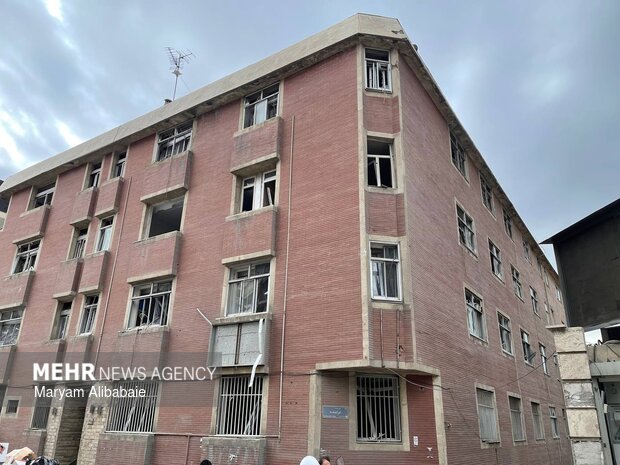
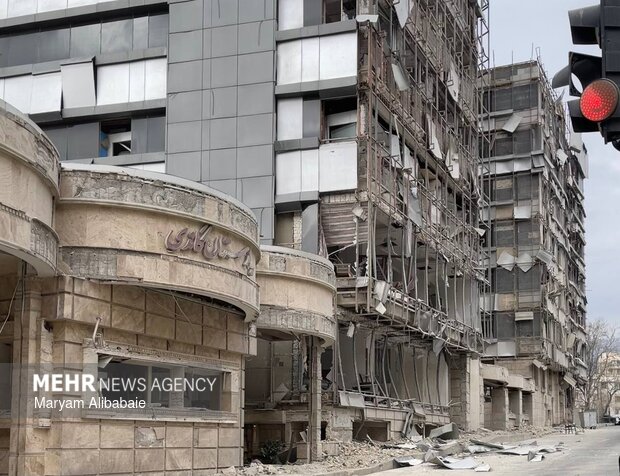
I reach Gandhi Street and my gaze wanders over the surrounding buildings. A sign on the wall of one of the buildings catches my attention, which reads "Residential Building" and worries me. The wave of the Zionist regime's attack has been so heavy and terrifying that it has damaged the windows and the skeletons of the houses. The closer I get to Gandhi Hospital, the more the destruction shows itself. I stand in front of the hospital and survey the building that bears the title Gandhi Hospital from top to bottom. At the bottom of the hospital's entrance ramp, two wheelchairs have been abandoned; an image that occupies my entire mind. These two wheelchairs are enough to understand what happened; Oh my God, they have destroyed the hospital. I stand there and constantly struggle with myself; What happened to the patients? How did the old man whose kidneys had failed manage to keep his mental state intact amidst this sudden panic? Was there a chance to calm him down, or did fear get to him before help arrived? Was the child connected to the machine, with the tubes that were holding his breath, unharmed? How was his mother able to control herself at that moment to keep everything stable?
My thoughts turn to the old woman who was hospitalized for her heart; how did her heart, which was already weak, now withstand the sound of the explosion and the shaking of the walls? How did she swallow her fear? And the companions… each and every one of the companions who, with a thousand hopes, had entrusted their patients to this private hospital so that they might have more peace; now, with this amount of terror, what has happened to their psyche and soul?
As I cross the ramp, I head towards the hospital stairs; the stairs that have retained the traces of the blast wave. With each step I climb, I involuntarily imagine a wave; a blind, terrifying pressure that has risen from floor to floor, swallowing everything in its path.
The destruction of the angiography to the IVF room
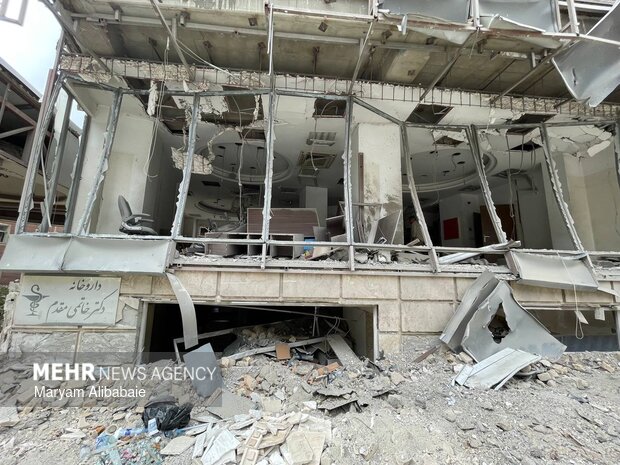
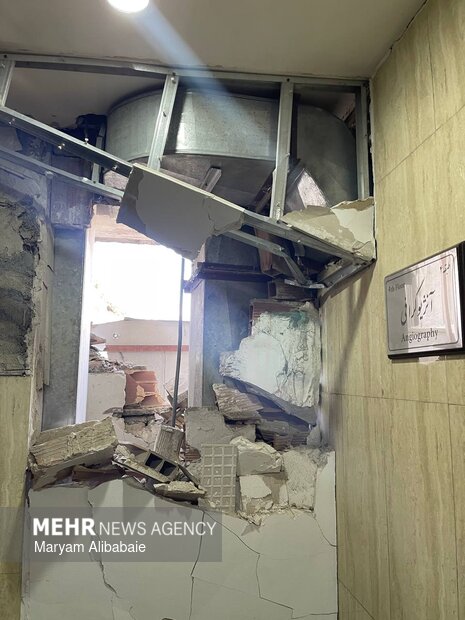
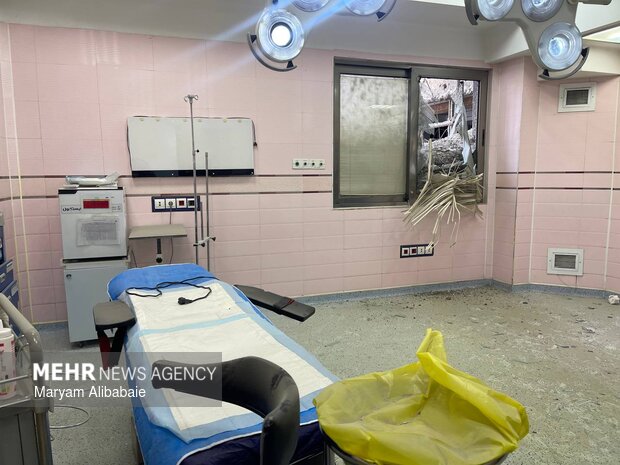
The holes created by the explosion, like open wounds, reveal the function of each floor. For example, there was a floor related to the angiography department, and on that side was the angiography lab; the very place that saved the blood flow has now stopped moving.
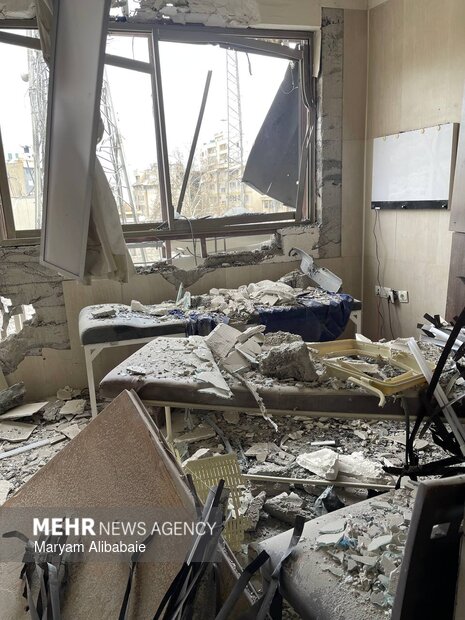
The other section, the IVF, which was the place where embryos were stored, where life in its most basic form was protected, has been completely destroyed. There is no trace of that medical order left in this hospital building; as far as the eye can see, there is only rubble and emptiness.
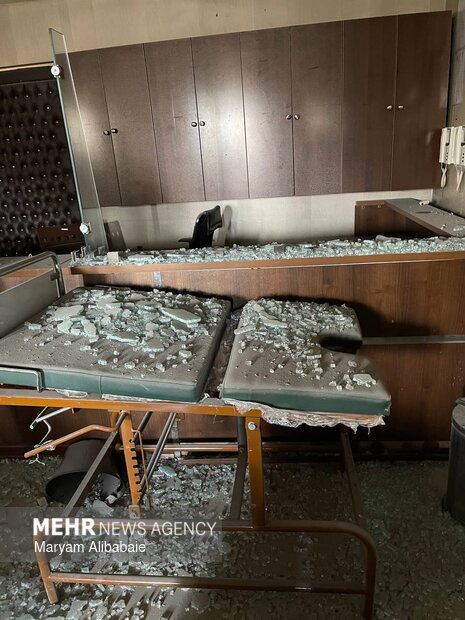
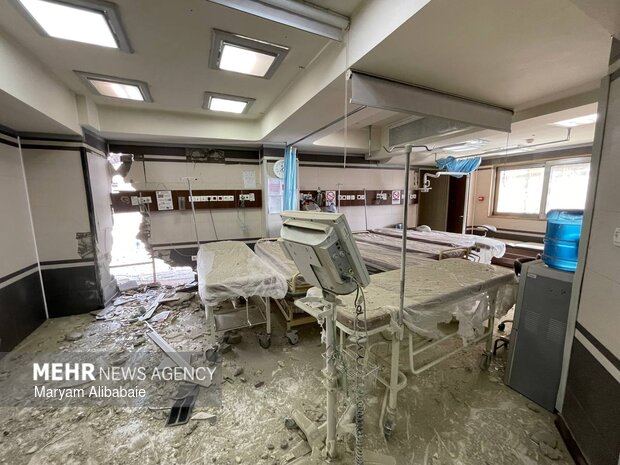
On another floor, there was a special patients' ward; three beds side by side, with oxygen cylinders, the beds of which are now either overturned or buried under the ground. Without a doubt, here, life was dependent on the machine, and now the same inanimate machines are carrying the narrative of the sudden cessation of life.
0 seconds of 0 secondsVolume 90%
A little further on, there was the cardiac operating room; where the most precise decisions had to be made to save lives. The explosion created a large hole in the heart of this room; a hole that not only cracked the concrete, but also collapsed the concept of treatment safety.
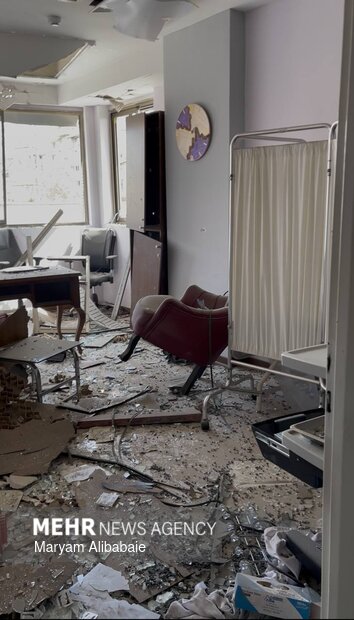
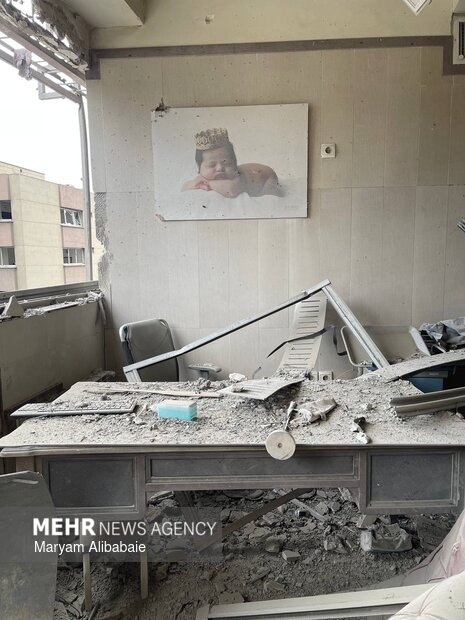
The kidney operating room was not spared from this destruction; a space that should have been a place for the repair of body organs, now itself needs renovation. Going to each floor and seeing the scenes that were a chain of care, treatment, and hope are now broken apart floor by floor. The further I go, the scope of the destruction goes beyond the operating rooms and reaches the heart of medical services. Service rooms have been destroyed one by one; The same spaces that are said to be the main parts of keeping a hospital afloat, but now nothing remains of them but destruction.
Embryo freezing tanks and their transfer
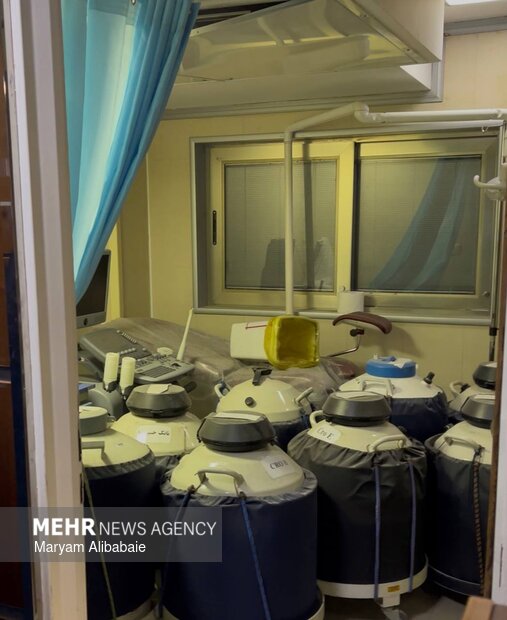
The room that was the place where embryos were stored and kept has been completely destroyed; where life, before birth, was entrusted to devices and scientific precision. Of course, the head of the hospital, Mr. Bani Asad, says in the meantime, "So that the embryos are not harmed, what is left has been transferred to freezing tanks."
In the infrastructure sector, the hospital's air conditioner has failed, and with its loss, the hospital has been practically paralyzed in the inpatient and medical services sectors. Here, the cycle that should allow for the continuation of treatment has stopped breathing.
The equipment in the heart department, the heart surgery operating room, the eye surgery departments, the scopic operating room, and the ICU have all been severely damaged. Now these devices, each of which could have determined the difference between life and death, have either failed or are buried under rubble. Of course, the hospital, in this state, is no longer able to respond to the most basic medical needs and has been completely evacuated.
Floor by floor destruction of the Gandhi Hospital clinic
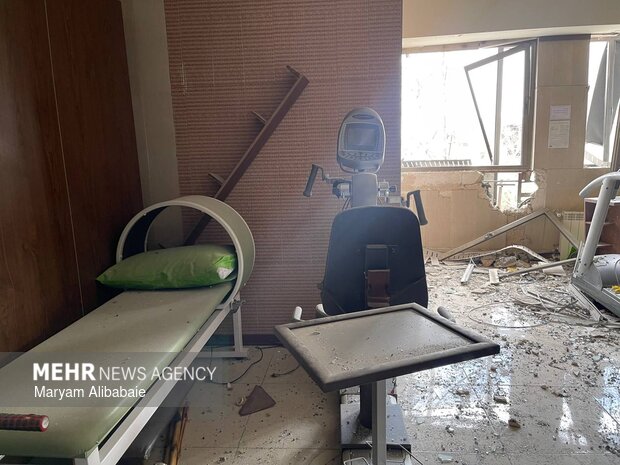
I walk towards the Gandhi Hospital clinic and clinics, which are located wall to wall of the hospital; a high-rise building, 15 floors, maybe 17 floors, each floor of which is tied to a part of the treatment. The neonatal clinic, physiotherapy, immunology, kidney, heart, gastroenterology and dozens of other specialized services were concentrated in this building; where outpatients received medical services, as the saying goes.
But here too, the blast wave has risen floor by floor. Equipment, walls and treatment spaces have been destroyed one after another; Physiotherapy equipment, specialized treatment equipment, and even the concept of “service” have disappeared in the blink of an eye, and nothing remains of that clinic; only scattered signs of what was and is no longer.
Meanwhile, in this devastation left by the infamous Zionist regime, my gaze falls on a pile of scrap metal; compressed pieces that are initially indistinguishable. I pause for a moment and try to understand what I am seeing. As I look a little closer, I realize that these are the clinic window shutters; this frame, more than anything else, makes me feel the weight of the space. I feel the devastation of the hospital and the same deep sadness, like dust, settles on everything, making it difficult to breathe.
They deliberately hit the hospital, that's how I feel
I come down the stairs and the words are spinning in my head, the wheelchair that I see at the foot of the stairs makes my heart tremble; this wheelchair would have been a sign of life if they had left it. When I leave the clinic, I see people who are desperately taking out packages of medicine. The hospital pharmacy has also been destroyed; the shelves and medical equipment are all under the rubble and those medicines that were still safe are now being moved, maybe to save other lives that still need help. I don't know. This scene seems like the last shot that hits the heart of every viewer, making everyone's mood heavier and sadder.
The destruction of Gandhi Hospital has severed the bridge between life and death. The abandoned wheelchair at the foot of the stairs, the abandoned chairs, the embryo freezing tanks, and the collapsed window shutters, each tell a sad and painful story.
0 seconds of 0 secondsVolume 90%
With every look at this ruin, it becomes clear how high the deliberate bombing of the hospital by the Zionist criminals is; because here, cruelty, nakedly and openly, targets human security, social trust, and the value of every moment of life. The brutal Zionist regime, accompanied by the criminal America, those who claimed not to target vital infrastructure and medical centers, hit the hospital and turned it into ruins; an attack that targeted not only a medical center, hospital, operating room, and physiotherapy, but also the lives and peace of hospitalized patients, leaving nearly 20 of them stranded in the midst of the crisis. Know that I am saying this seriously, Gandhi Hospital is now a symbol of a clear violation of humanity.
Residential homes victim of Trump's war
When I leave the hospital, I walk down the street, my eyes fall on the residential buildings next to the hospital; houses that are damaged and the signs of destruction are obvious. I see a man patiently packing his household belongings and putting them in the trunk of his car, gathering everything he can to take with him to leave his home and his home.
But what catches my attention most of all is the thick book of Shahnameh that he has put in a box and a few other books of his that seem to have had value and meaning to him, a few of which he has carefully placed in the trunk. I think to myself for a moment; our lives, even in the midst of war, are defined by these simple and human details. When I ask him, "Were you at home when the attack happened?" he says, "Yes... the windows are broken, we can't stay here anymore; we packed up and left." With these departures, I understand how much this war has shattered people's daily lives and their safest places.
My thoughts turn to the old woman who was hospitalized for her heart; how did her heart, which was already weak, now withstand the sound of the explosion and the shaking of the walls? How did she swallow her fear? And the companions… each and every one of the companions who, with a thousand hopes, had entrusted their patients to this private hospital so that they might have more peace; now, with this amount of terror, what has happened to their psyche and soul?
As I cross the ramp, I head towards the hospital stairs; the stairs that have retained the traces of the blast wave. With each step I climb, I involuntarily imagine a wave; a blind, terrifying pressure that has risen from floor to floor, swallowing everything in its path.
The destruction of the angiography to the IVF room
The holes created by the explosion, like open wounds, reveal the function of each floor. For example, there was a floor related to the angiography department, and on that side was the angiography lab; the very place that saved the blood flow has now stopped moving.
The other section, the IVF, which was the place where embryos were stored, where life in its most basic form was protected, has been completely destroyed. There is no trace of that medical order left in this hospital building; as far as the eye can see, there is only rubble and emptiness.
On another floor, there was a special patients' ward; three beds side by side, with oxygen cylinders, the beds of which are now either overturned or buried under the ground. Without a doubt, here, life was dependent on the machine, and now the same inanimate machines are carrying the narrative of the sudden cessation of life.
0 seconds of 0 secondsVolume 90%
A little further on, there was the cardiac operating room; where the most precise decisions had to be made to save lives. The explosion created a large hole in the heart of this room; a hole that not only cracked the concrete, but also collapsed the concept of treatment safety.
The kidney operating room was not spared from this destruction; a space that should have been a place for the repair of body organs, now itself needs renovation. Going to each floor and seeing the scenes that were a chain of care, treatment, and hope are now broken apart floor by floor. The further I go, the scope of the destruction goes beyond the operating rooms and reaches the heart of medical services. Service rooms have been destroyed one by one; The same spaces that are said to be the main parts of keeping a hospital afloat, but now nothing remains of them but destruction.
Embryo freezing tanks and their transfer
The room that was the place where embryos were stored and kept has been completely destroyed; where life, before birth, was entrusted to devices and scientific precision. Of course, the head of the hospital, Mr. Bani Asad, says in the meantime, "So that the embryos are not harmed, what is left has been transferred to freezing tanks."
In the infrastructure sector, the hospital's air conditioner has failed, and with its loss, the hospital has been practically paralyzed in the inpatient and medical services sectors. Here, the cycle that should allow for the continuation of treatment has stopped breathing.
The equipment in the heart department, the heart surgery operating room, the eye surgery departments, the scopic operating room, and the ICU have all been severely damaged. Now these devices, each of which could have determined the difference between life and death, have either failed or are buried under rubble. Of course, the hospital, in this state, is no longer able to respond to the most basic medical needs and has been completely evacuated.
Floor by floor destruction of the Gandhi Hospital clinic
I walk towards the Gandhi Hospital clinic and clinics, which are located wall to wall of the hospital; a high-rise building, 15 floors, maybe 17 floors, each floor of which is tied to a part of the treatment. The neonatal clinic, physiotherapy, immunology, kidney, heart, gastroenterology and dozens of other specialized services were concentrated in this building; where outpatients received medical services, as the saying goes.
But here too, the blast wave has risen floor by floor. Equipment, walls and treatment spaces have been destroyed one after another; Physiotherapy equipment, specialized treatment equipment, and even the concept of “service” have disappeared in the blink of an eye, and nothing remains of that clinic; only scattered signs of what was and is no longer.
Meanwhile, in this devastation left by the infamous Zionist regime, my gaze falls on a pile of scrap metal; compressed pieces that are initially indistinguishable. I pause for a moment and try to understand what I am seeing. As I look a little closer, I realize that these are the clinic window shutters; this frame, more than anything else, makes me feel the weight of the space. I feel the devastation of the hospital and the same deep sadness, like dust, settles on everything, making it difficult to breathe.
They deliberately hit the hospital, that's how I feel
I come down the stairs and the words are spinning in my head, the wheelchair that I see at the foot of the stairs makes my heart tremble; this wheelchair would have been a sign of life if they had left it. When I leave the clinic, I see people who are desperately taking out packages of medicine. The hospital pharmacy has also been destroyed; the shelves and medical equipment are all under the rubble and those medicines that were still safe are now being moved, maybe to save other lives that still need help. I don't know. This scene seems like the last shot that hits the heart of every viewer, making everyone's mood heavier and sadder.
The destruction of Gandhi Hospital has severed the bridge between life and death. The abandoned wheelchair at the foot of the stairs, the abandoned chairs, the embryo freezing tanks, and the collapsed window shutters, each tell a sad and painful story.
0 seconds of 0 secondsVolume 90%
With every look at this ruin, it becomes clear how high the deliberate bombing of the hospital by the Zionist criminals is; because here, cruelty, nakedly and openly, targets human security, social trust, and the value of every moment of life. The brutal Zionist regime, accompanied by the criminal America, those who claimed not to target vital infrastructure and medical centers, hit the hospital and turned it into ruins; an attack that targeted not only a medical center, hospital, operating room, and physiotherapy, but also the lives and peace of hospitalized patients, leaving nearly 20 of them stranded in the midst of the crisis. Know that I am saying this seriously, Gandhi Hospital is now a symbol of a clear violation of humanity.
Residential homes victim of Trump's war
When I leave the hospital, I walk down the street, my eyes fall on the residential buildings next to the hospital; houses that are damaged and the signs of destruction are obvious. I see a man patiently packing his household belongings and putting them in the trunk of his car, gathering everything he can to take with him to leave his home and his home.
But what catches my attention most of all is the thick book of Shahnameh that he has put in a box and a few other books of his that seem to have had value and meaning to him, a few of which he has carefully placed in the trunk. I think to myself for a moment; our lives, even in the midst of war, are defined by these simple and human details. When I ask him, "Were you at home when the attack happened?" he says, "Yes... the windows are broken, we can't stay here anymore; we packed up and left." With these departures, I understand how much this war has shattered people's daily lives and their safest places.
Includes Video:
Yes
Content:
به مسیر خیابان گاندی میرسم و نگاهم روی ساختمانهای اطراف میچرخد، تابلویی که روی دیوار یکی از ساختمانهاست توجهام را جلب میکند که نوشته «ساختمان مسکونی» نگرانم میکند؛ موج حمله رژیم صهیونیستی آنقدر سنگین و مهیب بوده که به پنجرهها و اسکلت خانهها هم آسیب رسانده، هرچه به بیمارستان گاندی نزدیکتر میشوم، حجم تخریب بیشتر خودش را نشان میدهد. جلوی بیمارستان میایستم و سر تا پای ساختمانی که عنوان بیمارستان گاندی را یدک میکشد را برانداز میکنم. پایین رمپ ورودی بیمارستان، دو صندلی ویلچر رها شدهاند؛ تصویری که تمام ذهنم را درگیر میکند. همین دو ویلچر کافی است تا بفهمم چه اتفاقی افتاده؛ خدایا، بیمارستان را نابود کردهاند. ایستادهام و مدام با خودم کلنجار میروم؛ بیماران چه شدند؟ آن پیرمردی که کلیهاش از کار افتاده بود، چطور توانست در میان این هراس ناگهانی، وضعیت روانش را سر پا نگه دارد؟ آیا فرصتی برای آرامکردنش بود یا ترس، زودتر از امداد به او رسید؟ آن کودک وصل به دستگاه، با لولههایی که نفسش به آنها بند بود، آیا آسیبی ندید؟ مادرش چطور توانست در آن لحظه، خودش را کنترل کند تا همه چیز را استیبل نگه دارد.
فکرم میرود سمت پیرزنی که برای قلبش بستری بود؛ قلبی که از پیش ضعیف بود، حالا در برابر صدای انفجار و لرزش دیوارها چطور تاب آورد؟ ترس را چطور قورت داد؟ و همراهان… تکتک همراهانی که با هزار امید، بیمارانشان را به این بیمارستان خصوصی سپرده بودند تا شاید آرامش بیشتری داشته باشند؛ حالا با این حجم از وحشت، چه بلایی بر سر روان و روحشان آمده است.
از رمپ که عبور میکنم، به سمت پلههای بیمارستان میروم؛ پلههایی که رد عبور موج انفجار را در خود نگه داشتهاند. با هر پلهای که بالا میروم، ناخواسته موج را تصور میکنم؛ فشاری کور و مهیب که طبقهبهطبقه بالا رفته و هرچه در مسیرش بوده را بلعیده است.
ویران شدن آنژیوگرافی تا اتاقک «آی وی اف»
حفرههایی که بر اثر انفجار ایجاد شدهاند، مثل زخمهایی باز، کارکرد هر طبقه را لو میدهند. مثلا طبقهای مرتبط با بخش آنژیوگرافی بوده، آنطرف هم کتلب آنژیوگرافی؛ همان جایی که نجاتدهنده جریان خون بوده حالا خود از حرکت ایستاده.
بخش دیگر هم آیویاف که محل نگهداری جنینها بوده، جایی که زندگی در ابتداییترین شکلش محافظت میشده، بهکلی نابود شده است. در این ساختمان بیمارستان دیگر هیچ نشانی از آن نظم پزشکی نمانده؛ تا چشم کار میکند فقط آوار و خلأ است.
در طبقهای دیگر، بخش بیماران خاص قرار داشته؛ سه تخت کنار هم، با کپسولهای اکسیژن که حالا تختها یا واژگوناند یا زیر خاک مدفون شدهاند. بدون شک اینجا نفس، وابسته به دستگاه بوده و حالا همان دستگاههای بیجان، روایت قطع یکباره حیات را به دوش میکشند.
0 seconds of 0 secondsVolume 90%
کمی آنسوتر، اتاق عمل قلب قرار داشته است؛ جایی که باید دقیقترین تصمیمها برای نجات جان گرفته میشد. انفجار، در دل این اتاق حفرهای بزرگ ایجاد کرده؛ حفرهای که فقط بتن را نشکافته، بلکه مفهوم امنیت درمان را هم فرو ریخته.
اتاق عمل جراحی کلیه هم از این تخریب در امان نمانده؛ فضایی که باید محل ترمیم اعضای بدن باشد، حالا خودش نیازمند مرمت شده. رفتن به هر طبقه و دیدن صحنهها که زنجیرهای از مراقبت، درمان و امید بودند حالا طبقهبهطبقه از هم گسسته است. هرچه جلوتر میروم، دامنه تخریب از اتاقهای عمل فراتر میرود و به قلب خدمات درمانی میرسد. اتاقهای خدماتی یکییکی از بین رفتهاند؛ همان فضاهایی که میگویند بخشهای اصلی سرپا نگهداشتن یک بیمارستاناند، اما حالا چیزی جز ویرانی از آنها باقی نمانده.
تانکهای فریزینگ جنینها و انتقالشان
اتاقی که محل ذخیره و نگهداری جنینها بوده، بهطور کامل تخریب شده؛ همانجا که زندگی، پیش از تولد، به دستگاهها و دقت علمی سپرده میشده. البته رییس بیمارستان آقای بنی اسد در این میان میگوید «برای آنکه جنینها آسیب نبینند، آنچه باقی مانده، به تانکهای فریزینگ منتقل شده است»
در بخش زیرساخت، هواساز خدمات بیمارستان از کار افتاده و با از بین رفتن آن، بیمارستان در بخش خدمات بستری و خدمات درمانی عملاً فلج شده است. اینجا دیگر چرخهای که باید امکان ادامه درمان را فراهم کند، از نفس افتاده است.
تجهیزات بخش قلب، اتاق عمل جراحی قلب، بخشهای مربوط به جراحی چشم، اتاق عمل اسکوپی و آیسییو همگی بهشدت آسیب دیدهاند. حالا این دستگاههایی که هرکدام بهتنهایی میتوانستند فاصله مرگ و زندگی را تعیین کنند، یا از کار افتادهاند یا زیر آوار ماندهاند. البته بیمارستان، در این وضعیت، دیگر توان پاسخگویی به ابتداییترین نیازهای درمانی را ندارد و کاملا تخلیه شده است.
طبقه به طبقه نابودی کلینیک بیمارستان گاندی
به سمت درمانگاه و کلینیکهای بیمارستان گاندی که دیوار به دیوار بیمارستان قرار دارد میروم؛ ساختمانی بلندمرتبه، ۱۵ طبقه، شاید هم ۱۷ طبقه، که هر طبقهاش به بخشی از درمان گره خورده. کلینیک نوزادان، فیزیوتراپی، ایمونولوژی، کلیه، قلب، گوارش و دهها خدمات تخصصی دیگر، در این ساختمان متمرکز بود؛ جایی که بیماران سرپایی به قول معروف خدمات درمانی دریافت میکردند.
اما اینجا هم موج انفجار، طبقهبهطبقه بالا رفته است. تجهیزات، دیوارها و فضاهای درمانی، یکی پس از دیگری نابود شدهاند؛ دستگاههای فیزیوتراپی، وسایل تخصصی درمان و حتی مفهوم «خدمت» در چشمبههمزدنی از میان رفته و چیزی از آن درمانگاه باقی نمانده؛ فقط نشانههایی پراکنده از آنچه بوده و دیگر نیست.
در این میان در این ویرانگی که رژیم منحوس صهیونیستی بر جای گذاشته، نگاهم به تودهای از آهنپارهها گیر میکند؛ قطعاتی درهمفشرده که در ابتدا قابل تشخیص نیستند. لحظهای مکث میکنم و سعی میکنم بفهمم چه چیزی را میبینم. کمی که دقیقتر میشوم، میفهمم اینها کرکرههای پنجره کلینیکهاست؛ این قاب، بیش از هر چیز، سنگینی فضا را به دلم مینشاند. ویرانی بیمارستان را حس میکنم و همان غمی عمیق، مثل گرد و غبار، روی همهچیز نشسته و نفس کشیدن را سخت میکند.
به عمد بیمارستان را زدند، اینگونه حس میکنم
از پلهها پایین میآیم و کلمات در سرم میچرخند، ویلچری که در پاگرد پلهها به چشمم میآید قلبم را میلرزاند؛ لابد این ویلچر نشانهای از زندگی میشد اگر میگذاشتند. وقتی از کلینیک خارج میشوم، چشمم به افرادی میافتد که بستههای دارو را با استیصال خارج میکنند. داروخانه بیمارستان هم نیز نابود شده؛ قفسهها و تجهیزات دارویی، همه زیر آوار ماندهاند و آن داروهایی که هنوز در امان ماندند، اکنون جابهجا میشوند، شاید برای نجات جانهایی دیگر که هنوز به کمک نیاز دارند. نمیدانم. این صحنه انگار تیر آخری است که بر دل هر بینندهای فرود میآید و حال همه را سنگینتر و اندوهگینتر میکند.
ویرانی بیمارستان گاندی پل ارتباطی میان زندگی و مرگ را قطع کرده آن ویلچر رها شده در پاگرد پلهها، صندلیهای رها شده، تانکهای فریزینگ جنینها و کرکرههای فرو ریخته پنجرهها، هر یک حکایتی غمبار و دردناک را بازگو میکنند.
0 seconds of 0 secondsVolume 90%
با هر نگاه به این ویرانه، روشن میشود که بمباران از روی عمد جنایتکاران صهیونیستی به بیمارستان چقدر بالاست؛ چون اینجا بیرحمی، به شکلی عریان و آشکارا امنیت انسانی، اعتماد اجتماعی و ارزش هر لحظه زندگی را هدف گرفته. رژیم سفاک صهیونیستی با همراهی امریکای جنایتکار، همانهایی که مدعی بودند زیرساختهای حیاتی و مراکز درمانی را هدف قرار نمیدهند، بیمارستان را زدند و آن را به ویرانه تبدیل کردند؛ حملهای که نهتنها یک مرکز درمانی و بیمارستان و اتاق عمل و فیزیوتراپی بلکه جان و آرامش بیماران بستری را نشانه رفته و نزدیک به ۲۰ نفر از آنان را در میانه بحران سرگردان کرده است. این را بدانید که به جدیت میگویم بیمارستان گاندی اکنون نمادی از نقض آشکار انسانیت است.
خانههای مسکونی قربانی جنگ ترامپ
وقتی از بیمارستان بیرون میآیم، خیابان را پایین میروم، چشمم به ساختمانهای مسکونی کنار بیمارستان میافتد؛ خانههایی که آسیب دیدهاند و آثار خرابی مشهود است. مردی را میبینم که با حوصله، اسباب و وسایل خانهاش را جمع میکند و در صندوق عقب ماشینش میگذارد، هر چیزی که میتواند، با خود ببرد را جمع کرده تا خانه و کاشانهاش را ترک کند.
اما چیزی که بیشتر از همه توجهام را جلب میکند، کتاب قطور شاهنامه است که در جعبهای گذاشته و چند کتاب دیگرش که گویا برای او ارزش و معنا داشتهاند و چند تا از آنها را با دقت در صندوق عقب گذاشته. لحظهای با خودم فکر میکنم؛ زندگی ما آدمها، حتی در دل جنگ، با همین جزئیات ساده و انسانی تعریف میشود. وقتی از او میپرسم «لحظه حمله در خانه بودید؟»، میگوید: «اره… شیشهها شکستهاند، اینجا دیگه نمیتونیم بمونیم؛ وسایلمون رو جمع کردیم تا بریم.» با این رفتنها میفهمم که تا چه اندازه این جنگ زندگی روزمره و امنترین مکانهای مردم را هم در هم کوبیده است.
فکرم میرود سمت پیرزنی که برای قلبش بستری بود؛ قلبی که از پیش ضعیف بود، حالا در برابر صدای انفجار و لرزش دیوارها چطور تاب آورد؟ ترس را چطور قورت داد؟ و همراهان… تکتک همراهانی که با هزار امید، بیمارانشان را به این بیمارستان خصوصی سپرده بودند تا شاید آرامش بیشتری داشته باشند؛ حالا با این حجم از وحشت، چه بلایی بر سر روان و روحشان آمده است.
از رمپ که عبور میکنم، به سمت پلههای بیمارستان میروم؛ پلههایی که رد عبور موج انفجار را در خود نگه داشتهاند. با هر پلهای که بالا میروم، ناخواسته موج را تصور میکنم؛ فشاری کور و مهیب که طبقهبهطبقه بالا رفته و هرچه در مسیرش بوده را بلعیده است.
ویران شدن آنژیوگرافی تا اتاقک «آی وی اف»
حفرههایی که بر اثر انفجار ایجاد شدهاند، مثل زخمهایی باز، کارکرد هر طبقه را لو میدهند. مثلا طبقهای مرتبط با بخش آنژیوگرافی بوده، آنطرف هم کتلب آنژیوگرافی؛ همان جایی که نجاتدهنده جریان خون بوده حالا خود از حرکت ایستاده.
بخش دیگر هم آیویاف که محل نگهداری جنینها بوده، جایی که زندگی در ابتداییترین شکلش محافظت میشده، بهکلی نابود شده است. در این ساختمان بیمارستان دیگر هیچ نشانی از آن نظم پزشکی نمانده؛ تا چشم کار میکند فقط آوار و خلأ است.
در طبقهای دیگر، بخش بیماران خاص قرار داشته؛ سه تخت کنار هم، با کپسولهای اکسیژن که حالا تختها یا واژگوناند یا زیر خاک مدفون شدهاند. بدون شک اینجا نفس، وابسته به دستگاه بوده و حالا همان دستگاههای بیجان، روایت قطع یکباره حیات را به دوش میکشند.
0 seconds of 0 secondsVolume 90%
کمی آنسوتر، اتاق عمل قلب قرار داشته است؛ جایی که باید دقیقترین تصمیمها برای نجات جان گرفته میشد. انفجار، در دل این اتاق حفرهای بزرگ ایجاد کرده؛ حفرهای که فقط بتن را نشکافته، بلکه مفهوم امنیت درمان را هم فرو ریخته.
اتاق عمل جراحی کلیه هم از این تخریب در امان نمانده؛ فضایی که باید محل ترمیم اعضای بدن باشد، حالا خودش نیازمند مرمت شده. رفتن به هر طبقه و دیدن صحنهها که زنجیرهای از مراقبت، درمان و امید بودند حالا طبقهبهطبقه از هم گسسته است. هرچه جلوتر میروم، دامنه تخریب از اتاقهای عمل فراتر میرود و به قلب خدمات درمانی میرسد. اتاقهای خدماتی یکییکی از بین رفتهاند؛ همان فضاهایی که میگویند بخشهای اصلی سرپا نگهداشتن یک بیمارستاناند، اما حالا چیزی جز ویرانی از آنها باقی نمانده.
تانکهای فریزینگ جنینها و انتقالشان
اتاقی که محل ذخیره و نگهداری جنینها بوده، بهطور کامل تخریب شده؛ همانجا که زندگی، پیش از تولد، به دستگاهها و دقت علمی سپرده میشده. البته رییس بیمارستان آقای بنی اسد در این میان میگوید «برای آنکه جنینها آسیب نبینند، آنچه باقی مانده، به تانکهای فریزینگ منتقل شده است»
در بخش زیرساخت، هواساز خدمات بیمارستان از کار افتاده و با از بین رفتن آن، بیمارستان در بخش خدمات بستری و خدمات درمانی عملاً فلج شده است. اینجا دیگر چرخهای که باید امکان ادامه درمان را فراهم کند، از نفس افتاده است.
تجهیزات بخش قلب، اتاق عمل جراحی قلب، بخشهای مربوط به جراحی چشم، اتاق عمل اسکوپی و آیسییو همگی بهشدت آسیب دیدهاند. حالا این دستگاههایی که هرکدام بهتنهایی میتوانستند فاصله مرگ و زندگی را تعیین کنند، یا از کار افتادهاند یا زیر آوار ماندهاند. البته بیمارستان، در این وضعیت، دیگر توان پاسخگویی به ابتداییترین نیازهای درمانی را ندارد و کاملا تخلیه شده است.
طبقه به طبقه نابودی کلینیک بیمارستان گاندی
به سمت درمانگاه و کلینیکهای بیمارستان گاندی که دیوار به دیوار بیمارستان قرار دارد میروم؛ ساختمانی بلندمرتبه، ۱۵ طبقه، شاید هم ۱۷ طبقه، که هر طبقهاش به بخشی از درمان گره خورده. کلینیک نوزادان، فیزیوتراپی، ایمونولوژی، کلیه، قلب، گوارش و دهها خدمات تخصصی دیگر، در این ساختمان متمرکز بود؛ جایی که بیماران سرپایی به قول معروف خدمات درمانی دریافت میکردند.
اما اینجا هم موج انفجار، طبقهبهطبقه بالا رفته است. تجهیزات، دیوارها و فضاهای درمانی، یکی پس از دیگری نابود شدهاند؛ دستگاههای فیزیوتراپی، وسایل تخصصی درمان و حتی مفهوم «خدمت» در چشمبههمزدنی از میان رفته و چیزی از آن درمانگاه باقی نمانده؛ فقط نشانههایی پراکنده از آنچه بوده و دیگر نیست.
در این میان در این ویرانگی که رژیم منحوس صهیونیستی بر جای گذاشته، نگاهم به تودهای از آهنپارهها گیر میکند؛ قطعاتی درهمفشرده که در ابتدا قابل تشخیص نیستند. لحظهای مکث میکنم و سعی میکنم بفهمم چه چیزی را میبینم. کمی که دقیقتر میشوم، میفهمم اینها کرکرههای پنجره کلینیکهاست؛ این قاب، بیش از هر چیز، سنگینی فضا را به دلم مینشاند. ویرانی بیمارستان را حس میکنم و همان غمی عمیق، مثل گرد و غبار، روی همهچیز نشسته و نفس کشیدن را سخت میکند.
به عمد بیمارستان را زدند، اینگونه حس میکنم
از پلهها پایین میآیم و کلمات در سرم میچرخند، ویلچری که در پاگرد پلهها به چشمم میآید قلبم را میلرزاند؛ لابد این ویلچر نشانهای از زندگی میشد اگر میگذاشتند. وقتی از کلینیک خارج میشوم، چشمم به افرادی میافتد که بستههای دارو را با استیصال خارج میکنند. داروخانه بیمارستان هم نیز نابود شده؛ قفسهها و تجهیزات دارویی، همه زیر آوار ماندهاند و آن داروهایی که هنوز در امان ماندند، اکنون جابهجا میشوند، شاید برای نجات جانهایی دیگر که هنوز به کمک نیاز دارند. نمیدانم. این صحنه انگار تیر آخری است که بر دل هر بینندهای فرود میآید و حال همه را سنگینتر و اندوهگینتر میکند.
ویرانی بیمارستان گاندی پل ارتباطی میان زندگی و مرگ را قطع کرده آن ویلچر رها شده در پاگرد پلهها، صندلیهای رها شده، تانکهای فریزینگ جنینها و کرکرههای فرو ریخته پنجرهها، هر یک حکایتی غمبار و دردناک را بازگو میکنند.
0 seconds of 0 secondsVolume 90%
با هر نگاه به این ویرانه، روشن میشود که بمباران از روی عمد جنایتکاران صهیونیستی به بیمارستان چقدر بالاست؛ چون اینجا بیرحمی، به شکلی عریان و آشکارا امنیت انسانی، اعتماد اجتماعی و ارزش هر لحظه زندگی را هدف گرفته. رژیم سفاک صهیونیستی با همراهی امریکای جنایتکار، همانهایی که مدعی بودند زیرساختهای حیاتی و مراکز درمانی را هدف قرار نمیدهند، بیمارستان را زدند و آن را به ویرانه تبدیل کردند؛ حملهای که نهتنها یک مرکز درمانی و بیمارستان و اتاق عمل و فیزیوتراپی بلکه جان و آرامش بیماران بستری را نشانه رفته و نزدیک به ۲۰ نفر از آنان را در میانه بحران سرگردان کرده است. این را بدانید که به جدیت میگویم بیمارستان گاندی اکنون نمادی از نقض آشکار انسانیت است.
خانههای مسکونی قربانی جنگ ترامپ
وقتی از بیمارستان بیرون میآیم، خیابان را پایین میروم، چشمم به ساختمانهای مسکونی کنار بیمارستان میافتد؛ خانههایی که آسیب دیدهاند و آثار خرابی مشهود است. مردی را میبینم که با حوصله، اسباب و وسایل خانهاش را جمع میکند و در صندوق عقب ماشینش میگذارد، هر چیزی که میتواند، با خود ببرد را جمع کرده تا خانه و کاشانهاش را ترک کند.
اما چیزی که بیشتر از همه توجهام را جلب میکند، کتاب قطور شاهنامه است که در جعبهای گذاشته و چند کتاب دیگرش که گویا برای او ارزش و معنا داشتهاند و چند تا از آنها را با دقت در صندوق عقب گذاشته. لحظهای با خودم فکر میکنم؛ زندگی ما آدمها، حتی در دل جنگ، با همین جزئیات ساده و انسانی تعریف میشود. وقتی از او میپرسم «لحظه حمله در خانه بودید؟»، میگوید: «اره… شیشهها شکستهاند، اینجا دیگه نمیتونیم بمونیم؛ وسایلمون رو جمع کردیم تا بریم.» با این رفتنها میفهمم که تا چه اندازه این جنگ زندگی روزمره و امنترین مکانهای مردم را هم در هم کوبیده است.
Images:
Additional Details
Captured Date
2026-04-27 16:04:54
Captured Post ID