Source
Archive URL: https://airwars.org/source/www-theguardian-com-tess-mcclure-and-deepa-parent-2026-03-03-124503/
Captured Post Date:
2026-03-03 12:45
Author:
Tess McClure and Deepa Parent
Includes Video:
Yes
Content:
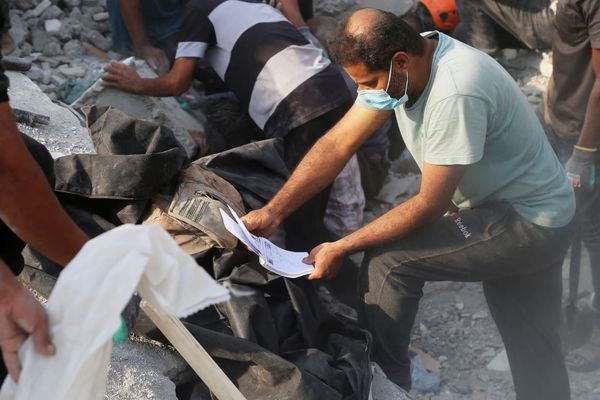
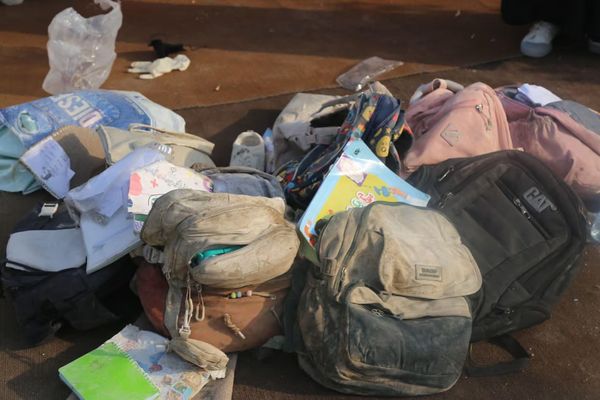
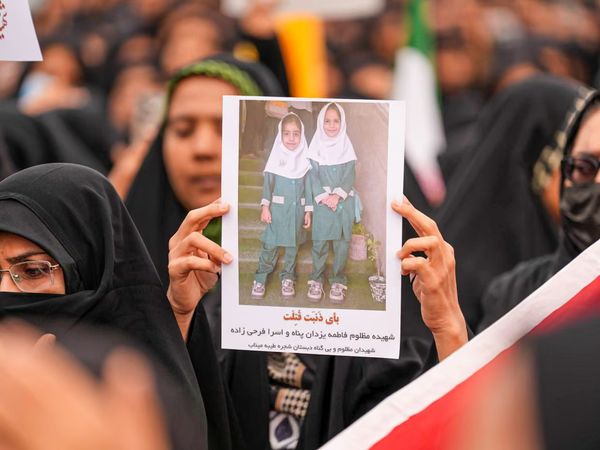
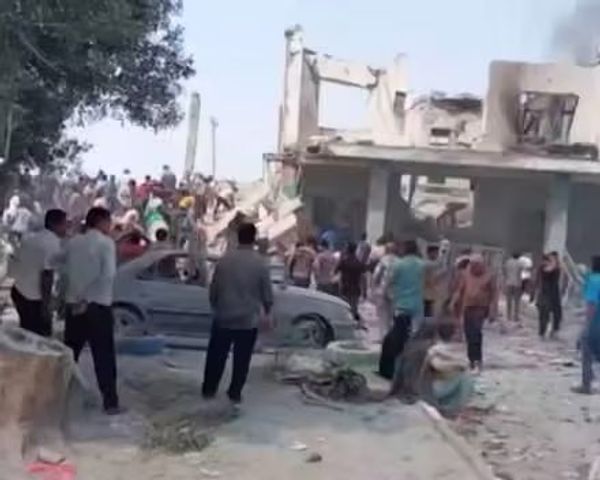
The missile hit during the school’s morning session. In Iran, the school week runs from Saturday to Thursday, so when US and Israeli bombs began falling at around 10am on Saturday, classes were under way. At a point between 10am and 10.45am, a missile directly hit Shajareh Tayyebeh school, in Minab, southern Iran, demolishing its concrete building and killing dozens of seven to 12-year-old girls. Photographs and verified videos from the site, which the Guardian has not published due to their graphic nature, show children’s bodies lying partly buried under the debris. In one video, a very small child’s severed arm is pulled from the rubble. Colourful backpacks covered with blood and concrete dust sit among the ruins. One girl wears a green dress with gingham patches on her pockets and the collar, her form partly obscured by a black body bag. Screams can be heard in the background.
One distraught man stands in the ruins of the school, waving textbooks and worksheets as rescuers dig by hand through the debris. “These are the schoolbooks of the children who are under these ruins, under this rubble here,” he shouts. “
According to Iranian state media, up to 168 people were killed by the strike and 95 injured – figures that the Guardian has not been able to verify. With independent reporting severely restricted in Iran, and much of the country still experiencing internet blackouts, the Guardian has used verified video footage, geolocated images, satellite imagery and interviews to piece together a more detailed account of the Minab girls’ school bombing – the worst mass casualty event of the US-Israeli-led attack so far – which has been described by Unesco as a “grave violation” of international law.
The Guardian cross-referenced verified videos from the site with satellite imagery to confirm the location of the primary school. Shajareh Tayyebeh school was adjacent to a cluster of buildings that form the local Islamic Revolutionary Guard Corps (IRGC) barracks and support buildings. The complex next to the school includes a medical clinic and pharmacy, which has signage bearing the IRGC logo and reads “Islamic Revolutionary Guard Corps Navy Medical Command”. Also in the wider complex is what appears to be a gymnasium or concert space, which is marked “Seyyed al-Shohada Cultural Complex of the Revolutionary Guard”. The school’s location has also been verified by Osint (open source intelligence) researchers, the Iranian student network, and independent Farsi factchecking service Factnameh.
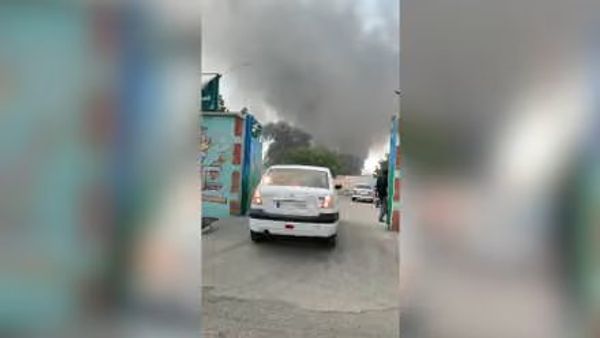
There is no indication, however, that the school is in any sense a military-use building: its classroom building and playground is walled off from the rest of the IRGC compound, and the colourful murals on its walls are visible in some satellite imagery. Nor were its classes exclusively reserved for children of military families, Shiva Amelirad, a Canada-based representative of the Coordinating Council of Iranian Teachers’ Trade Associations, a network of teachers’ unions in Iran, told the Guardian. The school also enrolled many children from the local community, particularly those who could not afford private school fees. “Because its tuition was lower than many other private schools, and due to the high overcrowding in public schools, ordinary families had been compelled to enrol their children there,” Amelirad said. Early videos from the scene of the school bombing also show thick smoke rising from at least one nearby building.
The school’s location, the nearby smoke, and the timing of the bombing – in the first round of strikes by US and Israeli forces – all give credence to the assertion that the school was hit as part of a series of strikes by the US and Israel on or around the IRGC complex. The US military said it was “looking into” the bombing.
Capt Tim Hawkins, the spokesperson for US Central Command, said the US was “aware of reports concerning civilian harm resulting from ongoing military operations. We take these reports seriously and are looking into them.” US secretary of state, Marco Rubio, said the Department of War “would be investigating that if that was our strike,” and that the US “would not deliberately target a school”. Iranian authorities began issuing orders for schools to close shortly after the US-Israeli attack began at 9.40am. It is not clear whether the bomb hit the school before those warnings arrived in Minab, or just after them, with parents not having time to act. Amelirad, of the Teachers’ Council, said they had been told that “the time between the announcement of the school’s closure and the moment of the explosion was very short” so “families had not yet arrived to pick up their children”. It is not yet clear how many of the total dead were teachers or school staff, although Isna (the state-affiliated Iranian Student news agency) has reported that the school’s headteacher was among the dead. According to human rights organisation Hengaw, the school’s morning session typically included 170 children. A local official told AP that the casualties from the Saturday strike included students, parents and school staff.
Amelirad told the Guardian that the number of dead overwhelmed the local morgue, saying: “Due to the limited capacity of the hospital morgue, refrigerated vehicles have reportedly been used to store the bodies of the victims.”
“Among the victims were children from [many] different families,” Amelirad said. “In some cases, more than one child from the same family lost their lives.”
Images: 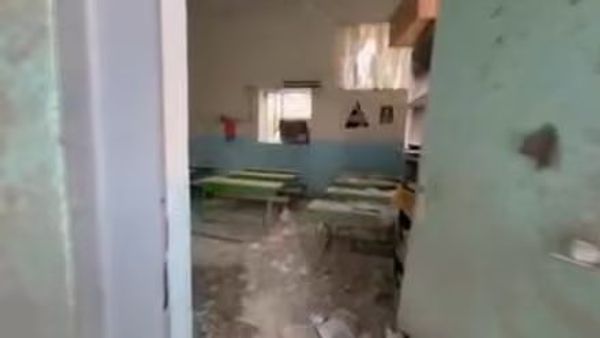
Additional Details
Captured Date
2026-05-04T14:20:06.000Z
Language
English
Incident