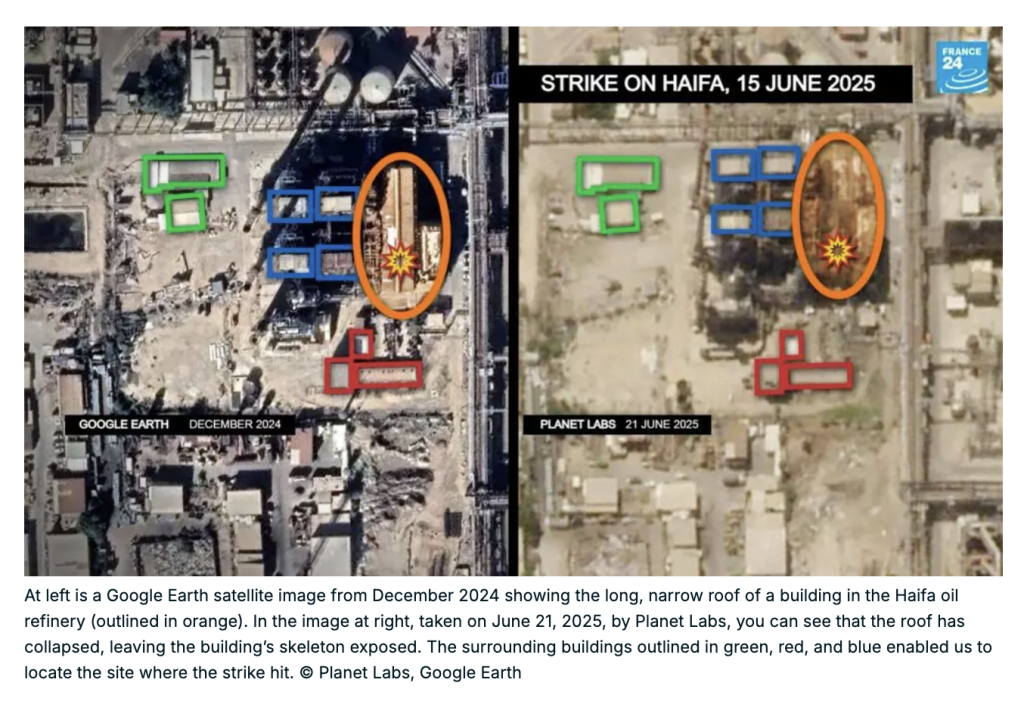
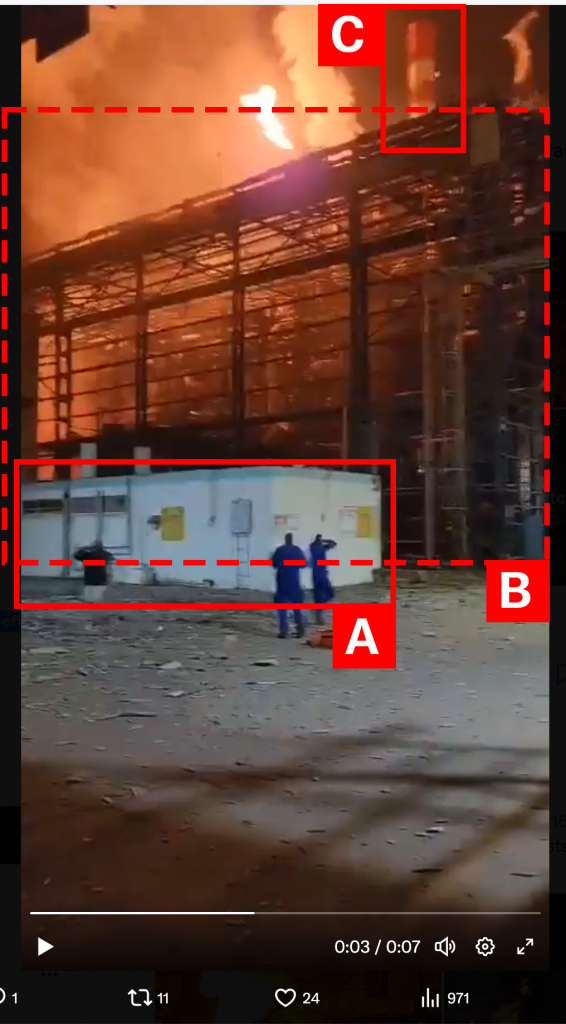
Three Bazan oil refinery employees were reportedly killed, and a number of employees were injured after an alleged Iranian missile struck the oil refinery located in Haifa bay, Israel, shortly after 4 a.m. on June 16, 2025. The cause of death for all three men was suffocation, as well as the extreme heat from the fire.
The local sources named three men who were killed in the strike: 50-year-old Igor Fradkin, 58-year-old Uri Levy and 59-year-old Dani Avraham from Kiryat Motzkin.
According to an article by the Times of Israel, Dani Avraham, a father of two, was remembered by the Kiryat Motzkin municipality as a “modest man, dedicated and respected, who worked in the energy industry for more than 30 years and was always willing to help even in difficult times.”
Igor Fradkin, a resident of nearby Kiryat Ata, worked at the oil refinery for 17 years, his family said, and he “believed deeply in what he did,” considering it to be his part in “taking care of the country.” He was survived by his wife, three children and a granddaughter. However, according to Israeli in New York on Twitter/X, Igor had five children.
@HenMazzig on Twitter/X posted a headshot of Igor Fradkin, who was a middle-aged man with short dark hair, a round face, large eyes and a gentle smile. He was dressed in a black T-shirt, with sunglasses perched on his head.
As reported by the Times of Israel, Kiryat Ata Mayor Yaakov Peretz mourned the death of Igor in a statement. “My heart goes out to the Fradkin family in this difficult time of loss and bereavement. “On behalf of myself and the residents of the city, I offer my deepest condolences.”
Uri Levy, who lived in Haifa and worked for decades at the oil refinery, was survived by his wife, three children and a grandson. One of his sons got married just two weeks ago, the Kan public broadcaster reported. He was buried at the city’s Sde Yehoshua Cemetery earlier on Tuesday. According to an Israeli in New York on Twitter/X, Uri was “a kind-hearted and genuine friend to all who knew him.”
@HenMazzig on Twitter/X posted an image of Uri Levy, standing outdoors in a nature setting, wearing a beige hoodie and a black jacket. He is seen as a middle-aged man with short grey hair and a wide smile.
According to the Times of Israel, which referred to Haaretz, three men weren’t killed in the initial missile strike at the refinery complex, but in a subsequent fire that broke out at the site. At first, rescuers had been able to communicate with them, the report said, but they lost contact early on in the rescue mission, and fear for their well-being grew as the hours wore on.
The New York Times quoted Tal Volvovitch, a spokeswoman for the Israel Fire and Rescue Authority, who said that firefighters were trying to contain a blaze ignited by the strike and to rescue people trapped in the area.
According to the Times of Israel, oil company Bazan Group said on June 15 that its pipelines and transmission lines in Haifa had been damaged by Iranian missile strikes, along with the death of three employees. The article also contained an image showing heavy damage inflicted on the refinery. In its official statement, Bazan said: “As a result of the strike on the Bazan Group compound, the power station responsible for part of the steam and electricity production for the group’s facilities was significantly damaged. Additional damages occurred, and at this time, all refinery operations and subsidiary facilities have been shut down.”
Accordingto @ThinkingHumanit on Twitter/X, energy supply in northern Israel was temporarily disrupted.
@Everytinupdate on Twitter/X posted an image showing large clouds of black smoke billowing in the skies, writing, “Reports of a huge fire and explosion in Haifa, Israel, surface today, possibly linked to recent Iran-Israel strikes. Fires near Haifa’s port and refinery suggest missile impacts, but details remain unclear.”
Where sources identified belligerent, all sources attributed the strike to the Iranian military.
Fair
Reported by two or more credible sources, with likely or confirmed near actions by a belligerent.
Causes of Death / Injury
Heavy weapons and explosive munitions, Denial of access to/destruction of objects indispensable to survival
Civilians reported killed
3
(3 Men)
Civilians reported injured
2
Geolocation Notes
Reports of the incident mention the Bazan Group oil refinery complex on HaHistadrut Ave (שדרות ההסתדרות) in Haifa (חיפה, حيفا). This incident was independently geolocated by France 24. Satellite imagery shows the strike location at the following exact coordinates: 32.792200, 35.055497.
Israel channel Kan:
Avraham Cohen (one of the representatives of the Israeli security structure) was eliminated last night in Bnei Brak as a result of an Iranian missile strike.
Media from SprinterObserve (1)
This media contains graphic content. Click to unblur.
Situation after the barrage from Iran: 4 dead and 2 seriously injured at 4 crash sites in Gush Dan and one site in Haifa, where 3 are still considered disconnected | All updates https://bit.ly/3ZyyIW7
Content
תמונת המצב לאחר המטח מאיראן: 4 הרוגים ו-2 פצועים קשה ב-4 זירות נפילה בגוש דן וזירה אחת בחיפה, שם 3 עדיין מוגדרים מנותקי קשר | כל העדכונים
https://bit.ly/3ZyyIW7
Media from newsisrael13 (1)
This media contains graphic content. Click to unblur.
EXPLAINERUsing open-source intelligence and visual evidence, Al Jazeera’s Sanad unit has mapped key Iranian strikes on Israel from Saturday to Monday.Sirens have continued to sound in cities across Israel as Iranian missiles strike for a sixth consecutive day in response to Israeli attacks on Iran’s nuclear, military and other sites since Friday.
On Wednesday morning, an Iranian missile sparked a fire in central Israel that appeared to have engulfed several cars. Iran’s Fars News Agency says one of the targets was the Meron airbase, which is in northern Israel.
Israeli attacks across Iran have killed at least 240 people since Friday while Iranian attacks have killed at least 24 people in Israel.
Military censorship during war
Israeli media have reported on some strikes across the country that have resulted in varying levels of damage and casualties. However, due to military censorship enforced during wartime, reports on attacks involving sensitive or strategic targets are often restricted or withheld from the public.
Using open source intelligence, including publicly circulated images and videos on social media, Israeli media platforms as well as visual identification of destroyed locations in Israeli cities, Al Jazeera’s fact-checking unit, Sanad, has mapped some of the most significant Iranian attacks on Israel from Saturday to Monday.
These sites are shown on the map below:
(Al Jazeera)
Sensitive locations targeted
On Saturday, missiles landed just 300 metres (984ft) from the Israeli Ministry of Defence headquarters (the Kirya) in Tel Aviv.Sign up for Al JazeeraBreaking News AlertGet real-time breaking news alerts and stay up-to-date with the most important headlines from around the globe.
This location, often called “Israel’s Pentagon”, is one of the most sensitive and heavily fortified government complexes in Israel, housing key military and intelligence offices.
Another strike hit the Weizmann Institute of Science, one of Israel’s leading research centres, located in Rehovot, south of Tel Aviv. The institute is reported to have collaborated with the Israeli military, making it a significant target.
Tel Aviv metropolitan area
Several areas across the Tel Aviv metropolitan area have also come under fire.
In Ramat Gan, a city adjacent to Tel Aviv, missiles struck several towers and residential complexes, causing significant damage and forcing evacuations. Local authorities reported that nine buildings were destroyed.
Residences were damaged in a missile attack from Iran in Ramat Gan on June 14, 2025 [Yair Palti/Reuters]
The nearby city of Petah Tikva, to the east, was also hit by missile strikes that damaged both residential and commercial areas while in Bnei Brak, a religious school was destroyed.
Ultra-Orthodox Jewish men inspect the damage at the site of an Iranian missile strike in Bnei Brak, east of Tel Aviv, on June 16, 2025 [John Wessels/AFP]
South of Tel Aviv, Bat Yam experienced the highest levels of destruction and casualties in Israel with nine confirmed deaths and about 200 people injured, according to emergency services. In Rishon LeZion, multiple homes were destroyed, adding to the widespread damage across the region.
Israeli first responders work in a residential area hit by a missile fired from Iran in Bat Yam on June 15, 2025 [Ariel Schalit/AP Photo]
Haifa refinery
In northern Israel, Iranian missiles struck Haifa’s Bazan petrochemical complex, the country’s largest oil refinery, forcing a shutdown of operations.
Haifa suffered a second missile strike, which hit several residential buildings in the Neve Sha’anan neighbourhood.
Smoke billows up from an Iranian missile attack on an oil refinery in Haifa on June 16, 2025 [Ariel Schalit/AP Photo]
Tamra
In Tamra, a predominantly Palestinian town of 35,000 people in northern Israel, an Iranian missile killed four women from the same family. Like many Palestinian towns in Israel, Tamra lacks adequate bomb shelters.
Damaged cars lie amid the rubble of a damaged building in Tamra after an overnight missile attack from Iran on June 15, 2025 [Ahmad Gharabli/AFP]
Haifa Refinery Hit by Iranian Missiles – 16 June
Iran launched around 40 ballistic missiles overnight; several struck the Bazan oil refinery in Haifa. Fires broke out, 3 workers were killed, and the facility remains completely offline, disrupting energy supply in northern Israel.
Civilian infrastructure is now a direct target in this escalating conflict.
Media from ThinkingHumanit (1)
This media contains graphic content. Click to unblur.
MILITARY/STRATEGIC TARGET: BAZAN Group, formerly Oil Refineries Ltd (Haifa Bay, Israel) hit by IRGC missiles.
IDF lifeline-supply might be in a perilous condition (and that's what UNRESTRICTED WARFARE is all about)
#IRGC #IDF #NuclearWar #NuclearWeapons #OilRefinery #BAZAN
Media from fratercrc (3)
This media contains graphic content. Click to unblur.
Israel reported damage on Sunday to an oil refinery in the northern city of Haifa after Iranian missile attacks.
Iranian missiles hit the Bazan oil refinery complex in Haifa overnight, causing damage to pipelines and transmission lines, Bazan Group, which operates the complex, said in a statement cited by the Times of Israel news portal.
Read: https://middleeastmonitor.com/20250615-iranian-missiles-damage-oil-refinery-in-northern-israel/…
Media from MiddleEastMnt (1)
This media contains graphic content. Click to unblur.
The Israeli economy heavily relies on the BAZAN oil facilities in Haifa, which has been struck by Iran.
Huge Iranian breach for American-Israeli defenses.
Media from mamashami2 (4)
This media contains graphic content. Click to unblur.
3 civilians killed as Iranian regime missile hits Bazan oil refinery in Haifa.
Second strike in 48 hrs.
Credit: Israel Live News
#IsraelUnderAttack #Haifa #IranMissileStrike #BreakingNews
Media from YOU_Israel (2)
This media contains graphic content. Click to unblur.
An Iranian ballistic missile that killed three people in Haifa overnight hit the Bazan oil refinery complex in the northern city, Israeli media reported, as it was permitted to publish on Monday evening.
It was one of several deadly impacts caused by a ballistic missile barrage in the early hours of Monday morning. Four people were also killed in Petah Tikva, and another in Bnei Brak.
Haifa Mayor Yona Yahav had confirmed that three people were killed in the northern city, but initially only told Channel 12 news that they had been working at a facility “that’s very important to us in the area, which we would be happy if it closed and left.”
Only hours later was the news that the missile had hit the oil refinery complex permitted for publication.
Rescuers attempted for hours to reach the three missing people, who were buried under rubble during the attack on the northern city. A fire also broke out at the location, complicating rescue operations.
Get The Times of Israel's Daily Edition
by email and never miss our top stories
By signing up, you agree to the terms
According to Haaretz, the fire hadn’t been brought under control as of Monday afternoon, and it was unclear when it would be.
The three weren’t killed in the initial missile impact, Haaretz reported, but in the subsequent fire. At first, rescuers had been able to communicate with them, the report said, but they lost contact early on in the rescue mission, and fear for their well-being grew as the hours wore on.
It is believed that the cause of death for all three was suffocation, as well as the extreme heat from the fire.
Their identities have not been made public, but the news outlet reported that all were residents of Haifa and the nearby Krayot. It said two other workers had been with them when the missile struck, but managed to escape with light injuries.
A ballistic missile attack a night earlier had also caused “localized damage” at the oil facility.
Smoke billows from a site in the northern city of Haifa following a fresh barrage of Iranian missile attacks on June 15, 2025. (Ahmad Gharabli/AFP)
The facility, home to a distinctive cooling tower that looms over the densely populated Haifa Bay, has for years been threatened with attack by Israel’s adversaries, including Iranian proxy Hezbollah. It has never been known to have suffered a direct hit in the past.
In October, Hezbollah published a video purporting to show one of its drones flying over the refinery site and other sensitive installations in the area.
Residents, environmental activists and others have long lobbied for the Bazan facility to be shuttered and moved elsewhere, due to both the heavy pollution it causes to the area and fears of disastrous consequences should it be struck.
In 2022, the government voted to relocate the facility by 2030. Work on the removal of an array of large oil tanks adjacent to the site was set to begin this year.
Voicing the public’s discontent with the situation, Haifa Mayor Yahav told Army Radio on Monday that the government “needs to be brave and take these factories out of residential areas.”
Israelis were the last to know
Although the missile strike itself occurred shortly after 4 a.m., it took more than 12 hours for media outlets in Israel to be granted permission to publish any details from it, beyond reporting that three people were killed by a missile strike in Haifa overnight.
International news outlets, meanwhile, were able to report on the location of the strike, and several news outlets, including Al Jazeera, which is banned from the air in Israel, were airing footage from the scene not long after the attack.
Thus, Israelis were the last to know about the hit at the oil refinery complex.
Israeli air defense systems are activated to intercept Iranian missiles over Haifa on June 16, 2025. (Ahmad Gharabli/AFP)
National Security Minister Itamar Ben Gvir pledged on Monday to crack down on foreign media for broadcasting the location of missile impacts, citing assessments that they put lives at risk by allowing the Iranians to better triangulate their fire.
“Broadcasts that show exactly where the missiles land on the State of Israel are a danger to the security of the country and I expect that anyone who does this will be treated as someone who harms state security,” the ultranationalist minister said.
His office also announced that officials from the Communications Ministry, along with the police, would track down the source of what was thought to be an Al Jazeera broadcast in the Haifa area.
It said, however, that the reporters and crew at the scene were not with Al Jazeera reporters, but rather “other foreign broadcasting channels, for which there is no blanket prohibition on filming — as long as they did not violate censorship regulations.”
The Israel Police had said in a separate statement that officers were sent to clear international journalists who had been broadcasting live missile impacts in the Haifa area, which, in addition to being the home of the oil refinery, also hosts a major port and a naval base.
Sam Sokol contributed to this report.
You appreciate our journalism
We’re really pleased that you’ve read 4 Times of Israel articles in the past month.
You clearly find our careful reporting valuable, in a time when facts are often distorted and news coverage often lacks context.
Your support is essential to continue our work. We want to continue delivering the professional journalism you value, even as the demands on our newsroom have grown dramatically since October 7.
So today, please consider joining our reader support group, The Times of Israel Community. For as little as $6 a month you'll become our partners while enjoying The Times of Israel AD-FREE, as well as accessing exclusive content available only to Times of Israel Community members.
Thank you,David Horovitz, Founding Editor of The Times of Israel
Join Our Community
Join Our Community
Already a member? Sign in to stop seeing this
Israel’s Bazan Group announced Monday evening that all operations at its Haifa Bay refinery and subsidiaries have been shut down following a direct Iranian missile strike very early in the morning. The company confirmed in a statement to the Tel Aviv Stock Exchange that the attack caused significant damage, including to its on-site power station. Three people were killed in the incident.According to the Energy Ministry, the attack struck a strategic facility and left the power generation unit—critical to steam and electricity production—heavily damaged. The ministry assured the public it is prepared to maintain national fuel supply and estimated that repair work will take about 10 days.liveThe direct hit to the Bazan refineryThe attack, which had not been publicly disclosed until Energy Minister Eli Cohen’s announcement in the evening, came as a surprise to some in Israel’s defense establishment. It is unclear whether the incident would have become public knowledge had Bazan not been a publicly traded company legally obligated to report material events.In its official statement, Bazan said: “As a result of the strike on the Bazan Group compound, the power station responsible for part of the steam and electricity production for the group’s facilities was significantly damaged. Additional damages occurred, and at this time all refinery operations and subsidiary facilities have been shut down.”Bazan added that it is working with the Israel Electric Corporation, which responded immediately to assist in restoring power to the site, and that it is currently assessing the full scope of the damage. The company also expressed condolences to the families of the victims.1 View gallery Damage at the Bazan power plantCohen visited the blast site along with Bazan’s CEO and the head of the Electric Corporation, Meir Spiegler. Cohen said the energy sector will continue to provide for the country’s fuel needs during the recovery period.Lihi Shahar, director of the Haifa Bay Environmental Protection Union, said the incident highlights long-standing concerns. “This was a known scenario. Just a day earlier, we saw damage and Bazan reported it to the stock exchange. Nationally, this raises serious questions about Israel’s energy security,” she said.Shahar criticized past claims by Bazan that wartime conditions proved the facility must remain operational. “Two or three missiles and that theory collapsed. Now we must ask: what are the alternatives? The Energy Ministry and the National Emergency Authority need to answer that,” she said.“We've been warning for years that there’s no airtight protection," Shahar added. "Back in 2018, we described this scenario—war with Iran, missile strikes, and now Bazan is offline. What now?”
Media from Ynet News (1)
This media contains graphic content. Click to unblur.
The company, Bazan, tells regulator it will likely resume full operations in October; missile impact killed three employees
Israel Oil Refineries said Sunday that it had partly resumed activities at its Haifa facility, which was shut down following an Iranian missile strike two weeks ago.
The company, known by the Hebrew acronym Bazan, said in a regulatory filing in Tel Aviv that it was gradually restoring operations and would likely be fully operational by October. It noted that it holds insurance covering damage and profit losses of up to $250 million caused by acts of terrorism and war.
Bazan said on June 15 that its pipelines and transmission lines in Haifa had been damaged by Iranian missile strikes, which killed three employees, and that it was examining the impact of the damage on its operations and implications on its financial results.
Visit Advertiser websiteGO TO PAGE
Energy Minister Eli Cohen said separately on Sunday that Israel’s energy system “functioned flawlessly throughout the war, and the swift resolution of the issue at Bazan is further proof of the strength and resilience of Israel’s energy sector.”
The 12-day war with Iran, which ended with a US-brokered ceasefire last week, saw Israel strike Iran’s nuclear program, missile facilities and military leadership. Israel said the operation was necessary to prevent the Islamic Republic from realizing its avowed goal of destroying the Jewish state.
Get The Times of Israel's Daily Edition
by email and never miss our top stories
By signing up, you agree to the terms
Iran retaliated by launching over 500 ballistic missiles and around 1,100 drones at Israel. The attacks killed 28 people and wounded over 3,000 in Israel, according to health officials and hospitals.
Smoke billows from the missile impact site in the northern city of Haifa on June 16, 2025, where three people were killed in an Iranian strike on the Bazan oil refinery complex. (Ahmad Gharabli/AFP)
A major player in Israel’s energy market, Bazan has long been a target of Israel’s adversaries. Prior to being devastated by Israel in open war last fall, Iran’s Lebanese proxy Hezbollah published a video in June 2024 that purported to show one of its drones flying over the Bazan refinery site in Haifa and other sensitive installations in the area.
Bazan is owned by Petrochemical Enterprises, which took over control from ICL (formerly Israel Chemicals Ltd.) in September 2022. In 2024, Bazan supplied 65 percent of Israel’s diesel fuel for transportation, 59% of its gasoline, and 52% of its kerosene (used for jet fuel and cooking gas), according to information sent to the stock exchange in March.
Sue Surkes contributed to this report.
Is The Times of Israel important to you?
If so, we have a request.
Every day, even during war, our journalists keep you abreast of the most important developments that merit your attention. Millions of people rely on ToI for fast, fair and free coverage of Israel and the Jewish world.
We care about Israel - and we know you do too. So today, we have an ask: show your appreciation for our work by joining The Times of Israel Community, an exclusive group for readers like you who appreciate and financially support our work.
Yes, I'll give
Yes, I'll give
Already a member? Sign in to stop seeing this
If you’d like to comment, join The Times of Israel Community.
Five people who were killed in Iranian ballistic missile strikes in the early hours of Monday morning have been named as Yaakov and Hadassah Belo, Daisy Yitzhaki, and Igor Fradkin and Uri Levy.
The five were killed when missiles slammed into Israeli cities in at least five locations, claiming the lives of eight people in total. Close to 300 others were injured in the same barrage.
Fradkin and Levy were among three people killed in a strike on the Bazan oil refinery complex in Haifa, northern Israel. The identity of the third victim, Dani Avraham, was made public Monday night.
1080p720p360pAuto
Yitzhaki, 85, and Yaakov and Hadassah Belo, both 77, were killed in a barrage on the central city of Petah Tikva, in which four people were killed. The name of the city’s fourth victim has yet to be released.
Ofir Belo, the couple’s Brazil-based son, announced the death of his parents in a Facebook post on Tuesday, saying he was “in total shock.”
Get The Times of Israel's Daily Edition
by email and never miss our top stories
By signing up, you agree to the terms
The two were sheltering in their safe room when a missile with a large explosive warhead slammed into their 20-story apartment block, impacting a wall right between two safe rooms, which were unable to withstand the intensity of the blast.
The scene where a ballistic missile fired from Iran hit a building in Petah Tikva, June 16, 2025. (Chaim Goldberg/Flash90)
Israeli authorities say reinforced rooms located inside apartments are suitable protective spaces in case of attack, though they are largely designed to protect against shrapnel and shock waves, and unlike underground bunkers used for public shelters, cannot necessarily stand up to a direct impact of heavy explosives.
According to officials, reinforced rooms have saved countless lives in the missile barrages from Iran thus far.
Yitzhaki, who was killed in the same strike, is thought to have been outside of a protected space at the time of the attack. Her caregiver was also injured in the impact, according to Ynet.
Responders are seen next to a damaged building following a strike by an Iranian missile in the Israeli city of Petah Tikva, east of Tel Aviv, on June 16, 2025 (Jack GUEZ / AFP)
In a statement on Tuesday afternoon, Petah Tikva Mayor Rami Greenberg confirmed that Yitzhaki was among the four killed in the Iranian missile strike, and said the municipality would formally release the names of the other three victims later in the day.
“With deep sorrow and great pain, we bow our heads together with all city residents over the cruel murder of four Petah Tikva residents in yesterday’s deadly missile barrage,” he said. “We are assisting the families in every way necessary, and will continue to stand by them in these difficult moments.”
Fradkin, 50, and Levy, 58, were killed when the Bazan oil refinery, where they both worked, was struck by an Iranian missile. Their coworker Dani Avraham, 59, from Kiryat Motzkin, was named as a victim Monday night.
Damage at the Bazan Group’s oil refinery in the Haifa Bay after it was hit by an Iranian missile overnight, June 15-16. (Used in accordance with clause 27a of the copyright law)
Avraham, a father of two, was remembered by the Kiryat Motzkin municipality as a “modest man, dedicated and respected, who worked in the energy industry for more than 30 years and was always willing to help even in difficult times.”
Fradkin, a resident of nearby Kiryat Ata, worked at the oil refinery for 17 years, his family said, and he “believed deeply in what he did,” considering it to be his part in “taking care of the country.”
He was survived by his wife, three children and a granddaughter.
He will be buried on Wednesday at the Tel Regev Cemetery.
“My heart goes out to the Fradkin family in this difficult time of loss and bereavement,” Kiryat Ata Mayor Yaakov Peretz said in a statement. “On behalf of myself and the residents of the city, I offer my deepest condolences.
Smoke billows from a missile impact site in the northern city of Haifa on June 16, 2025, where three people were killed in a strike on the Bazan oil refinery complex. (Ahmad Gharabli/AFP)
Levy, who lived in Haifa and worked for decades at the oil refinery, was survived by his wife, three children and a grandson. One of his sons got married just two weeks ago, the Kan public broadcaster reported.
He was buried at the city’s Sde Yehoshua Cemetery earlier on Tuesday.
Bazan offered condolences to the families of the three men, whom they said were “dedicated professionals who fell while doing their duty.”
The three weren’t killed in the initial missile impact at the refinery complex, Haaretz had reported Monday, but in a subsequent fire that broke out at the site.
At first, rescuers had been able to communicate with them, the report said, but they lost contact early on in the rescue mission, and fear for their well-being grew as the hours wore on.
It is believed that the cause of death for all three was suffocation, as well as the extreme heat from the fire.
In total, 24 people have been killed and hundreds more have been wounded by Iranian missile strikes since Friday, when Israel launched a major offensive against Iran, hitting nuclear sites and scientists, missile bases and top military officials.
Iran has launched some 350 ballistic missiles at Israel since Friday, the vast majority of which were intercepted, according to IDF statistics released Monday.
Is The Times of Israel important to you?
If so, we have a request.
Every day, even during war, our journalists keep you abreast of the most important developments that merit your attention. Millions of people rely on ToI for fast, fair and free coverage of Israel and the Jewish world.
We care about Israel - and we know you do too. So today, we have an ask: show your appreciation for our work by joining The Times of Israel Community, an exclusive group for readers like you who appreciate and financially support our work.
Yes, I'll give
Yes, I'll give
Already a member? Sign in to stop seeing this
Media from Times of Israel (3)
This media contains graphic content. Click to unblur.
AdvertisementSKIP ADVERTISEMENTIranian Strikes Kill at Least 8 in Israel as Conflict Enters Fourth DayDozens of others were injured overnight across Israel, the authorities said. Israel was striking military sites in Iran and the four-day-old conflict showed no sign of slowing.VideoBlack smoke billowed from the Iranian state TV headquarters after an Israeli strike hit the building on Monday. The attack comes as the fighting between Israel and Iran show no signs of slowing down.CreditCredit...Getty Images/Getty ImagesJune 16, 2025Iranian strikes on populated areas of Israel overnight killed at least eight people, the local authorities said on Monday, as Israel’s military attacked military sites in Iran and the four-day-old conflict between the Middle East’s two most powerful militaries showed no sign of slowing.Four of the people died when a missile hit a residential block in the central Israeli city of Petah Tikva, and three more in Haifa, the local authorities said. An 80-year-old man died when his home collapsed as a result of a shock wave from a strike in Bnei Brak, a city east of Tel Aviv.Sigal Kovalski, 47, who lives in Petah Tikva, said that she and her family heard an explosion and saw dust trickling into the room where they were sheltering. When they emerged, they found their apartment completely ruined.“The windows were broken, the floor was covered with shattered glass and the furniture was in pieces,” she said.Photos and videos from Petah Tikva showed a high-rise residential building with several floors blackened and visibly blown outward, with concrete and debris dangling from the blast site.Nearly 100 people were injured across central Israel on Monday, including in Haifa and Tel Aviv, and search and rescue operations were continuing, according to Magen David Adom, the national emergency service.Iranian missiles also hit Israel’s largest oil refinery, in Haifa Bay in northern Israel, according to footage verified by The New York Times. Firefighters were trying to contain a blaze ignited by the strike and to rescue people trapped in the area, said Tal Volvovitch, a spokeswoman for the Israel Fire and Rescue Authority.The attacks followed a day of strikes on multiple locations in Iran and Israel, including a rare daytime Israeli air raid on Tehran that caused casualties and damage to buildings and infrastructure. Internet traffic from Iran dropped significantly, according to NetBlocks, an internet monitoring group. That left many Iranians unable to contact emergency services or connect with the outside world.The fighting, which began on Friday with an Israeli attack on Iran, has been the fiercest and most prolonged between Israel and Iran in decades. It has stoked fears of a wider regional conflict that could draw in the United States and other powers.The Israeli strikes have killed at least 224 people in Iran, according to the country’s health ministry. Several top Iranian security chiefs are among the dead, and more than 1,400 people have been injured.In Israel, at least 21 people have been killed in Iran’s retaliatory barrages since Friday, according to the national emergency service.Natan Odenheimer is a Times reporter in Jerusalem, covering Israeli and Palestinian affairs.Related ContentMore in Middle EastArash Khamooshi for The New York TimesPhilip Montgomery for The New York TimesOhad Zwigenberg/Associated PressAmr Abdallah Dalsh/ReutersJack Guez/Agence France-Presse — Getty ImagesImage by Ronen Zvulun/ReutersEditors’ PicksBrian ReaAnnie McElwainCaroline Tompkins for The New York TimesTrending in The TimesMark Weinberg for The New York Times. Food Styling by Barrett Washburne.Photo Illustration by The New York Times; Photo: James Ransom for The New York Times; Food Stylist: Maggie RuggieroThe New York TimesYe Fan for The New York TimesHeather Willensky for The New York TimesSaher Alghorra for The New York TimesImage by Ronen Zvulun/ReutersMattie Neretin/Sipa, via AP ImagesBrian Fraser for The New York TimesOhad Zwigenberg/Associated PressAdvertisementSKIP ADVERTISEMENT
Several Israeli Arrested on Charges of Installing Cameras to Live Broadcast Iran's Attacks on Haifa
The Israel regime police announced the arrest of several people who intended to film and publish live the possible Iranian missile strikes on the port of Haifa.
These individuals installed cameras on the balcony of one of the hotels overlooking the port of Haifa in order to record in real time the moment the rockets hit.
Media from SprinterObserve (1)
This media contains graphic content. Click to unblur.
Cleared for publication: Igor Pradkin, a 50-year-old resident of Kiryat Ata, and Uri Levy (58) have been named as two of the people murdered in the Iranian Missile attack that hit Haifa.
May their memory forever be a blessing.
Media from HenMazzig (2)
This media contains graphic content. Click to unblur.
Tragically, more victims have been identified from Iran’s ongoing attacks against innocent Israeli civilians.
Nastia Borik, 7, who came to Israel from Ukraine to receive life-saving leukemia treatment, was murdered alongside her mother, grandmother, and two young cousins.
Dani Avraham, 59, was a devoted father of two who was always willing to help others.
Yaakov and Hadassah Belo, both aged 77, were a beautiful couple dedicated to each other and their family.
Igor Fradkin, 50, leaves behind a grieving wife and five children.
Uri Levy, 58, was a kind-hearted and genuine friend to all who knew him.
Daisy Yitzhaki, 85, was a beloved pillar of her community.
May their memory be a blessing
Media from IsraeliNewYork (1)
This media contains graphic content. Click to unblur.