Around 11:00 a.m. on 28 February 2026 a child, 11-year-old Mahyar Zangeneh, was reported killed after an alleged U.S./Israeli strike that hit the Imam Reza School in the city of Abyek. Two other students were reported injured.
Mahyar was a primary school student. One photograph shows him on a football field, while another shows him in a yellow sweatshirt, smiling at the camera. Many sources included a photograph of a handwritten note Mahyar had submitted in school. @RobinShour1 described the letter as his “letter to the martyrs”: “Look at the name of the streets and avenues of your neighbourhood. You can see the name of the homeland’s heroes and martyrs there.” Mahyar’s teacher had been complimentary: “very well done my good boy!”
@akhbarefori reported that the missile hit the “water reservoir in the city of Abyek,” and the corresponding blast was what killed Mahyar and injured others. ILNA News, however, quoted the principal of the school, who stated that “damage was caused to the courtyard of the Imam Reza (AS) school [….] due to an object launched by a missile or drone.” INLA reported that the wounded were “two other students.”
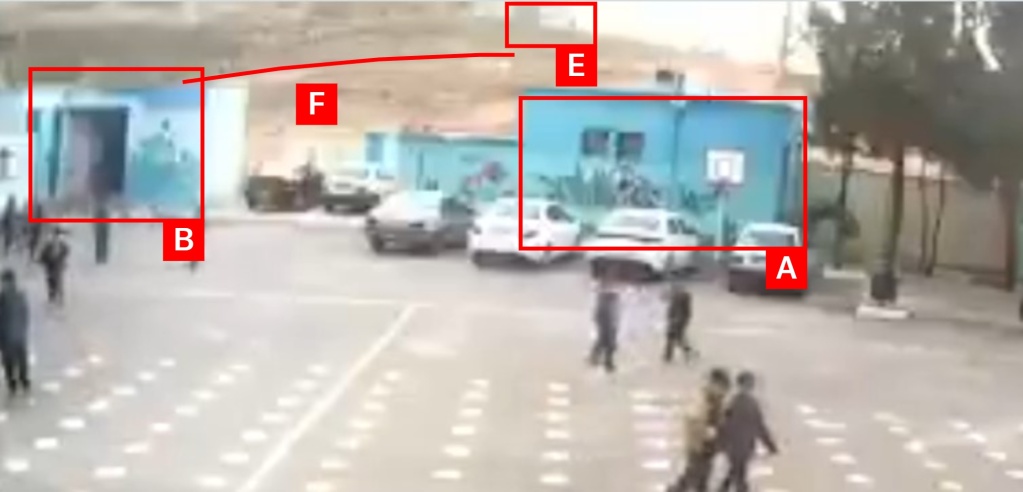
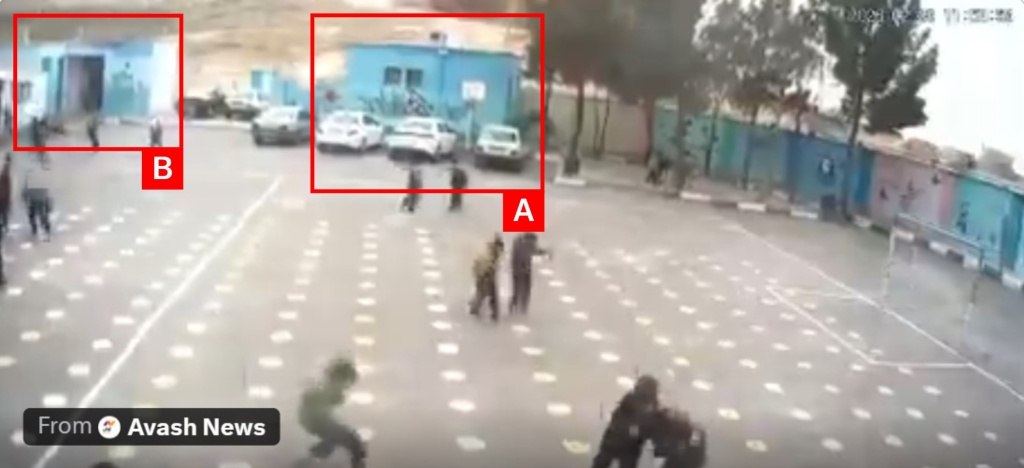
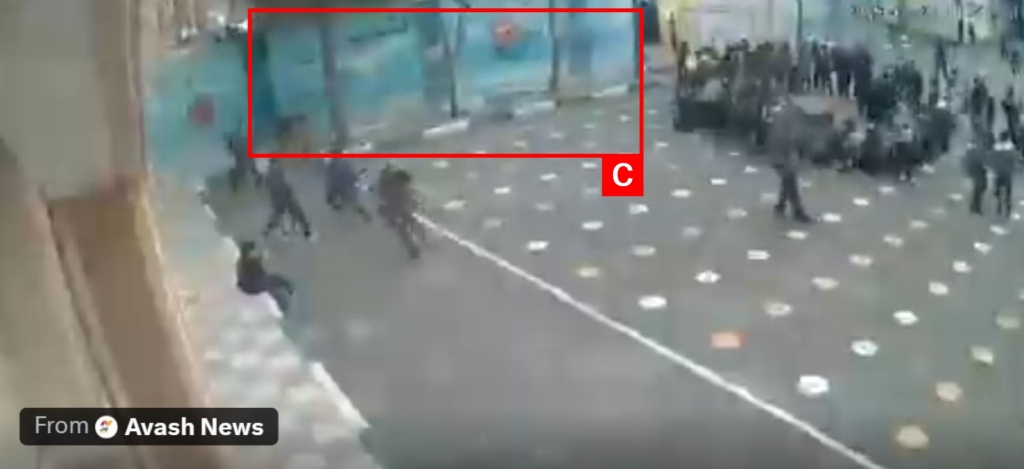
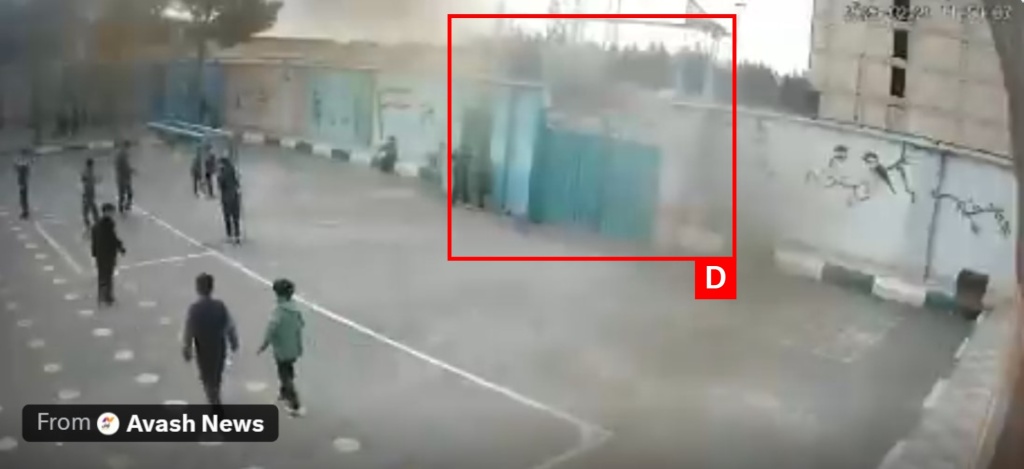
A video shared by @Avash_media corroborated this – showing the nearby site of detonation, and the subsequent wave which hit the schoolyard. The New York Times analysed the video, which they noted had been published on the channel of the Coordinating Council of Iranian Teachers’ Union. The description of the video provided by The New York Times was that “40 boys play on the playground. A few wander around, others linger by the soccer goal and a large group gather in a circle….The footage shows windows shattering. Children run, some with hands over their ears. A child falls to the ground by a soccer goal post, seemingly hit by a piece of debris.” The Times conducted geolocation analysis identified a communications tower as possibly the intended target – noting that it was less than 400 feet from the school and was reduced to rubble during the attack.
@bbcpersian and Fars News provided additional details that the attack happened around 12 noon. The principal of Imam Reza School had announced at 10 a.m that the school should closed because of the beginning of the attacks on Iran, and “the staff were waiting for students’ parents. Staff and students sheltered inside the school building.” At the moment of the bombing, a pole from the telecommunications tower was thrown into the schoolyard, striking Mahyar in the head and killing him.
A witness told Fars News that they were at a nearby bakery when they heard a huge explosion and when they arrived at the school: “There were some broken glass scattered on the ground; a heartbreaking scene caught my attention. I just looked at the body lying on the ground and sometimes tears would fall from my eyes without my control. It was a small, oppressed and innocent body by the football goal, with a white cloth stretched over it. I asked his name; Mahyar, an 11-year-old student, fifth grade. At the same time, I saw two other students who were crying continuously; one was Mahyar’s brother and the other was his cousin. Some were trying to calm them down. I returned to the yard again; this time Mahyar’s mother, aunt and uncle were also standing over him, filling the air with their broken wails and groans. The municipality vehicle arrived and the student’s clean body was transferred to the morgue.”
Fars News spoke with Ali Inanlu, the school’s health instructor, who described the chaos among the students right after the strike when they were running around in fear. He also described Mahyar as “moral, responsible, and excelled in his studies in every way. He was one of the purest and most oppressed students in the school’ while Ms. Narimani, Mahyar’s teacher, spoke of him as a “kind, caring, studious, pious, and exemplary boy.” Fars News also spoke with his father, who said “My son was a member of the mosque and the delegation; he would distribute tea at ceremonies.”
Khabar Online interviewed Mahyar’s mother Fatemeh Saeedi who said that she walked the three minute walk to the school after hearing the explosions and saw “Fatemeh Saeedi “scared boys by the wall, their mothers pouring water on their faces with bottles, and the teachers turning their heavy gazes away from her.” The source went on to explain that according to Shahram Ahmadpour, spokesman for the Qazvin Provincial Security Council’s statement to IRNA on the same day, a soldier at the nearby defense site was also killed, adding that the site was about 150 meters away from the school according to a map.
In a short documentary film called Goodbye Mom, teachers and school employees said that around 15 students were in the courtyard at around 11am for recess and were being led inside when the strike happened. The staff recreate the moment, saying “Instantly, all of these windows overlooking the courtyard—the ones that have since been replaced—shattered. The glass flew toward our heads and faces like shrapnel. The force was so strong that it physically pushed me from where I was standing. My colleagues suddenly screamed and ran outside. To be honest, I was dazed and disoriented for a moment. I did not understand what had happened. I ran toward the school entrance and helped direct the children inside. I saw that all the glass here had fallen. The witnesses further describe that “there was the sound of the explosion itself, and then there were the screams of the children.The children had no idea what to do, where to go, or where to run. Some ran in one direction, others in another. I came out into the corridor and over to this side. The Qur’an teacher and several others were standing in the courtyard with the students. We saw that the door had been closed. This door had been open; we opened it, and the children came inside. We brought everyone to what we considered a shelter area—a place where we thought they would be safer if another rocket struck.”
Tragically, Mahyar’s little brother had also been at the school when he was killed, and was disoriented and asking where his brother was so that they could go home together after the bombing. However, “we told him that Mahyar had already left.Then his parents arrived. His mother, poor woman, came into the school looking for her son. At that moment, the first thing I told her was that we had already sent him home—that Mahyar had left. His uncle came forward and sat beside him. But it was already over; he had been killed. No matter how much they cried, wailed, shouted, and pleaded, he was gone. After that, his mother came. This time I had to tell her. Then his father came. I could not tell his father, because they had already taken the child away. I just couldn’t. I told his father: “Go home.”I was only trying to hold myself together, trying not to cry. I told him: “Go home.”
The U.S. military explicitly denied involvement in this incident. Following reporting by The New York Times which documented damage to 22 schools and 17 healthcare institutions in Iran since February 28th (including this incident), Admiral Cooper, CENTCOM commander, explicitly denied US involvement in 38 of the documented cases (excluding the Minab School strike), stating “our comprehensive assessment is that the other 38 did not have a US munition nexus at all.”
Where sources identified a belligerent, all sources attributed the attack to the US and Israel.
Assessment Updates
12 May 2026
Geolocation added. Incident had not been geolocated when originally published.
Fair
Reported by two or more credible sources, with likely or confirmed near actions by a belligerent.
Causes of Death / Injury
Heavy weapons and explosive munitions
Civilians reported killed
1
(1 Child)
Civilians reported injured
2
(2 Children)
Military actors reported killed
1
Geolocation Notes
Reports of the incident mention a water reservoir near Imam Reza (AS) school (مدرسه امام رضا(ع)), in Abyek (آبیک). Analysing audio-visual material from sources, we have narrowed the location down to the following exact coordinates: 36.043911, 50.542049.
JACOBS: On these other 39 allegations here in this other NYT article, you have done preliminary assessments of these reports?
COOPER: We looked at all 39, yes.
JACOBS: And your understanding is that none of the other 38 had US munitions?
COOPER: Not just our understanding, our comprehensive assessment is that the other 38 did not have a US munition nexus at all.
Student martyred in missile attack on Abiq🔹Following the American-Zionist attack on the city of Abiq, a number of students from the Imam Reza (AS) school in the city were injured.🔹The injured are currently being treated in the hospital, and some of them were treated as outpatients and discharged. According to reports, a student was also martyred by the blast wave.@TasnimNews Student martyred in missile attack on Abiq🔹Following the American-Zionist attack on the city of Abiq, a number of students from the Imam Reza (AS) school in the city were injured.🔹The injured are currently being treated in the hospital, and some of them were treated as outpatients and discharged. According to reports, a student was also martyred by the blast wave.@TasnimNews
Content
شهادت یک دانش آموز در حمله موشکی به آبیک🔹در پی حمله آمریکایی صهیونیستی به شهر آبیک تعدادی از دانش آموزان مدرسه امام رضا(ع) این شهر مجروح شدند.🔹در حال حاضر مجروحان در بیمارستان تحت مداوا قرار دارند که تعدادی از آنان سرپایی مداوا و مرخص شدند. بر اساس شنیدهها یک دانشآموز نیز بر اثر موج انفجار به شهادت رسیده است.@TasnimNews شهادت یک دانش آموز در حمله موشکی به آبیک🔹در پی حمله آمریکایی صهیونیستی به شهر آبیک تعدادی از دانش آموزان مدرسه امام رضا(ع) این شهر مجروح شدند.🔹در حال حاضر مجروحان در بیمارستان تحت مداوا قرار دارند که تعدادی از آنان سرپایی مداوا و مرخص شدند. بر اساس شنیدهها یک دانشآموز نیز بر اثر موج انفجار به شهادت رسیده است.@TasnimNews
BREAKING NEWS | Shrapnel hits primary school in Iran's Qazvin province: 1 child killed
A primary school in Abyek city of Qazvin was targeted. A child who was hit by shrapnel lost his life.
Content
SON DAKIKA | Iran Kazvin eyaletin'de İlkokula İsabet: 1 Çocuk Hayatını Kaybetti
Kazvin’in Abyek kentinde bir ilkokul hedef alındı. Şarapnel isabet eden bir çocuk yaşamını yitirdi.
Media from objecturk (1)
This media contains graphic content. Click to unblur.
Mahyar Zanganeh, a martyred student of Imam Reza School in Abek, Qazvin, and his handwritten letter to the martyrs.
The freedom that Trump brought resulted in the overcrowding of school children.
Content
مهیار زنگنه دانش آموز شهید مدرسه امام رضا در آبیک قزوین و دست نوشته اش برای شهدا.
آزادی که ترامپ آورد حاصلش پرپر شدن بچه های مدرسه ای شد.
Media from RobinShour1 (2)
This media contains graphic content. Click to unblur.
Fars: A student was martyred after a missile hit the city of Abiq. 🔹The missile hit the side of the water reservoir in the city of Abiq, and the blast wave killed a student and injured several others. @AkhbareFori Fars: A student was martyred after a missile hit the city of Abiq. 🔹The missile hit the side of the water reservoir in the city of Abiq, and the blast wave killed a student and injured several others. @AkhbareFori
Content
فارس: در پی اصابت موشک به شهر آبیک، یک دانش آموز به شهادت رسید 🔹موشک به کنار مخزن آب شهر آبیک اصابت کرده و در پی موج انفجار یک دانش آموز به شهادت رسید و چند تن دیگر مجروح شدند. @AkhbareFori فارس: در پی اصابت موشک به شهر آبیک، یک دانش آموز به شهادت رسید 🔹موشک به کنار مخزن آب شهر آبیک اصابت کرده و در پی موج انفجار یک دانش آموز به شهادت رسید و چند تن دیگر مجروح شدند. @AkhbareFori
Media from akhbarefori (3)
This media contains graphic content. Click to unblur.
A student from Abiq was martyred in a missile attack
A student was martyred and several others were injured after a missile hit the city of Abiq.
According to ILNA, the principal of the Abiq school said on Saturday: "At around 11:00 today, damage was caused to the courtyard of the Imam Reza (AS) school in this city due to an object launched by a missile or drone."
Eskandari continued: "A number of students from this school were injured and sent to medical centers."
The director of public relations at Qazvin University of Medical Sciences also stated in this regard: "The Zionist regime's airstrike on a school in Abiq unfortunately resulted in the martyrdom of a student."
Hassan Ardaghian clarified: "Two other students were injured in this incident and are hospitalized."
End of message/
Content
یک دانشآموز آبیکی در حمله موشکی به شهادت رسید
در پی اصابت موشک به شهر آبیک یک دانشآموز به شهادت رسید و چند تن دیگر مصدوم شدند.
به گزارش ایلنا، مدیر مدرسه شهرستان آبیک روز شنبه در این رابطه، گفت: حوالی ساعت ۱۱ امروز براثر پرتاب شئی ناشی از پرتاب موشک و یا پهباد به حیاط مدرسه امام رضا (ع) این شهرستان خسارتی وارد آمد.
اسکندری ادامه داد: تعدادی از دانش آموزان این مدرسه مجروح و به مراکز درمانی اعزام شدند.
مدیر روابط عمومی دانشگاه علوم پزشکی قزوین نیز در این رابطه، اظهار کرد: حمله هوایی رژیم صهیونیستی به مدرسهای در شهرستان آبیک متاسفانه منجر به شهادت یک دانش آموز شد.
حسن ارداقیان تصریح کرد: در این حادثه ۲ دانش آموز دیگر مصدوم و در بیمارستان بستری هستند.
انتهای پیام/
A report from the Imam Reza Abek Boys' School in Qazvin, which was attacked by the Americans and Israelis, and one of its students was unjustly martyred.
Content
گزارشی از مدرسه پسرانه امام رضا آبیک قزوین که مورد حمله آمریکایی ـ اسراییلی قرار گرفت و یک دانشآموزش در آنجا مظلومانه به شهادت رسید.
Media from Avash_media (2)
This media contains graphic content. Click to unblur.
Student martyred in missile attack on Abiq
A number of students from the Imam Reza (PBUH) school in the city were injured
The injured are currently being treated in the hospital, with some of them being treated as outpatients and discharged
Content
شهادت یک دانش آموز در حمله موشکی به آبیک
تعدادی از دانش آموزان مدرسه امام رضا (علیهالسلام) این شهر مجروح شدند
در حال حاضر مجروحان در بیمارستان تحت مداوا قرار دارند که تعدادی از آنان سرپایی مداوا و مرخص شدند
Handwritten by the child martyr "Mehyar Zanganeh"
Little Mehyar was martyred on the first day of the war by Israel and America in the Imam Reza Abek School in Qazvin.
This post shares a news from published media sources purely for informational purposes. It is prepared in a neutral, news-oriented manner and does not intend to violate Instagram's Community Guidelines.
Content
دست نوشتهی کودک شهید «مهیار زنگنه»
مهیار کوچک، در روز اول جنگ توسط اسرائیل و آمریکا در مدرسهی امام رضای آبیک قزوین به شهادت رسید.
This post shares a news from published media sources purely for informational purposes. It is prepared in a neutral, news-oriented manner and does not intend to violate Instagram's Community Guidelines.
Media from tasnimnews_fa (1)
This media contains graphic content. Click to unblur.
A communications tower seemed to be the intended target, according to satellite imagery analysis. Iranian state media reported that a boy had been killed in the explosion.March 9, 2026At the Imam Reza Elementary School for boys in Abyek, a small city in the Qazvin Province, west of Tehran, security camera footage from Feb. 28 shows scenes from an ordinary morning. Some 40 boys play on the playground. A few wander around, others linger by the soccer goal and a large group gather in a circle.That was just hours after the first joint Israeli and U.S. strikes on Iran, according to Iranian state media. Schools were still open.Then, the footage shows a large explosion at the top of the screen, where a communications tower stands on a hill.The blast rips through the area, damaging the school. The footage shows windows shattering. Children run, some with hands over their ears. A child falls to the ground by a soccer goal post, seemingly hit by a piece of debris. Tasnim, a semiofficial Iranian news agency, identified the child as Mahyar Zanganeh and said he had not survived.The video remained virtually unseen until it was posted online on Friday. It has since been verified by The New York Times.The footage captures one of two known explosions near a school in service on Feb. 28, the first day of U.S.-Israeli attacks. The other hit a girls’ school in Minab, where 175 people, many of them children, were reported killed.No side has taken responsibility for that strike so far. Videos verified by The Times show a Tomahawk cruise missile hitting a naval base operated by the Islamic Revolutionary Guards Corps beside the school in Minab. (The U.S. military is the only force involved in the conflict that uses Tomahawk missiles.)The footage from the school in Abyek was shared by the official channel of the Coordinating Council of Iranian Teachers’ Unions, one of the largest trade unions in the country; some of the group’s members have been imprisoned by the Iranian government in the past for their activism.Using before and after satellite imagery, The Times, as well as geolocation experts, have determined that the communications tower where the explosion was observed in the security camera footage seemed to have been the intended target. The structure, less than 400 feet from the playground, was reduced to rubble after the explosion.“We have active members in Qazvin Province and in the teachers’ movement there,” said Shiva Amelirad, an international representative in Toronto for the Coordinating Council of Iranian Teachers’ Unions. “But unfortunately contact has not been possible yet, due to widespread internet disruptions across the country.”In a public statement, the union emphasized that targeting schools and hospitals was “rejected under any circumstances,” stressing that attacks on such spaces “were not only a violation of fundamental humanitarian principles, but also a clear breach of international law and human rights conventions.”The U.S. and Israeli militaries did not respond to requests for comment.Johnatan Reiss contributed reporting.Christiaan Triebert is a Times reporter working on the Visual Investigations team, a group that combines traditional reporting with digital sleuthing and analysis of visual evidence to verify and source facts from around the world.Parin Behrooz is an associate editor and writer for The New York Times.Related ContentAdvertisementSKIP ADVERTISEMENTSale ends soon.$1/week for your first six months year.Subscribe
Media from New York Times (1)
This media contains graphic content. Click to unblur.
kashowra 9w🔴 CCTV footage of an attack near a boys' school in Abiq, Qazvin, killing a child. The attack took place on the morning of the first day of the war, Saturday, March 26, before schools closed, and a student named Mahyar Zanganeh unfortunately lost his life in the attack. The Coordination Council of Iranian Teachers' Unions, while offering condolences to the family of the student killed in Abiq, Qazvin, once again emphasizes that targeting schools and hospitals is unacceptable under any circumstances and considers it a crime against civilians. The council emphasizes that attacking such spaces is not only a violation of the fundamental principles of humanity, but also a clear violation of international law and human rights conventions. #War_on_Children #Mehyar_Zanganeh #Abandoned_Backpacks 🔹🔹🔹Coordination Council of Iranian Educators' Unions 🔹Council's Telegram channel address: 🆔 @kashowra 📍Educational and trade union news, opinions and criticisms: 🆔 @kashowranews
Content
kashowra 9w🔴تصاویر دوربین مداربسته از حمله به نزدیک یک مدرسه پسرانه در آبیک قزوین و جانباختن یک کودک این حمله در صبح روز اول جنگ ،شنبه نهم اسفندماه قبل از تعطیلی مدارس اتفاق افتاده و در این حمله یک دانش آموز به نام مهیار زنگانه متاسفانه جان می بازد.شورای هماهنگی تشکلهای صنفی فرهنگیان ایران ضمن تسلیت به خانواده دانش آموز جانباخته در ابیک قزوین ، بار دیگر تاکید می کند هدف قرار دادن مدارس و بیمارستانها را در هر شرایطی مردود دانسته و آن را جنایتی علیه غیرنظامیان میداند. این شورا تأکید میکند که حمله به چنین فضاهایی نهتنها نقض اصول بنیادین انسانگرایی است، بلکه تخطی آشکار از قوانین بینالملل و کنوانسیونهای حقوق بشر محسوب میشود.#جنگ_علیه_کودکان#مهیار_زنگانه#کولهپشتیهای_رها_شده🔹🔹🔹شورای هماهنگی تشکلهای صنفی فرهنگیان ایران 🔹نشانی کانال تلگرامی شورا: 🆔 @kashowra 📍اخبار، نظرات و انتقادات صنفی و آموزشی:🆔 @kashowranews
Media from cashew (1)
This media contains graphic content. Click to unblur.
Tuesday, May 19, 2026 | 10:00 |
2118 Rayburn
The hearing will examine DoD policies, programs, and activities in the Greater Middle East and Africa in preparation for the FY27 NDAA. Members will assess the threats to U.S. national security in the region and evaluate the effectiveness of the Department’s use of the resources provided by Congress to defend our nation.
Opening Statement:
Chairman Mike Rogers
Witnesses:
The Honorable Daniel Zimmerman
Assistant Secretary of Defense for International Security Affairs
Office of the Secretary of Defense
Admiral Brad Cooper, USN
Commander
U.S. Central Command
General Dagvin Anderson, USAF
Commander
U.S. Africa Command
Livestream:
Related Files
2026-05-19 Cooper Testimony
2026-05-19 Anderson Testimony
2026-05-19 Zimmerman Testimony
Media from House Armed Services Committee (2)
This media contains graphic content. Click to unblur.
As uncertainty over the fragile cease-fire persists, Iran is sorting through the wreckage from U.S.-Israeli strikes, which have exacted a heavy toll on its civilian infrastructure. The New York Times has verified damage to 22 schools and 17 health care facilities, a fraction of the devastation in the war so far.The scale of devastation is likely far greater than The Times’s analysis. The Iranian Red Crescent Society, the country’s primary humanitarian relief organization, said on April 2 that at least 763 schools and 316 health care facilities had been damaged or destroyed in the war.The Times confirmed damage by using high-resolution satellite imagery and by verifying footage from state media or social media sites, including X, Telegram, Instagram and Facebook. The analysis was limited to schools and health care facilities that were damaged on or after Feb. 28, the first day of the war.The Times’s analysis shows that the damage was often caused by strikes in crowded neighborhoods — especially in Tehran, a capital of 10 million people that is as densely populated as New York City.The Times was not able to verify the total number of people killed at schools and health care facilities. At least 1,701 civilians have been killed in Iran as of Tuesday, according to the Human Rights Activists News Agency. Among them are students, teachers and health care workers.In most instances examined by The Times, the intended target of a strike was not clear. In some cases, schools and health care facilities were damaged by nearby strikes; others were directly hit. It was not always possible to determine whether the strikes were by the U.S. or Israeli military.Schools and hospitals hold some of the strongest protections of all civilian infrastructure under international humanitarian law, and intentional attacks on them could be considered war crimes. Even strikes on military targets that damage nearby schools and hospitals can violate international law, experts say, and military commanders are expected to take stringent measures to prevent and minimize such harm.Defense Secretary Pete Hegseth and other American officials have insisted that the U.S. military is acting with precision.During the second week of the war, Mr. Hegseth accused Iran of “moving rocket launchers into civilian neighborhoods near schools, near hospitals to try to prevent our ability to strike.” He has not provided any proof for this assertion, and when asked by The Times to provide such evidence, the Pentagon declined to comment.The Pentagon also declined to comment on The Times’s analysis of schools and health care facilities damaged during the war.Early strikes on schools are among the deadliestBy far the deadliest strike on civilians came on Feb. 28, the first day of the war, when the Shajarah Tayyebeh Elementary School was bombed in the southern Iranian town of Minab. The strike killed at least 175 people, most of them children, according to Iranian health officials.An ongoing investigation by the U.S. military found that American forces were responsible for the bombing, according to U.S. officials and others with knowledge of the preliminary findings. The military had used outdated information and labeled the school as a military target, the early findings said.The site of the school was originally part of an Iranian naval base, but according to a visual investigation by The Times, the building had been fenced off from the naval base for at least 10 years. It had clearly visible play areas, and its walls were painted blue and pink.U.S. officials have emphasized that the findings of the investigation were preliminary and that there were still unanswered questions about why the outdated information had not been double checked, said the people briefed on the inquiry. The White House press secretary, Karoline Leavitt, has said the investigation is “still ongoing.”On the same day, in Abyek, west of Tehran, a blast from a nearby strike ripped through a boys elementary school, blowing out windows and sending dozens of children on the playground running for cover.Satellite image analysis and video footage verified by The Times showed that the strike had apparently targeted a communications tower less than 400 feet away. One boy was killed, Iranian state media reported. The footage showed that he appeared to have been hit by debris on the playground.Verified footage showed that another strike that day hit near a high school in Tehran’s Narmak district, in a residential area where Iran’s former president, Mahmoud Ahmadinejad, was known to live. Two students were killed, according to Mehr, a semiofficial news agency.A fourth strike that day, using a new U.S.-made ballistic missile, hit a sports hall, an adjacent elementary school and a blood transfusion center near a military facility in the city of Lamerd, according to weapons experts and a visual analysis by The Times. The sports hall was being used by a young girls’ volleyball team at the time.At least six people, including at least four children, were killed in this strike, according to a Times review of a list of fatalities released by an Iranian news agency, images of caskets posted online, recordings of funeral speeches and reference photos of the victims.As the war got underway, the Iranian government suspended classes in schools across the country. But U.S.-Israeli strikes continued to damage school buildings for weeks.Some, such as the Shaghayegh Girls’ School in Khomein and a building at the Iran University for Science and Technology in Tehran, were directly hit and reduced to ruins, according to analysis of video and satellite imagery.Bombings near hospitals forced evacuationsHealth facilities have also been substantially damaged, impacting patients, health care workers and emergency crews.On March 1, the facade of the Gandhi Hospital in northern Tehran was ripped off during heavy strikes that appeared to target Iranian state television facilities across the street.Videos taken on a government media tour from outside and inside the hospital show the extent of the strike’s damage.The hospital was forced to evacuate its patients, including at least one infant in an incubator, according to Iran’s health ministry, hospital officials in interviews with Iranian state media, and footage verified by The Times.“We have newborn babies,” Dr. Mohammad Hassan Bani Assad, the hospital’s president, told Iranian state television. “We had eight patients in the I.C.U., two in critical condition. Women giving birth. Embryos in our fertility department.”The bombing forced another hospital complex in the city of Bushehr, in southern Iran, to evacuate babies.In footage shared by the Iranian Red Crescent Society and verified by The Times, an emergency worker grew emotional as he looked over infants in the hospital’s damaged newborn ward.“If we disconnect what they’re hooked up to, they will die,” he said. “Look at them. This poor kid. This dear child.”Under international humanitarian law, military commanders planning a strike must consider the risk of incidental damage to civilians and civilian infrastructure. In each attack, they are supposed to weigh the expected military gains against expected civilian harm, and take precautions to minimize that harm.Experts said that Mr. Hegseth has dismantled many of the systems meant to help the United States abide by such obligations. They noted that the defense secretary has fired the military’s top lawyers, who advise military leaders on domestic and international laws of armed conflict, and that he has closed Pentagon offices and terminated positions designed to reduce and respond to civilian harm.Mr. Hegseth has also boasted about his efforts to scale back what he has called “stupid rules of engagement.”Oona Hathaway, a professor of international law at Yale Law School, said those rules “were developed precisely to prevent this kind of civilian harm,” referring to the damage caused to Iran’s schools and hospitals. Ms. Hathaway was one of over 100 U.S.-based international law experts who signed an open letter this month expressing “profound concern over serious violations of international law” during the war.On Monday, Mr. Trump, who has threatened to bomb Iran “back to the Stone Ages,” brushed off a question about the possibility that U.S. attacks on civilian infrastructure could amount to war crimes. Iran has also been accused of striking civilian infrastructure in the Middle East.Capt. Tim Hawkins, a spokesman for U.S. Central Command, the military headquarters leading the war, told The Times that it takes reports of civilian harm “seriously” and that it does not “deliberately target civilians.”He declined to answer detailed questions about the steps it was taking to minimize civilian harm in Iran, citing the ongoing investigation into the strike that killed scores of children at the school in Minab. He referred other questions to the Defense Department, which also declined to comment, citing the investigation.The Israeli military said in a statement that it “operates in accordance with the law of armed conflict” and takes precautions, “as much as possible under the circumstances,” to mitigate civilian harm. The military “invests significant efforts in assessing potential civilian harm” before a strike, the statement added.Many strikes hit Iran’s dense capitalAbout half of the damaged schools and health care facilities identified by The Times’s analysis were in Tehran, a crowded and typically bustling city, where the bombing has been intense.According to the Iranian Red Crescent Society, more than 46,000 residential and commercial units have also been damaged in the capital.During the war, the United States and Israel have struck not only the facilities of the Islamic Revolutionary Guards Corps, but also government buildings, intelligence offices and police stations.As in many cities around the world, those sites are often near schools, hospitals and residential buildings. In Tehran, multiple strikes hit the police headquarters in the Vanak neighborhood during the first days of the war and damaged several nearby hospitals, according to satellite imagery analyzed by The Times.A video shot from near the Red Crescent building and verified by The Times shows a massive smoke plume rising from the site of the police headquarters.Instances verified by The Times of damage to schools and health care facilities caused by strikes on civilian neighborhoods are “within the scope of foreseeable effects” that military commanders are meant to minimize, said Mara Revkin, a professor and scholar of armed conflict at the Duke University School of Law.The World Health Organization has verified at least 23 attacks on the Iranian health care system, including 11 attacks on health care facilities, said Dr. Hanan Balkhy, the W.H.O.’s regional director for the Eastern Mediterranean. Six of the 11 facility attacks that the W.H.O. has verified were in Tehran.Iran’s health care system is still “standing on its feet,” but operating under increasing strain, with disruptions to patient services and continuity of care for chronic conditions becoming more difficult, Dr. Balkhy said, adding, “Destroying health care and access to health care and doctors and medication is harm.”
Media from New York Times (33)
This media contains graphic content. Click to unblur.
In-depth investigation finds US violated international humanitarian law by failing to take all feasible precautions to avoid civilian harm.
US responsible for deadly attack on school packed full of children killing 156 people.
US authorities must ensure that the investigation is transparent, thorough, and that the results are made public.
Those responsible for planning and executing an unlawful US strike on a school in Minab, Hormozgan province in Iran that killed 156 people, including 120 children, must be held accountable, Amnesty International said today.
Evidence gathered by the organization indicates that the school building was directly struck, alongside 12 other structures in an adjacent Islamic Revolutionary Guard Corps (IRGC) compound, with guided weapons. This points to a failure by US forces to take feasible precautions to avoid civilian harm in carrying out the attack, which is a serious breach of international humanitarian law. The fact that the school building was directly targeted and was previously part of the IRGC compound raises concerns that US forces may have relied on outdated intelligence and failed in their obligation to do everything feasible to verify that the intended target was a military objective.
“This harrowing attack on a school, with classrooms full of children, is a sickening illustration of the catastrophic and entirely predictable price civilians are paying during this armed conflict. Schools must be places of safety and learning for children. Instead, this school in Minab became a site of mass killing. The US authorities could, and should, have known it was a school building. Targeting a protected civilian object, such as a school, is strictly prohibited under international humanitarian law,” said Erika Guevara-Rosas, Amnesty International’s Senior Director of Research, Advocacy, Policy and Campaigns.
This harrowing attack on a school, with classrooms full of children, is a sickening illustration of the catastrophic and entirely predictable price civilians are paying during this armed conflict.
Erika Guevara-Rosas, Amnesty International
US authorities must ensure that the investigation they have announced is impartial, independent and transparent. Investigations into the strike must consider the intelligence gathering and assessments, targeting decisions and precautions taken, as well as how artificial intelligence may have been employed in each of these steps, to evaluate how targeting decisions were made. The results of the investigation should be made public.
Where sufficient evidence exists, competent authorities should prosecute any person suspected of criminal responsibility. Victims and their families have the right to truth and justice and should receive full reparation, including restitution, rehabilitation and compensation for civilian harm.
“If the attackers failed to identify the building as a school and nevertheless proceeded with the attack, this would indicate gross negligence in the planning of the attack and would point to a shameful intelligence failure on the part of the US military and a serious violation of international humanitarian law. On the other hand, if the US was aware that the school was adjacent to the IRGC compound and proceeded to attack without taking all feasible precautions, such as striking at night when the school would have been empty, or giving effective advance warning to civilians likely to be affected, this would amount to recklessly launching an indiscriminate attack which killed and injured civilians and must be investigated as a war crime,” said Erika Guevara-Rosas.
“For their part, Iranian authorities must immediately remove, to the extent feasible, civilians from the vicinity of military objectives and allow independent monitors into the country. They must also restore internet access to ensure that the 92 million people in Iran have access to life-saving information and be able to contact their loved ones.”
Video footage, satellite imagery, and interviews with three independent sources with direct information about the situation in Minab indicate that an air strike hit Shajareh Tayyebeh Elementary School on the morning of 28 February 2026, killing and injuring civilians, including children, parents, and teachers, and causing extensive damage and destruction. Both girls and boys attended the school and were taught on separate floors.
Amnesty International’s analysis of audiovisual evidence of missile strikes on the adjacent IRGC compound and of missile remnants published by state media in Iran indicate that a US-manufactured Tomahawk missile was likely used for the attack. Tomahawk missiles are used exclusively by US forces in this conflict and are precision-guided missiles.
The school was individually struck as part of an attack on 12 other structures in the adjacent IRGC compound raising serious concerns that it may have been targeted based on outdated intelligence. The New York Times reported on 11 March 2026 that a preliminary investigation by the US military has found that the strike on the school was the result of reliance on outdated data.
Any current or future use of artificial intelligence magnify the risk of such failures. Also on 11 March 2026, US Central Command (CENTCOM) Commander Brad Cooper confirmed that the USA was using advanced artificial intelligence tools to process large amounts of data related to the operations.
The USA’s apparent reliance on outdated intelligence, which failed to reflect the long-standing status of Shajareh Tayyebeh Elementary School as a civilian object, would constitute a serious violation of the principle of precaution, particularly the obligation to do everything feasible to verify that an intended target is a military objective. In the aftermath of the attack, media and other organizations were able to promptly verify that the building hosting the school had been separated from the rest of the compound since at least 2016. This indicates that parties to the conflict, with much more advanced intelligence-gathering capabilities and technologies, were undoubtedly in a position to collect and verify this same information, which should have led to the decision not to attack the school.
In the aftermath of the attack, Iranian authorities have exploited the suffering of victims’ families and surviving children for propaganda purposes.
Methodology
Amnesty International’s Evidence Lab analysed over 30 satellite images of the school and the adjacent IRGC compound, including images captured after the strike and historical imagery dating back more than a decade. The organization analysed 28 videos and 30 photographs published online, including imagery showing the strike on the IRGC compound, photographs of munition remnants, and videos and images capturing the immediate aftermath, rescue efforts, and the recovery of bodies from the site. Additional analysis was conducted by an independent forensic pathologist.
The organization also reviewed official statements issued by authorities in Iran, Israel and the US, as well as state and independent media reports, and conducted interviews with three individuals based outside the country with knowledge of the situation in Minab, the school, and the attack: a teacher, a Minab resident, and a Baluchi human rights defender.
Amnesty International was unable to speak directly with witnesses and victims’ families due to the deliberate internet shutdown imposed by Iranian authorities since 28 February 2026.
Children and teachers killed and injured in airstrike on school
According to US officials, air strikes by the Israeli and US forces on 28 February 2026 began across Iran at 9.45am local time.
In a media interview, the governor of Hormozgan province, Mohammad Ashouri, said that Shajareh Tayyebeh Elementary School was struck one hour into the military operation, at 10.45am local time.
Amnesty International spoke to Sohrab (real name withheld for security reasons), a resident of Minab, who told the organization that he communicated with four independent sources with direct knowledge of the school attack. He reported that school staff began to contact parents at around 10am to pick up their children. Their decision appeared to precede an official nationwide alert issued (around 15 mins later) by the Iranian authorities announcing the closure of all schools across the country.
The organization also spoke to Shiva Amelirad, the international representative of the Coordinating Council of Iranian Teachers’ Trade Associations, who is based outside Iran and relayed information from two independent sources with direct knowledge of the school and the attack.
Shiva Amelirad and Sohrab reported that by the time many families reached the school to pick up their children, it had already been struck. Sohrab told the organization:
“People from nearby streets and those who had time rushed over and tried to take children whose families hadn’t arrived yet. Many students were from surrounding villages, and travel took time; those who lived further away faced long delays for a car to come from the village. That delay was fatal. The principals and teachers stayed to get the children out. Most of them were killed. People did not imagine that a school within the city would be hit.”
According to the Iranian authorities, 156 people were killed in the attack. On 3 March 2026, the judiciary’s Mizan News Agency announced that at least 110 school children were among the dead, comprising 66 boys and 54 girls, as well as 26 teachers and four parents. On 7 March 2026, the authorities published a collage containing the images of 119 children killed. Due to the ongoing internet blackout and no access to the country to inspect the site and interview affected people, Amnesty International is unable to independently corroborate the number of people killed.
School location next to a military compound
According to Amnesty International’s research, the school is located in the Shahrak-e Al-Mahdi neighbourhood of Minab and is adjacent to a compound belonging to the Seyyed al-Shohada Asif Missile Brigade of the IRGC’s navy force responsible for coastal defence along southern Iran. The compound is a military installation of the IRGC and contains multiple buildings. There is also a medical facility named the Shahid Absalan Specialist Clinic belonging to the IRGC Navy Health Command walled off within the compound.
Shiva Amelirad and Sohrab informed Amnesty International that the school serves both children of IRGC personnel and low-income families from the area, who include members of Iran’s oppressed Baluchi ethnic minority.
Amnesty International’s analysis of satellite imagery dating back to 2013 shows that the current school building was previously located within the perimeter of the IRGC compound but was later walled off and separate public entrances were created.
By 2016, satellite images indicate that the school premises, which were located in the northeast of the compound, had been physically separated from the IRGC compound through the construction of boundary walls and three separate gated entrances. Satellite imagery captured in 2017 and 2018 shows that the grounds and walls were painted with features and colours that look similar to other schools in the area. Between 2023 and 2025, two satellite images captured on school days show updated painting on the grounds and people present outside the entrances.
According to Shiva Amelirad, the school building previously served as the command headquarters of this IRGC compound before being converted into a school several years ago. Amnesty International has not been able to determine the date on which the building was converted into a school.
Satellite and video analysis of the strikes on the school and IRGC compound
Satellite imagery from 10.23am local time on 28 February 2026 indicates that the school and IRGC compound were still standing without visible damage at that time, suggesting that the strikes occurred sometime after.
Iranian state officials announced that the attack took place at 10.45am. Videos posted online at 11:49am and 12pm show thick smoke rising from the direction of the IRGC compound.
Analysis of satellite imagery on 2 and 4 March shows destruction at the site of the school and IRGC compound. The satellite imagery from 4 March 2026 shows the western half of the school building is destroyed with a large pile of rubble visible, as well as damage or destruction to at least 12 structures within the adjacent IRGC compound. The school building is around 74 metres from the nearest structure targeted in the adjacent IRGC compound.
Videos from the scene show distinctive pancaking of the roof, evidence of a top-down air strike, affecting much of the school building.
In addition to satellite imagery, multiple videos published on 28 February 2026 show the immediate aftermath of the strike on the school.
Video from the school grounds filmed after the strike shows the brightly painted walls separating the school from the IRGC compound and playground markings on the ground. On the western side of the school, the building appears largely collapsed into rubble. The eastern side, while still standing, is heavily damaged with thick smoke rising from inside.
Videos and images published online show that the school yard quickly filled with scores of men and women following the strike, with some assisting in clearing rubble. Other videos show that the rescue efforts were supported by members of the Iranian Red Crescent Society and others, including men wearing green and brown camouflage uniforms resembling those of the IRGC and its Basij battalions, as well as several trucks and excavators.
Several videos show dozens of dusty children’s backpacks collected in one area, some stained with what appears to be blood. In one video, women are seen sitting beside the backpacks and crying, while an excavator rumbles in the background. Another video captures several people standing around the rubble where part of a body is visible beneath the rubble. According to a forensic pathologist consulted by Amnesty International, the forearm appears to have been traumatically severed. The size of the hand and forearm, when compared with those of the adult males visible in the footage, indicates that they most likely belonged to a child. A video filmed later in the afternoon captures a man standing in the rubble and holding a severed hand and forearm. According to the forensic pathologist, the hand and forearm are covered in dust and lacerations consistent with trauma caused by an explosion and are also very likely from a child’s body.
A video filmed inside one of the classrooms shows rubble covering desks and benches. The window frames, green benches, and wall décor visible in the footage match the style of those elsewhere in the school, indicating that the destroyed part of the building was used for schooling.
A video published on 8 March 2026 by the state media Mehr News Agency in Iran and verified by Amnesty International shows the impact of a missile on the IRGC compound. Closer analysis of the footage indicates that the missile is very likely a US-manufactured Tomahawk subsonic cruise missile, identifiable by its distinctive wings and large squared fins. Based on the footage, this specific missile did not impact the school. The video also shows a plume of grey smoke from the northeastern part of the compound, which could originate from either the school or the adjacent buildings in the IRGC compound.
On 9 March 2026, state broadcaster, the Islamic Republic of Iran Broadcasting (IRIB), published images of what appear to be missile remnants consistent with a Tomahawk missile found. IRIB stated that the images pertain to “the remains of an American missile that landed on the children of Minab School”. While these remnants would further corroborate that parts of the compound were struck by at least one Tomahawk missile, Amnesty International is not in a position to independently verify whether the school was targeted by similar munition.
During a Pentagon press briefing on 2 March 2026, the US Chairman of the Joint Chiefs of Staff, Dan Caine, confirmed the US Navy had fired Tomahawk missiles on 28 February 2026 in southern Iran. During another press briefing on 4 March 2026, Dan Caine shared a map showing locations struck by US and Israeli forces during the first 100 hours of the military intervention that included Minab. When asked about the strike on the school, Secretary of Defence Pete Hegseth said the Pentagon was investigating the incident.
During a press briefing on 9 March 2026, in response to a question from a journalist about a Tomahawk missile likely striking the school, US President Donald Trump claimed that “Iran or somebody else” was responsible for the attack.
On 10 March 2026, a White House spokesperson confirmed that investigations into the school attack were ongoing, and that the US Department of Defence will release a full report.
International humanitarian law
International humanitarian law requires parties to the conflict to distinguish at all times between combatants and military objectives, on the one hand, and civilians and civilian objects, on the other hand. It is prohibited to directly attack civilians and civilian objects, such as schools. Only combatants and military objectives can be the object of attacks.
Parties to the conflict must also respect the principle of precaution, which requires them to take constant care to spare civilians and civilian objects during military operations, including by taking all feasible precautions to avoid or minimize incidental loss of civilian life, injury to civilians and damage to civilian objects during attacks.
This means they must do everything feasible to verify that targets are military objectives, including carrying out rigorous and up‑to‑date intelligence-gathering, as well as conducting analysis and verification of all available information concerning a target. They must cancel or suspend an attack if at any time during its planning or execution it becomes apparent that the target is not a military objective or that the attack would be disproportionate. Parties to the conflict must ensure that meaningful human control is maintained when using artificial intelligence during the planning and execution of attacks.
Parties to the conflict must also take all feasible precautions in choosing weapons, tactics and modalities of an attack, including its timing, with the aim to avoid or minimize incidental harm to civilians and damage to civilian objects, and they must give effective advance warning of attacks which may affect the civilian population, unless circumstances do not permit.
In addition, international humanitarian law requires parties to the conflict to take all feasible precautions to protect the civilian population and civilian objects under their control against the effects of attacks. This includes removing, to the extent feasible, civilians and civilian objects from the vicinity of military objectives. Accordingly, Iranian authorities should not have located the school in a building adjacent to an IRCG compound, which during armed conflict qualifies as a military objective and that was, in fact, targeted.
Testimony and video evidence gathered by Amnesty International also reveals that Iranian authorities forced some bereaved children’s families to participate in funeral ceremonies that were not in accordance with their traditions and used traumatized child survivors for state propaganda.
Sohrab told the organization that the authorities informed families that all the children’s bodies would be placed in coffins and incorporated into a single, state-organized mass funeral on 3 March 2026 at which Shi’a Muslim prayers would be recited, despite the fact that some of the victims and their families were from Iran’s Sunni Baluchi minority who observe different religious rites. When some families expressed their wish to hold funerals in accordance with their own religious traditions, the authorities said this would not be permitted. According to Sohrab, officials told families that they would not receive their children’s remains until after the mass ceremony.
The authorities have also taken surviving children to the ruins of their school and filmed them for propaganda purposes, despite their visible injuries and trauma. In one video published online on 5 March 2026, a male journalist interviews two visibly distressed girls who appear to be aged between 7 and 11, repeatedly asking the younger child to name her friends who were killed and which ones she loved the most. The young girl names her friends and says that she loved all of them, adding that the mother of one of her friends who was a teacher was also killed, before breaking down into tears.
In another video, a 10-year-old girl with a visible facial injury was interviewed during the mass funeral ceremony about the killing of her 11-year-old brother, and the interview was subsequently broadcast on state media on 6 March 2026.
These acts of coercion, intimidation and instrumentalization of both grieving families and traumatised child survivors cause severe mental anguish and may violate the absolute prohibition of torture and other cruel, inhuman or degrading treatment.
US Congress should ensure ongoing efforts to mitigate civilian harm
Critical systems put in place in recent years building on work started under the first Trump Administration to reduce and better respond to civilian harm caused by US lethal actions abroad are under threat by the current Trump Administration. News outlets have reported that programmes at the Defence Department focused on civilian harm mitigation and response have been gutted, and that the US President has rolled back constraints on commanders authorizing certain types of air strikes and special operations. Defence Secretary Pete Hegseth has fired the top military lawyers responsible for ensuring compliance with international humanitarian law in military operations.
Background
On 28 February 2026, the US and Israel launched a joint military operation in Iran, with thousands of strikes across the country since. The Iranian authorities have launched retaliatory attacks across the region. The armed conflict rapidly expanded into regional hostilities across the Middle East and has resulted in significant loss of civilian life and destruction of civilian infrastructure. Israel has also escalated its attacks on Lebanon in response to Hezbollah’s attacks.
To date, according to reports at least 1,255 people have been killed in Iran; over 773 in Lebanon; at least 12 killed in Israel; and at least 17 killed across other countries in the region.
The head of the Information and Public Relations Centre at Iran’s Ministry of Education announced on 7 March 2026 that at least 66 schools across Iran have been damaged or destroyed, resulting in the deaths of students in several schools. In one incident, a schoolboy was killed on 28 February 2026 in the playground at Imam Reza Elementary School in Abyek, Qazvin province, following a nearby strike that shattered windows and sent debris across the yard. The incident was captured on CCTV.
In a 12 March statement, eight UN experts called for “independent investigation of specific attacks that could constitute grave violations of international humanitarian law” citing the targeting of the school.
Please note this article was updated on 28 April 2026 amending the death toll from 168 killed to 156 killed to reflect the latest official figures issued by the authorities
Media from Amnesty International (7)
This media contains graphic content. Click to unblur.
On Saturday, March 29, a few hours after the US and Israeli attack on Iran began, Mahyar Zangaaneh, an 11-year-old student at Imam Reza School in Besat Township in #Abek #Qazvin, was killed by shrapnel from an explosion of a telecommunications tower located on a hill next to the school. Images from the school's CCTV cameras published by Iranian media show the moment of the explosion, the panic and escape of students, and the efforts of the teaching staff to take refuge in the school building. School officials have said that following the start of the attack on Iran and the announcement of the closure of schools by the Ministry of Education, at the moment of the attack, which according to the information on the camera images shows at around 12 noon, they were waiting for the parents of the students to arrive to pick up their children.
Content
شنبه ۹ اسفند، چند ساعت پس از آغاز حمله آمریکا و اسرائیل به ایران، مهیار زنگانه، دانشآموز ۱۱ ساله مدرسه امام رضا در شهرک بعثت در #آبیک #قزوین بر اثر ترکش انفجار دکل مخابراتی واقع بر تپه مجاور مدرسه کشته شد.تصاویر دوربینهای مداربسته مدرسه که رسانههای ایران منتشر کردهاند، لحظه انفجار و وحشت و فرار دانشآموزان و تلاش کادر آموزشی برای پناه گرفتن کودکان در ساختمان مدرسه را نشان میدهد. مسئولان این مدرسه گفتهاند که در پی آغاز حمله به ایران و اعلام تعطیلی مدارس از سوی وزارت آموزش و پرورش، در لحظه حمله که بنابر اطلاعات مندرج بر تصاویر دوربینها حدود ساعت ۱۲ ظهر را نشان میدهد، منتظر رسیدن اولیای دانشآموزان برای بردن فرزندانشان بودند.
Media from bbcpersian (1)
This media contains graphic content. Click to unblur.
The day Mahyar was martyred in the schoolyard
In the attack of 9 Esfand by the American–Zionist enemy on our country’s soil, a missile struck near Imam Reza (PBUH) Elementary School in Abek, which led to the martyrdom of an 11-year-old student named Mahyar.
At 10 a.m., when the principal of Imam Reza (PBUH) Elementary School was informed that the school should be closed, the school staff contacted the students’ parents so they could take their children home. It naturally took time for the parents to reach the school. Hours passed; the clock hand had not yet reached 12. Suddenly, a terrifying sound was heard from the sky over the city, and a severe explosion occurred; everyone’s attention turned toward the mountain from which black smoke was rising. By asking around, I learned that a water reservoir and a school had been attacked. I approached the school. Outside, there was a crowd of students and parents; some children were crying because of the explosion. I entered the schoolyard. Several broken pieces of glass were scattered on the ground; a heartbreaking scene caught my attention. I was only looking at the body lying on the ground, and at times tears fell from my eyes involuntarily. A small and innocent body lay beside the football goal, covered with a white cloth. I asked his name; Mahyar, an 11-year-old student, fifth grade. At the same time, I saw two other students who were constantly crying; one was Mahyar’s brother and the other his cousin. Some people were trying to calm them down. I returned to the yard again; this time Mahyar’s mother, his aunt, and his uncle were also standing over him, filling the space with their broken cries and lamentation. A municipal vehicle arrived and the pure body of this student was transferred to the morgue.
I asked the school’s educational deputy: “What happened at that moment?” Mr. Fallahati replied: “It was recess and the children were playing in the schoolyard. Suddenly, in a fraction of a second, everything fell apart. A blast wave, dust and white smoke, fragments of stone and iron shrapnel were scattered. Unfortunately, due to the missile hitting the water reservoir and its fragments, Mahyar was martyred. He was one of the outstanding students and a main helper of the school.”
Ali Inanloo, the school health instructor, says: “When this happened, all the students ran toward the hall and we tried to calm them.” In the schoolyard I noticed a student lying on the ground. At first I thought he had fallen out of fear; I ran toward him to help. Then I realized that the small body of Mahyar, the 11-year-old student, was lying on the ground and, unfortunately, he had been martyred. Because I did not want the situation of the school and the students to become more inflamed, the first thing that came to my mind was to pull one of the school’s curtains over Mahyar’s body so that, until the arrival of emergency forces, we could protect him from everyone’s sight."
Content
روزی که مهیار در حیاط مدرسه شهید شد
در حمله ۹ اسفندماه دشمن آمریکایی_صهیونی به خاک کشورمان، یک موشک به حوالی دبستان امامرضا (ع) آبیک برخورد کرد که به شهادت یک دانشآموز ۱۱ ساله به نام مهیار منجر شد.
ساعت ۱۰ صبح، وقتی به مدیر مدرسهٔ دبستان امامرضا (ع) اعلام شد که مدرسه تعطیل شود، عوامل مدرسه با اولیای دانشآموزان تماس گرفتند تا فرزندانشان را به منزل ببرند. بالاخره زمان میبرد تا اولیا خود را به مدرسه برسانند. ساعتها گذشت؛ هنوز عقربه ساعت به ۱۲ نرسیده بود. ناگهان صدای مهیبی از آسمان شهر به گوش آمد و یک انفجار شدید رخ داد؛ نگاه تمام مردم به سمت کوه که دود سیاهی بلند شده بود، معطوف شد. با پرسوپرس متوجه شدم که منبع آب و یک مدرسه مورد حمله قرار گرفته است.نزدیک مدرسه شدم. بیرون از مدرسه ازدحام جمعیت دانشآموزان و اولیا بود؛ برخی از کودکان بهدلیل انفجار میگریستند. به حیاط مدرسه وارد شدم. چند شیشهٔ شکسته روی زمین پخش شده بود؛ صحنهای دلخراش توجه مرا جلب کرد. تنها به پیکری که بر زمین افتاده بود نگاه میکردم و گاهی بدون اختیار اشک چشمهایم میریخت. پیکری کوچک، مظلوم و معصوم کنار دروازهٔ فوتبال بود که پارچهٔ سفیدی بر تنش کشیده شده بود. اسم او را پرسیدم؛ مهیار، دانشآموز ۱۱ ساله، کلاس پنجم. در همین حین دو دانشآموز دیگر را دیدم که مدام میگریستند؛ یکی برادر مهیار و دیگری پسر خالهاش بود. برخی سعی میکردند آنها را آرام کنند.دوباره به حیاط برگشتم؛ این بار مادر مهیار، خاله و داییاش نیز بالای سر او ایستاده بودند و با زاری و نالهٔ شکستهشان فضا را پر کرده بودند. خودروی شهرداری از راه رسید و پیکر پاک این دانشآموز به سردخانه منتقل شد. وسط زنگ تفریح، موشک زدند از معاون آموزشی مدرسه پرسیدم: «در آن لحظه چه اتفاقی افتاد؟» آقای فلاحتی پاسخ داد: «زنگ تفریح بود و بچهها در حیاط مدرسه مشغول بازی بودند. ناگهان، در صدم ثانیه همه چیز به هم ریخت. یک موج انفجار، گرد و خاک و دود سفید، قطعات سنگ و ترکشهای آهنی پراکنده شد.» متأسفانه بهدلیل اصابت موشک به منبع آب و ترکشهای آن، مهیار شهید شد. او یکی از دانشآموزان ممتاز و مددکار اصلی مدرسه بود
علی اینانلو، مربی بهداشت مدرسه میگوید: «وقتی این اتفاق افتاد، تمام دانشآموزان به سمت سالن دویدند و سعی کردیم آنها را آرام کنیم.»در حیاط مدرسه متوجه شدم یک دانشآمورد بر زمین افتاده است. ابتدا فکر کردم از ترس سقوط کرده باشد؛ به سمت او دویدم تا کمکاش کنم. آنوقت فهمیدم پیکر کوچک مهیار، دانشآموز ۱۱ ساله، در زمین افتاده و متأسفانه شهید شده است.چون نمیخواستم وضعیت مدرسه و دانشآموزان بیشتر شعلهور شود، اولین کاری که به ذهنم رسید این بود که یکی از پردههای مدرسه را روی پیکر مهیار کشیدم تا تا زمان رسیدن نیروهای امدادی، او را از نگاه همگان محافظت کنیم.
Media from Hajar Abdollahi (11)
This media contains graphic content. Click to unblur.
If Mahyar hadn't returned his security card a few hours ago, he wouldn't have been in the yard that day, at that moment, when a bomb would hit him in the head, the blast wave would throw him to the ground, the telecommunications mast would fall on his head, and his head would hit the edge of the table. The night before, he had said, "Mom, I'm relieved that there are security guards. I'll come back after recess, I won't hang around in the yard or in class."
The children were playing that day, March 29, at 11:00 a.m., when a missile hit a point near them. Mahyar was one of the first students to die in the American and Israeli attacks on Iran. In a video that went viral, it is said that he died as a result of the blast wave and a falling pole, but according to his mother, based on the statements of doctors and also according to the statements of the spokesman for the Qazvin Provincial Supply Council, the drone strike was the cause of the death of this 11-year-old child.
“It was almost 12 o’clock and I wanted to fry potatoes for the children when I heard the explosion,” says his mother, Fatemeh Saeedi. Upon hearing the explosion, she ran to the school like all families to save her two sons. The distance from home to school is three minutes. Every morning, Mahyar, in fifth grade, and his brother Mahan, in fourth grade, walked this distance to school together. But that day after the explosion, the mother saw only Mahan on the street, who was returning home. Without a brother.
Ms. Saeedi describes Mahyar as follows: "Whenever the teachers were not there, they would send her above the children to read stories, spell and do math."
When Ms. Saeedi walked to school, she saw scared boys by the wall, their mothers pouring water on their faces with bottles, and the teachers turning their heavy gazes away from her. “They were crying and shaking their heads.” She was looking for Mahyar in the yard when the school principal arrived and said in a panic: “We sent Mahyar away. But everyone knew that Mahyar had not gone anywhere. He was just hiding under a white cloth. “I turned my back on the house, but Mahyar was not there. My sister and my other child went to look for other places, but my brother and I went back to school. I said, maybe my child is scared, maybe he fell in the classroom. I saw the ambulance at the door. I even saw someone there with a cloth over him, but I didn’t know that it was our child.” The ground beneath Mahyar's body had turned red. The mother said: "My child was anemic. I don't know where all this blood came from."
That day, the fifth-grade Persian children had heavenly gifts and spelling and left school half-finished before noon. Many of them had even left without packing their belongings out of fear. The school had left their backpacks and jackets at the door for the families to return to pick up their belongings. That cloudy afternoon, Ms. Saeedi’s family picked up Mahyar Zanganeh’s backpack from among the belongings left behind and took her home without her.
Imam Reza School in Besat Township is not far from Abek, Qazvin. Near this elementary school with about 400 students, Mehr Housing Apartments were built years ago, but the school is older than the Mehr Housing buildings around it. None of the administrators or education officials in this area have been willing to talk about this in the past month.
Shahram Ahmadpour, spokesman for the Qazvin Provincial Security Council, gave more details about the attack on Abiq to IRNA at around 8pm on the same day of the incident. According to his statements, in addition to Mahyar, one of the soldiers at the defense sites also met the same fate, who seems to have been nearby. The place is about 150 meters away from the school on the map, and as the history of Google Earth satellite images shows, one of the two buildings existed there before the school was built.
Content
اگر مهیار زنگ قبل، کارت انتظامات خود را پس نمیداد، آن روز، آن لحظه، داخل حیاط نبود که ترکش به سرش برخورد کند، موج انفجار او را روی زمین بیندازد، میله دکل مخابرات روی سرش بیفتد و گیجگاه او را به لبه جدول بزند. شب قبل گفته بود: «مامان راحت شدم از انتظامات بودن. دیگر زنگ تفریحها میآیم، توی حیاط و توی کلاس نمیچرخم.»
بچهها آن روز، نهم اسفند ماه، ساعت ۱۱ ظهر داشتند بازی میکردند که موشک به نقطهای در نزدیکیشان برخورد کرد. مهیار از اولین دانشآموزانی بود که حملات آمریکا و اسرائیل به ایران جانش را گرفت. در ویدیویی که از او وایرال شد گفته میشود که بر اثر موج انفجار و افتادن یک میله جان خود را از دست داده اما به گفته مادر، بر اساس اظهارات پزشکان و همچنین به گفتههای سخنگوی شورای تامین استان قزوین ترکش حمله پهبادی، عامل مرگ این کودک ۱۱ ساله بوده است.
«ساعت نزدیک به ۱۲ بود و میخواستم برای بچهها سیبزمینی سرخ کنم که صدای انفجار را شنیدم.» این را فاطمه سعیدی، مادرش میگوید. او با شنیدن صدای انفجار، مثل همه خانوادهها به سمت مدرسه دوید تا دو پسرش را نجات دهد. فاصله خانه تا مدرسه سه دقیقه است. هر روز صبح این فاصله را مهیار کلاس پنجمی و برادرش ماهان کلاس چهارمی با هم به مدرسه میرفتند. اما آن روز بعد از انفجار مادر داخل خیابان فقط ماهان را دید که داشت به خانه برمیگشت. بدون برادر.
خانم سعیدی مهیار را اینطور توصیف میکند: «هر وقت معلمها نبودند او را میفرستادند بالای سر بچهها که داستان بخواند، املا بگوید و ریاضی کار کند.»
وقتی خانم سعیدی به سمت مدرسه میرفت پسربچههای ترسیده را کنار دیوار میدید که مادرها با بطری، آب روی صورتشان میریختند و معلمها را میدید که نگاه سنگینشان را از او برمیگرداندند. «گریه میکردند و سرشان را تکان میدادند.» داخل حیاط دنبال مهیار میگشت که مدیر مدرسه رسید و دستپاچه گفت: « مهیار را فرستادیم رفت. اما همه میدانستند مهیار جایی نرفته است. فقط زیر یک پارچه سفید پنهان شده. «مسیرم را کج کردم به سمت خانه اما مهیارآنجا نبود. خواهرم و فرزند دیگرم رفتند جاهای دیگری را بگردند اما من و برادرم دوباره برگشتیم مدرسه. گفتم شاید بچهام ترسیده،شاید توی کلاس افتاده. آمبولانس را هم دم در دیدم. حتی دیدم یکی آنجاست که پارچه رویش کشیدهاند اما نمیدانستم آن بچه ماست.» زمین زیر بدن مهیار به رنگ قرمز درآمده بود. مادر میگوید: «بچهام کم خونی داشت. نمیدانم این همه خون از کجا آمده بود.»
آن روز بچههای کلاس پنجم فارسی، هدیههای آسمانی و املا داشتند و مدرسه را نیمه کاره قبل از ظهر رها کردند. حتی از روی ترس خیلی از آنها وسایلشان را جمع نکرده بیرون زده بودند. مدرسه کولهها و کاپشنهایشان را دم در گذاشته بود تا خانوادهها برگردند وسایلشان را ببرند. آن بعد از ظهر ابری آن روز، خانواده خانم سعیدی کولهپشتی مهیار زنگانه را از میان وسایل به جا مانده برداشتند و بدون او به خانه بردند.
مدرسه امام رضا در شهرک بعثت، فاصله زیادی تا آبیک قزوین ندارد. نزدیک این مدرسه ابتدایی با حدود ۴۰۰ دانشآموز، از سالها قبل آپارتمانهای مسکن مهر ساخته شده ولی عمر مدرسه قدیمیتر از ساختمانهای مسکن مهر اطرافش است. هیچ کدام از مدیران و یا مسئولان آموزش و پرورش این منطقه در یک ماه گذشته حاضر به گفتوگو در این زمینه نشدند.
شهرام احمدپور، سخنگوی شورای تامین استان قزوین، حوالی ساعت ۲۰ شب همان روز حادثه، به خبرگزاری ایرنا جزئیات بیشتری درباره حمله به آبیک داده بود.طبق اظهارات او به جز مهیار، یکی از سربازان در سایتهای پدافندی هم به همین سرنوشت رسیده بود که به نظر میرسد در همان نزدیکی قرار داشته است. جایی که روی نقشه تا مدرسه حدودا ۱۵۰ متر فاصله دارد و اینطور که تاریخچه تصاویر ماهوارهای «گوگل ارث» نشان میدهند از دو ساختمان، یکی از ساختمانهای آن پیش از ساخته شدن مدرسه، در آنجا وجود داشته است.
We geolocated the footage to the Imam Reza Elementary School for boys in Abyek, a small city in the Qazvin Province, west of Tehran: 36.045062, 50.542351. The footage from the interior shows the blast damaged the school itself too.
The intended target appears to have been a comms tower less than 400 ft from the school's playground.
This video is real, and of a school in Aybek, Iran, hundreds of miles away from Minab where almost two hundred were killed.
You can see the one student reported to have been killed hit by debris from the strike that hit about 115 meters away from him.
Media from Trevor Ball (4)
This media contains graphic content. Click to unblur.