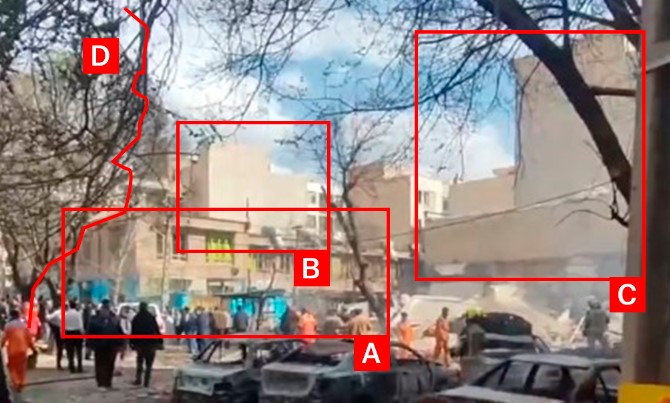
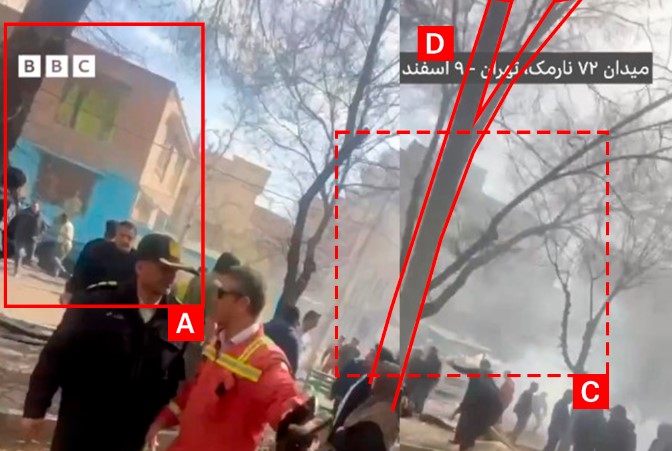
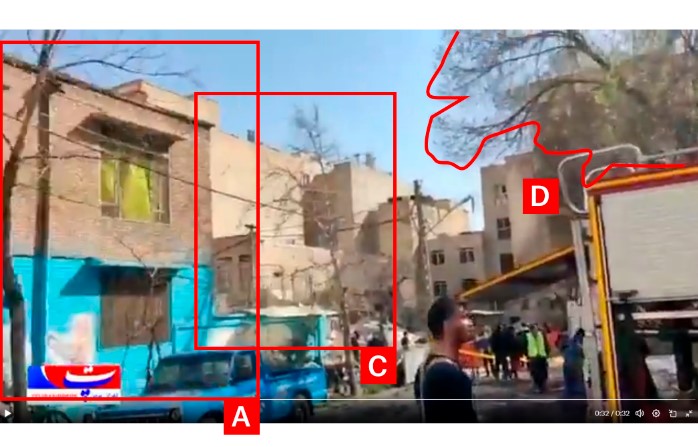
On the morning of February 28, 2026, two students were injured when the Hedayat High School was damaged by an alleged U.S./Israeli strike which targeted the home of former Iranian President Mahmoud Ahmadinejad‘s in Tehran’s Narmak 72nd square. Some reports suggested that students were killed but this was later denied. Three bodyguards – Mehdi Mokhtari, Mustafa Azizi and Hassan Masjedi – were reported killed in the strike and have been recorded as militants. Initial reports suggested that Ahmadinejad was also killed, but recent reporting refutes this claim and instead asserts that he was injured in the strike, which is how he has been counted until further information is found.
Students
@farsna, Mehr, and hra_news reported that two male students were injured following the strike. Subsequent reporting, from Mehr claimed that two students had been killed but HRANA – an Iranian opposition rights organisation – later reported that two male students were injured while returning from school in the Narmak area but were in stable condition. It also reported that “three other students were injured in Narmak and District 4 of Tehran.” None of the reports identified those harmed.
The next day, March 1, the Shargh Media Group reported that the head of the Information and Public Relations Center of the Ministry of Education also denied the news of the death of two school students in the Narmak area of Tehran. Stating that no students were killed, Hossein Sadeghi said: “Only two students were injured while returning home and their general condition is described as good.” He also added that the school did not suffer serious damage as a result of the attacks and its windows were simply broken under the impact of the blast wave.
As no sources refuted the injury of students, Airwars has recorded a range of two to three children injured. To account for the discrepancy in reporting regarding whether students died, Airwars has recorded a range of zero to two children killed. This will be updated should additional information become available.
Ahmadinejad and Mokhtari, Azizi, and Masjedi
Sabreen News specified that the strike “hit the location of the security guards and police officers about 200 meters from [Ahmadinejad’s] house.” This source reported that Ahmadinejad himself was ferried out of the building with a car. Other Iranian sources also refuted the news of the killing of the country’s former President. @akhbarefori reported on Telegram that Ahmadinejad’s relatives had denied that he had been killed in an interview with KhabareFori, while Iran International reported that Ahmadinejad had survived the assassination attempt and was in a safe location.
@IranianCongress included a photograph of one of Ahmadinejad’s bodyguards sitting behind him; his identity was not made clear.
An article in The National News referred to the bodyguards directly as members of the Iranian Revolutionary Guard Corp (IRGC) while reporting from The New York Times further referred to them as IRGC members “who were both guarding him and holding him under house arrest.” The IRGC is a military organisation that is part of the Iranian armed forces under Iran’s Constitution. Therefore, Ahmadinejad’s bodyguards have been categorised as militants. Analysis in Just Security also noted that Ahmadinejad’s bodyguards’ membership in the IRGC would result in their classification as militants. This will be updated if additional information emerges.
An American official and an associate of Ahmadinejad told the New York Times that the former president had been injured in the strike on his home. According to analysis by Just Security, Ahmadinejad’s identity as a former president would make him a civilian as long as “there are no indications in the public domain that he has been involved in the kinds of decision-making or other activities that could render him a direct participant in hostilities.” Therefore, he has been counted as a civilian injury until additional information emerges.
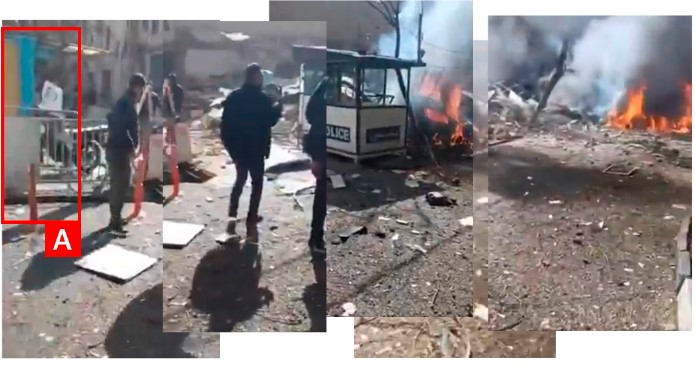
Videos of the aftermath of the incident, including one shared by BBC Persian, showed a damaged residential building, at least four burnt cars and a police booth that was only slightly damaged, indicating that the location was indeed related to police forces. Fires were still burning at the moment the video was filmed.
@factnameh reported the exact geographic location of the strike as 35°43’34.8″N 51°29’14.9″E. The New York Times noted that “the strike did not significantly damage Mr. Ahmadinejad’s house at the end of a dead-end street. But the security outpost at the entrance to the street was struck. Satellite imagery shows that building was destroyed.”
@hra_news, the HRANA News Agency and Mehr News Agency named both the U.S. and Israel as responsible. However, the New York Times spoke with U.S. officials who attributed the strike to the Israeli military. Therefore, both the U.S. and Israel have been listed as potential belligerents.
The U.S. has explicitly denied involvement in this incident. Following reporting by the New York Times which documented damage to 22 schools and 17 healthcare institutions in Iran since February 28th (including this incident), Admiral Cooper, CENTCOM commander, denied US involvement in 38 of the documented cases (excluding Minab School), stating “our comprehensive assessment is that the other 38 did not have a US munition nexus at all.”
A spokesperson for Mossad, the Israeli foreign intelligence agency, declined to comment to the New York Times on their story which detailed Israel’s role in the strike.
Fair
Reported by two or more credible sources, with likely or confirmed near actions by a belligerent.
Causes of Death / Injury
Heavy weapons and explosive munitions
Civilians reported killed
0–2
(0–2 Children)
Civilians reported injured
3
(2 Children, 1 Man)
Military actors reported killed
3
Geolocation Notes
Reports of the incident mention a strike on location name (local translation). This incident was independently geolocated by name of FactNameh | فکتنامه (@factnameh). Analysing audio-visual material from sources, we have narrowed the location down to the following exact coordinates: 35.726178, 51.487483.
JACOBS: On these other 39 allegations here in this other NYT article, you have done preliminary assessments of these reports?
COOPER: We looked at all 39, yes.
JACOBS: And your understanding is that none of the other 38 had US munitions?
COOPER: Not just our understanding, our comprehensive assessment is that the other 38 did not have a US munition nexus at all.
Tehran Press reporter's account of the attack by the child-killing American regime and the Zionist regime on Hedayat School in 72nd Narmak Square, Tehran/ Two students were martyred in this cowardly attack.
Saturday, March 29, 2021
Media from Dr_Ordinarylove (1)
This media contains graphic content. Click to unblur.
News sources report an Israeli attack on a school in Narmak. A source told Fars that two students were injured in the attack. @Farsna News sources report an Israeli attack on a school in Narmak. A source told Fars that two students were injured in the attack. @Farsna
Content
منابع خبری از حملۀ اسرائیل به یک مدرسه در نارمک خبر میدهند. یک منبع به فارس گفته ۲ دانشآموز در این حمله زخمی شدند.@Farsna منابع خبری از حملۀ اسرائیل به یک مدرسه در نارمک خبر میدهند. یک منبع به فارس گفته ۲ دانشآموز در این حمله زخمی شدند.@Farsna
Hedayat High School in Tehran Targeted; 2 Students Die
HRANA News Agency – Official media announced that two #students of Hedayat School in 72nd Square, Narmak, lost their lives following US and Israeli missile attacks on Iranian soil.
Read more
https://ow.ly/9eR650Ynn9O
Content
دبیرستان هدایت در تهران هدف حمله قرار گرفت؛ ۲ دانشآموز جانباختند
خبرگزاری هرانا – رسانههای رسمی اعلام کردند که در پی حملات موشکی آمریکا و اسرائیل به خاک ایران، دو تن از #دانشآموزان مدرسه هدایت در میدان ۷۲ نارمک جان خود را از دست دادند.
ادامه مطلب
https://ow.ly/9eR650Ynn9O
Media from hra_news (1)
This media contains graphic content. Click to unblur.
The Education Ministry spokesman announced that in the past 48 hours, and at the same time as the US and Israeli attacks began, 171 #students have died in different parts of the country. According to him, the highest number of casualties was related to the attack on the "Shajre Tayyiba" girls' elementary school in Minab, with 168 killed and 95 injured. Also, two students in Tehran and a 9-year-old #child in Abek, Qazvin, lost their lives. Three other students were injured in Narmak and District 4 of Tehran.
Content
سخنگوی آموزش و پرورش اعلام کرد که در ۴۸ ساعت گذشته و همزمان با آغاز حملات آمریکا و اسرائیل، ۱۷۱ #دانشآموز در نقاط مختلف کشور جان باختهاند.
به گفته وی، بیشترین تلفات مربوط به حمله به مدرسه ابتدایی دخترانه «شجره طیبه» در میناب با ۱۶۸ کشته و ۹۵ مجروح است. همچنین دو دانشآموز در تهران و یک #کودک ۹ ساله در آبیک قزوین جان خود را از دست دادهاند. سه دانشآموز دیگر نیز در نارمک و منطقه چهار تهران مجروح شدهاند.
Mehr News Agency has reported that at least two students from the Hedayat School in the Narmak district of Tehran have been killed following the US and Israeli military attack on Iran. A video of Israeli missiles hitting the Narmak district of Tehran near the residence of former Iranian President Mahmoud Ahmadinejad was previously released.
This morning, March 24, Iranian media reported, citing the governor of Minab, that 24 students were killed in a girls’ school in Minab, Hormozgan. The Islamic Republic News Agency (IRNA) estimated the number at at least 40 students. The claim that students were killed in the military attack by Islamic Republic media is being made at a time when, despite the widespread internet outage, it is not possible to verify the claim. On the other hand, this claim is being made at a time when the Trade Union Coordination Council announced a few days ago that the number of students killed during the suppression of the January protests by Islamic Republic forces was more than 200.
On Saturday, March 21, 1404, the United States and Israel launched a military attack on Iran, and in return, the Islamic Republic targeted American bases in several countries in the region.
Content
خبرگزاری مهر خبر داده است که در پی حمله نظامی آمریکا و اسراییل به ایران، دستکم ۲ دانشآموز مدرسه «هدایت» در منطقه نارمک تهران کشته شدهاند. پیشتر ویدیویی از اصابت موشکهای اسراییل به منطقه نارمک تهران در نزدیکی محل زندگی «محمود احمدینژاد» رییس جمهور سابق ایران منتشر شده بود.
صبح امروز ۹اسفند، رسانههای داخل ایران به نقل از فرماندار میناب، از کشته شدن ۲۴دانشآموز در دبستانی دخترانه در «میناب» هرمزگان خبر داده بودند. خبرگزاری جمهوری اسلامی ایرنا، این شمار را دستکم ۴۰ دانشآموز برآورد کرده است. ادعای کشته شدن دانشآموزان از سوی رسانههای جمهوری اسلامی درجریان حمله نظامی در حالی مطرح میشود که با وجود قطعی گسترده اینترنت امکان صحتسنجی ادعا وجود ندارد. از سوی دیگر این ادعا در حالی مطرح میشود که شورای هماهنگی تشکلهای صنفی چند روز پیش شمار دانشآموزان کشته شده درجریان سرکوب اعتراضات دی ماه به دست نیروهای جمهوری اسلامی را بیش از ۲۰۰ نفر اعلام کرد.
شنبه ۹اسفند۱۴۰۴ آمریکا و اسراییل به ایران حمله نظامی کردند و در مقابل، جمهوری اسلامی پایگاههای آمریکا را در چندین کشور منطقه هدف حمله نظامی قرار داد.
The martyrdom of two school students in Narmak, Tehran was denied
The head of the Information and Public Relations Center of the Ministry of Education denied the news of the martyrdom of two school students in the Narmak area of Tehran.
According to the Shargh Media Group,
The head of the Information and Public Relations Center of the Ministry of Education denied the news of the martyrdom of two school students in the Narmak area of Tehran.
Stating that no students were martyred in the brutal attacks of the child-killing Zionist regime, Hossein Sadeghi said: Only two students were injured while returning home and their general condition is described as good and there is no reason for concern.
While wishing the two students good health, he added: The school did not suffer serious damage as a result of the enemy attacks and its windows were simply broken under the impact of the blast wave.
Sadeghi also continued about the activity of the television program: Although the TV school programs are being broadcast, these programs do not cover all subjects of the educational levels, so they have not yet started their activities in a coherent manner.
The head of the Information and Public Relations Center of the Ministry of Education expressed hope that, given the current conditions for the country and the need to pay attention to non-exclusive education, with financial support and the issuance of the necessary credits, we will witness the development of programs and maximum coverage of education through the television network so that we can strongly pursue education through this means.
For the latest news and analysis, join the Shargh channel on
"Bale"
and
"Rubika"
Content
شهادت دو دانشآموز مدرسهای در نارمک تهران تکذیب شد
رییس مرکز اطلاع رسانی و روابط عمومی وزارت آموزش و پرورش، خبر شهادت دو دانشآموز مدرسهای در منطقه نارمک تهران را تکذیب کرد.
به گزارش گروه رسانهای شرق،
رییس مرکز اطلاع رسانی و روابط عمومی وزارت آموزش و پرورش، خبر شهادت دو دانشآموز مدرسهای در منطقه نارمک تهران را تکذیب کرد.
حسین صادقی با بیان اینکه هیچ دانشآموزی در حملات وحشیانه رژیم کودک کش صهیونی به شهادت نرسیده، گفت: تنها دو دانش آموز در حین بازگشت به منزل مصدوم شده اند و حال عمومی آنان خوب توصیف شده و جای نگرانی وجود ندارد.
وی ضمن آرزوی سلامتی برای این دو دانش آموز، افزود: مدرسه در پی حملات دشمن آسیب جدی ندیده و صرفاَ تحت تأثیر موج انفجار، شیشه های آن شکسته شده است.
صادقی همچنین درباره فعالیت برنامه تلویزیونی، ادامه داد: اگرچه برنامه های مدرسه تلویزیونی در حال پخش است ولی این برنامه ها، همه دروس پایه های تحصیلی را پوشش نمی دهد، لذا هنوز به شکل منسجمی فعالیت های خود را آعاز نکرده است.
رییس مرکز اطلاع رسانی و روابط عمومی وزارت آموزش و پرورش ابراز امیدواری کرد با توجه به شرایط پیش آمده برای کشور و صرورت توجه به آموزش های غیرحصوری، با حمایت های مالی و ابلاغ اعتبارات لازم شاهد توسعه برنامه ها و پوشش حداکثری آموزش ها از طریق شبکه تلویزیونی باشی تا بتوانیم با قوت از این طریق آموزش ها را دنبال کنیم.
برای اطلاع از آخرین اخبار و تحلیلها به کانال شرق در
«بله»
و
«روبیکا»
بپیوندید.
Three members of Iran's Islamic Revolutionary Guard Corps (IRGC) who belonged to the security team of former president Mahmoud Ahmadinejad have been killed in US-Israeli strikes on Tehran, a source told The National.
The killings took place when a building in the Iranian capital used by the former president's security team was hit on Saturday morning, the source said. All former Iranian presidents are given a security detail from a unit within the IRGC, the country's most powerful military force.
The source denied reports circulating on social media that the building, in Tehran's north-eastern Narmak district, was Mr Ahmadinejad's residence. But he confirmed footage circulating on social media showing the site. It was unclear whether the attack was carried out by the US or Israeli military.
Two videos show burning debris of a building and the sound of sirens can be heard in the background.
At least two pupils at a nearby school were also killed in the strike, the source said. Saturday is a weekday in Iran.
Reuters also confirmed the location of the videos as Tehran from the buildings, numbered sign, road layout and curb, which matched file and satellite imagery of the area. Reuters was not able to verify the exact time when the videos were filmed.
The strike came as the US and Israel launched widespread strikes on Iran on Saturday, prompting retaliatory strikes on US interests across the Middle East.
In other verified videos circulating on social media, some Iranians could be heard whooping and cheering as booms rang out overhead.
Some Iranians have called for foreign military intervention to oust the country's leadership, which has ruled since a revolution in 1979 ousted the former monarchy. At least 7,000 Iranians were killed in a crackdown on anti-government protests last month, held amid widespread grievances over dire economic conditions and strict curbs on social and political freedoms.
Many Iranians know the US and Israel possess significant military power and have the ability to inflict major damage on their country.
Iranian authorities have not yet confirmed that any senior IRGC or political figures were killed in the attacks. As he launched the strikes, US President Donald Trump urged members of the IRGC to lay down their weapons or face death. He also called on Iranians to "take over your government".
It was hard to reach Iranians inside the country on Saturday morning, as online access observers reported widespread cuts to the internet.
The mood in Tehran is "quite grey" and "complex", said the source, who was able to get online. "I am not hearing cars and humans. In the morning and until noon, you could hear people's voices."
Another resident of Iran told The National that "the confrontation is getting more intense".
Javad Heirannia, a Tehran-based political analyst, spoke to The National in the hours before the strikes began and said Iran's strategy was based on making a war as costly as possible for the US by targeting, not only military but also commercial targets across the Middle East, in retaliation.
"It will not allow a war to happen such that the existence of its political system is threatened," he said. "And that’s why it is introducing non-military targets – whether in Israel or Trump’s commercial and business centres in the region. With the threats against commercial centres, it wants to make the cost of war higher for the US."
But any war will also be costly for Tehran, he said, pointing to the huge cost after the 12-day conflict last summer, which required Iran to rebuild ballistic missile and nuclear sites. A war could also prompt greater internal instability. "A new war could cause prices to rise a lot higher, it could prompt new protests and make the situation even more complex than before for Iran," he added.
Iranian state media reported that authorities were making arrangements to evacuate people from their homes, but said citizens should not fear shortages of basic goods, fuel and medicine.
"The government, having understood the serious conditions of the country for a long time, has thought of all the necessary measures and the people should not worry about any shortages or shortcomings," state media reporting, quoting a government notice. It said schools and universities would be closed until further notice "for the well-being of the people".
Basic goods, fuel and medicine are abundant in the country, while 24-hour medical centres and some 24-hour pharmacies are to continue to operate, it said.
Banks are also to continue to provide services. Arrangements have also been made for the movement of people, it added, with the authorities calling for the public to be calm and patient.
Media from The National News (1)
This media contains graphic content. Click to unblur.
♦️3 of Mahmoud Ahmadinejad's bodyguards were martyred🔹Mehdi Mokhtari🔹Mostafa Azizi🔹Hassan Masjedi@AkhbareFori ♦️3 of Mahmoud Ahmadinejad's bodyguards were martyred🔹Mehdi Mokhtari🔹Mostafa Azizi🔹Hassan Masjedi@AkhbareFori
Content
♦️۳ نفر از محافظان محمود احمدینژاد به شهادت رسیدند🔹مهدی مختاری🔹مصطفی عزیزی🔹حسن مسجدی@AkhbareFori ♦️۳ نفر از محافظان محمود احمدینژاد به شهادت رسیدند🔹مهدی مختاری🔹مصطفی عزیزی🔹حسن مسجدی@AkhbareFori
♦️ Ahmadinejad's martyrdom news denied 🔹Following the publication of news that Mahmoud Ahmadinejad was martyred in an Israeli and American missile attack, his relatives denied this news in an interview with KhabareFori and considered it false. @AkhbareFori | Link ♦️ Ahmadinejad's martyrdom news denied 🔹Following the publication of news that Mahmoud Ahmadinejad was martyred in an Israeli and American missile attack, his relatives denied this news in an interview with KhabareFori and considered it false. @AkhbareFori | Link
Content
♦️خبر شهادت احمدینژاد تکذیب شد🔹در پی انتشار اخباری مبنی بر شهادت محمود احمدینژاد در حمله موشکی اسرائیل و آمریکا نزدیکان وی در گفتوگو با خبرفوری این خبر را تکذیب کردند و آن را نادرست دانستند.@AkhbareFori | Link ♦️خبر شهادت احمدینژاد تکذیب شد🔹در پی انتشار اخباری مبنی بر شهادت محمود احمدینژاد در حمله موشکی اسرائیل و آمریکا نزدیکان وی در گفتوگو با خبرفوری این خبر را تکذیب کردند و آن را نادرست دانستند.@AkhbareFori | Link
Following the US and Israeli attacks on Iran, images of an explosion and fire have been released in Tehran's Narmak 72 Square on Saturday, March 29. The attack took place near the home of former Iranian President Mahmoud Ahmadinejad.
No reports have been released yet on possible damage from the attack.
Content
در پی حمله آمریکا و اسرائیل به ایران، تصاویری از انفجار و آتشسوزی در میدان ۷۲ نارمک تهران، شنبه، ۹ اسفند، منتشر شده است. این حمله در حوالی خانه محل سکونت محمود احمدینژاد، رئیسجمهور پیشین ایران صورت گرفته است.
تاکنون گزارشی درمورد آسیبهای احتمالی این حمله منتشر نشده است.
Media from bbcpersian (2)
This media contains graphic content. Click to unblur.
This video is of the aftermath of the US and Israeli attacks on March 29, 1404, at 72 Narmak Square, on the corner of Hedayat Blvd. in Tehran.
We have verified this location. Tehran, Iran:
35°43'34.8"N 51°29'14.9"E
@GeoConfirmed
Content
این ویدیو از آثار حملات آمریکا و اسرائيل در روز ۹ اسفند ۱۴۰۴، مربوط به میدان ۷۲ نارمک، نبش بنبست هدایت در تهران است.
We have verified this location. Tehran, Iran:
35°43'34.8"N 51°29'14.9"E
@GeoConfirmed
Media from factnameh (1)
This media contains graphic content. Click to unblur.
Sabreen News made a claim about the attack on Mahmoud Ahmadinejad's house yesterday.
Sabreen News claimed: Yesterday, with the aim of blinding Ahmadinejad's clues and hidden communications, a projectile hit the location of the security guards and police officers about 200 meters from his house, which resulted in the martyrdom of several of his guards.
At the same time as this attack, a private car quickly arrived in front of Ahmadinejad's house, took him out of the place and out of reach. In a way that his family and relatives were unaware of him for hours.
Related News
Content
صابرین نیوز درباره حمله روز گذشته به خانه محمود احمدی نژاد ادعایی را مطرح کرد.
صابرین نیوز مدعی شد:روز گذشته با هدف کور کردن سرنخها و ارتباطات پنهان احمدینژاد، پرتابهای به محل استقرار محافظان و دژبان نیروی انتظامی در فاصله حدود ۲۰۰ متری از منزل وی اصابت کرده که منجر به شهادت تنی چند از محافظان وی شد.
همزمان با این حمله، یک خودروی شخصی به سرعت به مقابل منزل احمدینژاد رسیده، وی را از محل خارج و از دسترس خارج کرده است. به شکلی که خانواده و مرتبطان وی، ساعت ها از او بی خبر بودهاند.
اخبار مرتبط
Mehr News Agency has reported that at least two students from the Hedayat School in the Narmak district of Tehran have been killed following the US and Israeli military attack on Iran. A video of Israeli missiles hitting the Narmak district of Tehran near the residence of former Iranian President Mahmoud Ahmadinejad was previously released.
This morning, March 24, Iranian media reported, citing the governor of Minab, that 24 students were killed in a girls’ school in Minab, Hormozgan. The Islamic Republic News Agency (IRNA) estimated the number at at least 40 students. The claim that students were killed in the military attack by Islamic Republic media is being made at a time when, despite the widespread internet outage, it is not possible to verify the claim. On the other hand, this claim is being made at a time when the Trade Union Coordination Council announced a few days ago that the number of students killed during the suppression of the January protests by Islamic Republic forces was more than 200.
On Saturday, March 21, 1404, the United States and Israel launched a military attack on Iran, and in return, the Islamic Republic targeted American bases in several countries in the region.
Content
خبرگزاری مهر خبر داده است که در پی حمله نظامی آمریکا و اسراییل به ایران، دستکم ۲ دانشآموز مدرسه «هدایت» در منطقه نارمک تهران کشته شدهاند. پیشتر ویدیویی از اصابت موشکهای اسراییل به منطقه نارمک تهران در نزدیکی محل زندگی «محمود احمدینژاد» رییس جمهور سابق ایران منتشر شده بود.
صبح امروز ۹اسفند، رسانههای داخل ایران به نقل از فرماندار میناب، از کشته شدن ۲۴دانشآموز در دبستانی دخترانه در «میناب» هرمزگان خبر داده بودند. خبرگزاری جمهوری اسلامی ایرنا، این شمار را دستکم ۴۰ دانشآموز برآورد کرده است. ادعای کشته شدن دانشآموزان از سوی رسانههای جمهوری اسلامی درجریان حمله نظامی در حالی مطرح میشود که با وجود قطعی گسترده اینترنت امکان صحتسنجی ادعا وجود ندارد. از سوی دیگر این ادعا در حالی مطرح میشود که شورای هماهنگی تشکلهای صنفی چند روز پیش شمار دانشآموزان کشته شده درجریان سرکوب اعتراضات دی ماه به دست نیروهای جمهوری اسلامی را بیش از ۲۰۰ نفر اعلام کرد.
شنبه ۹اسفند۱۴۰۴ آمریکا و اسراییل به ایران حمله نظامی کردند و در مقابل، جمهوری اسلامی پایگاههای آمریکا را در چندین کشور منطقه هدف حمله نظامی قرار داد.
aryentvfarsiVerified 1 w. Iranian authorities and news agencies say that at least two students from the Hedayat School in the Narmak district of Tehran have been killed following the US and Israeli military attack on Iran on Saturday, March 29, 1404. Earlier, videos of a missile hitting the Narmak district near the residence of former Iranian President Mahmoud Ahmadinejad were posted on social media. At the same time, Iranian domestic media quoted the governor of Minab as saying that 24 students had died in an attack on a girls' elementary school in Minab, Hormozgan province. These claims come at a time when independent verification and access to field sources are not possible due to a widespread internet outage in Iran. So far, independent sources or impartial international institutions have not confirmed this figure. The claim that students were killed during military attacks was published by the official media of the Islamic Republic, while the Coordination Council of Teachers' Unions had previously announced that more than 200 students were killed during the suppression of the January protests by the forces of the Islamic Republic. No comments yet.
Content
aryentvfarsiVerified 1 w.مقامات و خبرگزاریهای ایران می گویند که در پی حمله نظامی آمریکا و اسرائیل به ایران در روز شنبه ۹ اسفند ۱۴۰۴، دستکم دو دانشآموز مدرسه «هدایت» در منطقه نارمک تهران کشته شدهاند. پیشتر ویدیوهایی از اصابت موشک به منطقه نارمک در نزدیکی محل سکونت محمود احمدینژاد، رییسجمهور پیشین ایران، در شبکههای اجتماعی منتشر شده بود.همزمان، رسانههای داخلی ایران به نقل از فرماندار میناب اعلام کردند که در جریان حمله به یک دبستان دخترانه در میناب، استان هرمزگان، ۲۴ دانشآموز جان باختهاند.این ادعاها در شرایطی مطرح میشود که بهدلیل قطعی گسترده اینترنت در ایران، امکان صحتسنجی مستقل و دسترسی به منابع میدانی وجود ندارد. تاکنون منابع مستقل یا نهادهای بیطرف بینالمللی این آمار را تأیید نکردهاند.ادعای کشتهشدن دانشآموزان در جریان حملات نظامی در حالی از سوی رسانههای رسمی جمهوری اسلامی منتشر شده که پیشتر شورای هماهنگی تشکلهای صنفی فرهنگیان اعلام کرده بود بیش از ۲۰۰ دانشآموز در جریان سرکوب اعتراضات دیماه به دست نیروهای جمهوری اسلامی کشته شدهاند. No comments yet.
Media from aryentvfarsi (1)
This media contains graphic content. Click to unblur.
iranian_rcsVerified 1 wRight now, Narmak 72 Square; Direct and terrorist attack by the Zionist regime and the US on residential areas in Narmak 72 Square, Tehran
Content
iranian_rcsVerified 1 wهم اکنون میدان ۷۲ نارمک؛حمله مستقیم و تروریستی رژیم صهونیستی و آمریکا به مناطق مسکونی در میدان ۷۲ نارمک تهران
The martyrdom of two school students in Narmak, Tehran was denied
The head of the Information and Public Relations Center of the Ministry of Education denied the news of the martyrdom of two school students in the Narmak area of Tehran.
According to the Shargh Media Group,
The head of the Information and Public Relations Center of the Ministry of Education denied the news of the martyrdom of two school students in the Narmak area of Tehran.
Stating that no students were martyred in the brutal attacks of the child-killing Zionist regime, Hossein Sadeghi said: Only two students were injured while returning home and their general condition is described as good and there is no reason for concern.
While wishing the two students good health, he added: The school did not suffer serious damage as a result of the enemy attacks and its windows were simply broken under the impact of the blast wave.
Sadeghi also continued about the activity of the television program: Although the TV school programs are being broadcast, these programs do not cover all subjects of the educational levels, so they have not yet started their activities in a coherent manner.
The head of the Information and Public Relations Center of the Ministry of Education expressed hope that, given the current conditions for the country and the need to pay attention to non-restricted education, with financial support and the announcement of the necessary credits, we will witness the development of programs and maximum coverage of education through the television network so that we can strongly pursue education in this way.
Follow the latest news
Society
through this link.
Content
شهادت دو دانشآموز مدرسهای در نارمک تهران تکذیب شد
رییس مرکز اطلاع رسانی و روابط عمومی وزارت آموزش و پرورش، خبر شهادت دو دانشآموز مدرسهای در منطقه نارمک تهران را تکذیب کرد.
به گزارش گروه رسانهای شرق،
رییس مرکز اطلاع رسانی و روابط عمومی وزارت آموزش و پرورش، خبر شهادت دو دانشآموز مدرسهای در منطقه نارمک تهران را تکذیب کرد.
حسین صادقی با بیان اینکه هیچ دانشآموزی در حملات وحشیانه رژیم کودک کش صهیونی به شهادت نرسیده، گفت: تنها دو دانش آموز در حین بازگشت به منزل مصدوم شده اند و حال عمومی آنان خوب توصیف شده و جای نگرانی وجود ندارد.
وی ضمن آرزوی سلامتی برای این دو دانش آموز، افزود: مدرسه در پی حملات دشمن آسیب جدی ندیده و صرفاَ تحت تأثیر موج انفجار، شیشه های آن شکسته شده است.
صادقی همچنین درباره فعالیت برنامه تلویزیونی، ادامه داد: اگرچه برنامه های مدرسه تلویزیونی در حال پخش است ولی این برنامه ها، همه دروس پایه های تحصیلی را پوشش نمی دهد، لذا هنوز به شکل منسجمی فعالیت های خود را آعاز نکرده است.
رییس مرکز اطلاع رسانی و روابط عمومی وزارت آموزش و پرورش ابراز امیدواری کرد با توجه به شرایط پیش آمده برای کشور و صرورت توجه به آموزش های غیرحصوری، با حمایت های مالی و ابلاغ اعتبارات لازم شاهد توسعه برنامه ها و پوشش حداکثری آموزش ها از طریق شبکه تلویزیونی باشی تا بتوانیم با قوت از این طریق آموزش ها را دنبال کنیم.
آخرین اخبار
جامعه
را از طریق این لینک پیگیری کنید.
Sabreen News: Three of the bodyguards of former Iranian President Mahmoud Ahmadinejad, Mehdi Mokhtari, Mostafa Azizi and Hassan Masjedi, were martyred in an attack by the global arrogance.
Three of the bodyguards of former Iranian President Mahmoud Ahmadinejad, Mehdi Mokhtari, Mostafa Azizi and Hassan Masjedi, were martyred in an attack by the global arrogance.
Content
صابرین نیوز: سه تن از محافظان محمود
احمدینژاد، رئیس جمهور اسبق ایران به نام
های مهدی مختاری، مصطفی عزیزی و حسن مسجدی در حمله استکبار جهانی به شهادت رسیدند.
سه تن از محافظان محمود احمدینژاد، رئیس جمهور اسبق ایران به نام های مهدی مختاری، مصطفی عزیزی و حسن مسجدی در حمله استکبار جهانی به شهادت رسیدند.
Mahmoud Ahmadinejad's bodyguards including; Mehdi Mokhtari, Mostafa Azizi, Hassan Masjid were killed. Mahmoud Ahmadinejad is said to have been targeted by Israel this morning for his remarks about calling the Holocaust a lie. His death has not yet been confirmed. #Iran #Mahmoud_Ahmadi_Nejad
Content
محافظان محمود احمدینژاد شامل؛مهدی مختاری، مصطفی عزیزی، حسن مسجدیکشته شدند. گفته میشود محمود احمدی نژاد به دلیل سخنان خود در مورد دروغین خواندن هولوکاست امروز صبح توسط اسرائیل هدف قرار گرفته. هنوز مرگ او تایید نشده.#ایران #محمود_احمدی_نژاد
Media from voice.of.revolution (1)
This media contains graphic content. Click to unblur.
Exclusive Informed source: Ahmadinejad is alive and has been moved to a safe place March 12, 1404, 11:35 (GMT)According to exclusive information received by Iran International from informed sources in Iran, Mahmoud Ahmadinejad, the former head of state in the Islamic Republic, is alive, has survived an assassination attempt and is in a safe place. Earlier, the media in Iran had published reports that he was killed in US and Israeli airstrikes.
Content
اختصاصی منبع مطلع: احمدینژاد زنده است و به مکانی امن منتقل شده۱۲ اسفند ۱۴۰۴، ۱۱:۳۵ (گرینویچ)بر اساس اطلاعات اختصاصی رسیده به ایراناینترنشنال از منابع آگاه در ایران، محمود احمدینژاد، رییس پیشین دولت در جمهوری اسلامی، زنده است، از سوءقصد جان سالم به در برده و در مکانی امن قرار دارد. پیشتر رسانهها در ایران گزارشهایی درباره کشته شدن او در حملات هوایی آمریکا و اسرائیل منتشر کرده بودند.
The Hammihan newspaper published the names of three bodyguards of former Iranian President Mahmoud Ahmadinejad who were killed in an attack in Tehran this morning. Mehdi Mokhtari, Mostafa Azizi, and Hassan Masjedi were among the bodyguards who perished in the incident. This morning, videos of the explosion in Narmak Square 72, near Ahmadinejad’s residence, were released.
Content
روزنامه هممیهن اسامی سه نفر از محافظین محمود احمدینژاد، رئیسجمهوری اسبق رژیم ایران، را که در حمله صبح امروز به تهران کشته شدند منتشر کرد. مهدی مختاری، مصطفی عزیزی و حسن مسجدی از جمله محافظانی بودند که در این حادثه به هلاکت رسیدند. صبح امروز ویدیوهایی از انفجار در میدان ۷۲ نارمک، در نزدیکی محل زندگی احمدینژاد، منتشر شده بود.
Media from nictv24 (1)
This media contains graphic content. Click to unblur.
Three members of Iran's Islamic Revolutionary Guard Corps (IRGC) who belonged to the security team of former president Mahmoud Ahmadinejad have been killed in US-Israeli strikes on Tehran, a source told The National.
The killings took place when a building in the Iranian capital used by the former president's security team was hit on Saturday morning, the source said. All former Iranian presidents are given a security detail from a unit within the IRGC, the country's most powerful military force.
The source denied reports circulating on social media that the building, in Tehran's north-eastern Narmak district, was Mr Ahmadinejad's residence. But he confirmed footage circulating on social media showing the site. It was unclear whether the attack was carried out by the US or Israeli military.
Two videos show burning debris of a building and the sound of sirens can be heard in the background.
At least two pupils at a nearby school were also killed in the strike, the source said. Saturday is a weekday in Iran.
Reuters also confirmed the location of the videos as Tehran from the buildings, numbered sign, road layout and curb, which matched file and satellite imagery of the area. Reuters was not able to verify the exact time when the videos were filmed.
The strike came as the US and Israel launched widespread strikes on Iran on Saturday, prompting retaliatory strikes on US interests across the Middle East.
In other verified videos circulating on social media, some Iranians could be heard whooping and cheering as booms rang out overhead.
Some Iranians have called for foreign military intervention to oust the country's leadership, which has ruled since a revolution in 1979 ousted the former monarchy. At least 7,000 Iranians were killed in a crackdown on anti-government protests last month, held amid widespread grievances over dire economic conditions and strict curbs on social and political freedoms.
Many Iranians know the US and Israel possess significant military power and have the ability to inflict major damage on their country.
Iranian authorities have not yet confirmed that any senior IRGC or political figures were killed in the attacks. As he launched the strikes, US President Donald Trump urged members of the IRGC to lay down their weapons or face death. He also called on Iranians to "take over your government".
It was hard to reach Iranians inside the country on Saturday morning, as online access observers reported widespread cuts to the internet.
The mood in Tehran is "quite grey" and "complex", said the source, who was able to get online. "I am not hearing cars and humans. In the morning and until noon, you could hear people's voices."
Another resident of Iran told The National that "the confrontation is getting more intense".
Javad Heirannia, a Tehran-based political analyst, spoke to The National in the hours before the strikes began and said Iran's strategy was based on making a war as costly as possible for the US by targeting, not only military but also commercial targets across the Middle East, in retaliation.
"It will not allow a war to happen such that the existence of its political system is threatened," he said. "And that’s why it is introducing non-military targets – whether in Israel or Trump’s commercial and business centres in the region. With the threats against commercial centres, it wants to make the cost of war higher for the US."
But any war will also be costly for Tehran, he said, pointing to the huge cost after the 12-day conflict last summer, which required Iran to rebuild ballistic missile and nuclear sites. A war could also prompt greater internal instability. "A new war could cause prices to rise a lot higher, it could prompt new protests and make the situation even more complex than before for Iran," he added.
Iranian state media reported that authorities were making arrangements to evacuate people from their homes, but said citizens should not fear shortages of basic goods, fuel and medicine.
"The government, having understood the serious conditions of the country for a long time, has thought of all the necessary measures and the people should not worry about any shortages or shortcomings," state media reporting, quoting a government notice. It said schools and universities would be closed until further notice "for the well-being of the people".
Basic goods, fuel and medicine are abundant in the country, while 24-hour medical centres and some 24-hour pharmacies are to continue to operate, it said.
Banks are also to continue to provide services. Arrangements have also been made for the movement of people, it added, with the authorities calling for the public to be calm and patient.
Media from The National News (1)
This media contains graphic content. Click to unblur.
As uncertainty over the fragile cease-fire persists, Iran is sorting through the wreckage from U.S.-Israeli strikes, which have exacted a heavy toll on its civilian infrastructure. The New York Times has verified damage to 22 schools and 17 health care facilities, a fraction of the devastation in the war so far.The scale of devastation is likely far greater than The Times’s analysis. The Iranian Red Crescent Society, the country’s primary humanitarian relief organization, said on April 2 that at least 763 schools and 316 health care facilities had been damaged or destroyed in the war.The Times confirmed damage by using high-resolution satellite imagery and by verifying footage from state media or social media sites, including X, Telegram, Instagram and Facebook. The analysis was limited to schools and health care facilities that were damaged on or after Feb. 28, the first day of the war.The Times’s analysis shows that the damage was often caused by strikes in crowded neighborhoods — especially in Tehran, a capital of 10 million people that is as densely populated as New York City.The Times was not able to verify the total number of people killed at schools and health care facilities. At least 1,701 civilians have been killed in Iran as of Tuesday, according to the Human Rights Activists News Agency. Among them are students, teachers and health care workers.In most instances examined by The Times, the intended target of a strike was not clear. In some cases, schools and health care facilities were damaged by nearby strikes; others were directly hit. It was not always possible to determine whether the strikes were by the U.S. or Israeli military.Schools and hospitals hold some of the strongest protections of all civilian infrastructure under international humanitarian law, and intentional attacks on them could be considered war crimes. Even strikes on military targets that damage nearby schools and hospitals can violate international law, experts say, and military commanders are expected to take stringent measures to prevent and minimize such harm.Defense Secretary Pete Hegseth and other American officials have insisted that the U.S. military is acting with precision.During the second week of the war, Mr. Hegseth accused Iran of “moving rocket launchers into civilian neighborhoods near schools, near hospitals to try to prevent our ability to strike.” He has not provided any proof for this assertion, and when asked by The Times to provide such evidence, the Pentagon declined to comment.The Pentagon also declined to comment on The Times’s analysis of schools and health care facilities damaged during the war.Early strikes on schools are among the deadliestBy far the deadliest strike on civilians came on Feb. 28, the first day of the war, when the Shajarah Tayyebeh Elementary School was bombed in the southern Iranian town of Minab. The strike killed at least 175 people, most of them children, according to Iranian health officials.An ongoing investigation by the U.S. military found that American forces were responsible for the bombing, according to U.S. officials and others with knowledge of the preliminary findings. The military had used outdated information and labeled the school as a military target, the early findings said.The site of the school was originally part of an Iranian naval base, but according to a visual investigation by The Times, the building had been fenced off from the naval base for at least 10 years. It had clearly visible play areas, and its walls were painted blue and pink.U.S. officials have emphasized that the findings of the investigation were preliminary and that there were still unanswered questions about why the outdated information had not been double checked, said the people briefed on the inquiry. The White House press secretary, Karoline Leavitt, has said the investigation is “still ongoing.”On the same day, in Abyek, west of Tehran, a blast from a nearby strike ripped through a boys elementary school, blowing out windows and sending dozens of children on the playground running for cover.Satellite image analysis and video footage verified by The Times showed that the strike had apparently targeted a communications tower less than 400 feet away. One boy was killed, Iranian state media reported. The footage showed that he appeared to have been hit by debris on the playground.Verified footage showed that another strike that day hit near a high school in Tehran’s Narmak district, in a residential area where Iran’s former president, Mahmoud Ahmadinejad, was known to live. Two students were killed, according to Mehr, a semiofficial news agency.A fourth strike that day, using a new U.S.-made ballistic missile, hit a sports hall, an adjacent elementary school and a blood transfusion center near a military facility in the city of Lamerd, according to weapons experts and a visual analysis by The Times. The sports hall was being used by a young girls’ volleyball team at the time.At least six people, including at least four children, were killed in this strike, according to a Times review of a list of fatalities released by an Iranian news agency, images of caskets posted online, recordings of funeral speeches and reference photos of the victims.As the war got underway, the Iranian government suspended classes in schools across the country. But U.S.-Israeli strikes continued to damage school buildings for weeks.Some, such as the Shaghayegh Girls’ School in Khomein and a building at the Iran University for Science and Technology in Tehran, were directly hit and reduced to ruins, according to analysis of video and satellite imagery.Bombings near hospitals forced evacuationsHealth facilities have also been substantially damaged, impacting patients, health care workers and emergency crews.On March 1, the facade of the Gandhi Hospital in northern Tehran was ripped off during heavy strikes that appeared to target Iranian state television facilities across the street.Videos taken on a government media tour from outside and inside the hospital show the extent of the strike’s damage.The hospital was forced to evacuate its patients, including at least one infant in an incubator, according to Iran’s health ministry, hospital officials in interviews with Iranian state media, and footage verified by The Times.“We have newborn babies,” Dr. Mohammad Hassan Bani Assad, the hospital’s president, told Iranian state television. “We had eight patients in the I.C.U., two in critical condition. Women giving birth. Embryos in our fertility department.”The bombing forced another hospital complex in the city of Bushehr, in southern Iran, to evacuate babies.In footage shared by the Iranian Red Crescent Society and verified by The Times, an emergency worker grew emotional as he looked over infants in the hospital’s damaged newborn ward.“If we disconnect what they’re hooked up to, they will die,” he said. “Look at them. This poor kid. This dear child.”Under international humanitarian law, military commanders planning a strike must consider the risk of incidental damage to civilians and civilian infrastructure. In each attack, they are supposed to weigh the expected military gains against expected civilian harm, and take precautions to minimize that harm.Experts said that Mr. Hegseth has dismantled many of the systems meant to help the United States abide by such obligations. They noted that the defense secretary has fired the military’s top lawyers, who advise military leaders on domestic and international laws of armed conflict, and that he has closed Pentagon offices and terminated positions designed to reduce and respond to civilian harm.Mr. Hegseth has also boasted about his efforts to scale back what he has called “stupid rules of engagement.”Oona Hathaway, a professor of international law at Yale Law School, said those rules “were developed precisely to prevent this kind of civilian harm,” referring to the damage caused to Iran’s schools and hospitals. Ms. Hathaway was one of over 100 U.S.-based international law experts who signed an open letter this month expressing “profound concern over serious violations of international law” during the war.On Monday, Mr. Trump, who has threatened to bomb Iran “back to the Stone Ages,” brushed off a question about the possibility that U.S. attacks on civilian infrastructure could amount to war crimes. Iran has also been accused of striking civilian infrastructure in the Middle East.Capt. Tim Hawkins, a spokesman for U.S. Central Command, the military headquarters leading the war, told The Times that it takes reports of civilian harm “seriously” and that it does not “deliberately target civilians.”He declined to answer detailed questions about the steps it was taking to minimize civilian harm in Iran, citing the ongoing investigation into the strike that killed scores of children at the school in Minab. He referred other questions to the Defense Department, which also declined to comment, citing the investigation.The Israeli military said in a statement that it “operates in accordance with the law of armed conflict” and takes precautions, “as much as possible under the circumstances,” to mitigate civilian harm. The military “invests significant efforts in assessing potential civilian harm” before a strike, the statement added.Many strikes hit Iran’s dense capitalAbout half of the damaged schools and health care facilities identified by The Times’s analysis were in Tehran, a crowded and typically bustling city, where the bombing has been intense.According to the Iranian Red Crescent Society, more than 46,000 residential and commercial units have also been damaged in the capital.During the war, the United States and Israel have struck not only the facilities of the Islamic Revolutionary Guards Corps, but also government buildings, intelligence offices and police stations.As in many cities around the world, those sites are often near schools, hospitals and residential buildings. In Tehran, multiple strikes hit the police headquarters in the Vanak neighborhood during the first days of the war and damaged several nearby hospitals, according to satellite imagery analyzed by The Times.A video shot from near the Red Crescent building and verified by The Times shows a massive smoke plume rising from the site of the police headquarters.Instances verified by The Times of damage to schools and health care facilities caused by strikes on civilian neighborhoods are “within the scope of foreseeable effects” that military commanders are meant to minimize, said Mara Revkin, a professor and scholar of armed conflict at the Duke University School of Law.The World Health Organization has verified at least 23 attacks on the Iranian health care system, including 11 attacks on health care facilities, said Dr. Hanan Balkhy, the W.H.O.’s regional director for the Eastern Mediterranean. Six of the 11 facility attacks that the W.H.O. has verified were in Tehran.Iran’s health care system is still “standing on its feet,” but operating under increasing strain, with disruptions to patient services and continuity of care for chronic conditions becoming more difficult, Dr. Balkhy said, adding, “Destroying health care and access to health care and doctors and medication is harm.”
Media from New York Times (33)
This media contains graphic content. Click to unblur.
Tuesday, May 19, 2026 | 10:00 |
2118 Rayburn
The hearing will examine DoD policies, programs, and activities in the Greater Middle East and Africa in preparation for the FY27 NDAA. Members will assess the threats to U.S. national security in the region and evaluate the effectiveness of the Department’s use of the resources provided by Congress to defend our nation.
Opening Statement:
Chairman Mike Rogers
Witnesses:
The Honorable Daniel Zimmerman
Assistant Secretary of Defense for International Security Affairs
Office of the Secretary of Defense
Admiral Brad Cooper, USN
Commander
U.S. Central Command
General Dagvin Anderson, USAF
Commander
U.S. Africa Command
Livestream:
Related Files
2026-05-19 Cooper Testimony
2026-05-19 Anderson Testimony
2026-05-19 Zimmerman Testimony
Media from House Armed Services Committee (2)
This media contains graphic content. Click to unblur.
Days after Israeli strikes killed Iran’s supreme leader and other top officials in the opening salvos of the war, President Trump mused publicly that it would be best if “someone from within” Iran took over the country.
It turns out that the United States and Israel went into the conflict with a particular and very surprising someone in mind: Mahmoud Ahmadinejad, the former Iranian president known for his hard-line, anti-Israel and anti-American views.
But the audacious plan, developed by the Israelis and which Mr. Ahmadinejad had been consulted about, quickly went awry, according to the U.S. officials who were briefed on it.
Mr. Ahmadinejad was injured on the war’s first day by an Israeli strike at his home in Tehran that had been designed to free him from house arrest, the American officials and an associate of Mr. Ahmadinejad said. He survived the strike, they said, but after the near miss he became disillusioned with the regime change plan.
He has not been seen publicly since then and his current whereabouts and condition are unknown.
To say that Mr. Ahmadinejad was an unusual choice would be a vast understatement. While he had increasingly clashed with the regime’s leaders and had been placed under close watch by the Iranian authorities, he was known during his term as president, from 2005 to 2013, for his calls to “wipe Israel off the map.” He was a strong supporter of Iran’s nuclear program, a fierce critic of the United States and known for violently cracking down on internal dissent.
How Mr. Ahmadinejad was recruited to take part remains unknown.
The existence of the effort, which has not been previously reported, was part of a multistage plan developed by Israel to topple Iran’s theocratic government. It underscores how Mr. Trump and Prime Minister Benjamin Netanyahu of Israel went into the war not only misjudging how quickly they could achieve their objectives but also gambling to some degree on a risky plan for leadership change in Iran that even some of Mr. Trump’s aides found implausible. Some American officials were skeptical in particular about the viability of putting Mr. Ahmadinejad back into power.
“From the outset, President Trump was clear about his goals for Operation Epic Fury: destroy Iran’s ballistic missiles, dismantle their production facilities, sink their navy, and weaken their proxy,” Anna Kelly, a White House spokeswoman, said in response to a request for comment about the regime change plan and Ahmadinejad. “The United States military met or exceeded all of its objectives, and now, our negotiators are working to make a deal that would end Iran’s nuclear capabilities for good.”
A spokesperson for Mossad, the Israeli foreign intelligence agency, declined to comment.
U.S. officials spoke during the early days of the war about plans developed with Israel to identify a pragmatist who could take over the country. Officials insisted that there was intelligence that some within the Iranian regime would be willing to work with the United States, even if those people couldn’t be described as “moderates.”
Mr. Trump was enjoying the success of the raid by U.S. forces to capture Venezuela’s leader, Nicolas Maduro, and the willingness of his interim replacement to work with the White House — a model that Mr. Trump appeared to think could be replicated elsewhere.
In recent years, Mr. Ahmadinejad has clashed with regime leaders, accusing them of corruption, and rumors have swirled about his loyalties. He was disqualified from numerous presidential elections, his aides were arrested and Mr. Ahmadinejad’s movements were increasingly restricted to his home in the Narmak section of eastern Tehran.
That American and Israeli officials saw Mr. Ahmadinejad as a potential leader of a new government in Iran is further evidence that the war in February was launched with the hopes of installing more pliable leadership in Tehran. Mr. Trump and members of his cabinet have said that the goals of the war were narrowly focused on destroying Iran’s nuclear, missile and military capabilities.
There are many unanswered questions about how Israel and the United States planned to put Mr. Ahmadinejad in power, and the circumstances surrounding the airstrike that injured him. American officials said that the strike — carried out by the Israeli Air Force — was meant to kill the guards watching over Mr. Ahmadinejad as part of a plan to release him from house arrest.
On the first day of the war, Israeli strikes killed Ayatollah Ali Khamenei, Iran’s supreme leader. The strike at Ayatollah Khamenei’s compound in central Tehran also blew up a meeting of Iranian officials, killing some officials whom the White House had identified as more willing to negotiate over a change in government than their bosses.
There were also initial reports at the time in the Iranian media that Mr. Ahmadinejad had been killed in the strike on his home.
The strike did not significantly damage Mr. Ahmadinejad’s house at the end of a dead-end street. But the security outpost at the entrance to the street was struck. Satellite imagery shows that building was destroyed.
In the days that followed, official news agencies clarified that he had survived but that his “bodyguards” — in actuality Islamic Revolutionary Guard Corps members who were both guarding him and holding him under house arrest — were killed.
An article in The Atlantic in March, citing anonymous associates of Mr. Ahmadinejad, said that the former president had been freed from government confinement after the strike at his house, which the article described as “in effect a jailbreak operation.”
After that article, an associate of Mr. Ahmadinejad confirmed to The New York Times that Mr. Ahmadinejad saw the strike as an attempt to free him. The associate said the Americans viewed Mr. Ahmadinejad as someone who could lead Iran, and had the capability to manage “Iran’s political, social and military situation.”
Mr. Ahmadinejad would have been able to “play a very important role” in Iran in the near future, the associate said, suggesting that the United States saw him as similar to Delcy Rodriguez, who took power in Venezuela after American forces seized Mr. Maduro and has since worked closely with the Trump administration, the person said.
During his presidency, Mr. Ahmadinejad was known both for his hard-line policies and his often outlandish fundamentalist pronouncements, such as his declaration that there was not a single gay person in Iran and his denial of the Holocaust. He spoke at a conference in Tehran called “A World Without Zionism.”
Western satirists lampooned these views, and Mr. Ahmadinejad became something of an unwitting pop culture curiosity, even the subject of Saturday Night Live parodies.
He also presided over the country at a time when Iran was accelerating the enrichment of uranium it could one day use for making a nuclear bomb should it choose to weaponize its program. An American intelligence assessment in 2007 concluded that Iran had, years earlier, frozen its work on building a nuclear device but was continuing the enrichment of nuclear fuel it could use for a nuclear weapon if it changed its mind.
After Mr. Ahmadinejad left office he gradually became something of an open critic of the theocratic government, or at least at odds with Ayatollah Khamenei.
Three times — 2017, 2021, and 2024 — Mr. Ahmadinejad tried to run for his previous job, but each time Iran’s Guardian Council, a group of civilian and Islamic jurists, blocked his presidential campaign. Mr. Ahmadinejad has accused senior Iranian officials of corruption or bad governance and become a critic of the government in Tehran. While he never was an overt dissident, the regime began to treat him as a potentially destabilizing element.
Mr. Ahmadinejad’s ties to the West are far murkier.
In a 2019 interview with The New York Times, Mr. Ahmadinejad praised President Trump and argued for a rapprochement between Iran and the United States.
“Mr. Trump is a man of action,” Mr. Ahmadinejad said. “He is a businessman and therefore he is capable of calculating cost-benefits and making a decision. We say to him, let’s calculate the long-term cost-benefit of our two nations and not be shortsighted.”
People close to Mr. Ahmadinejad have been accused of having too close ties to the West, or even spying for Israel. Esfandiar Rahim Mashai, Mr. Ahmadinejad’s former chief of staff, was put on trial in 2018 and the judge in the case publicly asked about his links to British and Israeli spy agencies, an accusation publicized by state media.
In the past few years Mr. Ahmadinejad has made trips out of Iran that further fueled speculation.
In 2023, he traveled to Guatemala and in 2024 and 2025 he went to Hungary, trips detailed by New Lines magazine. Both countries have close ties to Israel.
The Hungarian prime minister at the time, Viktor Orban, has a close relationship with Mr. Netanyahu. During the trips to Hungary, Mr. Ahmadinejad spoke at a university connected to Mr. Orban.
He returned from Budapest just days before Israel began attacking Iran last June. When that war broke out, he kept a low public profile and posted only few statements on social media. His relative silence about a war with a country that Mr. Ahmadinejad had long viewed as Iran’s main enemy was noted by many on Iranian social media.
Discussion of Mr. Ahmadinejad on Iranian social media picked up after reports of his death, according to an analysis by FilterLabs, a company that tracks public sentiment. But the discussion declined in the weeks following, mainly amounting to confusion about his whereabouts.
At the outset, Israel envisioned the war unfolding in several phases, starting with air assaults by the United States and Israel plus the killing of Iran’s supreme leaders and the mobilization of Kurds to fight Iranian forces, according to two Israeli defense officials familiar with the operational planning.
Then, the Israeli plan foresaw a combination of influence campaigns carried out by Israel and the Kurdish invasion creating political instability in Iran and a sense that the regime was losing control. In a third stage, the regime, under intense political pressure and the weight of damage to key infrastructure like electricity, would collapse, allowing for what the Israelis referred to as an “alternative government” to be established.
Other than the air campaign and the killing of the supreme leader, little of the plan played out as the Israelis had hoped, and much of it appears in retrospect to have profoundly misjudged Iran’s resilience and the capacity of the United States and Israel to exert their will.
But even after it became clear that Iran’s theocratic government had survived the first months of the war, some Israeli officials continued to express belief in their vision of imposing regime change in Tehran.
David Barnea, Mossad’s chief, told associates in several discussions that he still thought that the agency’s plan, based on decades of intelligence collection and operational activity in Iran, had a very good chance of succeeding had it received approval to move forward.
The most recent round of hostilities between Iran, on one hand, and Israel and the United States, on the other, opened with a campaign of leadership targeting. The initial strikes killed Iran’s supreme leader, Ali Khamenei, and other senior figures within Iran’s military and security apparatus. Most died in Israeli attacks, often with at least American intelligence support; U.S. forces may have targeted others. Subsequent operations have extended to Lebanon, where Hezbollah leadership, including senior intelligence officers, have been targeted. These operations present a question that has animated over three decades of scholarship and government deliberations on what has variously been called decapitation, assassination, and targeted killing: in wartime, when is striking a member of the enemy leadership lawful under the law of armed conflict?
In this essay, we map the legal framework that governs the targeting of a State’s leadership during an international armed conflict (IAC). Our analysis focuses solely on IACs; it does not address the targeting of the leadership of an organized armed group during non-international armed conflict. We will similarly limit ourselves to the legality of such strikes under the law of armed conflict (LOAC), also known as international humanitarian law.
There is an important distinction to be made at the outset. As we will explain, there are circumstances in which a State’s leaders can lawfully be targeted under LOAC during an armed conflict. But the legality of such targeting does not affect any parallel illegality under the jus ad bellum. A State’s violation of the prohibition on the use of force in Article 2(4) of the UN Charter is not somehow “cured” by specific acts being lawful under LOAC. Thus, if targeting Khamenei and certain other senior Iranian leaders was lawful under LOAC (and in our view it likely, or at least arguably, was for most of those targeted), this does not diminish the illegality of the use of force by the United States and Israel against Iran (which is in our view is apparent), of which these strikes were part.
In short, a State leader can legally be targeted under LOAC if they are a combatant, meaning a member of the State’s armed forces (which some senior leaders will be), or if they are a civilian directly participating in hostilities (which, as we will explain, many civilian leaders often are). Civilian leaders who do not directly participate in hostilities are protected from attack. These are the same rules that apply to targeting any other person in a conflict.
Aside from a degree of complexity regarding the legal architecture governing leadership strikes, which we explore below, the assessment of individual strikes is heavily fact-dependent. Because we have access only to open-source material, our conclusions are, in most cases, tentative. It is also essential to point out that members of the leadership may have been killed incidentally in attacks on other individuals or objects that do qualify as “military objectives,” a term we use to include lawfully targetable persons. If they were not targetable themselves, their deaths would be factored into proportionality calculations and the requirement to take feasible precautions in attack to minimize harm to civilians.
From our review of the available reporting, many of the senior Iranian leaders killed were plainly combatants, and thus targetable under LOAC (which, again, does not affect the illegality of the use of force against Iran under the Charter). The analysis is less straightforward for some of the other leaders, including those from Iran’s intelligence apparatus, as it is for Khamenei. In two cases, based on the facts at our disposal, it is likely that the attacks were unlawful. The first is the alleged targeting of former Iranian President Mahmoud Ahmadinejad, but there is conflicting reporting on this alleged strike, which may not have happened at all. Second, the Tuesday, March 3, reported attack on a meeting of Iran’s Assembly of Experts, tasked with electing Khamenei’s successor as Supreme Leader, at a minimum, raises very serious legal questions.
The Focus on “Assassination” is Misplaced
Since the operations began, there has been significant media and commentator focus on “assassinations” under international law. The term inevitably surfaces whenever a State targets a specific individual. In peacetime, killing the head of State of another State would plainly constitute a use of force against that State, be an infringement on its sovereignty, implicate rules on the personal immunities of high-ranking State officials, and violate the international human right to life. However, once an IAC has been initiated, the legal analysis of targeting enemy leadership turns not on whether the target is politically prominent, but on whether the killing is lawful under LOAC, in addition to issues that arise under the Charter.
The wartime analog of assassination is “treacherous killing,” which typically involves perfidy (Hague Regulations, art. 23(b)). That is not at issue here. Instead, the question is whether those who were directly targeted qualified as military objectives under LOAC. If not, they are civilians protected from attack. Attacking them would constitute an internationally wrongful act for the State concerned and a war crime for some of those involved.
There is no LOAC rule prohibiting attacks against specific, named individuals, so long as the cardinal principle of distinction (distinguishing between military objectives and civilians) is complied with. For example, during the first Gulf War in 1991, coalition forces conducted a massive air campaign that included repeated strikes on leadership targets, including Saddam Hussein, even though the Air Force Chief of Staff had earlier been fired in September of 1990 for suggesting that Hussein should be the “focus of our efforts.” Since then, leadership strikes are not unprecedented. In 2003, the United States moved forward the date at which it was going to launch Operation Iraqi Freedom when it identified the location of Hussein. Other noteworthy leadership strikes include the drone strike on Qasem Soleimani (IRGC-Quds Force) in 2020, the CIA strike on Ayman al-Zawahiri (al-Qaeda) in 2022, the Israeli killings of Fuad Shukr (Hezbollah) and Ismail Haniya (Hamas) in 2024, and the decapitation strike on Hassan Nasrallah (Hezbollah) in 2024. Whether those examples were part of an IAC may distinguish some of the cases.
That said, in each case, the legality of the operation turned not on the target’s political prominence but on their status or conduct under the law of armed conflict. Moreover, the fact that a leader bears political or moral responsibility for aggression or atrocities does not render that person targetable under the law of armed conflict. The issue is function or conduct, not blame-worthiness.
Simply put, the law is clear. Two categories of leaders can lawfully be attacked during an IAC: combatants (members of the armed forces) and civilians who have lost their protection from attack because they are directly participating in hostilities.
Leaders as Members of the Armed Forces
Distinction is the foundational principle of the “conduct of hostilities” during an armed conflict. This customary rule of law (and therefore binding on Israel and the United States) finds its treaty expression in Article 48 of the 1977 Additional Protocol I to the Geneva Conventions: “In order to ensure respect for and protection of the civilian population and civilian objects, the Parties to the conflict shall at all times distinguish between the civilian population and combatants … and accordingly shall direct their operations only against military objectives” (see also DoD, Law of War Manual, § 2.5; ICRC Customary IHL study, rule 1). Thus, during an armed conflict, members of the armed forces are clearly subject to direct attack as combatants. (DoD, Law of War Manual, § 5.7; ICRC Customary IHL study, Rule 3).
Geneva Convention III (GC III), which addresses prisoner of war status, is also treated as the touchstone for targetability based on combatant status. Article 4A(1) includes in this category, “[m]embers of the armed forces of a Party to the conflict as well as members of militias or volunteer corps forming part of such armed forces.” Additional Protocol I, Article 43 (AP I) clarifies that “[m]embers of the armed forces of a Party to a conflict (other than medical personnel and chaplains … are combatants,” defining the armed forces as “all organized armed forces, groups and units which are under a command responsible to that Party for the conduct of its subordinates, even if that Party is represented by a government or an authority not recognized by an adverse Party. Such armed forces shall be subject to an internal disciplinary system which, ‘inter alia,’ shall enforce compliance with the rules of international law applicable in armed conflict.” Neither the United States nor Israel is a party to the Protocol, but this provision fairly reflects the customary law.
Membership in the armed forces will generally depend on a State’s domestic law. As the ICRC puts it in the 2020 Commentary on Article 4 GC III, “The requirements for membership in the armed forces are not prescribed in international law. Rather, it is a matter of domestic regulation” (¶ 977). Thus, to identify the various branches of the Iranian armed forces, we need to examine Iranian domestic law. Individuals who are leaders of those branches and are themselves members of the armed forces are clearly combatants and are targetable during an IAC.
There are two components to the Iranian armed forces under Iran’s Constitution–the Army of the Islamic Republic of Iran (Artesh) and the Islamic Revolutionary Guard Corps (IRGC). The Army is responsible for “guarding the independence and territorial integrity of the country as well as the order of the Islamic Republic” (art. 143). By contrast, the IRGC “is tasked with “guarding the revolution and its achievements” (art. 150). Its relationship with the other armed forces in terms of duties is “to be determined by law.” The Quds Force, a unit of the IRGC, is responsible for extraterritorial operations and the organization, arming, training, and funding of armed groups such as Hezbollah, Hamas, and the Houthis. Every individual who is formally a member of these two groups (on their “roll”), except for purely medical and religious personnel, is targetable solely based on their status. That includes all its leadership.
Iran’s Constitution also requires the government to “provide a program of military training, with all requisite facilities, for its citizens” (art. 151). This is the basis for the Basij (Organization for Mobilization of the Oppressed), a volunteer paramilitary force that delivers that training. It serves primarily as an internal security and law enforcement auxiliary, including policing morals and suppressing dissent.
Of significance in the strikes on leadership, the Basij also maintains armed brigades to augment the IRGC during armed conflict. Because there are distinct units for military and non-military purposes, only members of the armed brigades qualify as members of the armed forces (Ashoura, Al-Zahra, Imam Hossein, Imam Ali Brigades) and are therefore targetable as such. They qualify as a “volunteer corps forming part of [the] armed forces,” (GC III, art. 4(A)(1)). Those members of the overall leadership of the Basij who exercise control over both the armed military and other wings likewise qualify as combatants for targeting purposes.
Bearing this in mind, the targeting of individuals such as General Mohammad Pakpour, the commander of the IRGC, and General Abdolrahim Mousavi, the chief of staff of the Army, is unambiguously lawful as a matter of LOAC; they were combatants. And U.S. and/or Israeli forces are pressing their decapitation campaign against the Iranian armed forces hard, just yesterday killing the commander of Iran’s Quds Force operations in Lebanon, Daoud Ali Zadeh, in a drone strike in Tehran. Again, that attack was lawful.
Leaders as Civilians Directly Participating in Hostilities
In addition to members of the armed forces, civilians who take a “direct part in hostilities” may lawfully be targeted. Additional Protocol I, Article 51(3), codifies this customary rule of international law in IACs: “Civilians shall enjoy the protection afforded by this Part, unless and for such time as they take a direct part in hostilities” (see also ICRC Customary IHL study, rule 6).
The DoD Law of War Manual is in accord: “Civilians who take a direct part in hostilities forfeit protection from being made the object of attack” (§ 5.8). Of relevance to the leadership strikes, the Manual confirms the rule’s applicability to political leaders: “In addition to leaders who have a role in the operational chain of command, leaders taking a direct part in hostilities may also be made the object of attack.” (§ 5.7.4).
This raises the question of when a civilian leader can be said to be directly participating in hostilities. In its Interpretive Guidance on the Notion of Direct Participation, the ICRC set forth three “constitutive elements” of direct participation, the satisfaction of which qualify as action as direct participation, opening the door to targeting the individual “for such time” as they engage in the activity.
The act must be likely to adversely affect the military operations or military capacity of a party to an armed conflict or, alternatively, to inflict death, injury, or destruction on persons or objects protected against direct attack (threshold of harm), and
There must be a direct causal link between the act and the harm likely to result either from that act, or from a coordinated military operation of which that act constitutes an integral part (direct causation), and
The act must be specifically designed to directly cause the required threshold of harm in support of a party to the conflict and to the detriment of another (belligerent nexus).
Various acts by civilian leaders meet these criteria and thus constitute direct participation in hostilities. Of particular relevance to the strikes, direct participation includes military decision-making at the operational (campaign or other major operations) or tactical level of war. To the extent Iranian civilian leaders are involved in decisions on which targets to strike, how to strike them, when to mount the attack, etc., they are direct participants. Direct participation also encompasses military intelligence activities at the tactical and operational levels of war, as distinct from intelligence activities supporting political analysis or bearing on strategic-level matters. If an organization generates, even in part, intelligence falling into the former categories and is not led by members of the military, its leaders are direct participants in the hostilities and are targetable as such.
One of the individuals targeted by the IDF, Saleh Asadi, was, for instance, a high-ranking military intelligence officer and – on the assumption that he was not a member of the armed forces – he was likely a civilian directly participating in hostilities. It is somewhat more difficult to assess the IDF strike on the Ministry of Intelligence in Thran, which killed several high-ranking intelligence officers. Clearly, the facility itself was a lawful military objective. Yet, as in the case of the Central Intelligence Agency Headquarters, it is not obvious to us, although we cannot rule it out, that all of those killed during the attack were performing intelligence functions that would clearly render them direct participants. If not, those individuals would have to be considered in the proportionality and precautions assessment preceding the attack.
The question of direct participation of civilians in hostilities has important temporal dimensions. As the text of Article 51(3) makes clear, direct participants may only be targeted “for such time” as they participate. There have been conflicting views among States and scholars on how strictly this temporal requirement should be interpreted. The issue is particularly fraught regarding a decapitation strike on the leadership of a country at the very start of an IAC because it is difficult to say in such circumstances that a civilian is directly participating in hostilities when, before the strike, there were as yet no hostilities in which to participate.
We imagine the Israeli view on this would rely on their position that there has been a longstanding, ongoing IAC between Israel and Iran, which was never interrupted. We have previously written that this argument has no bearing on the central jus ad bellum question of whether the use of force against Iran was lawful under the Charter (here and here). But it does bear on assessing the temporal dimension of the DPH question. By it, Israel can argue that the civilians attacked were repeatedly participating in hostilities and were in some relevant sense continuing to do so. This would rely on the assertion (supported by Mike) that repeated related acts of direct participation amount to continuous participation.
The alternative view is that each alleged act of participation is subject to a separate “for such time” assessment, thereby creating a revolving door of targetability (ICRC Interpretive Guidance, page 70). Under this approach, whether civilians could lawfully be attacked as direct participants depends on what they are doing at the time of the surprise attack.
The analysis is even more challenging for the United States, as it clearly was not involved in an IAC with Iran until it launched the attacks, and therefore could not assert a continuing participation argument. Instead, the IAC to which LOAC applies only began with the first U.S. strike on Feb. 28, 2026. If a targeted civilian was at that very time engaging in activities qualifying as direct participation, then it can be argued that attacking them was lawful. But if not, they were civilians who retained their protection as such. All that said, if the United States was assisting Israel in an ongoing IAC between Israel and Iran, that would be lawful.
Even if one rejects the Israeli view that there was an ongoing IAC and agrees that the United States was not involved in an IAC directly with Iran until the current hostilities began, a colorable argument could be fashioned that the United States and Israel anticipated that particular individuals would, within minutes or even seconds, almost certainly be participating directly in hostilities, and therefore could be treated as direct participants. Examples include civilians performing tactical-level military intelligence functions, the defense minister, or even the Supreme Leader himself (see below). It is a novel approach, but not unreasonable. Naturally, however, it would apply equally to both Israel and the United States – a surprise decapitation strike by another state against either country could arguably be justified under LOAC by arguing that key civilian leaders, such as the President, Prime Minister, and defense ministers, routinely and deliberately participate in hostilities by making tactical and operational military decisions.
Key Strikes
Killing the Supreme Leader: The former Supreme Leader, Ayatollah Ali Khamenei, exercises “supreme command of the armed forces” pursuant to Article 110(4) of the Constitution. By that article, he is authorized to appoint, dismiss, and accept the resignation of the Chief of the Joint (General) Staff, the IRGC Commander, and the Commanders of the armed forces.
The exact point at which someone appointed as commander in chief becomes a targetable combatant based on that role (and is entitled to prisoner-of-war status upon capture) is somewhat uncertain (see discussion here). However, there is general consensus that if a leader is officially designated as the commander-in-chief and is a member of the armed forces under domestic law, that individual qualifies as a member of the armed forces for targeting purposes. This was the case, for example, with Saddam Hussein, who held the rank of Field Marshal (Muhib) in the Iraqi armed forces.
The situation becomes more complicated when the commander-in-chief is not formally a member of the armed forces under the law of the State concerned. For instance, many presidents serve as Commander-in-Chief of the armed forces, as with the American and French presidents. The mere designation as the commander-in-chief, standing alone, does not render an individual targetable. For instance, in the United Kingdom, the monarch is the Commander-in-Chief of the armed forces. That does not make him a targetable combatant, despite military trappings such as a uniform worn at ceremonies.
Yet, by one view (Mike’s), if the commander-in-chief is formally designated as such and exercises regular military command at the operational and tactical levels of war, they qualify as members of the armed forces. Khamenei was undeniably deeply involved in military affairs at that level. For instance, he is reported to have ordered an attack on US forces in 2020 and ordered the deployment of the Quds Force into Syria beginning in 2011. By this view, he was targetable as a combatant.
The alternative view (Marko’s) is that even in such cases, the individual is, absent being on the rolls of the military, a civilian. For instance, the premise of civilian control of the military implies that a leader may be at the top of the chain of command without losing civilian status, regardless of any legal designation as commander-in-chief. President Trump, for example, is a civilian, but one who (like his predecessors) routinely directly participates in hostilities and can be targeted for such time as he does so.
In such a case, the issue is whether the leader’s duties satisfy the three constitutive elements of direct participation. This was likely the case for Khamenei, with the caveat noted above regarding the temporal dimension of direct participation in a surprise decapitation strike. But, by either of the two views, Khamenei was, in our estimation, a lawful target.
Killing the Defense Minister: The Iranian Minister of Defense, Aziz Nasirzadeh, was also killed in the U.S.-Israeli strikes. Before he was appointed minister in 2024, Nasirzadeh was a Brigadier General and served as the Deputy Chief of Staff of the Iranian armed forces. It is unclear whether, under Iranian law, a military officer who joins the civilian government must resign his military commission—legal systems vary on this point. We lack enough facts to answer this question.
If Nasirzadeh was still a member of the armed forces, he was a targetable combatant. If not, he was a civilian, and the question would be whether he directly participated in hostilities. In principle, as noted above, defense ministers do participate in hostilities because they make operational and tactical military decisions, such as approving specific strikes. This is certainly the case with the current U.S. Secretary of Defense, Pete Hegseth, who is a civilian but routinely makes decisions that make him a direct participant in hostilities in this IAC. There is nothing unusual about the proposition. Nasirzadeh was almost certainly a legitimate target.
“Targeting” Ahmadinejad: There have been conflicting reports about whether former Iranian President Ahmadinejad has been targeted in the US-Israeli strikes. Some, citing Iranian media, claim he has been killed (see here and here). Others state that his death cannot be confirmed. One report, by the Turkish Anadolu news agency, quotes one of his aides as saying that Ahmadinejad is alive, and that: “A building related to his security detail was struck yesterday. Three of his bodyguards— members of the IRGC (Islamic Revolutionary Guard Corps) — have been killed. His own residence remained unaffected and was not targeted 100 meters away from that building.”
If Ahmadinejad was in fact targeted, we think it is highly unlikely that doing so was lawful, unless he was somehow directly participating in the hostilities. As a former president, he is an ordinary civilian. There are no indications in the public domain that he has been involved in the kinds of decision-making or other activities that could render him a direct participant in hostilities. If, on the contrary, it was his bodyguards – who were IRGC members and therefore combatants – who were targeted, and he was killed in the attack, the issue would be the proportionality of the strike and whether the attack complied with the obligation to take feasible precautions to avoid harming him. But, again, at the moment, it appears possible that Ahmadinejad was not harmed in that strike.
The Assembly of Experts: Under Article 111 of the Iranian Constitution, the Assembly of Experts is a deliberative body tasked with supervising and electing the Supreme Leader. It has been reported that the IDF struck an office building of the Assembly in the holy city of Qom on 3 March, allegedly to disrupt the process of the election of the new leader. It is unclear at this time whether the Assembly had met in person or virtually, and whether the IDF was targeting the building as such or specific individuals within it (see more here, here, here). An Israeli defense official said, “We wanted to prevent them from picking a new supreme leader.”
Even if one accepts, as we do, that targeting the previous Supreme Leader was lawful in terms of LOAC, we have difficulty seeing how it can be argued that the experts electing a new leader, all civilian religious figures, were directly participating in hostilities. Nor can we see how it could be argued that the Assembly office building itself was a military objective. However, we leave open the possibility that there may be relevant information that is not in the public domain. And if the building did somehow qualify as a military objective or there were legally targetable individuals in it, compliance with LOAC would be determined by reference to the rule of proportionality and the obligation to take feasible precautions to avoid harm to civilians in and near the building, including the participants.
Concluding Thoughts
The legality of targeting leaders in an IAC ultimately depends not on the individual’s political prominence but on well-established targeting rules in the law of armed conflict. The key question is whether the individual qualifies as a lawful military objective, either as a member of the armed forces or as a civilian directly participating in hostilities. These principles apply equally to high-level leaders and the most junior personnel.
Applying these rules to the strikes against Iranian leadership indicates that many of the individuals targeted—especially members of the regular armed forces and the IRGC–were clearly lawful targets consistent with the principle of distinction. The legal analysis becomes more complex regarding Khamenei, considering his designation in the Constitution as the supreme commander. It is also complicated when it comes to civilian leaders such as intelligence officials and senior political authorities, whose targetability depends on a detailed assessment of whether they are directly involved in hostilities and the temporal limits associated with that status. Be that as it may, the essential point is that it is the functional nature of targetability, which focuses on status and conduct rather than rank or political authority, that matters. Perhaps the most difficult legal question, on which we have offered some thoughts above, is how the rules governing direct participation in hostilities apply to decapitation strikes that initiate an armed conflict.
FEATURED IMAGE: Plumes of smoke rise following reported explosions in Tehran on March 2, 2026, after Iran's supreme leader, Ayatollah Ali Khamenei, was killed on February 28, in a large U.S. and Israeli attack, prompting a new wave of retaliatory missile strikes from Iran. (Photo by Mowj / Middle East Images / AFP via Getty Images)