Incident Code

ISIR250614n

Location

6th square, Narmak neighbourhood, Tehran, Tehran, Iran
میدان ۶, نارمک, تِهران

Geolocation

35.731776, 51.504208
Accuracy: Exact location (via Airwars)

Airwars Assessment

Last Updated: May 7, 2026

Around midnight on Saturday, the 14th June 2025, 13 people, including six women and three children, were killed and at least one man was injured in an attack allegedly carried out by the Israeli military on several residential buildings in the Narmak Sixth Square in the Narmak neighbourhood of Tehran, Iran. Reports stated that the attack caused the death of the Sadati family, made up of seven people, including children aged four to ten, as well as the Soltani family, who were a family of three. A young photography student, along with her father, and a renowned female painter, were also killed.

According to the websites Partokavir and Tirdadname, nuclear scientist Dr. Seyef Mustafa Sadati Armaki was killed alongside his wife, a religious teacher, Fahimeh Moghimi, and three of their children: a 15-year-old daughter, Reyhaneh Sadat Sadati Armaki, a Quran memoriser; a youngest daughter, Fatemeh ُSadat Sadati Armaki, who was eight or 10 years old, according to different sources, and was “very dependent on her mother”; and a four- or five-year-old son, Seyed Ali Sadati Armaki. Seyef’s mother-in-law, Rebabeh Azizi, and his father-in-law, Hamid Moghim, were also killed in the strike.

Seyef Sadati was a resident of the village of Aramak (Ermak), Kashan. He was a prominent professor at Shahid Beheshti University of Tehran and a nuclear scientist, holding a PhD in nuclear physics. He was raised in a religious and culturally-rooted family, and his own family, according to Tirdadname, was “cohesive, religious, and simple-minded.” His eldest daughter, Reyhaneh, was an intelligent girl who studied at the school for gifted children. She was reportedly a firm believer in her hijab and even “gave up on school field trips so as not to be forced to put away her veil.” The youngest son, Ali, loved General Soleimani and walked around the house and behaved like him, which is why they called him “General Soleimani” of the house.

An article by Tasnim News recounted correspondent Zeinab Omidi’s visit to the destroyed Sadati house. She attested to the destruction left behind and is quoted as saying “It still smells of blood here” and “Around me, I see broken playing equipment, the Quran, and a book of prayers and supplications that, despite the terrible explosion, have remained largely intact.” She highlighed seeing decorations for what seemed to be an Eid al-Ghadir celebration. According to Zeinab’s account, during the lunch for the celebration, the children of Seyef Mustafa jokingly said, “You’re going to be a martyr too.” He smiled, and as he was leaving, he told his wife that it was better not to come to our house tonight, saying “Either stay here or go to your parents’ house.” As Zeinab continued to observe, she noticed that the only clock in all the rubble and destruction has “stopped at midnight on June 14.”

28 to 35-year-old stewardess of Mahan Air, Mehrnoush Haji Soltani, was also killed in the strike, along with her mother, Nahid Mohammad Rahimi, and her father, a driver, Mohammad Haji Soltani. The family reportedly died due to the destruction of their house caused by the blast wave. In a video report filmed by Mashregh News, two surviving family members of the Soltani family told their story of the incident, and multiple images of their parents and sister are shown. The end of the video shows the victim’s tombs.

According to Zeinab Omidi, Sara Jawdat, a 20- or 22-year-old photography student, was also killed in the same building along with her father, Darioush Joudat, while Sara’s brother was injured. Zeinab wrote that the first thing she saw upon entering the building was Sara’s school records.

There are two contradicting accounts of where Sara and her father were staying when the alleged airstrike that caused their deaths occurred. According the to the Hammihan Newspaper’s interview with the with Amir Abedi, a professor at Pars University of Art and Architecture, his art student, Sara Joudat, and her father were walking on the street outside of their home in Narmak, Tehran, when the airstrike occurred on a nearby building.

In a separate account, Sara’s brother and son of the deceased, Darioush Jodat, who was injured in the strike, told the Iranian Students News Agency (ISNA) that he was sleeping at the time of the attack, while Sara and his father, Darioush, were watching television. He recalled: “It was 12 o’clock at night, we were gathered together, I was eating dinner, and I passed out without realizing it. I came to my senses while the war tore our family apart… My family was watching television when this happened, and they attained the status of martyrdom.”

Sara Joudat was a photography student at Pars University of Art and Architecture and a cafe employee. Amir Abedi, a professor at Pars University of Art and Architecture, told the student newspaper Hammihan, “Sara was my student for one semester. She was 22 years old and an art student; she took photography classes with me. The university is affiliated with the Ministry of Science and is on Amirabad Street. She had 12 classes with me, and when another of my students told me about her death, a young woman, it was very sad for me, and I am sorry for that.”

Some accounts, including the website Havash, claimed that Sara was 20 years old. Sara’s sister, speaking to ISNA, also said that her sister was 20 at the time of her death.

A customer at the cafe where she worked told the Iran Times, “Every time I went to the cafe, Sara would greet us with a smile and cheerfulness. She was a calm and composed girl. It’s hard to believe that she is no longer alive.”

On Twitter/X, user IranUnderFire posted an image of the late Sara, who was young and full of life, with long black hair. She was gently smiling in the picture, tilting her head to her shoulder.

Darioush Joudat, Sara’s father, was a retired bank employee. @iraninsa posted his image on her Instagram account. Darioush was a middle-aged man with dark hair, a moustache, and wore glasses.

On Twitter/X, user @ZeinabHeidari2 posted an image of the two coffins alongside each other, wrapped in Iranian flags. She commented, “This is the saddest and strangest father-daughter photo.”

A 57-year-old Iranian painter, Mansoureh Alikhani, was also killed in the Israeli strike on her home in Tehran’s Narmak neighborhood, as reported by @DropSiteNews on Twitter/X and the IranWire website. According to the Al-Akhbar website, Mansoureh Alikhani, a leading student of renowned artist Kazem Chalipa (b. 1957), was known for her unique style blending Iranian authenticity with modern aesthetics. A graduate of Al-Zahra University and Soore University, she taught at Kashan University and the Soore Higher Institute, and served as director of the Art Skills Center at Soore. Her work spanned local and international exhibitions, illustrated art books, aesthetic theory, and festival juries — including the Alif wa Bismillah Festival.

The images shared by donya-e-eqtesad show the devastating aftermath of the attack, with buildings destroyed and whole apartments burnt.

Where sources identified the belligerent, all sources attributed the strike to the Israeli military.

Although the Israeli Defence Forces admitted the assassination of nine leading nuclear scientists of Iran, the name of Seyef Sadati Armaki was not on that list. Hence, Airwars has graded the strike status of the incident as “likely” and the civilian harm status as “fair” until further information comes to light.

Victims

Family members (7)

Seyef Mustafa Sadati Armaki سید مصطفی ساداتی ارمکی
Adult male killed
Fahimeh Moghimi فهیمه مقیمی
Adult female wife of Seyef killed
Reyhaneh Sadat Sadati Armaki ریحانه سادات ساداتی ارمکی
15 years old female daughter of Seyef and Fahimeh killed
Fatemeh ُSadat Sadati Armaki فاطمه سادات ساداتی ارمکی
9 years old female daughter of Seyef and Fahimeh killed
Seyed Ali Sadati Armaki سید علی ساداتی ارمکی
4 years old male son of Seyef and Fahimeh killed
Rebabeh Azizi ربابه عزیزی
Adult female Seyef’s mother-in-law killed
Hamid Moghim حمید مقیمی
Adult male Seyef’s father-in-law killed

Family members (3)

Mehrnoush Haji Soltani مهرنوش حاجی سلطانی
32 years old female killed
Mohammad Haji Soltani محمد حاجی سلطانی
Adult male Mehrnoush's father killed
Nahid Mohammad Rahimi ناهید محمد رحیمی
Adult female Mehrnoush's mother killed

Family members (3)

Sara Jawdat سارا جودت
20 years old female killed
Darioush Jodat پدر سارا جودت
Adult male Sara's father killed
Sara's brother برادر سارا
Adult male injured

Family members (1)

Mansoureh Alikhani منصوره علیخانی
57 years old female killed

Key Information

Geolocation Notes

Reports of the incident mention 6th square (میدان ۶) in the Narmak neighbourhood (نارمک) in Tehran (تِهران). Analysing audio-visual material from sources, we have narrowed the location down to the following exact coordinates: 35.731776, 51.504208.
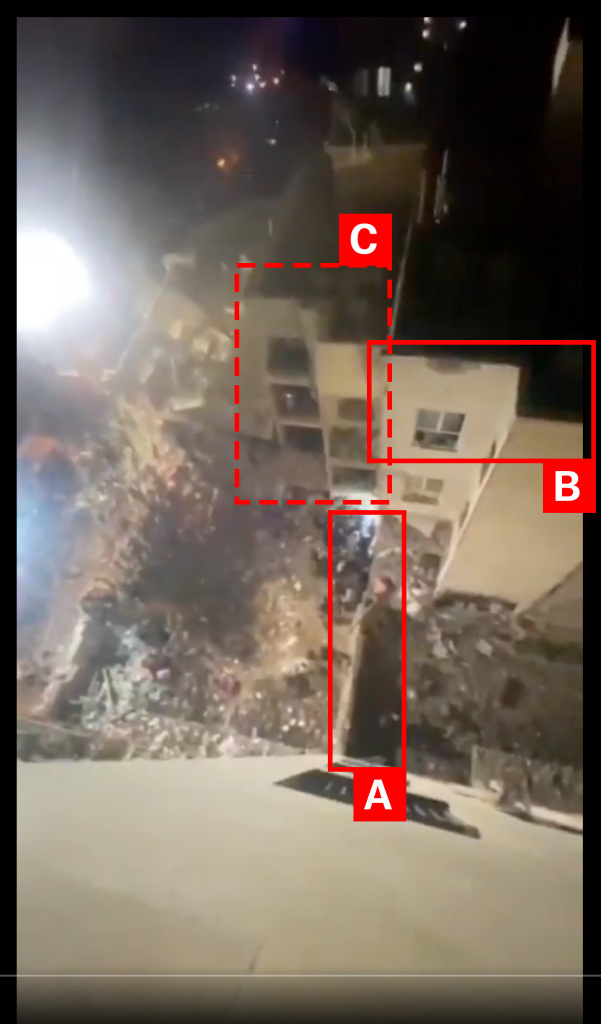
{"type":"FeatureCollection","features":[{"type":"Feature","properties":{"label":"C","label-type":"white-red","stroke":"#ff0000","stroke-width":1,"stroke-opacity":1,"fill-opacity":0},"geometry":{"coordinates":[[[51.504116117065564,35.731785729605676],[51.504116117065564,35.73174843901647],[51.5041905481836,35.73174843901647],[51.5041905481836,35.731785729605676],[51.504116117065564,35.731785729605676]]],"type":"Polygon"}},{"type":"Feature","properties":{"label":"A","label-type":"white-red","stroke":"#ff0000","stroke-width":1,"stroke-opacity":1,"fill-opacity":0},"geometry":{"coordinates":[[[51.5041143725864,35.7318848564029],[51.5041143725864,35.73182113204723],[51.50414577321473,35.73182113204723],[51.50414577321473,35.7318848564029],[51.5041143725864,35.7318848564029]]],"type":"Polygon"}},{"type":"Feature","properties":{"label":"B","label-type":"white-red","stroke":"#ff0000","stroke-width":1,"stroke-opacity":1,"fill-opacity":0},"geometry":{"coordinates":[[[51.504059317177166,35.731849536583766],[51.504059317177166,35.731804921086265],[51.5041356229346,35.731804921086265],[51.5041356229346,35.731849536583766],[51.504059317177166,35.731849536583766]]],"type":"Polygon"}},{"type":"Feature","properties":{"label":"Exact Location","label-type":"black-white"},"geometry":{"coordinates":[51.50419601197311,35.73179003377436],"type":"Point"}}]}

Imagery: IranNewsAgency0

Military Statements

Israeli Military Assessment
Suspected belligerent
Israeli Military
Israeli Military position on incident
Not yet assessed

Sources (13)

iranwire
15 Jun 2025

Persian

View

Source ID

233577

Archive URL

Archive

Source URL

View

Date

15 Jun 2025

Source Author

iranwire

Languages

Persian

Translated Content

"Mehrnoosh Haji Soltani", a flight attendant for Mahan Airline, lost her life on Saturday evening, June 14, 2021, in the Narmak neighborhood of Tehran due to the destruction of her house caused by the blast wave. At the same time, Hammyhan reported the death of a painter named "Mansoureh Alikhani". https://iranwire.org/au2w5 #Iran_News

Content

«مهرنوش حاجی سلطانی»، مهماندار شرکت هواپیمایی «ماهان»، شامگاه شنبه ۲۴خرداد۱۴۰۴ در محله نارمک تهران به‌دلیل تخریب منزل ناشی از موج انفجار، جان خود را از دست داد.همزمان هم‌میهن از کشته شدن یک هنرمند نقاش به نام «منصوره عالیخانی» خبر داده است. https://iranwire.org/au2w5 #اخبار_ایران

Media from iranwire (1)

YousefJafary
15 Jun 2025

Persian

View

Source ID

233579

Archive URL

Archive

Source URL

View

Date

15 Jun 2025

Source Author

YousefJafary

Languages

Persian

Translated Content

Mehrnoush Haji Soltani, a flight attendant, lost her life on the evening of Saturday, June 14, 2021, in the Narmak neighborhood of Tehran due to the destruction of her house caused by the blast wave.

Content

مهرنوش حاجى سلطانى، مهماندار هواپیما شامگاه شنبه ۲۴ خرداد ۱۴۰۴ در محله نارمک تهران به دلیل تخریب منزل ناشی از موج انفجار جان خود را از دست داد

Media from YousefJafary (1)

Nikkitta2011
15 Jun 2025

Persian

View

Source ID

233581

Archive URL

Archive

Source URL

View

Date

15 Jun 2025

Source Author

Nikkitta2011

Languages

Persian

Translated Content

This kid, Mehrnoush Haji Soltani, was apparently killed in the Narmak bombing along with the family of the Mahan flight attendant. I don't know what the Narmak incident is, was it an operator error or was a specific person targeted.

Content

این بچه، مهرنوش حاجی سلطانی، ظاهراً تو بمباران نارمک کشته شده به همراه خانواده مهماندار ماهان بوده بچه. نمی دونم جریان نارمک چیه، اشتباه اپراتور بوده یا شخص خاصی هدف بوده

Media from Nikkitta2011 (1)

iran wire
15 Jun 2025

English

View

Source ID

233589

Archive URL

Archive

Source URL

View

Date

15 Jun 2025

Source Author

iran wire

Languages

English

Content

Mehrnoush Haji Soltani, a Mahan Air flight attendant, was killed on Saturday evening when an Israeli strike destroyed her home in Tehran’s Narmak neighborhood. Painter Mansoureh Alikhani was also killed in the strikes, the Hammihan newspaper reported. Iran’s Health Ministry says 128 people have been killed in Israeli strikes, warning the toll may rise as debris is cleared. Iranian media published video from a residential area in Narmak that was targeted by Israeli forces.
Khabaronline News Agency
15 Jun 2025

Persian

View

Source ID

275533

Archive URL

Archive

Source URL

View

Date

15 Jun 2025

Source Author

خبرگزاری خبرآنلاین

Source Author Translated

Khabaronline News Agency

Languages

Persian

Translated Content

June 15, 2021 - 15:25 Mahan Airline stewardess martyred in last night's Narmak attacks/Photo Mehrnoush Haji Soltani, a Mahan Airline stewardess, was martyred in the destruction of her home caused by the blast wave following the Zionist regime's attacks last night in the Narmak neighborhood of Tehran. According to Khabaronline, the Mahan Airline stewardess was martyred in the destruction of her home caused by the blast wave following the attacks last night in the Narmak neighborhood of Tehran. Mehr wrote in a news article: Mehrnoush Haji Soltani, a Mahan Airline stewardess, was martyred in the destruction of her home caused by the blast wave following the attacks last night in the Narmak neighborhood of Tehran.

Content

شهادت مهماندار "ماهان" در پی حملات دیشب نارمک/ عکس مهرنوش حاجی سلطانی، مهماندار شرکت هواپیمایی ماهان در پی حملات دیشب رژیم صهیونیستی در محله نارمک تهران، به دلیل تخریب منزل ناشی از موج انفجار به شهادت رسید. به گزارش خبرآنلاین،مهماندار "ماهان" در پی حملات دیشب نارمک شهید شد. مهر در خبری نوشت:مهرنوش حاجی سلطانی، مهماندار شرکت هواپیمایی ماهان در پی حملات دیشب رژیم صهیونیستی در محله نارمک تهران، به دلیل تخریب منزل ناشی از موج انفجار به شهادت رسید.
Mashreq News
12 Sep 2025

Persian

View

Source ID

275535

Archive URL

Archive

Source URL

View

Date

12 Sep 2025

Source Author

مشرق نیوز

Source Author Translated

Mashreq News

Languages

Persian

Includes Video

Yes

Translated Content

Film/A story about the martyrdom of the stewardess One of the martyrs of the 12-day Sacred Defense is a 28-year-old girl who was martyred in the June aggression of the Zionist enemy along with two other family members.

Content

فیلم/ روایتی از شهادت بانوی مهماندار یکی از شهدای دفاع مقدس ۱۲ روزه، دختر ۲۸ ساله‌ای است که خرداد در تجاوز دشمن صهیونی به همراه دو تن دیگر از اعضای خانواده به شهادت رسید.

Media from Mashreq News (1)

donya-e-eqtesad.com
14 Jun 2025

Persian

View

Source ID

275537

Archive URL

Archive

Source URL

View

Date

14 Jun 2025

Languages

Persian

Translated Content

Israel's brutal attack on Narmak, Tehran + pictures Publication date: 1404/03/25 02:55 Tasnim: The Narmak area in Tehran was targeted by Israel.

Content

حمله وحشیانه اسرائیل به نارمک تهران + تصاویر تاریخ انتشار : ۱۴۰۴/۰۳/۲۵ ۰۲:۵۵ تسنیم : منطقه نارمک در تهران هدف حمله اسرائیل قرار گرفت.

Media from Source (5)

bbcpersian
15 Jun 2025

Persian

View

Source ID

275539

Archive URL

Archive

Source URL

View

Date

15 Jun 2025

Source Author

بی بی سی فارسی

Source Author Translated

bbcpersian

Languages

Persian

Translated Content

bbcpersian 16wAccording to reports, on the evening of June 14, the Narmak neighborhood of Tehran was attacked by Israel. Not much information has been reported about the attack yet, but it is said that a three-story building in a residential area was hit. Images published in Iranian media show that rescue forces are busy providing relief and removing debris.

Content

bbcpersian 16wبر اساس گزارش‌ها، شامگاه ۲۴ خرداد محله نارمک تهران مورد حمله اسرائیل قرار گرفت. هنوز اطلاعات زیادی از این حمله گزارش نشده اما گفته شده که ساختمانی سه طبقه در منطقه مسکونی مورد اصابت قرار گرفته است. تصاویر منتشر شده در رسانه‌های ایران نشان می‌دهد که نیروهای امدادی مشغول امدادرسانی و آواربرداری هستند.

Media from bbcpersian (1)

Partow Kavir

Persian

View

Source ID

275543

Archive URL

Archive

Source URL

View

Source Author

پرتو کویر

Source Author Translated

Partow Kavir

Languages

Persian

Translated Content

A picture of the family of the martyred scientist Dr. Seyyed Mustafa Sadati Aramaki of Kashan The martyrdom of Seyyed Mustafa Sadati and his family in the crime of the Zionist regime Dr. Seyyed Mustafa Sadati Aramaki, a scientific elite of the country and a resident of the village of Aramak in Kashan, along with his wife, three children, and his wife's parents, attained the highest degree of martyrdom in the brutal attacks of Israel in Tehran. In this horrific crime that demonstrated the height of the Zionist cruelty, the following high-ranking martyrs attained the grace of martyrdom: - Dr. Seyyed Mustafa Sadati Aramaki - Fahimeh Moghimi (wife of the martyr) - Reyhaneh Sadat (15 years old) - Fatemeh Sadat (8 years old) - Seyyed Ali (5 years old) - Mother and father of the martyr's wife Arranged by Mahboobeh Morshedi

Content

تصویری از خانواده دانشمند شهید دکتر سید مصطفی ساداتی ارمکی کاشان   شهادت سید مصطفی ساداتی و خانواده‌اش در جنایت رژیم صهیونیستی   دکتر سید مصطفی ساداتی ارمکی، نخبه‌ علمی کشور و از اهالی روستای ارمک کاشان، به همراه همسر، سه فرزند و والدین همسرش، در حملات وحشیانه‌ی اسراییل در تهران به درجه‌ رفیع شهادت نائل آمدند.   در این جنایت هولناک که اوج بی‌رحمی صهیونیست‌ها را به نمایش گذاشت، شهیدان والامقام زیر به فیض شهادت رسیدند:   - دکتر سید مصطفی ساداتی ارمکی  - فهیمه مقیمی (همسر شهید)   - ریحانه سادات (۱۵ ساله)   - فاطمه سادات (۸ ساله)   - سید علی (۵ ساله)   - مادر و پدر همسر شهید تنظیم از محبوبه مرشدی

Media from Partow Kavir (1)

Islamic Iran front
10 Aug 2025

Persian

View

Source ID

275545

Archive URL

Archive

Source URL

View

Date

10 Aug 2025

Source Author

جبهه ایران اسلامی

Source Author Translated

Islamic Iran front

Languages

Persian

Translated Content

60 days after the 12-day war, the smell of blood still lingers in Narmak Sixth Square, where the home of the family of martyr Sadati Aramaki was turned into a mound of dirt. Amid the rubble of broken toys and pieces of children’s clothes, only an unscathed flag of Imam Hussein (AS) remained. According to the report of Front 24, quoted by Tasnim, “There is no house, a mound of dirt…” The text message from the martyr’s daughter keeps replaying in my mind as I walk to her father’s house. After 60 days, we are visiting the site of one of the documents of Israeli crimes. I have no idea how I will see it after these days. Narmak Sixth Square in Tehran is our destination, we get off, we don’t even need to look for a house! Fatemeh was right, only a few mounds of dirt remain of a three-story building with a courtyard. * Return to Narmak Sixth Square; 60 days after the Israeli crime The building opposite the house where we were going first caught our attention. The entire building had been evacuated and the effects of the blast wave were clearly visible, showing the scale of the incident. Scaffolding had been erected in front of the house and blue plastic had been stretched all the way around. We pushed it aside and spent a few minutes with the cameraman in mourning. There are so many details that you have to keep turning your head and looking... This was once the home of the Moghimi family, but today it has become the massacre site of the family of Mustafa Sadati-Aramaki. The same nuclear scientist who was martyred on the evening of the second night of the war with his wife, martyred Fahimeh Moghimi, his three children, Reyhaneh Sadat, 15, Fatemeh Sadat, 10, Seyed Ali, 4, and his wife's mother and father, martyred Robaba Azizi, and the Sacred Defense veteran, martyred Hamid Moghimi. *It Smells Like Homeland Here/Green, White, and Red Three buildings adjacent to this house have been destroyed in such a way that the residents have completely evacuated. But on the wall of one of those houses, there is a design of the Iranian flag with green, white, and red butterflies, which shows that the days gone by have passed, because the paint buckets can still be seen next to this work of art. After that day, I realized that this taste is the work of Seyyed Mohammadza Miri, a painter and graphic artist, who seems to have breathed new life into the concept of homeland amidst those ruins. A banner hangs on the wall of one of the destroyed houses; a photo of Mehrnoush Haji Soltani, a flight attendant for Mahan Airlines, and her parents who were martyred on the night of the attack on June 14. Mehrnoush's smile in that photo still smelled of life... I step on the ruins and move forward. The first thing I see is the school records of martyred Sara Jawdat, a 21-year-old photography student who was also martyred there along with her father. Around me I see broken tools, the Quran and the prayer book that, despite the terrible explosion, have remained largely intact. A dusty doll, the clogs of folded shoes that their owners will never wear again, and pieces of clothing that are stuck under the rubble and whose owners are now sleeping under the ground. *It still smells of blood here I move forward, but it is weak under my feet, all the furniture, bricks and concrete are tied together in such a way that sometimes my eyes go black, here I still smell blood. It is really difficult to distinguish many of the items except for a few broken sofas and a few mattresses. With the cameraman, we decide to go around the house and enter the neighboring house so that we can have a wider frame from the upper floors. The entire house is almost destroyed, but the walls are still there and on the dust of the night of the attack they have written: “Death to Israel.” I remember the words of the aunt of the four-year-old martyr Seyyed Ali Sadati-Aramaki, who said: “He went to the 22nd Bahman march last year with a childish plastic gun to destroy Israel and did it with his own blood…” *The clock here has stopped at midnight on June 14 The clock here has stopped at midnight on Saturday, June 14, forever, with all its memories and everything it has left for the survivors of this crime. A piece of the birthday party string is shining in the sun amidst the stones and clods, meaning how many celebrations had it been installed on the wall for? Next to it, I see a torn black tent, I pull it out from under the rubble. The further I go with my story, the more it looks like a shrine. * The only thing left intact among the rubble/ “Peace be upon Hussein” at the Sadati-Aramaki family massacre I move away from the neighboring building and go to the highest mound of dirt, the house of the martyr Moghimi. I stand there and look around carefully for a few minutes, then suddenly, under some of the rubble, at the bottom of that mound of dirt, I see something that looks like the black cloth of Imam Hussein (AS). The sun is in my eyes, so I go down with difficulty to make sure. I call the cameraman and say, “I think I see a flag of Imam Hussein (AS) under the rubble.” He is surprised at first, and I almost feel the same way. Because after the night of the destruction of so many houses, it is almost impossible to see something like this intact under the rubble. I stand on the slope, pull out the cloth with my hands, and I am sure that I have seen it correctly. When I open the cloth, the resentment that has been gnawing at my throat since the beginning of my presence in this massacre comes out. The blackness of this inscription shines in the sun like a jewel. The folded back is covered in dirt, but the inside of the flag is so intact that I can say with confidence that the only intact object in that ruin was the flag of Imam Hussein… I fold it again and take it down with me, I couldn’t leave it there among those ruins anymore. It was as if it called me, maybe that’s why I went there that day, I don’t know… On the way down, I see children’s clothes, maybe they are for little Sayyid Ali with that curly hair that his Aunt Fatimah was talking about. The children's cartoon CDs are still here, the toys, which are not many, are scattered throughout the ruins; just like the bodies of the martyrs of the Sadati-Aramaki family, like the light shroud of Seyyed Ali, like the bodies of Reyhaneh Sadat and Fatima Sadat and their mother Fahimeh, of whom nothing but a few pieces was found after two weeks of searching... *Like us... We who will rise again from the ashes Now I am leaving a house with a flag of Imam Hussein and hundreds of photos and videos where all the children of martyr Moghimi used to gather with their children in their grandfather's house. A house where, according to Fatemeh Moghimi, one of the survivors of this family, Seyyed Ali's last birthday was celebrated there on Eid al-Adha, and that was their last gathering in their father's loving home... I cannot find any words to describe the depth of what I saw in that house. Perhaps instead of this report, one can better feel the depth of this pain by sitting at the shrine of Karbala. What I saw there was the pain that my people endured during those 12 days and the perseverance that, despite all their suffering, remained and is still there. 60 days after the crime of 14th Khordad, the smell of blood still lingers in the sixth square of Narmak; where the three-story house of the family of “Martyr Mustafa Sadati Aramaki” and his loved ones was turned into a mound of dirt. Amid the rubble of broken toys, school reports, and pieces of children’s clothes, only one unscathed flag of Imam Hussein (AS) remained; its shiny blackness under the sun, a symbol of perseverance that shouted from the heart of the ruins: We are alive. Like the same tricolor flag that was hung from the roof of the neighbor's house that I saw when I left, like my homeland, my people, like Karimi's "Sing O Iran" on the night of Ashura, like us, we who will rise again from the ashes... End of message/ Post Views: 4

Content

۶۰ روز پس از جنگ ۱۲ روزه، هنوز بوی خون در میدان ششم نارمک می‌‌آید؛ جایی که خانه خانواده شهید ساداتی ارمکی به تل خاکی بدل شد. میان آوارِ اسباب‌بازی‌های شکسته و تکه‌لباس‌های کودکان، تنها یک پرچم امام حسین(ع) بی‌خراش مانده بود. به گزارش جبهه ۲۴ به نقل از تسنیم “منزلی وجود نداره، یه تل خاکه…” پیامک دختر شهید موقع رفتن به منزل پدری‌‌اش مدام در ذهنم مرور می‌شود. بعد از گذشت ۶۰ روز داریم به مکان یکی از سندهای جانایات اسرائیل سر می‌زنیم. هیچ تصوری از اینکه بعد از این ایام آنجا را چگونه خواهم دید ندارم. میدان ششم نارمک تهران مقصد ماست، پیاده می‌شویم،‌ حتی نیازی نیست دنبال خانه بگردیم! فاطمه راست می‌گفت،‌ از یک ساختمان سه طبقه حیاط‌‌‌ دار فقط چند تل خاک باقی مانده. * بازگشت به میدان ششم نارمک؛ ۶۰ روز پس از جنایت اسرائیل ساختمان رو‌به روی منزلی که مقصد ما بود ابتدا توجه ما را جلب کرد. کل ساختمان تخلیه شده و آثار موج انفجار کاملا مشهود بود و نشان می‌داد ابعاد اتفاق وسیع بوده است. جلوی منزل را داربست زده‌اند و سر تا سر پلاستیک آبی کشیده‌اند،‌ آن را کنار می‌زنیم و دقایقی با فیلمبردار ماتمان می‌برد. جزئیات آنقدر زیاد است که باید مدام سر بچرخانی و بیینی… اینجا زمانی خانه خانواده مقیمی بوده که امروز به قتلگاه خانواده مصطفی ساداتی ارمکی تبدیل شده است. همان دانشمند هسته‌ای که شامگاه شب دوم جنگ به همراه همسرش شهیده فهیمه مقیمی، سه فرزندش ریحانه سادات ۱۵ ساله،‌ فاطمه سادات ۱۰ ساله، ‌سید علی ۴ ساله و مادر و پدر همسرش شهیده ربابه عزیزی و جانباز دفاع مقدس شهید حمید مقیمی همگی به شهادت رسیدند. *اینجا بوی وطن می‌دهد/سبز و سفید و سرخ سه ساختمان مجاور این منزل به نحوی تخریب شده که سکنه آن،‌ کلا آنجا را تخلیه کرده‌اند. اما روی دیوار یکی از آن خانه‌ها نقش و نگار پرچم ایران با پروانه‌های سبز و سفید و قرمز طراحی شده که نشان می‌دهد روزهای گذشته کشیده شده‌اند، چون هنوز سطل رنگ‌ها کنار این اثر هنری دیده می‌شود. بعد از آن روز فهمیدم این ذوق، کار سید محمدضا میری نقاش و گرافیست است که انگار میان آن خرابه‌ها؛ جان دوباره به مفهوم وطن بخشیده. به دیوار یکی از منازل تخریب شده یک بنر آویزان است؛ عکس مهرنوش حاجی سلطانی مهماندار شرکت هواپیمایی ماهان و پدر و مادرش که در شب حمله ۲۴ خرداد به شهادت رسیدند. لبخند مهرنوش توی آن عکس هنوز بوی زندگی ‌می‌داد… پایم را روی خرابه‌ها می گذارم و جلو می‌روم. اولین چیزی که می‌بینم کارنامه‌های دوران مدرسه شهیده سارا جودت دانشجوی ۲۱ ساله رشته عکاسی که او هم به همراه پدرش همجا شهید شده‌اند. اطرافم اسبا‌ب باز‌ی شکسته می‌بینم، قرآن و کتاب دعا و ادعیه که علی رغم آن انفجار مهیب اما؛‌ تا حد زیادی سالم مانده‌اند. یک عروسک خاک خورده، لنگه کفش‌های تا به تایی که صاحبان آنها دیگر هیچگاه آن را پا نخواهند کرد و تکه‌های لباس‌هایی که زیر آوار گیر کرده‌اند و صاحبان آنها حالا زیر خاک خفته‌اند. *اینجا هنوز بوی خون می‌دهد جلوتر می‌روم اما زیر پایم سُست است، تمام وسایل خانه، آجر و بتن‌ها جوری در هم گره خورده که گاهی چشمانم سیاهی می‌رود، اینجا هنوز بوی خون می‌دهد. تشخیص خیلی از وسایل به جز تعدادی مبل شکسته شده و چند تشک واقعا کار سختی‌ است. با فیلمبردار تصمیم می‌گیریم خانه را دور بزنیم و وارد خانه همسایه شویم تا از طبقات بالایی آنجا بتوانیم قاب وسیع‌تری داشته باشیم. تمام خانه تقریبا نابود شده، اما دیوارها هنوز هستند و روی گرد و خاک شب حمله نوشته‌اند: “مرگ بر اسرائیل”. یاد حرف خاله‌ شهید سیدعلی ساداتی ارمکی چهار ساله می‌افتم که می‌گفت: “راهپیمایی ۲۲ بهمن سال گذشته با یک پُتک پلاستیکی بچگانه رفته بود تا اسرائیل را نابود کند و با خون خود این کار را کرد…” *ساعت اینجا متوقف شده به وقت نیمه شب ۲۴ خرداد ساعت اینجا به وقت نیمه شب شنبه ۲۴ خرداد برای همیشه متوقف شده، با همه خاطراتش و هرآنچه برای بازماندگان این جنایت باقی گذاشته است. یک تکه از ریسمان جشن تولد لابه لای سنگ و کلوخ‌ها زیر آفتاب دارد برق می‌زند،‌ یعنی برای چند جشن آن را به دیوار نصب کرده بودند؟ کنارش یک چادر مشکی پاره پاره می‌بینم، از زیر آوار بیرونش می‌کشم. هرچه برای روایتم جلوتر می‌روم بیشتر شبیه روضه می‌شود. * تنها شیء سالم مانده از میان آوار/ «سلام بر حسین» در قتلگاه خانواده ساداتی ارمکی از ساختمان همسایه فاصله می‌گیرم و می‌روم روی بلندترین تل خاک خانه شهید مقیمی. آنجا می‌ایستم و دقایقی با دقت همه جا را نگاه می‌کنم، یکباره زیر بخشی از آوار، پایین آن تل خاک چیزی شبیه پارچه مشکی آقا امام حسین(ع) را می‌بینم. آفتاب توی چشمانم افتاده برای همین به سختی پایین می‌روم تا مطمئن شوم. فیلمبردار را صدا می‌کنم و می‌گویم: “فکر کنم دارم یک پرچم امام حسین زیر آوار می‌بینم”. او هم اول تعجب می‌کند،‌ تقریبا خودم نیز همین حس را دارم. چون بعد از شب اصابت و تخریب این حجم از خانه‌ها، دیدن چنین چیزی که سالم باشد زیر آوار تقریبا ناممکن است. توی شیب می‌ایستم، با دستانم پارچه را بیرون می‌کشم و دیگر مطمئن می‌شوم درست دیده‌ام. پارچه را که باز می‌کنم دیگر بغضی که از ابتدای حضورم در این قتلگاه خرخره‌ام را جویده بود سر باز می‌کند. سیاهی این کتیبه زیر آفتاب مثل جواهر می‌درخشد. پشت آن که تا شده بود خاکی است، اما داخل پرچم انقدر سالم مانده که به جرات می‌توانم بگویم تنها شیء سالم آن خرابه همین پرچم امام حسین بود… دوباره تایش می‌کنم و با خودم پایین می‌‌‌آورمش، دیگر نمی‌توانستم آن را آنجا میان آن خرابی‌ها رها کنم. انگار خودش مرا صدا کرد، شاید اصلا آن روز برای همین به آنجا رفته بودم نمی‌دانم… بین راه پایین آمدن، لباس‌های بچگانه می‌بینم شاید برای سید علی کوچولو با آن موهای فرفری که خاله فاطمه‌اش از آن حرف می‌زد باشد. سی دی کارتون‌های بچه‌ها هنوز اینجاست، اسباب بازی‌ها که خیلی هم نیستند، در تمام محیط خرابه پخش‌اند؛‌ درست مثل پیکر شهدای خانواده ساداتی ارمکی،‌ مثل کفن سبک سید علی، مثل پیکر ریحانه سادات و فاطمه سادات و مادرشان فهیمه که جز چند تکه چیزی دیگر از آنها بعد از دو هفته جست‌وجو پیدا نشد… *شبیه ما… مایی که دوباره از خاکستر برخواهیم خواست حالا من با یک پرچم امام حسین و صدها عکس و فیلم از خانه‌ای در حال رفتنم که زمانی تمامی فرزندان شهید مقیمی با فرزندانشان آنجا در خانه پدربزرگ دور هم جمع می‌شدند. خانه‌ای که به گفته فاطمه مقیمی یکی از بازماندگان این خانواده،‌‌ آخرین تولد سید علی را در روز عید قربان آنجا گرفته‌اند و آن شده آخرین دورهمی آنها در خانه پر مهر پدر… هیچ واژه‌ای برای توصیف عمق آنچه در آن خانه دیدم پیدا نمی‌کنم. شاید به جای این گزارش آدم بنشیند پای روضه کربلا بهتر عمقِ این درد را احساس کند. چیزی که من آنجا دیدم دردی‌ است که مردمم در آن ۱۲ روز کشیدند و استقامتی بود که علی رغم تمامی زجر‌هایش همچنان باقی ماند و هست. 60 روز پس از جنایت ۲۴ خرداد، هنوز بوی خون در میدان ششم نارمک می‌پیچد؛ جایی که خانه سه‌طبقه خانواده «شهید مصطفی ساداتی ارمکی» و عزیزانش، به تل خاکی بدل شد. میان آوارِ اسباب‌بازی‌های شکسته، کارنامه‌های مدرسه و تکه‌لباس‌های کودکان، تنها یک پرچم امام حسین(ع) بی‌خراش مانده بود؛ سیاهی براقش زیر آفتاب، نماد استقامتی که از دل ویرانه‌ها فریاد می‌زد: ما زنده‌ایم. شبیه همان پرچم سه رنگی که از بالا پشت بام خانه همسایه آویزان کرده بودند و موقع رفتن دیدم،‌ شبیه وطنم،‌ مردمم ،‌ شبیه «ای ایران بخوانِ» کریمی در شب عاشورا،‌ شبیه ما،‌ مایی که دوباره از خاکستر برخواهیم خواست… انتهای پیام/ Post Views: ۴
Tasnim News Agency | Tasnim
10 Aug 2025

Persian

View

Source ID

275547

Archive URL

Archive

Source URL

View

Date

10 Aug 2025

Source Author

خبرگزاری تسنیم

Source Author Translated

Tasnim News Agency | Tasnim

Languages

Persian

Translated Content

Tasnim News Agency Political Group - Zeinab Omidi: "There is no house, a pile of dirt..." The text message from the martyr's daughter keeps replaying in my mind as I walk to her father's house. After 60 days, we are visiting the site of one of the documents of Israeli crimes. I have no idea how I will see it after these days. Narmak 6th Square in Tehran is our destination, we get off, we don't even need to look for a house! Fatemeh was right, only a few piles of dirt remain of a three-story building with a courtyard. * Returning to Narmak 6th Square; 60 days after the Israeli crime The building opposite the house that was our destination first caught our attention. The entire building had been evacuated and the effects of the blast wave were clearly visible, showing the scale of the incident. Scaffolding had been erected in front of the house and blue plastic had been stretched all the way around. We pushed it aside and spent a few minutes mourning with the cameraman. There are so many details that you have to keep turning your head and looking... This was once the home of the Moghimi family, but today it has become the massacre site of the family of Mostafa Sadati-Aramaki. The same nuclear scientist who was martyred on the second night of the war along with his wife, Shaheed Fahimeh Moghimi, his three children, Reyhaneh Sadat, 15, Fatemeh Sadat, 10, Seyed Ali, 4, his wife's mother and father, Shaheed Robabeh Azizi, and the Sacred Defense veteran, Shaheed Hamid Moghimi. *It Smells of Homeland Here/Green, White, and Red The three buildings adjacent to this house have been destroyed in such a way that the residents have completely evacuated them. However, on the wall of one of those houses, a pattern of the Iranian flag with green, white, and red butterflies is designed, which shows that the days gone by have passed, because the paint buckets can still be seen next to this work of art. After that day, I realized that this taste is the work of Seyyed Mohammadza Miri, a painter and graphic artist, who seemed to have breathed new life into the concept of homeland amidst those ruins. A banner hangs on the wall of one of the destroyed houses; a photo of Mehrnoush Haji Soltani, a flight attendant at Mahan Airline, and her parents who were martyred on the night of the attack on June 14. Mehrnoush’s smile in that photo still exudes life... I step onto the ruins and move forward. The first thing I see is the school records of martyred Sara Jawdat, a 21-year-old photography student who was also martyred there along with her father. Around me, I see broken playing equipment, the Quran, and a book of prayers and supplications that, despite that terrible explosion, have remained largely intact. Read moreThe funeral of the body of the nuclear martyr "Seyed Mustafa Sadati" and 6 members of his family in Behesht Zahra A doll covered in dust, the clogs of folded shoes that their owners will never wear again, and pieces of clothes that are stuck under the rubble and whose owners are now sleeping under the ground. *It still smells of blood here I move forward, but it is weak under my feet, all the furniture, bricks and concrete are tied together in such a way that sometimes my eyes go black, here it still smells of blood. It is really difficult to identify many of the items except for a few broken sofas and a few mattresses. With the cameraman, we decide to go around the house and enter the neighboring house so that we can have a wider frame from the upper floors. The entire house is almost destroyed, but the walls are still there and on the dust of the night of the attack they have written: "Death to Israel." I remember the words of the aunt of the four-year-old martyr Seyyed Ali Sadati Aramaki, who said: "The march of 22 Bahman last year went with a child's plastic gun to destroy Israel and did it with his own blood..." *The clock here has stopped at midnight on June 14 The clock here has stopped at midnight on Saturday, June 14, forever, with all its memories and everything it has left for the survivors of this crime. A piece of birthday party string is shining in the sun amidst the stones and clods, meaning how many celebrations had it been hung on the wall for? Next to it, I see a torn black tent, I pull it out from under the rubble. The further I go in my narrative, the more it looks like a shrine. * The only intact object left among the rubble/ "Peace be upon Hussein" at the massacre site of the Sadati-Aramaki family I move away from the neighboring building and go to the highest mound of dirt of the house of martyr Moghimi. I stand there and look carefully for a few minutes, suddenly under part of the rubble, at the bottom of that mound of dirt, I see something that looks like a black cloth of Imam Hussein (AS). The sun is in my eyes, so I go down with difficulty to make sure. I call the cameraman and say: "I think I see a flag of Imam Hussein (AS) under the rubble." He is surprised at first, but I almost feel the same way. Because after the night of the destruction of so many houses, it is almost impossible to see something intact under the rubble. I stand on the slope, pull out the cloth with my hands, and then I am sure that I have seen it correctly. When I open the cloth, the hatred that had been gnawing at my throat since the beginning of my presence in this place of slaughter bursts forth. The blackness of this inscription shines like a jewel in the sun. The back of it, which was folded, is dusty, but the inside of the flag is so intact that I dare say that the only intact thing in that ruin was this flag of Imam Hussein... I fold it again and take it down with me, I could no longer leave it there among those ruins. It was as if it called me, maybe that's why I went there that day, I don't know... On the way down, I see children's clothes, maybe they are for little Sayyid Ali with that curly hair that his Aunt Fatimah was talking about. The children's cartoon CDs are still here, the toys, which are not many, are scattered throughout the ruins; just like the bodies of the martyrs of the Sadati-Aramaki family, like the light shroud of Seyyed Ali, like the bodies of Reyhaneh Sadat and Fatima Sadat and their mother Fahimeh, of whom nothing but a few pieces was found after two weeks of searching... *Like us... We who will rise again from the ashes Now I am leaving a house with a flag of Imam Hussein and hundreds of photos and videos where all the children of martyr Moghimi used to gather with their children in their grandfather's house. A house where, according to Fatemeh Moghimi, one of the survivors of this family, Seyyed Ali's last birthday was celebrated there on Eid al-Adha, and that was their last gathering in their father's loving home... I cannot find any words to describe the depth of what I saw in that house. Perhaps instead of this report, one would better sit at the foot of the Karbala shrine to feel the depth of this pain. What I saw there was the pain that my people endured during those 12 days and the perseverance that remained despite all their suffering. 60 days after the crime of Khordad 24, the smell of blood still lingers in the sixth square of Narmak; where the three-story house of the family of “Martyr Mustafa Sadati Aramaki” and his loved ones was turned into a mound of dirt. Amid the rubble of broken toys, school reports, and pieces of children’s clothes, only one unscathed flag of Imam Hussein (AS) remained; its shiny blackness under the sun, a symbol of perseverance that shouted from the heart of the ruins: We are alive. Like the same tricolor flag that was hung from the roof of the neighbor's house and I saw it when I left, like my homeland, my people, like Karimi's "Sing O Iran" on the night of Ashura, like us, we who will rise again from the ashes... End of message/

Content

گروه سیاسی خبرگزاری تسنیم-زینب امیدی: "منزلی وجود نداره، یه تل خاکه..." پیامک دختر شهید موقع رفتن به منزل پدری‌‌اش مدام در ذهنم مرور می‌شود. بعد از گذشت 60 روز داریم به مکان یکی از سندهای جانایات اسرائیل سر می‌زنیم. هیچ تصوری از اینکه بعد از این ایام آنجا را چگونه خواهم دید ندارم. میدان ششم نارمک تهران مقصد ماست، پیاده می‌شویم،‌ حتی نیازی نیست دنبال خانه بگردیم! فاطمه راست می‌گفت،‌ از یک ساختمان سه طبقه حیاط‌‌‌ دار فقط چند تل خاک باقی مانده. * بازگشت به میدان ششم نارمک؛ 60 روز پس از جنایت اسرائیل ساختمان رو‌به روی منزلی که مقصد ما بود ابتدا توجه ما را جلب کرد. کل ساختمان تخلیه شده و آثار موج انفجار کاملا مشهود بود و نشان می‌داد ابعاد اتفاق وسیع بوده است. جلوی منزل را داربست زده‌اند و سر تا سر پلاستیک آبی کشیده‌اند،‌ آن را کنار می‌زنیم و دقایقی با فیلمبردار ماتمان می‌برد. جزئیات آنقدر زیاد است که باید مدام سر بچرخانی و بیینی... اینجا زمانی خانه خانواده مقیمی بوده که امروز به قتلگاه خانواده مصطفی ساداتی ارمکی تبدیل شده است. همان دانشمند هسته‌ای که شامگاه شب دوم جنگ به همراه همسرش شهیده فهیمه مقیمی، سه فرزندش ریحانه سادات 15 ساله،‌ فاطمه سادات 10 ساله، ‌سید علی 4 ساله و مادر و پدر همسرش شهیده ربابه عزیزی و جانباز دفاع مقدس شهید حمید مقیمی همگی به شهادت رسیدند. *اینجا بوی وطن می‌دهد/سبز و سفید و سرخ سه ساختمان مجاور این منزل به نحوی تخریب شده که سکنه آن،‌ کلا آنجا را تخلیه کرده‌اند. اما روی دیوار یکی از آن خانه‌ها نقش و نگار پرچم ایران با پروانه‌های سبز و سفید و قرمز طراحی شده که نشان می‌دهد روزهای گذشته کشیده شده‌اند، چون هنوز سطل رنگ‌ها کنار این اثر هنری دیده می‌شود. بعد از آن روز فهمیدم این ذوق، کار سید محمدضا میری نقاش و گرافیست است که انگار میان آن خرابه‌ها؛ جان دوباره به مفهوم وطن بخشیده. به دیوار یکی از منازل تخریب شده یک بنر آویزان است؛ عکس مهرنوش حاجی سلطانی مهماندار شرکت هواپیمایی ماهان و پدر و مادرش که در شب حمله 24 خرداد به شهادت رسیدند. لبخند مهرنوش توی آن عکس هنوز بوی زندگی ‌می‌داد... پایم را روی خرابه‌ها می گذارم و جلو می‌روم. اولین چیزی که می‌بینم کارنامه‌های دوران مدرسه شهیده سارا جودت دانشجوی 21 ساله رشته عکاسی که او هم به همراه پدرش همجا شهید شده‌اند. اطرافم اسبا‌ب باز‌ی شکسته می‌بینم، قرآن و کتاب دعا و ادعیه که علی رغم آن انفجار مهیب اما؛‌ تا حد زیادی سالم مانده‌اند. بیشتر بخوانیدتشییع پیکر شهید هسته‌ای «سید مصطفی ساداتی» و 6 عضو خانواده‌اش در بهشت زهرا یک عروسک خاک خورده، لنگه کفش‌های تا به تایی که صاحبان آنها دیگر هیچگاه آن را پا نخواهند کرد و تکه‌های لباس‌هایی که زیر آوار گیر کرده‌اند و صاحبان آنها حالا زیر خاک خفته‌اند. *اینجا هنوز بوی خون می‌دهد جلوتر می‌روم اما زیر پایم سُست است، تمام وسایل خانه، آجر و بتن‌ها جوری در هم گره خورده که گاهی چشمانم سیاهی می‌رود، اینجا هنوز بوی خون می‌دهد. تشخیص خیلی از وسایل به جز تعدادی مبل شکسته شده و چند تشک واقعا کار سختی‌ است. با فیلمبردار تصمیم می‌گیریم خانه را دور بزنیم و وارد خانه همسایه شویم تا از طبقات بالایی آنجا بتوانیم قاب وسیع‌تری داشته باشیم. تمام خانه تقریبا نابود شده، اما دیوارها هنوز هستند و روی گرد و خاک شب حمله نوشته‌اند: "مرگ بر اسرائیل". یاد حرف خاله‌ شهید سیدعلی ساداتی ارمکی چهار ساله می‌افتم که می‌گفت: "راهپیمایی 22 بهمن سال گذشته با یک پُتک پلاستیکی بچگانه رفته بود تا اسرائیل را نابود کند و با خون خود این کار را کرد..." *ساعت اینجا متوقف شده به وقت نیمه شب 24 خرداد ساعت اینجا به وقت نیمه شب شنبه 24 خرداد برای همیشه متوقف شده، با همه خاطراتش و هرآنچه برای بازماندگان این جنایت باقی گذاشته است. یک تکه از ریسمان جشن تولد لابه لای سنگ و کلوخ‌ها زیر آفتاب دارد برق می‌زند،‌ یعنی برای چند جشن آن را به دیوار نصب کرده بودند؟ کنارش یک چادر مشکی پاره پاره می‌بینم، از زیر آوار بیرونش می‌کشم. هرچه برای روایتم جلوتر می‌روم بیشتر شبیه روضه می‌شود. * تنها شیء سالم مانده از میان آوار/ «سلام بر حسین» در قتلگاه خانواده ساداتی ارمکی از ساختمان همسایه فاصله می‌گیرم و می‌روم روی بلندترین تل خاک خانه شهید مقیمی. آنجا می‌ایستم و دقایقی با دقت همه جا را نگاه می‌کنم، یکباره زیر بخشی از آوار، پایین آن تل خاک چیزی شبیه پارچه مشکی آقا امام حسین(ع) را می‌بینم. آفتاب توی چشمانم افتاده برای همین به سختی پایین می‌روم تا مطمئن شوم. فیلمبردار را صدا می‌کنم و می‌گویم: "فکر کنم دارم یک پرچم امام حسین زیر آوار می‌بینم". او هم اول تعجب می‌کند،‌ تقریبا خودم نیز همین حس را دارم. چون بعد از شب اصابت و تخریب این حجم از خانه‌ها، دیدن چنین چیزی که سالم باشد زیر آوار تقریبا ناممکن است. توی شیب می‌ایستم، با دستانم پارچه را بیرون می‌کشم و دیگر مطمئن می‌شوم درست دیده‌ام. پارچه را که باز می‌کنم دیگر بغضی که از ابتدای حضورم در این قتلگاه خرخره‌ام را جویده بود سر باز می‌کند. سیاهی این کتیبه زیر آفتاب مثل جواهر می‌درخشد. پشت آن که تا شده بود خاکی است، اما داخل پرچم انقدر سالم مانده که به جرات می‌توانم بگویم تنها شیء سالم آن خرابه همین پرچم امام حسین بود... دوباره تایش می‌کنم و با خودم پایین می‌‌‌آورمش، دیگر نمی‌توانستم آن را آنجا میان آن خرابی‌ها رها کنم. انگار خودش مرا صدا کرد، شاید اصلا آن روز برای همین به آنجا رفته بودم نمی‌دانم... بین راه پایین آمدن، لباس‌های بچگانه می‌بینم شاید برای سید علی کوچولو با آن موهای فرفری که خاله فاطمه‌اش از آن حرف می‌زد باشد. سی دی کارتون‌های بچه‌ها هنوز اینجاست، اسباب بازی‌ها که خیلی هم نیستند، در تمام محیط خرابه پخش‌اند؛‌ درست مثل پیکر شهدای خانواده ساداتی ارمکی،‌ مثل کفن سبک سید علی، مثل پیکر ریحانه سادات و فاطمه سادات و مادرشان فهیمه که جز چند تکه چیزی دیگر از آنها بعد از دو هفته جست‌وجو پیدا نشد... *شبیه ما... مایی که دوباره از خاکستر برخواهیم خواست حالا من با یک پرچم امام حسین و صدها عکس و فیلم از خانه‌ای در حال رفتنم که زمانی تمامی فرزندان شهید مقیمی با فرزندانشان آنجا در خانه پدربزرگ دور هم جمع می‌شدند. خانه‌ای که به گفته فاطمه مقیمی یکی از بازماندگان این خانواده،‌‌ آخرین تولد سید علی را در روز عید قربان آنجا گرفته‌اند و آن شده آخرین دورهمی آنها در خانه پر مهر پدر... هیچ واژه‌ای برای توصیف عمق آنچه در آن خانه دیدم پیدا نمی‌کنم. شاید به جای این گزارش آدم بنشیند پای روضه کربلا بهتر عمقِ این درد را احساس کند. چیزی که من آنجا دیدم دردی‌ است که مردمم در آن 12 روز کشیدند و استقامتی بود که علی رغم تمامی زجر‌هایش همچنان باقی ماند و هست. 60 روز پس از جنایت 24 خرداد، هنوز بوی خون در میدان ششم نارمک می‌پیچد؛ جایی که خانه سه‌طبقه خانواده «شهید مصطفی ساداتی ارمکی» و عزیزانش، به تل خاکی بدل شد. میان آوارِ اسباب‌بازی‌های شکسته، کارنامه‌های مدرسه و تکه‌لباس‌های کودکان، تنها یک پرچم امام حسین(ع) بی‌خراش مانده بود؛ سیاهی براقش زیر آفتاب، نماد استقامتی که از دل ویرانه‌ها فریاد می‌زد: ما زنده‌ایم. شبیه همان پرچم سه رنگی که از بالا پشت بام خانه همسایه آویزان کرده بودند و موقع رفتن دیدم،‌ شبیه وطنم،‌ مردمم ،‌ شبیه «ای ایران بخوانِ» کریمی در شب عاشورا،‌ شبیه ما،‌ مایی که دوباره از خاکستر برخواهیم خواست... انتهای پیام/

Media from Tasnim News Agency | Tasnim (1)

tirdadname.ir
17 Jul 2025

Persian

View

Source ID

275551

Archive URL

Archive

Source URL

View

Date

17 Jul 2025

Languages

Persian

Translated Content

Dr. Seyyed Mostafa Sadati-Aramaki, a prominent university professor and nuclear scientist, is known as a symbol of sacrifice, commitment, and resistance in the path of scientific progress and technological independence of Iran. His life and that of his family, which was imbued with love for their homeland and service to science, ended on the evening of Khordad 1404 (1425) in a brutal attack by the Zionist regime on their home in Tehran, and they all attained the high degree of martyrdom. Personal details of Martyr Mostafa Sadati Aramaki Full name: Dr. Seyed Mostafa Sadati Aramaki Place of birth: Aramak village, Kashan, Iran Place of residence: Tehran, Narmak district Education: PhD in nuclear physics Specialization: Nuclear physics and technologies related to Iran's nuclear program Occupation: Professor at Shahid Beheshti University of Tehran and scientist of Iran's nuclear program Date of martyrdom: 14 June 2025 Place of martyrdom: Residential house in the Narmak district of Tehran Method of martyrdom: Assassination in a bombing attack by the Zionist regime Place of burial: Behesht Zahra Martyrs' Cemetery, Plot 42 The collective martyrdom of the Aramaki family Shaeed Sadati Aramaki with his family Martyrdom; The night when seven stars flew into the sky On the evening of 14 June 2025, Dr. Sadati's residential house in the Narmak district of Tehran was targeted by a bombing attack by the Zionist regime. In this horrific crime, seven members of a family were martyred. This attack, which targeted civilian areas, demonstrated the height of the Zionist usurper regime’s cruelty. The extent of the destruction was such that it took days to find the bodies of the martyrs. The grandmother of the family, who is herself the child of a martyr of the imposed war, recounts how she heard the news of the martyrdom of her loved ones one by one: “I was convinced that something had happened… The children were whispering to each other: Mustafa was martyred… I was patient, but the heat was unrelenting: Fahimeh was also martyred… I didn’t have more than a few seconds to mourn for each of them because another name of my loved ones was immediately added to the list: Reyhaneh Sadat… Fatima Sadat… Before they mentioned Seyyed Ali’s name, I intervened: General Soleimani, was I also martyred?!” Martyrs of the Sadati-Armaki family Martyr's name Relationship Age Description Dr. Seyyed Mustafa Sadati-Armaki – Probably 1970s Nuclear scientist and university professor Fahimeh Moghimi and Marzani Spouse Unknown Religious teacher, daughter of martyr Hassan Moghimi and Marzani Reihaneh Sadat Sadati 15-year-old daughter Student of the gifted school and Quran memorizer Fatemeh Sadat Sadati 8-year-old daughter She was very dependent on her mother Seyyed Ali Sadati 5-year-old son She was in love with General Soleimani and his body was identified by DNA testing Hamid Moghimi Father, mother, unknown Sacred Defense veteran Robabeh Azizi Mother, mother, unknown – Martyr Mustafa Sadati-Armaki Martyr Fahimeh Moghimi, wife of martyr Mustafa Sadati-Armaki Personal life And family Dr. Sadati was raised in a religious and culturally-rooted family in the village of Ermak, Kashan. He married Fahimeh Moghimi Vamrazani, the daughter of a martyr. His wife was a dedicated teacher who endured the hardships of life so that her husband could become a nuclear scientist and serve his country. This family was an example of a cohesive, religious, and simple-minded family. Dr. Sadati was very interested in his children's studies and spent a significant portion of his salary buying books for them, believing that the blessing of his salary was in the knowledge and awareness of his children. Reyhaneh Sadati Reyhaneh Sadati Ermaki She was an intelligent girl who studied at the gifted school. She was a firm believer in her hijab and even gave up on school field trips so as not to be forced to put away her veil. She was a memorizer of the Quran and, according to her grandmother, always smelled of heaven. Fatemeh Sadat Fatemeh, daughter of martyr Sadati Aramki was a kind and studious girl whose attachment to her mother, Fahimeh, was well-known. Their grandmother used to say: “I know… until Fatimah’s body is found, Fahimeh will not be found either. Wherever they are, they are together, as always.” Seyed Ali Ali Sadati Aramki, son of martyr Mustafa Sadati Aramki The youngest son of the family, loved General Soleimani and walked around the house and behaved like him, which is why they called him “General Soleimani” of the house. His small and light coffin on the day of the funeral was proof that, like his beloved general, not much remained of his burnt body. The story of the last night The night before the incident, the family had gathered at Dr. Sadati’s father’s house to celebrate Eid al-Ghadir. After lunch, Mustafa’s phone rang and he had to go somewhere. The children jokingly told him: “Dad, don’t be afraid, you’re going to be a martyr too, they summoned you!” Dr. Sadati replied with a smile, but as he was leaving he said to his wife: “It’s better not to come to our house tonight. Either stay here or go to your parents’ house.” That same night, Reyhaneh Sadat asked her grandfather while saying goodbye: “Dad, now that the door of martyrdom has opened, are you praying for me to become a martyr?!” And hours later, the news of the house explosion in Narmak stunned everyone. Scientific and professional activities After receiving his PhD in nuclear physics, Dr. Sadati worked as a professor at Shahid Beheshti University in Tehran and one of the leading scientists in Iran’s nuclear program. His research focused on sensitive and key areas that played an important role in advancing the country’s technology. He was probably associated with the Atomic Energy Organization of Iran or the Defense Research and Innovation Organization (Sapand), and as an unknown but hardworking scientist, he devoted his life to serving Iran’s scientific and defense goals, away from the media hype. Some unofficial sources have described him as one of the “key elements in the military nuclear program,” although these claims have not been confirmed by official sources. Reactions and funeral ceremonies The martyrdom of Dr. Sadati and his family brought a wave of anger and sorrow throughout Iran. The family’s magnificent funeral was held on June 20, 1404, in Plot 42 of Behesht Zahra, with a large attendance of the public, academics, and officials. The Minister of Science emphasized in a message: “The blood of these martyrs will illuminate the path of Iran’s scientific progress.” On social media, users reacted to the crime with sentences such as “What is the sin of having innocent children?” and “The martyrdom of this family is a shrine that burns the heart of every human being.” The grandmother of the family said with a heartbroken but steadfast heart: “Mostafa’s martyrdom was not far-fetched… Their house has become a killing pit for me.” The memory of these high-ranking martyrs, especially the innocent children, Reyhaneh Sadat, Fatemeh Sadat, and Seyyed Ali, will forever live in the hearts of the Iranian nation as a testament to the injustice and the price that Iran has paid for its independence and progress.

Content

دکتر سید مصطفی ساداتی ارمکی، استاد برجسته دانشگاه و دانشمند هسته‌ای، به عنوان یکی از نمادهای ایثار، تعهد و مقاومت در مسیر پیشرفت علمی و استقلال فناوری ایران شناخته می‌شود.زندگی او و خانواده‌اش، که با عشق به وطن و خدمت به علم آمیخته بود، در شامگاه ۲۴ خرداد ۱۴۰۴ در حمله‌ای وحشیانه از سوی رژیم صهیونیستی به منزلشان در تهران به پایان رسید و همگی به درجه رفیع شهادت نائل آمدند. مشخصات شخصی شهید مصطفی ساداتی ارمکی نام کامل: دکتر سید مصطفی ساداتی ارمکی محل تولد: روستای ارمک، کاشان، ایران محل زندگی: تهران، منطقه نارمک تحصیلات: دکتری فیزیک هسته‌ای تخصص: فیزیک هسته‌ای و فناوری‌های مرتبط با برنامه هسته‌ای ایران شغل: استاد دانشگاه شهید بهشتی تهران و دانشمند برنامه هسته‌ای ایران تاریخ شهادت: ۲۴ خرداد ۱۴۰۴ (۱۴ ژوئن ۲۰۲۵) محل شهادت: منزل مسکونی در منطقه نارمک تهران نحوه شهادت: ترور در حمله بمباران توسط رژیم صهیونیستی محل دفن: گلزار شهدای بهشت زهرا، قطعه ۴۲ شهادت دسته جمعی خانواده ارمکی شعید ساداتی ارمکی در کنار خانواده شهادت؛ شبی که هفت ستاره به آسمان پر کشیدند در شامگاه ۲۴ خرداد ۱۴۰۴، منزل مسکونی دکتر ساداتی در منطقه نارمک تهران هدف حمله بمباران رژیم صهیونیستی قرار گرفت. در این جنایت هولناک، هفت عضو یک خانواده به شهادت رسیدند. این حمله که مناطق غیرنظامی را هدف قرار داده بود، اوج بی‌رحمی رژیم غاصب صهیونیستی را به نمایش گذاشت. شدت تخریب به حدی بود که یافتن پیکرهای مطهر شهدا روزها به طول انجامید. مادربزرگ خانواده که خود فرزند شهید جنگ تحمیلی است، روایت می‌کند که چگونه خبر شهادت عزیزانش را یک به یک شنید: «یقین کردم که اتفاقی افتاده… بچه‌ها مِن مِن می‌کردند: مصطفی شهید شده… من صبور بودم اما داغ امان نمی‌داد: فهیمه هم شهید شده… برای هر کدام‌شان چندثانیه بیشتر فرصت عزاداری نداشتم چون بلافاصله اسم دیگری از عزیزانم در لیست قرار می‌گرفت: ریحانه‌سادات هم… فاطمه‌سادات… قبل از اینکه اسم سیدعلی را بیاورند پیش‌دستی کردم: سردار سلیمانی من هم شهید شده؟!» شهدای خانواده ساداتی ارمکی نام شهید نسبت سن توضیحات دکتر سید مصطفی ساداتی ارمکی – احتمالاً دهه ۱۳۵۰ دانشمند هسته‌ای و استاد دانشگاه فهیمه مقیمی وامرزانی همسر نامشخص معلم دینی، فرزند شهید حسن مقیمی وامرزانی ریحانه‌سادات ساداتی فرزند دختر ۱۵ ساله دانش‌آموز مدرسه تیزهوشان و حافظ قرآن فاطمه‌سادات ساداتی فرزند دختر ۸ ساله وابستگی زیادی به مادرش داشت سید علی ساداتی فرزند پسر ۵ ساله عاشق سردار سلیمانی بود و پیکرش با آزمایش DNA شناسایی شد حمید مقیمی پدرخانم نامشخص جانباز دفاع مقدس ربابه عزیزی مادرخانم نامشخص – شهید مصطفی ساداتی ارمکی شهید فهیمه مقیمی همسر شهید مصطفی ساداتی ارمکی زندگی شخصی و خانوادگی دکتر ساداتی در خانواده‌ای مذهبی و با ریشه‌های فرهنگی در روستای ارمک کاشان پرورش یافت. او با فهیمه مقیمی وامرزانی، فرزند شهید، ازدواج کرد. همسرش، معلمی فداکار بود که سختی‌های زندگی را به جان خرید تا همسرش به جایگاه یک دانشمند هسته‌ای برسد و به وطن خدمت کند. این خانواده نمونه‌ای از یک خانواده منسجم، متدین و ساده‌زیست بودند. دکتر ساداتی علاقه زیادی به مطالعه فرزندانش داشت و بخش قابل توجهی از حقوق خود را صرف خرید کتاب برای آنها می‌کرد و معتقد بود برکت حقوقش در همین علم و آگاهی بچه‌هاست. ریحانه‌سادات ریحانه ساداتی ارمکی دختری باهوش بود که در مدرسه تیزهوشان درس می‌خواند. او به حجابش اعتقاد راسخ داشت و حتی قید گردش علمی مدرسه را زد تا مجبور به کنار گذاشتن چادرش نشود. او حافظ قرآن بود و به گفته مادربزرگش، همیشه بوی بهشت می‌داد. فاطمه‌سادات فاطمه دختر شهید ساداتی ارمکی دختری مهربان و اهل مطالعه بود که وابستگی‌اش به مادرش، فهیمه، زبانزد بود. مادربزرگشان می‌گفت: «می‌دانم… تا پیکر فاطمه پیدا نشود، فهیمه هم پیدا نمی‌شود. هرجا هستند، کنار هم‌اند، مثل همیشه.» سید علی علی ساداتی ارمکی فرزند پسر شهید مصطفی ساداتی ارمکی پسر کوچک خانواده، عاشق سردار سلیمانی بود و در خانه راه می‌رفت و مانند او رفتار می‌کرد، به همین دلیل او را «سردار سلیمانی» خانه صدا می‌کردند. تابوت کوچک و سبک او در روز تشییع، گواه آن بود که همچون سردار محبوبش، چیز زیادی از پیکر سوخته‌اش باقی نمانده است. روایت شب آخر شب قبل از حادثه، خانواده برای جشن عید غدیر در خانه پدری دکتر ساداتی جمع بودند. پس از ناهار، تلفن مصطفی زنگ خورد و او باید جایی می‌رفت. بچه‌ها به شوخی به او گفتند: «بابا نکنه قراره شما هم شهید بشی که احضارت کردن!». دکتر ساداتی با لبخند پاسخ منفی داد، اما هنگام رفتن به همسرش گفت: «بهتره امشب نرید خونه‌مون. یا همین‌جا بمونید یا برید خونه پدر و مادرت.» همان شب، ریحانه‌سادات هنگام خداحافظی از پدربزرگش پرسید: «بابا جون حالا که باب شهادت باز شده دعا میکنی من شهید بشم؟!» و ساعاتی بعد، خبر انفجار خانه در نارمک، همه را در بهت فرو برد. فعالیت‌های علمی و حرفه‌ای دکتر ساداتی پس از اخذ مدرک دکتری فیزیک هسته‌ای، به عنوان استاد در دانشگاه شهید بهشتی تهران و یکی از دانشمندان برجسته برنامه هسته‌ای ایران مشغول به کار شد. تحقیقات او بر حوزه‌های حساس و کلیدی متمرکز بود که نقش مهمی در پیشبرد فناوری کشور داشتند. او احتمالاً با سازمان انرژی اتمی ایران یا سازمان پژوهش و نوآوری دفاعی (سپند) در ارتباط بود و به عنوان دانشمندی گمنام اما پرتلاش، زندگی خود را به دور از هیاهوی رسانه‌ای وقف خدمت به اهداف علمی و دفاعی ایران کرده بود. برخی منابع غیررسمی او را یکی از «عناصر کلیدی در برنامه هسته‌ای نظامی» توصیف کرده‌اند، هرچند این ادعاها توسط منابع رسمی تأیید نشده است. واکنش‌ها و مراسم تشییع شهادت دکتر ساداتی و خانواده‌اش موجی از خشم و اندوه را در سراسر ایران به همراه داشت. مراسم تشییع باشکوه این خانواده در تاریخ ۳۰ خرداد ۱۴۰۴ در قطعه ۴۲ بهشت زهرا با حضور گسترده مردم، دانشگاهیان و مقامات برگزار شد. وزیر علوم در پیامی تأکید کرد: «خون این شهدا راه پیشرفت علمی ایران را روشن‌تر خواهد کرد.» در شبکه‌های اجتماعی نیز کاربران با جملاتی مانند «چه گناهی داشتن بچه‌های معصوم؟» و «شهادت این خانواده روضه‌ای است که دل هر انسانی را می‌سوزاند» به این جنایت واکنش نشان دادند. مادربزرگ خانواده با قلبی داغ‌دیده اما استوار گفت: «شهادت مصطفی دور از انتظار نبود… خانه‌شان برایم گودال قتلگاه شده.» یاد و خاطره این شهدای والامقام، به‌ویژه کودکان معصوم، ریحانه‌سادات، فاطمه‌سادات و سید علی، به عنوان سندی بر مظلومیت و هزینه‌ای که ایران برای استقلال و پیشرفت خود پرداخته است، برای همیشه در قلب ملت ایران زنده خواهد ماند.

Media from Source (1)

IranNewsAgency0
14 Jun 2025

Persian

View

Source ID

408927

Archive URL

Archive

Source URL

View

Date

14 Jun 2025

Source Author

IranNewsAgency0

Languages

Persian

Translated Content

The den of the Islamic Republic's mercenaries near Narmak Square

Content

لانه مزدور جمهوری اسلامی حوالی میدان نارمک

Media from IranNewsAgency0 (1)

Media from Sources (14)