Incident Code
Incident Code
Incident Date
Location
Airwars Assessment
On Tuesday, October 1, 2024, at approximately 2:05 AM, alleged “double-tap” Israeli airstrikes hit the western villas area near the French Garden in the Mazzeh neighborhood of Damascus, Syria, killing at least three and up to 11 civilians, including a female journalist, and injuring up to 11 others. The Mezzeh district in western Damascus is home to many residential blocks, local businesses and diplomatic premises, including the Iranian Embassy. The attack resulted in widespread devastation, with a significant loss of civilian life and property.
The government-run Syrian Arab News Agency (SANA) reported the death of three civilians and nine injured civilians. In particular, SANA reported the following, referring to a military source: “At about 2:05 am on Tuesday morning the Israeli enemy carried out an air aggression with military aircraft and drones from the direction of the occupied Syrian Golan, targeting a number of points in the city of Damascus.” SANA added that the strike caused significant damage to private property, sharing the images of the two cars completely burnt and of one car with broken window glass.
The Facebook account Moqaa identified 11 deaths and 11 injured civilians and described the circumstances of the “double-tap strike”: “One of the missiles fell on a “service” opposite the garden, which led to the martyrdom of 11 people and the injury of 11 others, including the Syrian TV presenter Safaa Ahmad who was on the balcony of her house and was injured by one of the shrapnel. Minutes later, in a second wave of missiles, a missile fell near the place after people gathered and ambulance teams transported the injured, which led to an increase in the number of victims.”
Among the victims of the attack was Safaa Ahmad Ahmad, a renowned Syrian female broadcaster, who was killed by shrapnel while standing on the balcony of her home.
Safaa Ahmad who was originally from Homs was an anchor at Syrian state television, according to Arab News. She joined the state broadcaster Syria TV in 2002 and hosted several cultural talk shows and programs, including the flagship breakfast show “Sabah Al-Kheir.”
Emotional tributes to Safaa filled social media. Twitter/X user @Ali, at 9:45 AM, wrote: “She was carrying the news to become the news. No, Safaa, nooooo, oh God, have mercy. For God’s sake, get up and answer your phone… Think about your children and how you were their world. You are the sun of Syria, and now we are left in darkness.”
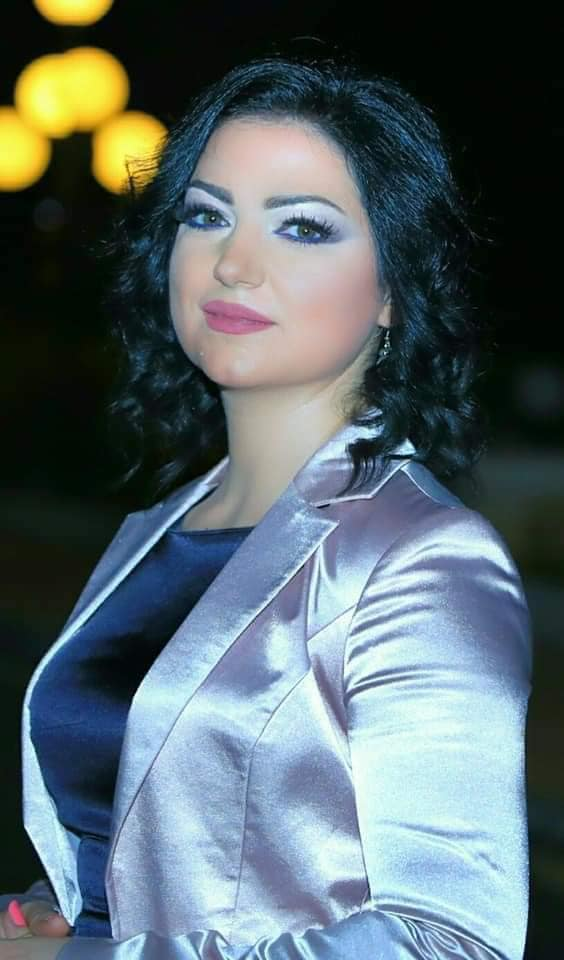
Similarly, @Tarq, at 10:12 AM, reflected: “Two months ago, I dreamt of you in heaven. You smiled and said the dream was sweet. You were our light, Safaa, and now that light is gone. This life is not fair.” The post was accompanied by a picture showing a woman who appeared to have been photographed in a professional or formal setting. She had shoulder-length, dark curly hair and wore makeup, including prominent eyeliner and pink lipstick. She was dressed in a shiny lavender blazer over a dark top, giving her a polished and elegant appearance.
Her husband, the dentist Ahmed al-Hassan, mourned publicly, sharing: “I bring you the news of the martyrdom of my wife, my love, and the mother of my children, the sun of Syria. Safaa was targeted by the treachery of the Zionists. Goodbye, my love.”
The General Authority for Radio and Television in Syria also mourned the death of its employee, saying that it “announces the martyrdom of the great broadcaster Safaa Ahmed as a result of the treacherous Israeli aggression that the capital Damascus was subjected to.”
Twitter/X user @Mohammad_awad90 shared an image reportedly related to the event showing a nighttime urban scene dominated by a fiery explosion in the foreground. Flames rose high into the air, casting a yellow-orange glow that illuminated nearby objects and trees. The fire appeared to emanate from a vehicle engulfed in flames, with thick smoke billowing upwards. To the left of the fire, a multi-story building stood prominently, partially lit by the fire and streetlights. The building showed no immediate visible damage. In the background, trees partially obscured the scene, their branches illuminated by the blaze. On the right side of the image, a man dressed in what appears to be a military or security uniform stood near a white car.
Facebook user Samer Alshamaly shared a series of pictures related to Safaa’s funeral. One picture showed a group of mourners gathered at the doorway of a residence. Two young men, dressed casually, were seen lifting a casket draped in a flag, partially visible in red, white, and black. The somber scene was intensified by the presence of a grieving woman, who raised her hand toward the casket in a gesture of farewell or despair. Other mourners, including older men and women, surrounded the doorway, their faces marked with sorrow and grief.
Another picture showed two men being seen lifting the casket, their expressions strained from both physical effort and emotional weight. One of the men, with a white beard and wearing a checkered shirt, held onto the casket while looking upward. Another man, bald and dressed in a dark T-shirt, supported the rear of the casket. The flag covering the casket was clearer here, with folds of black and white fabric visible.
Another picture showed an elderly woman wearing a black headscarf and dress supported by two other women. Her eyes were tightly closed, and her mouth slightly open, capturing a raw moment of anguish. The women around her held her arms as she appeared to struggle with her emotions. In the background, more mourners, some with visible tears, observed the scene.
Another image showed a casket, now fully draped in a flag with a green star visible in the center, being placed inside a van. Two men leaned into the vehicle, carefully positioning the casket in what appeared to be a designated space. The rear doors of the van were open, revealing a clean interior, while bystanders outside watched the proceedings. The white vehicle, marked with blue stripes, suggested it was part of an official funeral convoy.
Another picture showed the funeral van, heavily adorned with white and purple flower arrangements, driving down an empty street. The bright daylight contrasted with the somber purpose of the vehicle, creating a poignant image. Behind the van, a line of cars followed as part of the funeral procession. In another picture, the casket was placed on the ground, fully covered by a black cloth with a red and white border. White and purple flower wreaths rested on top, each inscribed with ribbons carrying messages of condolence. A crowd of mourners stood behind, their faces solemn and respectful, creating a stark juxtaposition with the colorful flowers symbolizing honor and remembrance.
Another picture shows a group of mourners, mostly men, standing in rows, facing the casket as they participate in a funeral prayer. The casket, still adorned with flowers, lay at the forefront of the image. Another image captured the casket being carefully lowered into a grave. Two men crouched beside the grave, using straps to guide the casket into place. The grave itself was freshly dug, its edges sharply defined against the dry, rocky soil. The surrounding mourners stood close by, watching the process with solemnity and reverence. The final image showed men using shovels to cover the grave with soil. A cloud of dust rose as the dry earth fell into the grave, signaling the final act of the burial. The mourners, now fewer in number, watched from a short distance. The surrounding environment was barren, with sparse vegetation and dry earth dominating the landscape, emphasizing the solemnity of the act.
There was no information on the identities, ages, and gender of other civilian victims. According to the sources, Lieutenant Ammar Dahi Saleh was also killed in the strike.
Where the sources identified the belligerent, all sources attributed responsibility for the attack to the Israeli military. According to the Facebook post by Alsharq News, the Israeli military was aiming at a “moving target” near the Syrian Telecommunications Company building, but other sources did not corroborate this information.