
Incident Code
Incident Code
Incident Date
Location
Geolocation
Geolocation
Airwars Assessment
On Tuesday, June 24, 2025, an alleged Israeli strike hit the home of the father-in-law of nuclear scientist Mohammad Reza Sedighi Saber in Astana Ashrafiyeh, located in the northern Iranian province of Gilan, at approximately 1:15 a.m., killing at least 14 civilians and injuring 33 others, according to Iranian officials and regional media reports.
Reports indicated that many of the victims belonged to the same extended family who had gathered at the residence at the time of the explosion. Several of those killed were women and children, while dozens of other civilians in the surrounding area were reportedly injured by the blast.
Those killed included 50-year-old Dr. Mohammad Reza Sedighi Saber, along with multiple members of his extended family: his two daughters, Mahia Sedighi Saber and 22-year-old Fatemeh Sedighi Saber, Zahra Saber, Mousa Saber, Saltanat Hosseinpour, Yas Saber, and Hamed Saber, a 39-year-old employee of Iran’s Ports and Maritime Organisation in southern Hormozgan province. Hamed was killed alongside his wife, Mahsa Ahmar, and their seven-year-old son, Milan Saber.
Also among the victims were relatives of the family: 14-year-old Amir Ali Chatranbarin, Ahmad Lotfi Rad, Rouhangiz Farhang Mohini, Sahrebanu Pour Ramazan and Mojtaba Mohammadpour.
Regional outlets and official sources confirmed that Mohammad Reza Sedighi Saber, a nuclear scientist sanctioned by the United States in connection with Iran’s military research programs, was among those killed in the strike. Some reports stated that he had recently relocated to his in-laws’ home in Astana Ashrafiyeh after an earlier strike days before on his residence in Tehran reportedly had killed his 17-year-old son, Hamid Reza (see Airwars incident ISIR250613ap).
According to @Rppress0 on Twitter/X, Dr. Saber, born on August 24, 1974, reportedly researched sympathetic explosions (chain explosions of ammunition). One of his articles focused on Comp-B, a material used in mines, bombs, and missile warheads. He was the head of the “Shahid Karimi” group affiliated with the Islamic Republic’s Sepand organisation, which worked on explosives-related projects.
Given his involvement in the development of explosives and weapons, Airwars has recorded his civilian status as “contested” until further information comes to light.
The late Mohammed was also one of the pioneers of judo, and his death was mourned by the Judo Federation of the Islamic Republic of Iran which highly praised his achievements: “The late Dr. Sedighi Saber not only achieved remarkable progress in the field of science and knowledge, but also shone with pride in the judo arena and set an example of a faithful, committed, and revolutionary athlete.” The post included a group picture of judo athletes, featuring Mohammed.
Mohammed’s eldest daughter, 22-year-old Fatemeh, was in her fourth year of medical school. Twitter/X account @justlikeusiran described her as “calm, focused, and full of hope, the one who dedicated her future to treating others.” The account added an image of a young smiling woman, wearing a black headscarf and sitting outdoors in front of a two-storey building. The post author emphasised that she “had died in her grandparents’ home, surrounded by those who loved her,” and this place was meant to be safe.
According to @killedByIsraeli on Twitter/X, one of the victims, Amir Ali Chateranbarin, a 14-year-old student from Lahijan, had just gone to spend a summer night at his relatives’ home in Astana Ashrafiyeh. He and his immediate family had traveled there to offer condolences to the Sedighi Sabers following the killing of their son, Hamid Reza. Sources shared an image of Amir showing a teenager dressed in a blue T-shirt.
News outlet Navide Shahed wrote that Hamed Saber, too, came to his hometown with his wife and their son to attend the memorial service for his martyred nephew Hamid Reza, son of Mohammad Reza Seddighi Saber, who had been killed days earlier in Tehran. The media outlet lamented the death of this family: “Hamed’s calm image, Mahsa’s kind gaze, and Milan’s childish smile are now engraved on new tombstones, and their memory will remain eternal in Iran’s national memory.”
Local authorities later released the names of the fifteen victims recovered from the site. A funeral announcement stated that ceremonies for the dead would take place in the provincial capital of Rasht before burial in Astana Ashrafiyeh.
According to Iranian media citing local authorities, the explosion destroyed four residential units and caused heavy damage to nearby houses. The force of the blast reportedly shattered windows and damaged surrounding structures, while emergency crews worked through the night to recover bodies and transport the wounded to nearby medical facilities.
An image shared by Twitter/X user @Whiteswanap1 showed commemorative posters of those killed stood among rubble. In the center of the image, which was taken in the evening, a steel and cement skeleton of a building.
At the time of reporting, casualty figures ranged from nine to fifteen fatalities, though the most recent official lists identified fifteen individuals killed and thirty-three injured in the incident.
Sources identifying a belligerent attributed the strike to Israeli military forces, while Israeli officials had not publicly commented on the specific incident.
Victims
Family members (10)
Individuals
Geolocation Notes
Reports of the incident mention a strike on multiple residential units in Astana Ashrafiyeh (آستانه اشرفیه), Gilan province (استان گیلان) . Analysing audio-visual material from sources, we have narrowed the location down to the following exact coordinates: 37.253188, 49.944885.
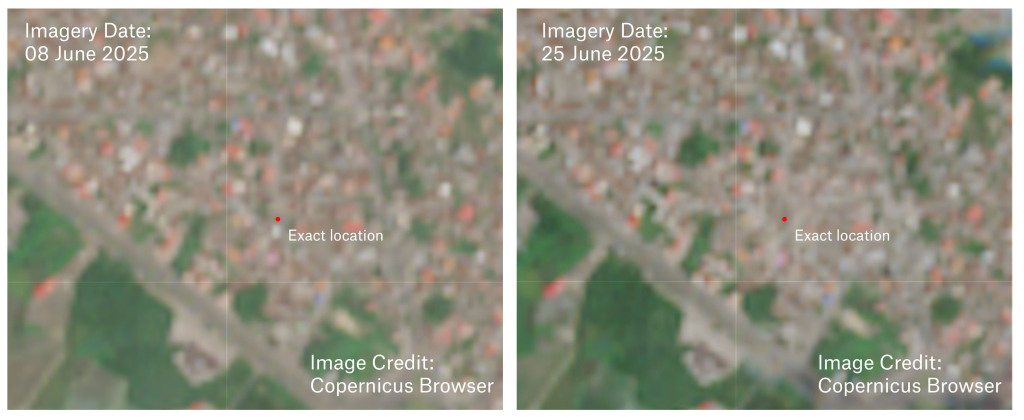
Imagery: Copernicus Browser
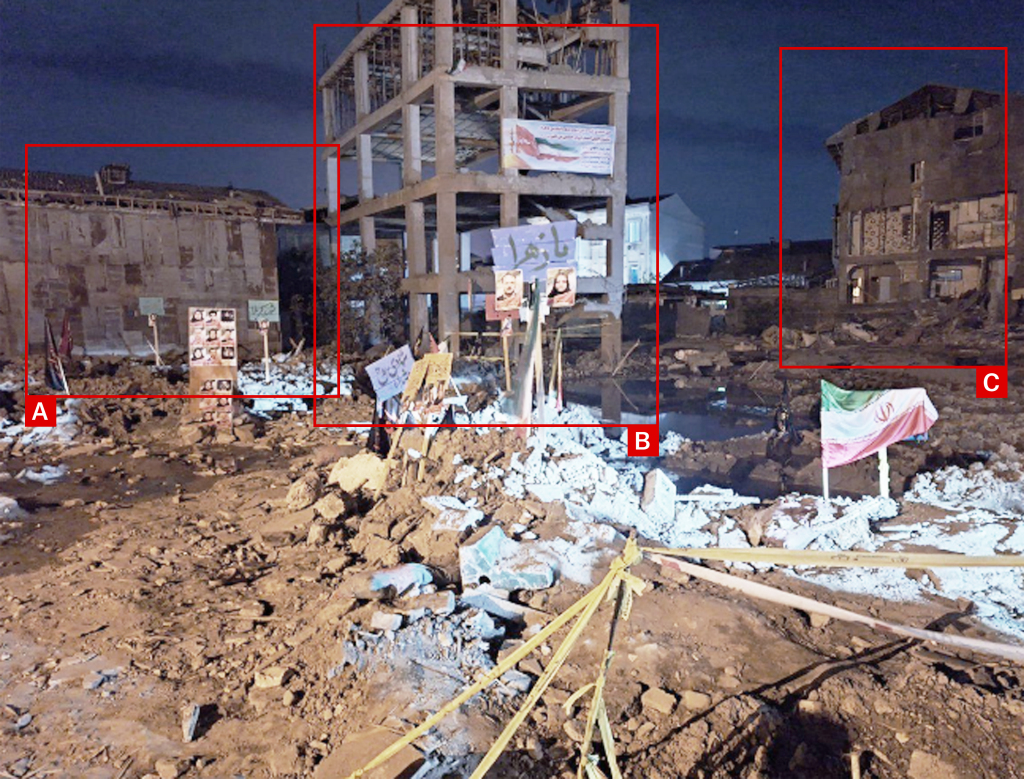
Imagery: Whiteswanap1
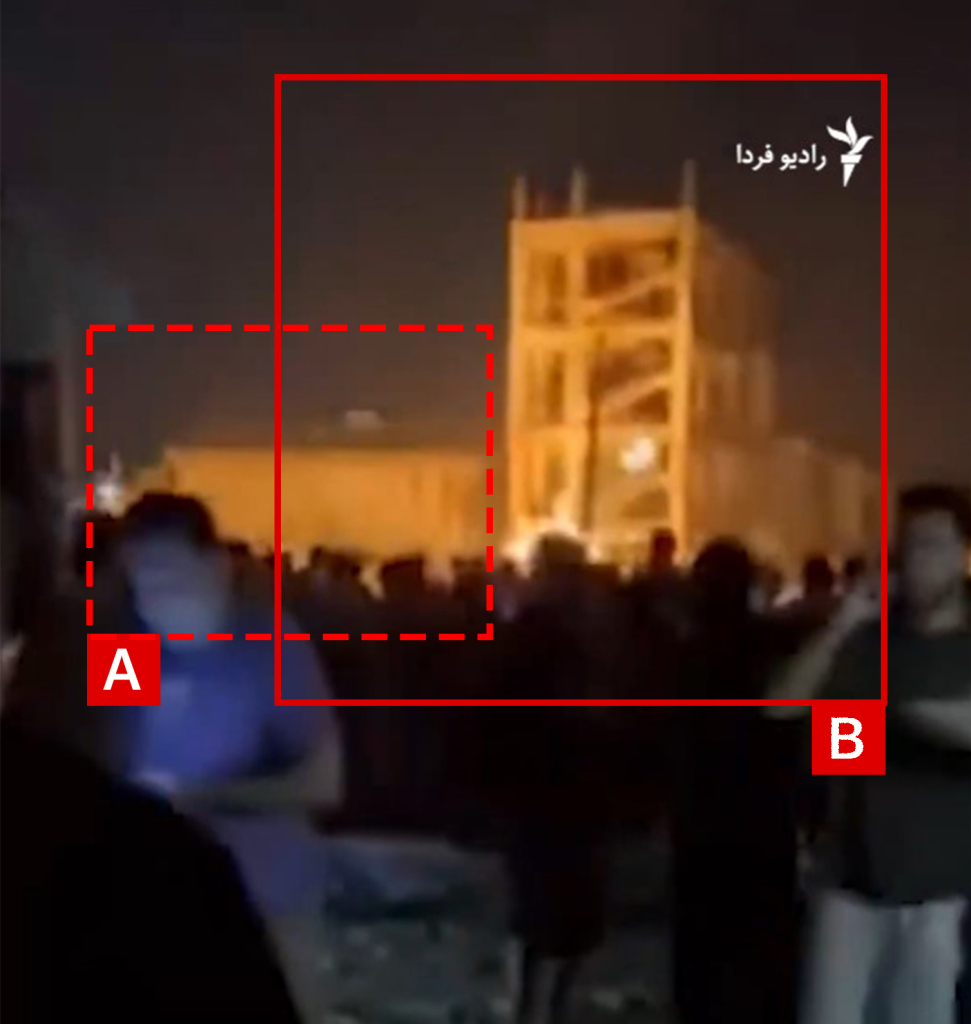
Imagery: RadioFarda
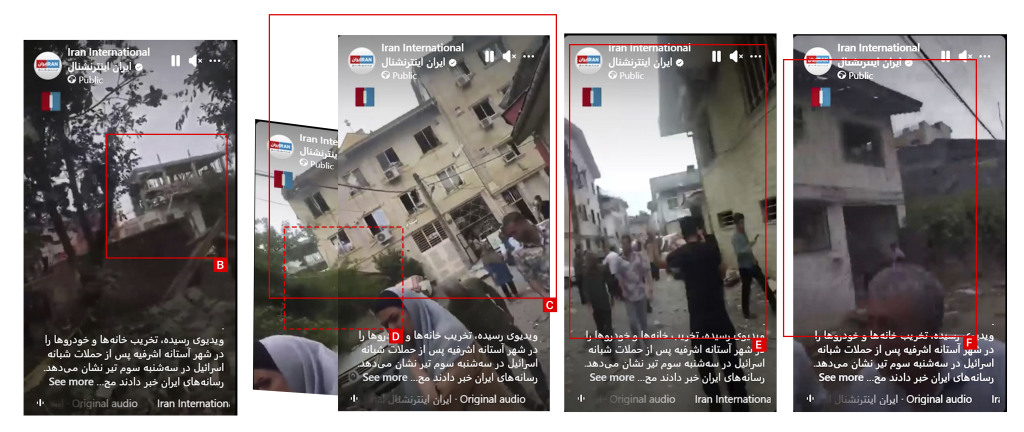
Imagery: Iranian International