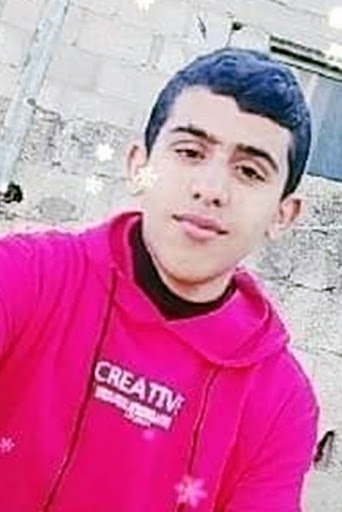
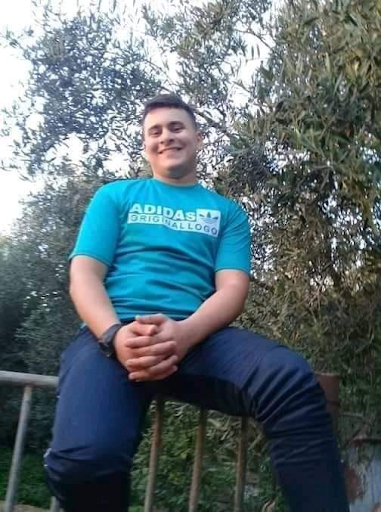
Up to seven civilians were killed, including two children, and as many as 34 people were injured, when an alleged rocket fired by a Palestinian armed group landed in Saleh Dardouna Street, near the al-Omari Mosque in Jabalia, north Gaza on May 10th 2021, according to multiple sources.
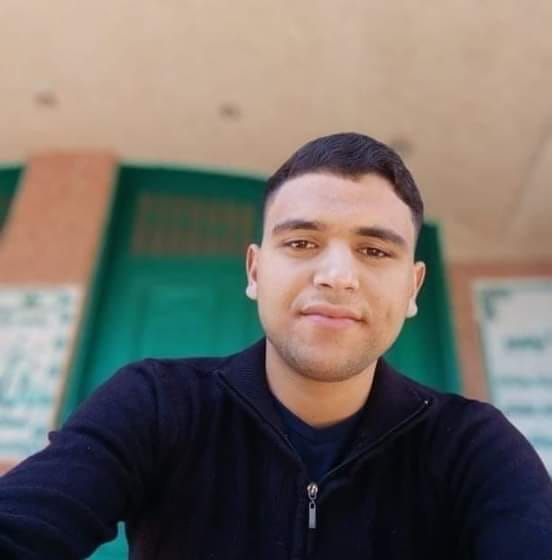
An investigation by Human Rights Watch revealed that seven civilians had been killed. The victims were named as: Bara al-Gharabli, 6; Mustafa Mohammad Obied, 14; Mousa Khamees Junied al-Zain, 20; Raed Abu Warda, 33; Nabeel Noman Dardona, 24; Ismat al-Zain, 50; and Basheer Aloush, 54. Fifteen people were said to have been injured, including five children. A shopkeeper who witnessed the strike identified one of the injured children as Mohammed Shaban.
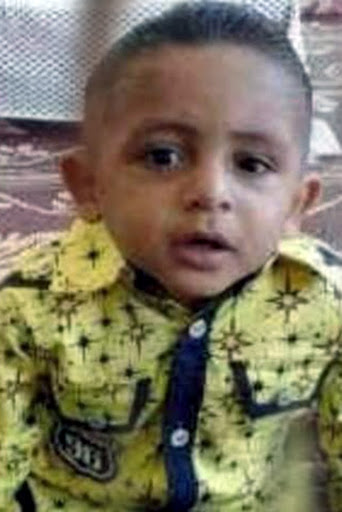
In a report published on May 11th 2021, Defence for Children International – Palestine, said eight civilians had been killed and as many as 34 injured, 10 of them children. Mustafa Mohammad Mahmoud Obaid, 16, was killed in the blast, and five-year-old Baraa Wisam Ahmad al-Gharabli succumbed to his injuries around 11 p.m. on May 10.
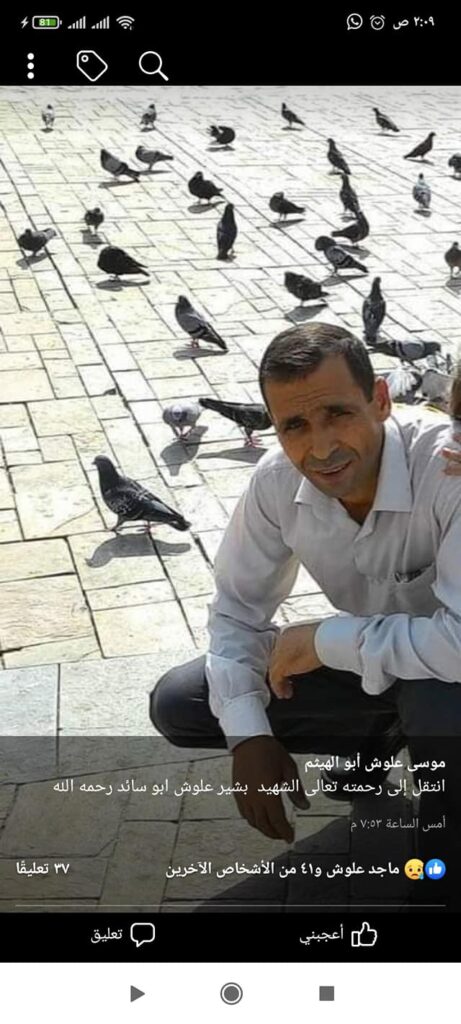
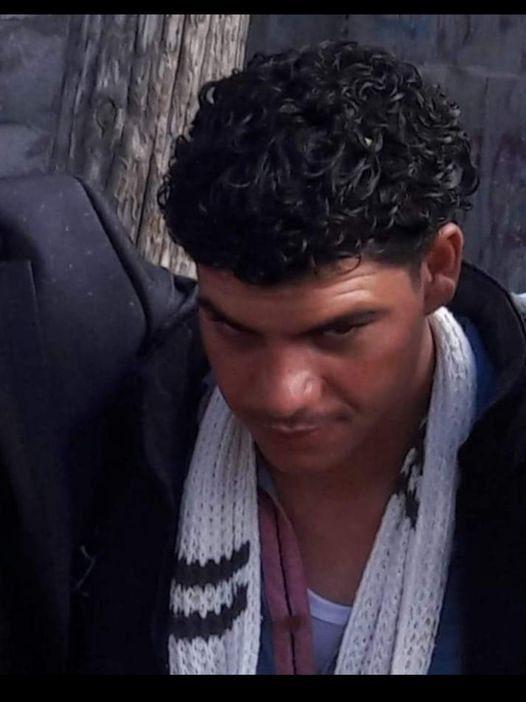
Another man, Zakaria Ziad Alloush, was also reported to have been killed. Tributes were paid online by relatives who identified Basheer and Zakaria Alloush as uncle and nephew respectively.
Four people, who were on the street at the time, said they saw a rocket rise into the sky above them and then fall to the street. Two adults said they saw the rocket approach from the northwest. Human Rights Watch spoke to a relative of one of the deceased who was at the scene. He gave the following account: “At about 6 p.m. I was standing near the entrance to the local market on Martyr Salah Dardona Street. I was near about 50 people who were close together in the street. Some of them were there to get food for poor people, cooked by locals wanting to help the poor during Ramadan. Suddenly, I heard a barrage of rockets being fired and I looked up and saw them rise in the air. I saw one rocket rising in the shape of a spiral and then it came down in the middle of the street about 10 meters from where I was standing.” The relative said that among those killed and injured were a father and a child washing a car, a man riding a motorbike, a child coming to get a plate of food, a woman exiting a hairdresser’s shop, and a child playing in front of a bicycle shop. The relative later spoke to a person who told him that six rockets had been launched from the Sheikh Radwan area of Jabalya.
The wife of one of those killed gave the following account: “[My husband] had just come home from work. He had bought sweets and new clothes for everyone, in preparation for Eid [Muslim holiday marking the end of the holy month of Ramadan]. Before he left, he gave the kids some sweets and kissed and hugged them. Then he asked me to look after the kids, as he wanted to buy one more thing. He told me he wouldn’t be delayed, as he was feeling tired. But he never came back.”
Some sources, including accounts from relatives of the victims, reported that Israeli forces were responsible for the strike. Human Rights Watch determined, based on witness accounts during site visits, munition remnants, and a review of video footage, that the casualties had been caused by a Palestinian rocket. Defence for Children International – Palestine came to the same conclusion citing Palestinian security sources and explosives experts.
The website NGO Monitor reported that one of the deceased, Issmat Shaaban Al-Zain had been a member of the Izz Ad-din Al-Qassam brigades. Al Qassam verified that he was a member, posting in their Telegram channel “The martyr Al-Qassami Mujahid / Ismat Sha`aban Al-Zein from Jabalia Al-Balad, who was martyred during the battle of #Saif_Al-Quds”. The Israeli Defense Force also identified Raed Abu Warda as “a Hamas terrorist operative [who] was killed in a failed jihadist launch” but Raed’s name was not posted in the official Al Qassam Telegram channel.
Contested
Competing claims of responsibility e.g. multiple belligerents, or casualties also attributed to ground forces.
Causes of Death / Injury
Heavy weapons and explosive munitions
Civilians reported killed
5–7
(2 Children, 4–5 Men)
Civilians reported injured
15–34
(5–10 Children, 2 Women)
Military actors reported killed
1–2
Geolocation Notes
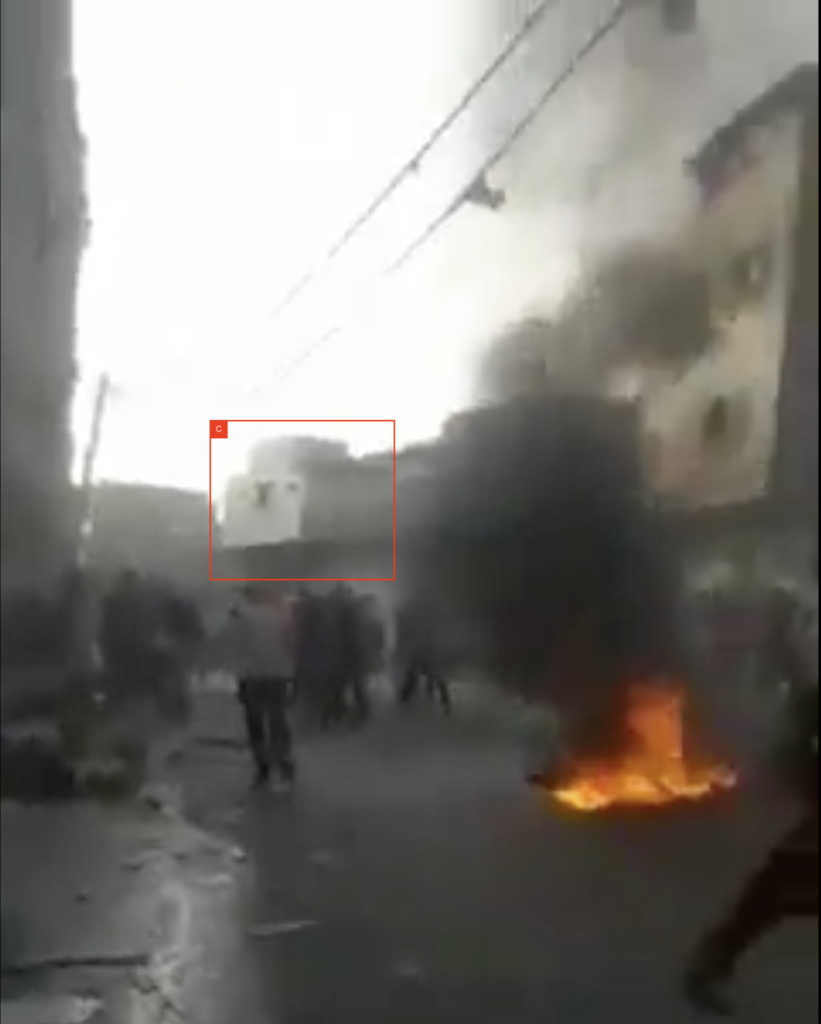
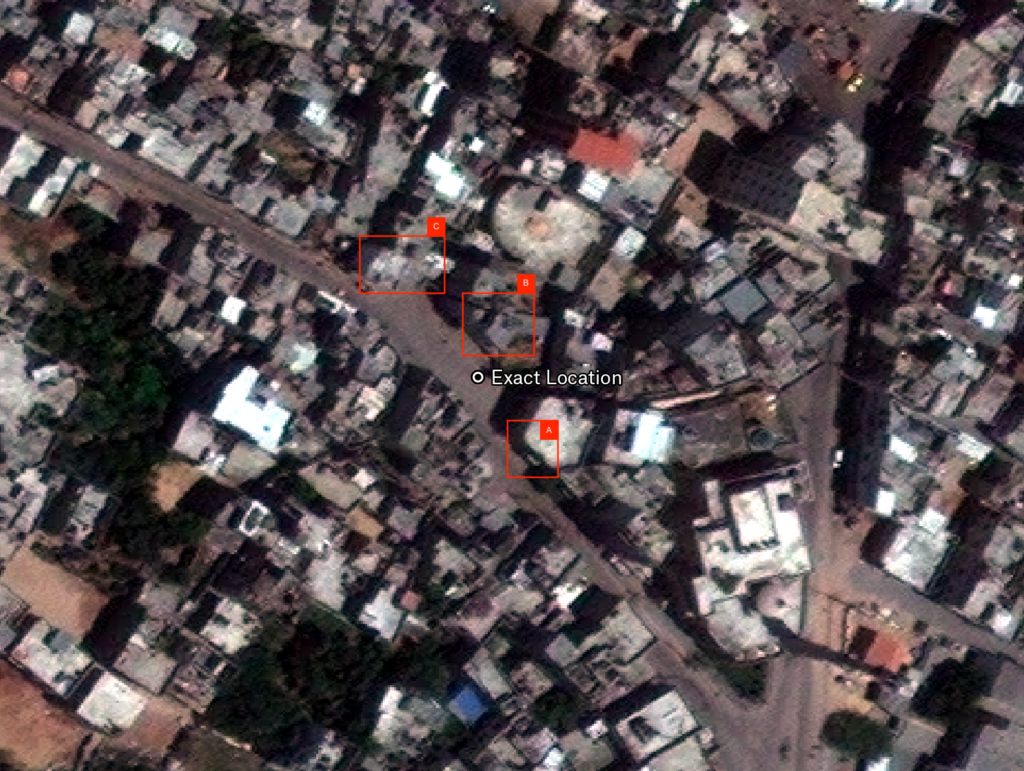
Reports of the incident mention a strike on Saleh Dardouna Street (صالح دردونة) near Al Omari Mosque (مسجد العمري) in Jabalia (جباليا). Analyzing visual material from sources, we have narrowed down the location to these exact coordinates: 31.526024, 34.483359.
A composite still from a video showing the immediate aftermath of the incident on Saleh Dardouna Street (صالح دردونة), May 10, 2021.
Imagery:Knooznet Article
A composite still from a video showing the immediate aftermath of the incident on Saleh Dardouna Street (صالح دردونة), May 10, 2021.
Imagery:Knooznet Article
A composite still from a video showing the immediate aftermath of the incident on Saleh Dardouna Street (صالح دردونة), May 10, 2021.
Imagery:Knooznet Article
Satellite image taken May 21, 2021, showing the features in the image above to verify an exact location.
Ramallah, May 11, 2021—At least nine Palestinian children are dead in the Gaza Strip following an escalation of violence between Israeli forces and Palestinian armed groups late yesterday afternoon.
Nine Palestinian children, ranging in age from two to 16 years old, were killed in three separate incidents across the northern Gaza Strip on May 10. An Israeli drone-fired missile killed 15-year-old Mohammad Saber Ibrahim Suleiman shortly after 6 p.m. while he and his father Saber Ibrahim Mahmoud Suleiman were on their agricultural land outside the city of Jabalia, according to documentation collected by Defense for Children International - Palestine. Father and son were both killed instantly. Mohammad’s body was subsequently transferred to the Indonesian hospital in Jabalia where doctors reported there were shrapnel wounds throughout his body.
Mohammad’s father was reportedly a commander in Izz Ad-Din Al-Qassam Brigades, a Palestinian armed group and the armed wing of Hamas, according to information collected by DCIP.
In a second incident around 6:05 p.m., initial investigations suggest a homemade rocket fired by a Palestinian armed group fell short and killed eight Palestinians, including two children. The rocket landed in Saleh Dardouna Street near Al-Omari Mosque in Jabalia, North Gaza, according to evidence collected by DCIP. Mustafa Mohammad Mahmoud Obaid, 16, was killed in the blast, and five-year-old Baraa Wisam Ahmad al-Gharabli succumbed to his injuries around 11 p.m. on May 10.
Palestinian security sources and explosives experts indicated the cause of this explosion was a Palestinian armed group rocket that fell short. Another 34 Palestinian civilians were injured in the blast, including 10 children, according to DCIP’s documentation.
Six Palestinian children and two adults were killed in a third blast that occurred around 6 p.m. in Beit Hanoun about 800 meters (2,600 feet) west of the Gaza Strip perimeter fence. Those killed included Rahaf Mohammad Attalla al-Masri, 10, and her cousin Yazan Sultan Mohammad al-Masri, 2; brothers Marwan Yousef Attalla al-Masri, 6, and Ibrahim Yousef Attalla al-Masri, 11; as well as Hussein Muneer Hussein Hamad, 11, and 16-year-old Ibrahim Abdullah Mohammad Hassanain, according to information collected by DCIP. When the blast occurred, members of the al-Masri family were reportedly harvesting wheat in the field outside their home, and their children were playing nearby, according to information collected by DCIP.
DCIP has not yet confirmed the cause of these deaths. At the time of the incident, Israeli drones and warplanes were reportedly overhead and Palestinian armed groups were firing homemade rockets towards Israel. DCIP continues to investigate these incidents to determine and identify the responsible parties.
“Israeli forces must not carry out indiscriminate airstrikes in densely populated areas that fail to distinguish between military targets, civilians, and civilian objects,” said Ayed Abu Eqtaish, accountability program director at DCIP. “Israeli forces and Palestinian armed groups must take all steps necessary to conduct any hostilities in accordance with international law and protect civilians, especially children.”
These latest incidents follow weeks of mounting tension as Israeli settlers, with Israeli government support, seek to expel hundreds of Palestinians from their homes in Sheikh Jarrah, a neighborhood in occupied East Jerusalem. Palestinian-led protests against these planned expulsions have been met with state-sanctioned violence as Israeli police and paramilitary border police use excessive force against Palestinian protesters.
During the Muslim holy month of Ramadan, which began on April 13, Israeli authorities have restricted Palestinian access to the Al-Aqsa Mosque compound, Islam’s third holiest site, and set up checkpoints at the Damascus Gate entrance to occupied East Jerusalem’s Old City. On Saturday, Israeli authorities closed roads to Jerusalem and sought to prevent thousands of Palestinian citizens of Israel from accessing and praying at Al-Aqsa Mosque on Laylat al-Qadr, the holiest night in the Muslim calendar.
On Monday, May 10, national religious Israelis marched through occupied East Jerusalem’s Old City celebrating Jerusalem Day, which commemorates Israel’s conquering of East Jerusalem in the 1967 War and its illegal annexation of the eastern part of the city. Palestinian armed groups in the Gaza Strip began firing rockets at Israel during the march, and the Israeli military responded with aerial attacks striking several locations in the Gaza Strip.
International humanitarian law prohibits indiscriminate and disproportionate attacks and requires all parties to an armed conflict to distinguish between military targets, civilians, and civilian objects. Israel as the occupying power in the Occupied Palestinian Territory, including the Gaza Strip, is required to protect the Palestinian civilian population from violence.
Israeli authorities have imposed a closure policy against the Gaza Strip since 2007 by strictly controlling and limiting the entry and exit of individuals; maintaining harsh restrictions on imports including food, construction materials, fuel, and other essential items; as well as prohibiting exports. Israel continues to maintain complete control over the Gaza Strip’s borders, airspace, and territorial waters.
May 10th, 2021: Mohammad Saber Suleiman, 16, was killed, along with his father, at their family home near Jabalia in northern Gaza. Israeli forces fired a missile at their land, killing landowner Saber Ibrahim Suleiman, and his son Mohammad.
The Palestinian Health Ministry in the Gaza Strip has confirmed, on Monday at night, that the Israeli army’s bombardment and shelling of the Gaza Strip, has resulted in the death of twenty Palestinians, including 9 children, and the injury of 95 others.
The Health Ministry added that, among the slain children is a girl, only nine years of age.
It also said the 95 Palestinians, including children and women, were injured by the Israeli missiles and shells, some seriously.
Meanwhile, the Ma’an News Agency has reported that five Palestinians were killed when an Israeli shell struck a yard behind the al-Omari Mosque in Gaza.
The Israeli bombardment in Jabalia also led to the death of Esmat Sha’ban az-Zein, Mousa Khalil az-Zein, Zakariya Ziad Alloush, Bashir Mohammad Alloush, Raed al-‘Abed Abu Warda, Nabil an-No’mani Dardouna, and Mustafa Mohammad Obeid.
In Beit Hanoun, the soldiers fired two missiles at the home of Ibrahim Atallah al-Masri, killing eight Palestinians and wounding several others.
The army also fired a missile at a motorcycle near a mosque in Beit Hanoun, killing Mohammad Nosseir and Mohammad Fayyad, in addition to firing a missile into the home of Husam Ali Nosseir, behind Abu Bakr Mosque in Beit Hanoun, causing several injuries.
Ma’an said the Palestinians, who were killed in the Israeli bombardment in Beit Hanoun, have been identified a Mohammad Ali Mohammad Nosseir, Mohammad Abdullah Zidan Fayyad, Ibrahim Yousef Atallah al-Masri, Marwan Yousef Atallah al-Masri, Ahmad Mohammad Atallah al-Masri, and Rahaf Mohammad Atallah al-Masri.
According to Jerusalem (Quds) Press correspondent, Israeli jets fired missiles at a large gathering of Palestinian civilians on Al-Masryin Street, adding that several people were transferred to the hospital for their injuries.
Earlier Monday, the “Joint Chamber of Palestinian Resistance Factions” demanded that the Israeli authorities disengage from the sacred Al-Aqsa Mosque and the Sheikh Jarrah neighborhood in occupied Jerusalem.
Resistance factions set a deadline of 6pm, at which time they would retaliate for the violations against the Palestinians in occupied Jerusalem.
At 6pm the Palestinian resistance reportedly fired several crude, homemade rockets into Israel from the besieged Gaza Strip, no casualties or damage were reported.
Immediately afterward, Israeli warplanes began flying over Gaza and dropping missiles on the civilian population of Gaza. Although Israel claimed they were targeted Palestinian resistance operations, the Israeli military offered no evidence of that claim, and the overwhelming majority of those killed were civilians.
Mohammad was from Jabalia, in the northern Gaza Strip. Source: IMEMC
Media from contact@ifamericansknew.org (3)
This media contains potentially graphic content. Click to unblur.
As of Tuesday morning, the Palestinian Ministry of Health has confirmed that Israeli airstrikes have killed 26 Palestinians, including 9 children and one woman, and wounded at least a hundred in the Gaza Strip. Israel began its assault on Gaza Monday evening, following three weeks of Israeli settler and soldier attacks on Palestinians in Jerusalem. The Israeli attacks in Jerusalem began on the first day of Ramadan on April 12th, and have continued throughout the Muslim holy month, which is set to end Wednesday, May 12th. Israel’s attacks focused on Palestinian Muslims attempting to pray at the holy al-Aqsa Mosque during the Muslim holy month of Ramadan.
In Gaza, reports continue to trickle in from hospitals and from survivors of the Israeli airstrikes. In addition to the nine children, including a 9-year old girl, who were confirmed killed in the first wave of Israeli airstrikes, local sources have also confirmed that a woman and her disabled son were among those slain.
In addition to those identified in the update below, five additional victims have been identified as having been killed by the two missiles that struck the home of Ibrahim Atallah al-Masri in Beit Hanoun, in northern Gaza Monday night.
Ibrahim Yousef Atallah al-Masri, 10 years old
Yazin Sultan Atallah al-Masri, 1-year-old
Marwan Yousef Atallah al-Masri, 12
Rahaf Mohammad Atallah al-Masri, 10-year-old girl
Ahmad Mohammad Atallah al-Masri, 20
Before dawn Tuesday, the Israeli army fired missiles into an apartment in a residential tower, in the Rimal neighborhood, west of Gaza city, killing three Palestinians, and seriously wounding one, in addition to injuring at least seven other Palestinians in adjacent apartments. The Maan News Agency said the army targeted leaders of the al-Quds Brigades, the armed wing of the Islamic Jihad, in the residential tower. The slain Palestinians have been identified as:
Sameh al-Mamlouk
Kamal Taiseer Qreiqe’, 35
Mohammad Abu al-Ata
Extrajudicial assassinations are considered violations of international law but are a common practice by the Israeli military.
In Khan Younis, a Palestinian died of wounds sustained Monday evening during Israeli missile attacks in the al-Manara area of the city. He has been identified as:
Salim Mahmoud al-Farra, 37
Children covered in dust after surviving Israeli missile strike
updated from:
Update: “Israeli Army Kills 20 Palestinians, including 9 Children, Injures 95, In Gaza”
May 11, 2021 at 02:02
The Palestinian Health Ministry in the Gaza Strip has confirmed, on Monday at night, that the Israeli army’s bombardment and shelling of the Gaza Strip, has resulted in the death of twenty Palestinians, including 9 children, and the injury of 95 others.
The Health Ministry added that, among the slain children is a girl, only nine years of age.
It also said the 95 Palestinians, including children and women, were injured by the Israeli missiles and shells, some seriously.
Meanwhile, the Ma’an News Agency has reported that five Palestinians were killed when an Israeli shell struck a yard behind the al-Omari Mosque in Gaza.
It added that an Israeli missile struck a land, east of Jabalia in northern Gaza, leading to the death of its owner Saber Ibrahim Suleiman, 39و and his son Mohammad, 16.
The Israeli bombardment in Jabalia also led to the death of:
Esmat Sha’ban az-Zein
Mousa Khalil az-Zein, 19
Zakariya Ziad Alloush
Bashir Mohammad Alloush
Raed al-‘Abed Abu Warda, 27
Nabil an-No’mani Dardouna
Mustafa Mohammad Obeid, 17
In Beit Hanoun, the soldiers fired two missiles at the home of Ibrahim Atallah al-Masri, killing eight Palestinians and wounding several others.
The army also fired a missile at a motorcycle near a mosque in Beit Hanoun, killing Mohammad Nosseir and Mohammad Fayyad, in addition to firing a missile into the home of Husam Ali Nosseir, behind Abu Bakr Mosque in Beit Hanoun, causing several injuries.
Ma’an said the Palestinians, who were killed in the Israeli bombardment in Beit Hanoun, have been identified a Mohammad Ali Mohammad Nosseir, Mohammad Abdullah Zidan Fayyad, Ibrahim Yousef Atallah al-Masri, Marwan Yousef Atallah al-Masri, Ahmad Mohammad Atallah al-Masri, and Rahaf Mohammad Atallah al-Masri.
– Updates Will be made once officially available
Updated From:
Israeli Airstrikes on Gaza Kill 21 Palestinians, Including 9 Children
May 11, 2021, at 00:03
Israeli warplanes bombarded the northern Gaza Strip, on Monday, killing at least 21 people including 9 children, the Ministry of Health in Gaza has confirmed.
The names of those killed have not yet been released, but IMEMC will update this article with the information as soon as it is available.
In northern Gaza, Israeli forces fired missiles from an unmanned Israeli drone, striking dozens of civilians in the city of Beit Hanoun, killing 21 and injuring 65 others.
Several missiles were fired into the besieged coastal region, in response to rockets fired from the resistance factions in Gaza.
According to Jerusalem (Quds) Press correspondent, Israeli jets fired missiles at a large gathering of Palestinian civilians on Al-Masryin Street, adding that several people were transferred to the hospital for their injuries.
Earlier Monday, the “Joint Chamber of Palestinian Resistance Factions” demanded that the Israeli authorities disengage from the sacred Al-Aqsa Mosque and the Sheikh Jarrah neighborhood in occupied Jerusalem.
Resistance factions set a deadline of 6pm, at which time they would retaliate for the violations against the Palestinians in occupied Jerusalem.
At 6pm the Palestinian resistance reportedly fired several crude, homemade rockets into Israel from the besieged Gaza Strip, no casualties or damage were reported.
Post navigation
Media from By IMEMC News (6)
This media contains potentially graphic content. Click to unblur.
Share to FacebookShare to XArticle printing is available to subscribers onlyPrint in a simple, ad-free formatSubscribeComments: Zen reading is available to subscribers onlyAd-free and in a comfortable reading formatSubscribeSince the start of the escalation in Gaza, 13 children and teenagers have been killed, including a 2-year-old, according to the Al-Mezan Center for Human Rights and the Gaza Health Ministry. Six of the minors were killed in a single attack. Only $1 for the first monthSubscribe now for on-the-ground reporting and analysisSUBSCRIBE NOWAlready signed up? Log inOrRegister to get up to 6 articles per monthClick the alert icon to follow topics:You Might Also LikeYou Might Also LikeCommentsYour Perspective Belongs HereWant to reply? Subscribe to join the conversationEnter the commenter display nameIn the NewsAfter the Deadly Attack at Bondi Beach, Israel Warns: Sydney Won't Be the Last TargetMy Students Can Only Draw Inspiration From Brothers and Sisters in ArmsMajor Cities Tighten Security Around Hanukkah Events After Deadly Bondi Beach AttackHaaretz CartoonIsrael's Top Court Strikes Down Police Protocol Allowing Detention Based on ProfilingRemembering and rebuilding two years laterICYMIAnalysisAnalysisThe Ultra-hawkish Right and anti-Zionist Left Have Drowned the American Jewish MajorityAnalysisAnalysisThe Visionary Palestinian Peace Plan for Israel and Gaza That You've Never Heard OfRaised in the Heart of the Settler Right, They're Determined to Revive Israel's LeftIsrael's Right Wing Bet the Country's Future on U.S. Christian Nationalists. It BackfiredHe Takes Killer Dogs, and Teaches Them to Love AgainWhy Did So Many Jews Vote for Mamdani?
Just minutes after the war between Israel and Hamas broke out, a 5-year-old boy named Baraa al-Gharabli was killed in Jabaliya, Gaza. A 16-year-old, Mustafa Obaid, was killed in the same strike, on the evening of May 10. Around the same time, four cousins — Yazan al-Masri, 2, Marwan al-Masri, 6, Rahaf al-Masri, 10, and Ibrahim al-Masri, 11 — were killed in Beit Hanoun, Gaza. “It was devastating,” said Mukhlis al-Masri, a cousin. “The pain for our family is indescribable.” Hussein Hamad, 11 Ibrahim Hassanain, 16 Muhammad Suleiman, 15 Hamza Ali, 12 Mina Sharir, 2, and Lina Sharir, 15, sisters Nearly all of the children killed were Palestinian. Gaza is crowded and its population skews young, with about half under age 18. So when Israeli warplanes hit homes and residential neighborhoods, the number of children at risk is extraordinary. Sometimes nearly entire households disappear with a single blast. Israel blames Hamas for the high civilian death toll in Gaza because the group fires rockets and conducts military operations from civilian areas. Israel’s critics cite the death toll as evidence that Israel’s strikes were indiscriminate and disproportionate. Beit Hanoun, in northern Gaza Strip, on May 15. Samar Abu Elouf for The New York Times Children are the most vulnerable. In Gaza, they grow up amid widespread poverty and high unemployment, and cannot freely travel in or out of the territory because of the blockade imposed by Israel and Egypt. They also live under the constant threat of war. An average 15-year-old would have lived through four major Israeli offensives. Nearly everyone in Gaza knows someone who has been killed in the fighting. “When I think about the children who died,” said Ola Abu Hasaballah, a child psychologist in Gaza, “I also think about the ones who survive, those who were pulled out of the rubble and lost a limb, or those who will go to school and see their friend is missing.” In the Arab village of Dahmash in central Israel, when the sirens wailed around 3 a.m. on May 12, Nadine Awad, 16, and her father ran outside for cover, said her uncle, Ismail Arafat. But a rocket fired by militants in Gaza slammed into the ground next to their home, killing both of them. Nadine was a top student, her academic adviser, Sirin Slameh, said. She spoke English proficiently, taught herself how to play the piano and participated in Jewish-Arab coexistence programs, Ms. Slameh said. The week before, she had scored a 97 on a math exam, a subject she had struggled with. She was very close to her father, Mr. Arafat said, and would follow him everywhere. “The sad part is she followed him outside when the sirens blared,” he said, “and now she has followed him to the grave.” Zaid Talbani, 4, and Miriam Talbani, 2, siblings Hala Rifi, 13 Bashar Samour, 17 The funeral of Mina Sharir, 2. Samar Abu Elouf for The New York Times While most of the children were Palestinians killed by Israeli airstrikes, there are exceptions. At least two of the children killed in Gaza — Baraa al-Gharabli and Mustafa Obaid — may have been killed when Palestinian militants fired a rocket at Israel that fell short, according to an initial investigation by Defense for Children International-Palestine. And one of the children killed in Israel, Nadine Awad, was Palestinian. “The rockets don’t differentiate between Arabs and Jews,” said Ismail Arafat, her uncle. Once the war started, Ido Avigal, 5, was so anxious that he did not want to sleep, shower or eat alone, said Shani Avigal, his mother. When sirens started blaring in Sderot, Israel, he huddled with his family in a fortified safe room at his aunt’s home. But when a rocket hit a nearby building, shrapnel punctured the thick glass of the safe room, tearing into his stomach and killing him. Ms. Avigal said her son was caring and loving, and had recently told his classmates that “not all Arabs are bad.” “I said they all don’t want to kill us,” he told his mother. “I eventually convinced them.” The same day, May 12, Hamada al-Emour, 13, went with his cousin, Ammar al-Emour, 10, to get haircuts at a barber shop — a tradition among many Palestinians before the festival that follows the end of Ramadan. They were nearly back home in Khan Younis when an Israeli airstrike killed them both, said Atiya al-Emour, Hamada’s father, who said he witnessed his son’s death. “I wish I didn’t see what happened to him,” said Mr. al-Emour. “It was awful.” Mahmoud Tolbeh, 12, was an excellent student, his father, Hamed Tolbeh, said. He liked the sciences and dreamed of becoming a mechanical engineer. He was helpful around the house, making eggs and sandwiches for his siblings, tea and coffee for guests, cleaning the house and picking up groceries. “He was the backbone of our family,” Mr. Tolbeh said. “We could rely on him for anything.” On the last night of Ramadan, he went to help a cousin at his barber shop. Mahmoud was steps from the shop’s entrance, his father said, when shrapnel from an Israeli airstrike hit his head and neck. He died two days later. His sister Nagham cradled his body. “He had a bright future,” Mr. Tolbeh said. “But it was buried with him in the grave.” Nagham Tolbeh mourned over the body of her brother, Mahmoud.Samar Abu Elouf for The New York Times Yahya Khalifa, 13, enjoyed riding his bike, had memorized several chapters of the Quran and hoped to one day visit the Aqsa Mosque in Jerusalem. “He was an innocent and sweet boy,” his father, Mazen Khalifa, said. He went out to run a quick errand, promising to pick up yogurt and ice cream for the family, his father said, and was killed in an Israeli airstrike. Four brothers: Amir Tanani, 6, Ahmad Tanani, 2, Ismail Tanani, 7, and Adham Tanani, 4 (not pictured). The identities of the children killed, their photographs and the circumstances of their deaths came from their parents and other relatives, teachers and schools in Gaza and Israel, international rights organizations, Palestinian officials, social media, and news organizations in Gaza and Israel. Most of the details were corroborated by multiple sources. Khaled Qanou, 17 Ahmad al-Hawajri, 14 The Israeli military says that it takes rigorous precautions to prevent civilian deaths. It says a major part of its bombing campaign was aimed at Hamas’s underground tunnel network, a military facility that runs underneath civilian neighborhoods. Many people in Gaza, however, say that the number of civilians killed proves that whatever precautions Israel may be taking are tragically insufficient. “People think there has to be some rationale,” said Raji Sourani, director of the Palestinian Center for Human Rights in Gaza, “but the bottom line is they want to inflict pain and suffering.” The mother and brother of Yahya Khalifa, 13. Samar Abu Elouf for The New York Times The low toll on the Israeli side also reflected an imbalance in defensive capabilities. Hamas and other militant groups fired more than 4,000 rockets at Israeli towns and cities, also indiscriminately. But most were intercepted by Israel’s Iron Dome air defense system, which Israeli officials said stopped about 90 percent of the rockets. And many Israelis have safe rooms in their homes. In Gaza, most people have no access to safe rooms or shelters. Many people seek refuge in the United Nations schools, but they too have been bombed, reinforcing a feeling that anyone could be killed anywhere. Even in Israel, Arab citizens don’t always have equal access to bomb shelters. Ms. Awad, who was killed by a rocket from Gaza, lived in an Arab village with no bomb shelter. Lina Issa, 13 Fawziya Abu Faris, 17, woke up early every morning in Umm al-Nasr, a Bedouin community in northern Gaza, to milk her family’s sheep and make fresh cheese and yogurt, said her father, Nasser Abu Faris. Muhammad Abu Dayyeh, 9 months Hoor al-Zamli, 2 Ibrahim al-Rantisi, 6 months It was shortly after midnight in Beit Lahia, Gaza, and the three terrified children were huddled in their mother’s arms. Muhammad-Zain al-Attar, 9 months, sat in the middle, his sister, Amira al-Attar, 6, and brother, Islam al-Attar, 8, on either side. The first strike hit the entrance of their ground floor apartment, trapping the family and making it impossible to flee, the father, Muhammad al-Attar, said. The second, moments later, brought the three story building down. Mr. al-Attar dug himself out of the rubble and survived. His wife and children were crushed under a concrete pillar, their bodies found still together. Abdullah Jouda, 12 Mental health experts and independent organizations who work with children in Gaza say they commonly suffer from post-traumatic stress disorder, chronic fear and anxiety. Those feelings can produce debilitating nightmares and self-destructive or aggressive behavior. A Palestinian boy next to the remains of his home in Gaza City.Samar Abu Elouf for The New York Times “Gaza is already a very violent and terrorizing experience for children because they are under constant military rule,” said Karl Schembri, a spokesman for the Norwegian Refugee Council, which runs a psychotherapy and education program for children in Gaza. Eleven of the children the group works with were killed this month, all of them in their homes. “They were getting assistance and care to try and put behind them their nightmares and their trauma,” Mr. Schembri said. “Now they are buried with their dreams and their nightmares.” Butheina Obaid, 6 Suheib al-Hadidi, 12, lived with his parents and four brothers in the crowded Shati refugee camp in Gaza City. He was fascinated by birds, which had a freedom he could only imagine. He owned a cockatiel, trained it to sit on his shoulder and envisioned a future as a breeder, his cousin, Abdullah al-Hadidi, said. His brother, Yahya al-Hadidi, 10, was a shy boy who liked riding his bike and playing with cats, Mr. al-Hadidi said. Osama al-Hadidi, 5, was considered one of the most stylish members of his family. He changed clothes frequently and took pains to perfect his looks, Mr. al-Hadidi said. “He would shower and change his clothes every two hours.” Abdurrahman al-Hadidi, 7, studied English, dreamed of traveling to Turkey and liked playing with remote-control cars, his father, Muhammad al-Hadidi, said. The four brothers were asleep at their uncle and aunt’s home, Muhammad al-Hadidi said, when an Israeli bomb ripped through the ceiling, killing them, their mother, their aunt and four cousins. Yamen Abu Hatab, 5, Bilal Abu Hatab, 9, Miriam Abu Hatab, 7, and Yousef Abu Hatab, 10 Palestinians carrying the bodies of children from the Abu Hatab family who were killed in an Israeli airstrike.Samar Abu Elouf for The New York Times Mohammad Bhar, 17 The al-Qawlaq family owned two adjacent apartment buildings on Al Wahda Street, a main thoroughfare in Gaza City. At around 1 a.m. on May 16, Israeli strikes reduced both buildings to rubble, killing more than 20 members of the extended family, including eight children: Yara al-Qawlaq, 9, Hala al-Qawlaq, 12, Rula al-Qawlaq, 5, Zaid al-Qawlaq, 8, Qusai al-Qawlaq, 6 months, Adam al-Qawlaq, 3, Ahmad al-Qawlaq, 15, and Hana al-Qawlaq, 14 (not pictured). “It’s unimaginable,” said Waseem al-Qawlaq, who survived. “It’s beyond torture.” Searching for victims from the al-Qawlaq family.Samar Abu Elouf for The New York Times Dima al-Ifranji, 15, far left, was the oldest child and the apple of her father’s eye. She was one of the top students in her class, spoke English and French, and dreamed of studying medicine, her father, Rami al-Ifranji, said. “She was brilliant,” he said. “She was a master of foreign languages.” Her brother, Yazan al-Ifranji, 13, was a bright child, often the first to answer questions in class, Mr. al-Ifranji said. He liked playing soccer and listening to music, and hoped to become a computer engineer. Mira al-Ifranji, 11, imagined a future as a dentist. And Amir al-Ifranji, 9, was a polite child with a vibrant smile who loved playing soccer and video games on his phone. An Israeli airstrike on May 16 killed all four children and their mother. It was late at night and even though the feast celebrating the end of Ramadan was over, Dana Ishkontana, 9, and Lana Ishkontana, 5, wanted to dress up in their new holiday outfits. Their uncle, Raed Ishkontana, snapped pictures on his phone while their two brothers, Yahya Ishkontana, 4, and Zain Ishkontana, 2, watched, Mr. Ishkontana recalled. Then he stepped out to get snacks for the family, chocolate candy bars and potato chips. The four children and their mother were killed in an Israeli airstrike, he said. “I wish I never left,” he said. Raed Ishkontana, who survived an airstrike, mourning the loss of his wife and four children.Hosam Salem for The New York Times Her father called her “Galaxy.” Tala Abu Elouf, 13, he thought, had skin the color of a Galaxy chocolate bar. She was quick with a joke and her father, Dr. Ayman Abu Elouf, adored her, said Alaa Abu Elouf, her cousin. Her brother, Tawfiq Abu Elouf, 17, was a serious student, intensely prepping for the standardized tests Palestinians take in their senior year of high school, Mr. Abu Elouf said. Brother, sister, mother and father were killed in Israeli airstrikes on Al Wahda Street in Gaza City on May 16, Mr. Abu Elouf said. Yousef al-Baz, 13 Rafeef Abu Dayer, 10, liked to draw. She had sketched one of the high-rise buildings that an Israeli airstrike destroyed in Gaza City two days earlier and had started to color in her drawing when her mother called her for lunch. “You can go back to drawing after you eat,” her mother said. The girl sat down for lunch with 13 relatives in a private residential garden. Minutes later, Israel attacked a building nearby, an uncle said. Shrapnel and rubble struck Rafeef. She and another uncle were killed. The drawing Rafeef Abu Dayer, 10, was working on before she was killed.Samar Abu Elouf for The New York Times Nagham Salha, 2 On May 19, the day before Israel and Hamas agreed to a cease-fire, Dima Asaliyah, 10, was walking home from her older sister’s house carrying an electric pizza oven. It was a small one, her father, Saad Asaliyah, said, the size of a soccer ball, that the family used to bake bread. An Israeli surveillance drone had been hovering overhead, and Mr. Asaliyah now wonders if Israeli soldiers mistook it for a weapon. “Maybe their alarms went off because of the stove,” he said. “But did they not see how small she was?” There was an explosion, and his youngest child was gone. “Do you see her picture?” he asked.“She’s worthy of our grief.”
Content
Just minutes after the war between Israel and Hamas broke out, a 5-year-old boy named Baraa al-Gharabli was killed in Jabaliya, Gaza.
A 16-year-old, Mustafa Obaid, was killed in the same strike, on the evening of May 10.
Around the same time, four cousins — Yazan al-Masri, 2, Marwan al-Masri, 6, Rahaf al-Masri, 10, and Ibrahim al-Masri, 11 — were killed in Beit Hanoun, Gaza.
“It was devastating,” said Mukhlis al-Masri, a cousin. “The pain for our family is indescribable.”
Hussein Hamad, 11
Ibrahim Hassanain, 16
Muhammad Suleiman, 15
Hamza Ali, 12
Mina Sharir, 2, and Lina Sharir, 15, sisters
Nearly all of the children killed were Palestinian.
Gaza is crowded and its population skews young, with about half under age 18. So when Israeli warplanes hit homes and residential neighborhoods, the number of children at risk is extraordinary. Sometimes nearly entire households disappear with a single blast.
Israel blames Hamas for the high civilian death toll in Gaza because the group fires rockets and conducts military operations from civilian areas. Israel’s critics cite the death toll as evidence that Israel’s strikes were indiscriminate and disproportionate.
Beit Hanoun, in northern Gaza Strip, on May 15.Samar Abu Elouf for The New York Times
Children are the most vulnerable.
In Gaza, they grow up amid widespread poverty and high unemployment, and cannot freely travel in or out of the territory because of the blockade imposed by Israel and Egypt. They also live under the constant threat of war. An average 15-year-old would have lived through four major Israeli offensives. Nearly everyone in Gaza knows someone who has been killed in the fighting.
“When I think about the children who died,” said Ola Abu Hasaballah, a child psychologist in Gaza, “I also think about the ones who survive, those who were pulled out of the rubble and lost a limb, or those who will go to school and see their friend is missing.”
In the Arab village of Dahmash in central Israel, when the sirens wailed around 3 a.m. on May 12, Nadine Awad, 16, and her father ran outside for cover, said her uncle, Ismail Arafat. But a rocket fired by militants in Gaza slammed into the ground next to their home, killing both of them.
Nadine was a top student, her academic adviser, Sirin Slameh, said. She spoke English proficiently, taught herself how to play the piano and participated in Jewish-Arab coexistence programs, Ms. Slameh said. The week before, she had scored a 97 on a math exam, a subject she had struggled with.
She was very close to her father, Mr. Arafat said, and would follow him everywhere.
“The sad part is she followed him outside when the sirens blared,” he said, “and now she has followed him to the grave.”
Zaid Talbani, 4, and Miriam Talbani, 2, siblings
Hala Rifi, 13
Bashar Samour, 17
The funeral of Mina Sharir, 2.Samar Abu Elouf for The New York Times
While most of the children were Palestinians killed by Israeli airstrikes, there are exceptions.
At least two of the children killed in Gaza — Baraa al-Gharabli and Mustafa Obaid — may have been killed when Palestinian militants fired a rocket at Israel that fell short, according to an initial investigation by Defense for Children International-Palestine.
And one of the children killed in Israel, Nadine Awad, was Palestinian.
“The rockets don’t differentiate between Arabs and Jews,” said Ismail Arafat, her uncle.
Once the war started, Ido Avigal, 5, was so anxious that he did not want to sleep, shower or eat alone, said Shani Avigal, his mother.
When sirens started blaring in Sderot, Israel, he huddled with his family in a fortified safe room at his aunt’s home. But when a rocket hit a nearby building, shrapnel punctured the thick glass of the safe room, tearing into his stomach and killing him.
Ms. Avigal said her son was caring and loving, and had recently told his classmates that “not all Arabs are bad.”
“I said they all don’t want to kill us,” he told his mother. “I eventually convinced them.”
The same day, May 12, Hamada al-Emour, 13, went with his cousin, Ammar al-Emour, 10, to get haircuts at a barber shop — a tradition among many Palestinians before the festival that follows the end of Ramadan.
They were nearly back home in Khan Younis when an Israeli airstrike killed them both, said Atiya al-Emour, Hamada’s father, who said he witnessed his son’s death.
“I wish I didn’t see what happened to him,” said Mr. al-Emour. “It was awful.”
Mahmoud Tolbeh, 12, was an excellent student, his father, Hamed Tolbeh, said. He liked the sciences and dreamed of becoming a mechanical engineer. He was helpful around the house, making eggs and sandwiches for his siblings, tea and coffee for guests, cleaning the house and picking up groceries.
“He was the backbone of our family,” Mr. Tolbeh said. “We could rely on him for anything.”
On the last night of Ramadan, he went to help a cousin at his barber shop. Mahmoud was steps from the shop’s entrance, his father said, when shrapnel from an Israeli airstrike hit his head and neck. He died two days later.
His sister Nagham cradled his body.
“He had a bright future,” Mr. Tolbeh said. “But it was buried with him in the grave.”
Nagham Tolbeh mourned over the body of her brother, Mahmoud.Samar Abu Elouf for The New York Times
Yahya Khalifa, 13, enjoyed riding his bike, had memorized several chapters of the Quran and hoped to one day visit the Aqsa Mosque in Jerusalem.
“He was an innocent and sweet boy,” his father, Mazen Khalifa, said.
He went out to run a quick errand, promising to pick up yogurt and ice cream for the family, his father said, and was killed in an Israeli airstrike.
Four brothers: Amir Tanani, 6, Ahmad Tanani, 2, Ismail Tanani, 7, and Adham Tanani, 4 (not pictured).
The identities of the children killed, their photographs and the circumstances of their deaths came from their parents and other relatives, teachers and schools in Gaza and Israel, international rights organizations, Palestinian officials, social media, and news organizations in Gaza and Israel. Most of the details were corroborated by multiple sources.
Khaled Qanou, 17
Ahmad al-Hawajri, 14
The Israeli military says that it takes rigorous precautions to prevent civilian deaths. It says a major part of its bombing campaign was aimed at Hamas’s underground tunnel network, a military facility that runs underneath civilian neighborhoods.
Many people in Gaza, however, say that the number of civilians killed proves that whatever precautions Israel may be taking are tragically insufficient.
“People think there has to be some rationale,” said Raji Sourani, director of the Palestinian Center for Human Rights in Gaza, “but the bottom line is they want to inflict pain and suffering.”
The mother and brother of Yahya Khalifa, 13.Samar Abu Elouf for The New York Times
The low toll on the Israeli side also reflected an imbalance in defensive capabilities.
Hamas and other militant groups fired more than 4,000 rockets at Israeli towns and cities, also indiscriminately. But most were intercepted by Israel’s Iron Dome air defense system, which Israeli officials said stopped about 90 percent of the rockets. And many Israelis have safe rooms in their homes.
In Gaza, most people have no access to safe rooms or shelters. Many people seek refuge in the United Nations schools, but they too have been bombed, reinforcing a feeling that anyone could be killed anywhere.
Even in Israel, Arab citizens don’t always have equal access to bomb shelters. Ms. Awad, who was killed by a rocket from Gaza, lived in an Arab village with no bomb shelter.
Lina Issa, 13
Fawziya Abu Faris, 17, woke up early every morning in Umm al-Nasr, a Bedouin community in northern Gaza, to milk her family’s sheep and make fresh cheese and yogurt, said her father, Nasser Abu Faris.
Muhammad Abu Dayyeh, 9 months
Hoor al-Zamli, 2
Ibrahim al-Rantisi, 6 months
It was shortly after midnight in Beit Lahia, Gaza, and the three terrified children were huddled in their mother’s arms. Muhammad-Zain al-Attar, 9 months, sat in the middle, his sister, Amira al-Attar, 6, and brother, Islam al-Attar, 8, on either side.
The first strike hit the entrance of their ground floor apartment, trapping the family and making it impossible to flee, the father, Muhammad al-Attar, said. The second, moments later, brought the three story building down.
Mr. al-Attar dug himself out of the rubble and survived. His wife and children were crushed under a concrete pillar, their bodies found still together.
Abdullah Jouda, 12
Mental health experts and independent organizations who work with children in Gaza say they commonly suffer from post-traumatic stress disorder, chronic fear and anxiety. Those feelings can produce debilitating nightmares and self-destructive or aggressive behavior.
A Palestinian boy next to the remains of his home in Gaza City.Samar Abu Elouf for The New York Times
“Gaza is already a very violent and terrorizing experience for children because they are under constant military rule,” said Karl Schembri, a spokesman for the Norwegian Refugee Council, which runs a psychotherapy and education program for children in Gaza. Eleven of the children the group works with were killed this month, all of them in their homes.
“They were getting assistance and care to try and put behind them their nightmares and their trauma,” Mr. Schembri said. “Now they are buried with their dreams and their nightmares.”
Butheina Obaid, 6
Suheib al-Hadidi, 12, lived with his parents and four brothers in the crowded Shati refugee camp in Gaza City. He was fascinated by birds, which had a freedom he could only imagine. He owned a cockatiel, trained it to sit on his shoulder and envisioned a future as a breeder, his cousin, Abdullah al-Hadidi, said.
His brother, Yahya al-Hadidi, 10, was a shy boy who liked riding his bike and playing with cats, Mr. al-Hadidi said.
Osama al-Hadidi, 5, was considered one of the most stylish members of his family. He changed clothes frequently and took pains to perfect his looks, Mr. al-Hadidi said. “He would shower and change his clothes every two hours.”
Abdurrahman al-Hadidi, 7, studied English, dreamed of traveling to Turkey and liked playing with remote-control cars, his father, Muhammad al-Hadidi, said.
The four brothers were asleep at their uncle and aunt’s home, Muhammad al-Hadidi said, when an Israeli bomb ripped through the ceiling, killing them, their mother, their aunt and four cousins.
Yamen Abu Hatab, 5, Bilal Abu Hatab, 9, Miriam Abu Hatab, 7, and Yousef Abu Hatab, 10
Palestinians carrying the bodies of children from the Abu Hatab family who were killed in an Israeli airstrike.Samar Abu Elouf for The New York Times
Mohammad Bhar, 17
The al-Qawlaq family owned two adjacent apartment buildings on Al Wahda Street, a main thoroughfare in Gaza City. At around 1 a.m. on May 16, Israeli strikes reduced both buildings to rubble, killing more than 20 members of the extended family, including eight children: Yara al-Qawlaq, 9, Hala al-Qawlaq, 12, Rula al-Qawlaq, 5, Zaid al-Qawlaq, 8, Qusai al-Qawlaq, 6 months, Adam al-Qawlaq, 3, Ahmad al-Qawlaq, 15, and Hana al-Qawlaq, 14 (not pictured).
“It’s unimaginable,” said Waseem al-Qawlaq, who survived. “It’s beyond torture.”
Searching for victims from the al-Qawlaq family.Samar Abu Elouf for The New York Times
Dima al-Ifranji, 15, far left, was the oldest child and the apple of her father’s eye. She was one of the top students in her class, spoke English and French, and dreamed of studying medicine, her father, Rami al-Ifranji, said. “She was brilliant,” he said. “She was a master of foreign languages.”
Her brother, Yazan al-Ifranji, 13, was a bright child, often the first to answer questions in class, Mr. al-Ifranji said. He liked playing soccer and listening to music, and hoped to become a computer engineer.
Mira al-Ifranji, 11, imagined a future as a dentist. And Amir al-Ifranji, 9, was a polite child with a vibrant smile who loved playing soccer and video games on his phone.
An Israeli airstrike on May 16 killed all four children and their mother.
It was late at night and even though the feast celebrating the end of Ramadan was over, Dana Ishkontana, 9, and Lana Ishkontana, 5, wanted to dress up in their new holiday outfits. Their uncle, Raed Ishkontana, snapped pictures on his phone while their two brothers, Yahya Ishkontana, 4, and Zain Ishkontana, 2, watched, Mr. Ishkontana recalled.
Then he stepped out to get snacks for the family, chocolate candy bars and potato chips.
The four children and their mother were killed in an Israeli airstrike, he said.
“I wish I never left,” he said.
Raed Ishkontana, who survived an airstrike, mourning the loss of his wife and four children.Hosam Salem for The New York Times
Her father called her “Galaxy.” Tala Abu Elouf, 13, he thought, had skin the color of a Galaxy chocolate bar. She was quick with a joke and her father, Dr. Ayman Abu Elouf, adored her, said Alaa Abu Elouf, her cousin.
Her brother, Tawfiq Abu Elouf, 17, was a serious student, intensely prepping for the standardized tests Palestinians take in their senior year of high school, Mr. Abu Elouf said.
Brother, sister, mother and father were killed in Israeli airstrikes on Al Wahda Street in Gaza City on May 16, Mr. Abu Elouf said.
Yousef al-Baz, 13
Rafeef Abu Dayer, 10, liked to draw. She had sketched one of the high-rise buildings that an Israeli airstrike destroyed in Gaza City two days earlier and had started to color in her drawing when her mother called her for lunch.
“You can go back to drawing after you eat,” her mother said.
The girl sat down for lunch with 13 relatives in a private residential garden. Minutes later, Israel attacked a building nearby, an uncle said. Shrapnel and rubble struck Rafeef. She and another uncle were killed.
The drawing Rafeef Abu Dayer, 10, was working on before she was killed.Samar Abu Elouf for The New York Times
Nagham Salha, 2
On May 19, the day before Israel and Hamas agreed to a cease-fire, Dima Asaliyah, 10, was walking home from her older sister’s house carrying an electric pizza oven. It was a small one, her father, Saad Asaliyah, said, the size of a soccer ball, that the family used to bake bread.
An Israeli surveillance drone had been hovering overhead, and Mr. Asaliyah now wonders if Israeli soldiers mistook it for a weapon.
“Maybe their alarms went off because of the stove,” he said. “But did they not see how small she was?”
There was an explosion, and his youngest child was gone.
“Do you see her picture?” he asked. “She’s worthy of our grief.”
Media from Mona El-Naggar, Adam Rasgon, Mona Boshnaq (43)
This media contains potentially graphic content. Click to unblur.
With hearts believing in God's decree, we entrust to God the martyr Zakaria Alloush. Indeed, the heart grieves and the eye sheds tears, and we are truly saddened by your departure.
To God we belong, and to Him we shall return.
Zakaria, you are a heartache.
Content
بقلوب مؤمنة بقضاء الله نحتسب عند الله الشهيد زكريا علوش والله ان القلب ليحزن وان العين لتدمع وانا على فراقكم لمحزونون
إنا لله وإنا إليه راجعون.
زكريا ي وجع القلب
Media from And hope remains. (1)
This media contains potentially graphic content. Click to unblur.
O God, reward us for our affliction and grant us patience. O Lord, until we meet in Paradise, O martyrs of the Jabalia massacre, my uncle, the martyr Bashir Alloush, and my cousin, the martyr Zakaria Alloush.
Content
اللهم اجرنا في مصيبتنا وصبرنا يارب الى اللقاء فى الجنه يا شهداء مجزرة جباليا الشهيد عمى بشير علوش وابن عمى الشهيد زكريا علوش
Media from Musa Alloush (2)
This media contains potentially graphic content. Click to unblur.
With profound sorrow, grief, pride, and honor, our family, the Aloush bin Manaf family, mourns its righteous martyrs in Palestine who ascended to their Lord as martyrs yesterday, as a result of the brutal Zionist aggression and its indiscriminate airstrikes against defenseless civilians in Gaza, Jerusalem, and the West Bank. We say, "This is the decree of God, and what He wills, He does." The sad news has just reached me, and to God we belong and to Him we shall return. "And do not think that those who were killed in the cause of God are dead; rather, they are alive with their Lord, receiving provision." (Quran 3:169) "So do not despair or grieve, for you will have the upper hand." (Quran 3:169) O giants of patience and steadfastness in the blessed land of Palestine, our beloved, victory is but a moment of patience. Farewell, cousin and comrade, Bashir Muhammad Aloush, and your nephew, the martyr Zakaria Ziad Aloush. You are our pride, and your pure, innocent blood will not be shed in vain. Blood begets blood, O Zionists, O filth of the earth and the world. Farewell, Bashir, Abu Saed, my beloved, and O Our innocent son, Zakaria Ziad Alloush, may God gather us and you in His highest Paradise, with the prophets, martyrs, the righteous, and the virtuous. How excellent a company they are! I offer my condolences to myself and my family wherever they may be. The caravans of heroic martyrs have been offered in the blessed land of Palestine since the Balfour Declaration of 1916 until now. My family and I are islands of its glorious history, having presented the highest examples of heroism, sacrifice, and glory. For Palestine and the blessed Al-Aqsa Mosque, O mountain, the wind of the treacherous, aggressor Zionists cannot shake you! This is our path of struggle, our fight, and our sacrifice for the liberation of Palestine and its Christian and Islamic holy sites. We have not attacked anyone. The vile Zionists are the ones who started the aggression and escalation because Netanyahu is facing an election crisis and has been unable to form a Zionist government for the fourth time. He is in crisis and wants to form an extremist Zionist government once again. Aggression at the expense of innocent Palestinian blood, including unarmed civilians and children, and at the expense of provoking unarmed worshippers in the blessed Al-Aqsa Mosque, and at the expense of displacing 500 Palestinian families from their homes in the Sheikh Jarrah neighborhood in East Jerusalem. But just as the pig Trump fell because of the sacrifices of our people in Palestine and Jerusalem, our eternal capital, now this pure blood of the righteous martyrs and the sacrifices of our people in their steadfastness at Al-Aqsa Mosque and Jerusalem will bring down Netanyahu, just as it brought down the pig Trump. And Trump and Netanyahu will soon join Sharon in hell.
Content
بمزيد من الحزن والأسى والفخر والاعتزاز ايضا،تنعي عائلتنا علوش بن مناف شهدائها الابرار،في فلسطين الذين ارتقوا شهداء الى ربهم،يوم أمس ،على اثر العدوان الصهيوني الغاشم وطيرانه الغاشم على العزل المدنيين في غزة هاشم والقدس والضفه ،ونقول قدر الله وما شاء فعل ،الان وصلني الخبر الحزين، وانا لله واليه راجعون،ولا تحسبن الذين قتلوا في سبيل الله امواتا بل احياء عند ربهم يرزقون،صدق الله العظيم،ولا تهنوا ولا تحزنوا وانتم الاعلون،يا عمالقه الصبر والصمود في الارض المباركه فلسطين،الحبيبه،وما النصر الا صبر ساعه،الي اللقاء يا بن العم ورفيق الدرب بشير محمد علوش وبن اخيك،الشهيد زكريا زياد علوش،وانتم فخرنا ولا ولن تذهب دمائكم الزكيه البريئه هدرا،والدم يستسرخ الدم يا صهاينه يا انجاس الارض والدنيا, الى القاء يا بشير،ابوسائد،حبيبي، ويا الزهره البريئه ابننا وابن اخيك زكريا زياد علوش،جمعنا الله وياكم في فردوسه الاعلى من الجنه،مع النبيين والشهداء والصديقين والابرار،وحسن أولئك رفيقا،اعزي نفسي وعائلتي في كل اماكن تواجدها والذي قدمت قوافل الشهداء الابطال في الارض المباركه فلسطين منذ وعد بلفور ١٩١٦حتى الان وهي تقدم عائلتي وانا جزر من تاريخها المشرق قدمنا أسمى صور البطوله والتضحيه والمجد،فما فلسطين والمسجد الأقصى المبارك،ويا جبل مايهزك ريح الصهاينة المعتدين الغادرين،وانها لمسيرة نضالنا وكفاحنا وفدائنا من أجل تحرير فلسطين ومقدساتها المسيحيه والاسلاميه،واحنا ما اعتدينا عحدا،الصهاينه الانجاس هم من بدأ بالعدوان والتصعيد ،لأن نتن ياهو في أزمة انتخابات ولم يستطع أن بشكل حكومه صهيونيه للمره الرابعه تحصل انتخابات لديهم وهو في ازمه ويريد أن يستطيع من جديد أن بشكل حكومه صهيونية متطرفه عدوانيه على حساب الدم الفلسطيني البرئ من المدنيين العزل والاطفال وعلى حساب استفزاز المصليين العزل في المسجد الأقصى المبارك وعلى حساب تهجير ٥٠٠ اسره فلسطينيه من بيوتهم من حي الشيخ جراح في القدس الشرقيه،وولكن مثلما سقط ترامب الخنزير بتضحيات اهلنا في فلسطين والقدس العاصمه الابديه لنا، والان هذه الدماء الزكية من الشهداء الأبرار وتضحيات اهلنا في رباطهم بالمسجد الأقصى والقدس ستسقط نتن ياهوا،كما أسقطت الخنزير ترامب، وسيلحق ترامب ونتن،ياهو قريبا سيلحقوا شارون الى الجحيم،
Media from Mohammed Alloush (1)
This media contains potentially graphic content. Click to unblur.
A major element of NGO propaganda consists of accusing Israel of targeting and killing civilians in Gaza. NGO Monitor has examined the use of this subterfuge during the May 2021 Gaza conflict, as well as in previous confrontations. One method used by NGOs to inflate civilian casualty numbers, accompanied by allegations of “war crimes,” is to obscure or omit essential details about specific incidents – thereby erasing the role of terrorist groups. NGOs falsely classify Palestinian terrorists as civilians and ignore evidence that implicates terror groups in the deaths of Gazan civilians. NGO Monitor research has identified 50 incidents in which Hamas and Islamic Jihad operatives killed in Gaza were falsely labeled by NGOs as civilian casualties, or in which civilians killed by Hamas were implicitly attributed to Israel. (Approximately 15 percent of the 4,300 missiles fired towards Israel fell short and impacted in Gaza.) In failing to report accurately, Palestinian NGOs amplify the demonization strategy, ignore the commission of war crimes by Palestinians, and distort the reality of Israeli efforts to limit civilian casualties during the fighting. These manipulated NGO accounts also serve as the basis of inflammatory media projects, such as the infamous New York Times front page story with pictures of children, and for international “investigations”, such as a forthcoming UN Human Rights Council commission of inquiry. To choose an incident, click on a circle next to a particular date and time.
Erasure of Terror Links
NGO report: According to the Palestinian Center for Human Rights (PCHR), an Israeli drone strike killed Saber Ibrahim Mahmoud Suliman and his son Mohammed at 18:10 on May 10, 2021, in Jabalia. The NGO reported that the two were killed “as they were in the [agricultural] land.”
Similarly, Al Mezan reported that two “residents of Jabalia” were killed in an Israeli air raid on farmland east of Jabalia. Additionally, Al Haq claims that the two were killed “as they worked their agricultural fields in the Jabal Al-Kashef area, east of Izbt Abd Rabbo.” Omission of Hamas ties: According to Hamas, Suliman was a field commander in the Izz Ad-Din Al-Qassam Brigades. Photographs have been published of Mohammed (15) dressed in military clothing carrying automatic weapons. A video of Suliman instructing his son in the use of automatic weapons is revealing, and indicates that the son was a victim of the crime of child recruitment.
Pictured: Muhammed Suliman dressed in military fatigues. Source
Notably, the reported Israeli strike occurred at the very beginning of hostilities, just 10 minutes after Hamas launched a rocket barrage toward Jerusalem. This timing – when Israel was responding narrowly to the initial attack and had yet to widely strike targets throughout Gaza – combined with the location of the incident in an isolated area reflects a precision strike on individuals engaged in military activity.
NGO report: According to Al Mezan, at 6:05 on May 12, 2021, Israeli planes struck Khan Younis, killing Mahmoud Jamil Kallousa (28). Al Mezan refers to Kallousa as “a passerby” who was killed. In its Arabic language report, the NGO labels Kallousa as a civilian.
PCHR reported that the area where Kalloua was killed contained a military site belonging to “Palestinian armed groups,” adjacent to a municipal park. Its Arabic language report also refers to Kallousa as a civilian. Omission of Hamas ties: According to Hamas, Kallousa was a combatant in the Izz al-Din Qassam Brigades. Neither NGO explained why a military installation was located next to a municipal park, or why Kallousa, a confirmed Hamas member, happened to be “passing by” at that precise moment.
NGO report: According to Al Haq, at 23:50 on May 14, 2021, near Abdelrazeq Glebo Mosque in Beit Lahia, Israeli missile strikes killed Ahmed Hatem Al-Mansi (34), his brother Yousuf Hatem Al-Mansi, (22), and neighbor Ahmed Mohammed Sabbah (28).
Al Haq reported that the Al-Mansi house was targeted “as residents tried to leave the house.” Al Mezan reported that the three were killed when a missile was “fired at a front yard next to a mosque.” According to PCHR, “3 civilians, including 2 brothers, were killed.” (emphasis added). Omission of Hamas ties: According to Hamas, Ahmed Mansi and Ahmed Mohammed Sabah were both combatants in the Izz ad-Din al-Qassam Brigades, while the Hamas Ministry of the Interior referred to Yousuf Mansi as a “soldier.” Notably, Al-Mezan’s claim that munitions were “fired at a front yard next to a mosque,” further suggests that Hamas members were exploiting civilian objects to shield their military activity.
Left: A freeze frame from one of Ahmed al-Mansi’s YouTube videos (Source); Right: Mansi’s official Hamas portrait (Source)
Palestinian Casualties Caused by Palestinian Rockets
In addition, NGO Monitor checked incidents involving Palestinian casualties that were caused by Palestinian rockets. There is no correlation between the incidents listed below and in Table 1 and the ones mentioned above in the database.
NGO report: According to DCI-P, at 18:10 on May 10, 2021, a “blast” killed eight civilians, most of them from the al-Masri family, in the al-Thahrah area, east of Beit Hanoun in the northern Gaza Strip. The organization acknowledged that it had not confirmed the cause of the deaths, referring only to a “blast” that caused the incident.
PCHR and Al Haq both reported that “a missile” killed the civilians, while Al Mezan originally reported that the incident was an airstrike, later revising to say instead that the casualties were the result of a “shell” hitting the house. Omission of Hamas role: The significant discrepancies in NGO reporting regarding the incident, combined with Al-Mezan’s correction and DCI-P’s cautious language, strongly suggest that these casualties were the result of Palestinian weapons that fell short and landed in Gaza. In many other reports, these NGOs consistently and regularly attributed attacks to the IDF. The lack of such attribution in this instance is conspicuous.
Similarly, Human Rights Watch (HRW), claimed that “a guided missile struck near the town of Beit Hanoun and killed 8 people, including 6 children, all apparently civilians, and reportedly injured 18.”
NGO report: According to DCI-P, at 21:15 on May 14, 2021, a six year-old girl was killed by shrapnel from a rocket-propelled grenade on Nuzha Street in Jabalia.
PCHR and Al Haq both reported that Buthaina Mahmoud ‘Issa ‘Obaid (6) was killed after being hit with shrapnel in the right side of her head when she was in front of her house. DCI-P acknowledged that it was not yet able to confirm the source of the rocket-propelled grenade. Omission of Hamas role: None of the NGOs reported the origin of the alleged rocket-propelled grenade. Moreover, RPGs are typically used for low to mid-range targets by infantry, there was no known Israeli ground incursion into Gaza, and these weapons are not a regular part of the IDF arsenal. These factors suggest that this incident is the result of Palestinian munitions: Either one of the RPGs fired by Palestinians towards Israel misfired, or an Israeli strike on a weapons cache led to secondary explosions.
NGO report: According to Al Mezan, at 16:20 on May 12, 2021, Hammad Ayyad Mansour Al-Dabari (86) was killed by shrapnel from a missile, near Al-Sabreen Mosque, Rafah. The NGO reported that Al-Dabari was killed by “the shrapnel of a missile that hit his home…”
Al Haq and PCHR both reported that the circumstances of the incident were still under investigation, but “coincided with the firing and interception of homemade Palestinian rockets from the Israeli Iron Dome system, and the firing of Israeli artillery shells.” Omission of Hamas role: Al-Haq’s and PCHR’s explanations are inconsistent with Iron Dome’s capabilities and deployment in intercepting rockets, which could not conceivably have intercepted a rocket over Rafah. Furthermore, as noted above, Al-Mezan’s statement demonstrates that while Israeli attacks are clearly labeled as “Israeli” in its reports, the attacker is not mentioned when Palestinian rockets cause fatalities – a recurring theme throughout NGO reporting on the conflict.
Table 1: Palestinian Casualties Likely Caused by Palestinian Weapons
Media from Source (2)
This media contains potentially graphic content. Click to unblur.
(Jerusalem) – Palestinian armed groups’ rocket and mortar attacks during the May 2021 fighting in the Gaza Strip, which killed and injured civilians in Israel and Gaza, violated the laws of war and amount to war crimes, Human Rights Watch said today. Palestinian and Israeli authorities have a long track record of failing to investigate alleged war crimes, highlighting the importance of the International Criminal Court’s investigation into Israeli and Palestinian conduct.The Hamas armed wing and other Palestinian armed groups launched rockets and fired mortars toward Israeli population centers that resulted in the deaths of 12 civilians in Israel and injuries to dozens of others. Munitions apparently directed toward Israel that misfired and fell short killed and injured an undetermined number of Palestinians in Gaza. Human Rights Watch investigated several of the attacks that killed Israeli citizens, as well as a Palestinian rocket attack that misfired above the city of Jabalya in the Gaza Strip, killing 7 Palestinian civilians and injuring 15. “Palestinian armed groups during the May fighting flagrantly violated the laws-of-war prohibition on indiscriminate attacks by launching thousands of unguided rockets towards Israeli cities,” said Eric Goldstein, acting Middle East and North Africa director at Human Rights Watch. “The failure of both Hamas authorities and the Israeli government to provide accountability for alleged war crimes by their forces highlights the essential role of the International Criminal Court.” In late July, Human Rights Watch reported on Israeli strikes in Gaza in May that accounted for 62 of the 129 or more Palestinian civilians who, according to the United Nations, were killed in Israeli strikes. Human Rights Watch found that these attacks violated the laws of war and amount to apparent war crimes. Human Rights Watch will soon release a report on Israeli airstrikes that destroyed or extensively damaged four high-rise towers in Gaza.Israeli authorities reported that Hamas and other Palestinian armed groups launched more than 4,360 unguided rockets and mortars toward Israeli population centers between May 10 and 21. They said that the rocket attacks resulted in the death of 10 civilians in Israel, that mortar fire killed 2 more, and that “several hundred” people were injured. Nine of the civilians were Israelis, including 2 children and 2 Palestinian citizens of Israel, and 3 were foreign nationals.Hamas authorities should stop unlawful rocket attacks toward Israeli population centers, Human Rights Watch said.Human Rights Watch in July interviewed 12 people in Israel and Gaza who witnessed a Palestinian rocket attack or are relatives of civilians killed. Human Rights Watch examined two rocket strikes in Israel that killed three civilians: Leah Yom Tov, 63, who was killed by metal fragments from a Palestinian rocket at her home in Rishon LeZion, south of Tel Aviv, on the evening of May 11; and Nadine Awad, 16, and Khalil Awad, 52, killed in front of their home in the Palestinian village of Dahmash in central Israel, about 20 kilometers from Tel Aviv, in the early morning of May 12. The rocket attacks that killed Yom Tov and the Awads occurred after the al-Qassam Brigades, the Hamas armed wing, said in a statement on the evening of May 11 that they had “directed the largest rocket barrage toward Tel Aviv and its surrounding areas, with 130 rockets, in response to the enemy’s targeting of civilian buildings.” On May 21, a coalition of Palestinian armed groups issued a statement seeking to justify their rocket attacks on Israeli cities and towns: “We put Tel Aviv, Ashkelon, Ashdod, Beersheva and all the occupied cities, the usurped places and sites under fire, in response to the barbaric aggression against our people.” Human Rights Watch also determined that a Palestinian rocket that misfired killed seven people in Jabalya in the Gaza Strip on May 10. Human Rights Watch based this finding on witness interviews, site visits, an inspection of rocket remnants, and a review of video footage.Under international humanitarian law, or the laws of war, warring parties may only attack military objectives. They must take all feasible precautions to minimize harm to civilians. Deliberate attacks on civilians and civilian objects are prohibited – claims by Hamas and other armed groups that rockets launched against Tel Aviv and other population centers were a response to unlawful Israeli attacks suggest that they were deliberate attacks on civilians. The laws of war also prohibit indiscriminate attacks, which include attacks that do not target a specific military objective, or that use a means or method of attack that cannot be directed at a specific military target. Warring parties to the extent feasible must also avoid firing weapons from within or near densely populated areas and otherwise take necessary precautions to protect civilians under their control from attack.An individual who commits a serious violation of the laws of war with criminal intent – that is, deliberately or recklessly – is responsible for war crimes. The rockets and mortars that Palestinian armed groups fired lack guidance systems and are prone to misfire, making them extremely inaccurate and thus inherently indiscriminate when directed toward areas with civilians. Launching such rockets to attack civilian areas is a war crime.On May 12, the Office of the Prosecutor of the International Criminal Court (ICC) indicated that it was monitoring the situation in Gaza. The prosecutor’s office should include in its Palestine investigation unlawful Palestinian rocket attacks against Israel, as well as unlawful Israeli attacks in Gaza.Palestinian armed groups also fired numerous unguided rockets during prior rounds of fighting, including in 2008, 2012, 2014, 2018, and 2019. The May hostilities took place amid Israel’s sweeping closure of the Gaza Strip, which began in 2007, and discriminatory efforts to remove Palestinians from their homes in occupied East Jerusalem – policies and practices that are part of the Israeli government’s crimes against humanity of apartheid and persecution, as Human Rights Watch has documented.On May 27, the UN Human Rights Council established a Commission of Inquiry to address violations and abuses in the Occupied Palestinian Territory (OPT) and in Israel, including by advancing accountability for those responsible and justice for victims. The commission should examine unlawful attacks committed by Palestinian armed groups during the May fighting and analyze the larger context of the violence, including the Israeli government’s discriminatory treatment of Palestinians. The commission’s findings should be shared with the ICC prosecutor and other credible judicial authorities examining the situation, Human Rights Watch said.Judicial authorities in other countries should also investigate and prosecute under national laws those credibly implicated in serious crimes in the OPT and in Israel under the principle of universal jurisdiction. Governments should also support a strong political declaration that addresses the harm that explosive weapons cause to civilians and commits states to avoid using those with wide-area effects in populated areas. “Hamas authorities should stop trying to justify unlawful rocket attacks that indiscriminately kill and injure civilians by pointing to Israel’s violations,” Goldstein said. “The laws of war are meant to protect all civilians from harm.” May HostilitiesThe May 2021 fighting followed efforts by Jewish settler groups to evict and confiscate the property of longtime Palestinian residents in East Jerusalem. Palestinians held demonstrations around East Jerusalem, and Israeli security forces fired teargas, stun grenades, and rubber-coated steel bullets, injuring hundreds of Palestinians.On May 10, Palestinian armed groups in Gaza started to launch rockets toward Israeli population centers. The Israeli military carried out attacks in the densely populated Gaza Strip with missiles, rockets, and artillery. Many of the attacks by the Israeli military and Palestinian armed groups used explosive weapons with wide-area effects in populated areas. A ceasefire between the warring parties went into effect on May 21. Palestinian Rocket Attacks, Mortar Fire Killing, and Injuring Civilians in IsraelOf the more than 4,360 rocket and mortar attacks by Palestinian armed groups, 3,573 “penetrated Israeli airspace,” according to Israeli authorities. Israeli authorities said that their aerial defense system, known as Iron Dome, intercepted about 90 percent of the rocket attacks.The attacks resulted in the death of 13 people in Israel, including 12 civilians, 2 of them children, and in injuries to several hundred people, according to Israeli authorities. The authorities said the attacks killed 9 civilians directly, while 3 more died as a result of accidents or cardiac arrest that occurred while they ran to take cover as rockets approached. The 12 civilians killed included 9 Israelis, including 2 Palestinian citizens of Israel, and 3 foreign nationals – 2 from Thailand and 1 from India.Leah Yom Tov in Rishon LeZion, May 11Leah Yom Tov, 63, was killed at about 8 p.m. on May 11 in Rishon LeZion, south of Tel Aviv, after a rocket struck her home. Her son, Kfir Yom Tov, said:My mother retired two years ago and was flourishing. Her life was filled with everything she loved to do. She was very spiritual and thanked God for each day. She supported peace and saw the positive and good side in every human being. She knew how to connect with others and develop good relations with them. She took care of everyone. She was a very giving person. She was studying natural health and wanted to enhance other people’s lives by advising them on good nutrition and thinking positively about their lives.He said that she was at home alone when the rocket struck and was killed instantly by munition fragments:When I heard the sirens and the sound of the heavy barrage of rockets in the area, I called her to check on her, but she didn’t answer. I drove to her house. The street was closed, and it was full of soldiers, police, and paramedics. It took them a while to identify her and confirm that she had been killed. She was a person of giving, and the emptiness and space she left behind is hard to describe.Awad Family in Dahmash, May 12Khalil Awad, 52, and his daughter Nadine, 16, were both killed in a rocket attack in front of their home in the Palestinian village of Dahmash in central Israel at about 3 a.m. on May 12. Suzan Awad, the wife and mother of the victims, described the rocket strike:Our village is totally neglected, and we don’t have basic services and infrastructure such as [bomb] shelters. The two nights before the attack, we didn’t know what to do and where to go. We ran in and out of the house and sometimes we ran into the street to look for shelter but there was no shelter in the area. We didn’t know where to hide…. That night, we couldn’t sleep from the sound of the rockets. The barrage of rockets in the neighborhood was so heavy and strong and, as always, we didn’t know where to hide ourselves. Many times in this situation, we don’t feel safe staying at home, so we escape outside but without knowing where to go exactly. … That night, Khalil and Nadine were terrified, the sound of the rockets falling were so close, so they decided to leave the house and seek protection outside at the entrance of the house. We live in a ground-floor home with only three steps at the entrance, so they decided to stand at the stairs and stick to the wall. They did that because we always hear that, in this kind of situation, it’s recommended to hide in the stairway, but we do not have a stairway. The only stairs we have is three steps at the entrance. But the rocket fell on the ground outside, next to the entrance where they stood, a few meters from them. It killed them immediately. It also caused huge damage to our house.Awad described her husband as “a loving, giving, and modest man.” He was a metal worker and worked very hard to provide everything for his family. For him, providing our children with a good education was his top priority. My daughter’s dream was to be a doctor to help others and contribute to the community. She was very talented. At school she was known as an outstanding student and took part in so many school projects and activities. She studied very hard and invested a lot to get good grades, so she could study medicine in Israel. She loved art and music so much and [recently] she learned online how to play guitar. She liked it very much, though she was better at piano.I’m still shocked and traumatized, can’t believe they are gone and not here with me anymore. It’s hard for me to go back to my routine, hard to resume my work. Before this tragedy, I used to work at a clothing store, and I can’t do it anymore. No one should suffer like this. I pray for peace for everyone, for Palestinians and Israelis, and I hope that this tragedy brings more attention to Dahmash and hope the circumstances here will be better.Ido Abigail in Sderot, May 12A Palestinian rocket attack killed 5-year-old Ido Abigail in Sderot, near Gaza, on May 12. The rocket struck the safe room of Ido’s family’s apartment and also injured seven other family members, including his mother and 7-year-old sister. The Jerusalem Post reported that Ido’s father, Assaf Abigail, who was not home at the time of the attack, said in a eulogy for his son, “I’m sorry that the shard hit you instead of me” and that “I will live with a hole in my heart for eternity.” He added, “I hope that you are the last sacrifice and that this is the last time that a parent buries his child.” Israeli authorities identified the other civilians who died in Israel as a result of Palestinian rocket and mortar attacks as: Soumya Santosh, 32, an Indian national working in Ashkelon; Nella Gurevitz, 52, from Ashkelon; Orly Liron, 52, from Netaim, a moshav, or cooperative village, south of Tel Aviv; Miriam Arie, 82, from Shtulim, a moshav near Ashdod in southern Israel; Gershon Franko, 55, from Ramat Gan, near Tel Aviv; Hava Vaknin, 73, from Holon, near Tel Aviv; Sikharin Sangamram, 24, a Thai national working in Ohad, a moshav near Gaza; and Weerawat Krunboorirak, 44, a Thai national also employed in Ohad.Misfired Palestinian Rockets Striking GazaSome Palestinian rockets – 680 according to the Israeli military – misfired, fell short, and struck in Gaza, in some instances causing deaths and injuries. Hamas authorities have not provided information about how many rockets misfired or how many people died as a result in Gaza and there are no precise independent estimates.Death of 7 Civilians in Jabalya, Gaza Strip, May 10Human Rights Watch determined, based on witness accounts during site visits, munition remnants, and a review of video footage, that a Palestinian rocket misfired in the city of Jabalya in the northern Gaza Strip on the evening of May 10, killing seven civilians, including two children.Human Rights Watch visited the site on July 14 and 26 and spoke with 10 witnesses to the strike and its aftermath. We are withholding their names for their security.The rocket, launched at around 6 p.m. on May 10, landed in Martyr Saleh Dardona Street, about 20 meters from the Omari Mosque, in Jabayla. Three adults and one child who were on the street at the time said they saw a rocket rise into the sky above them and then fall to the street. Two of the adults said they saw the rocket coming from the northwest. A fourth person heard the sound of a rocket being launched and saw it strike in front of his shop.The wife of one of those killed said:[My husband] had just come home from work. He had bought sweets and new clothes for everyone, in preparation for Eid [Muslim holiday marking the end of the holy month of Ramadan]. Before he left, he gave the kids some sweets and kissed and hugged them. Then he asked me to look after the kids, as he wanted to buy one more thing. He told me he wouldn’t be delayed, as he was feeling tired. But he never came back. A local shop owner said:People were gathering [on the street] watching the rockets in the sky. I saw a rocket spinning in the air and then it came down and exploded, about 10 meters from where I was standing. There was smoke. I saw the dead and injured. I couldn’t stand what I saw. I broke down.… I saw a child, Mohammed Shaban, whose eyes were bleeding.A relative of another person killed said:At about 6 p.m. I was standing near the entrance to the local market on Martyr Salah Dardona Street. I was near about 50 people who were close together in the street. Some of them were there to get food for poor people, cooked by locals wanting to help the poor during Ramadan.Suddenly, I heard a barrage of rockets being fired and I looked up and saw them rise in the air. I saw one rocket rising in the shape of a spiral and then it came down in the middle of the street about 10 meters from where I was standing.He said that among those killed and injured in the attack was a father and a child washing a car, a man riding a motorbike, a child coming to get a plate of food, a woman exiting a hairdresser’s shop, and a child playing in front of a bicycle shop. He said he later spoke to a person who had learned what had happened and told him that “six rockets were launched from the Sheikh Radwan area” of Jabalya, a shopping and residential area one kilometer from where the rocket hit, and all struck different areas nearby.Relatives and the Gaza Health Ministry identified the victims as Bara al-Gharabli, 6; Mustafa Mohammad Obied, 14; Mousa Khamees Junied al-Zain, 20; Raed Abu Warda, 33; Nabeel Noman Dardona, 24; Ismat al-Zain, 50; and Basheer Aloush, 54. The rocket also injured 15 people, including 5 children, said relatives of the injured and others who know them.Owners of shops nearby showed Human Rights Watch remnants of the munition, which they said they had recovered from the street or inside nearby shops on the day of the incident. The remnants indicate that the weapons used were rockets similar in size and payload to Grad-type unguided artillery rockets.The size and scale of the blast and fragmentation damage to walls near the scene was consistent with the detonation of this type of munition.
Content
(Jerusalem) – Palestinian armed groups’ rocket and mortar attacks during the May 2021 fighting in the Gaza Strip, which killed and injured civilians in Israel and Gaza, violated the laws of war and amount to war crimes, Human Rights Watch said today. Palestinian and Israeli authorities have a long track record of failing to investigate alleged war crimes, highlighting the importance of the International Criminal Court’s investigation into Israeli and Palestinian conduct.The Hamas armed wing and other Palestinian armed groups launched rockets and fired mortars toward Israeli population centers that resulted in the deaths of 12 civilians in Israel and injuries to dozens of others. Munitions apparently directed toward Israel that misfired and fell short killed and injured an undetermined number of Palestinians in Gaza. Human Rights Watch investigated several of the attacks that killed Israeli citizens, as well as a Palestinian rocket attack that misfired above the city of Jabalya in the Gaza Strip, killing 7 Palestinian civilians and injuring 15.
“Palestinian armed groups during the May fighting flagrantly violated the laws-of-war prohibition on indiscriminate attacks by launching thousands of unguided rockets towards Israeli cities,” said Eric Goldstein, acting Middle East and North Africa director at Human Rights Watch. “The failure of both Hamas authorities and the Israeli government to provide accountability for alleged war crimes by their forces highlights the essential role of the International Criminal Court.”In late July, Human Rights Watch reported on Israeli strikes in Gaza in May that accounted for 62 of the 129 or more Palestinian civilians who, according to the United Nations, were killed in Israeli strikes. Human Rights Watch found that these attacks violated the laws of war and amount to apparent war crimes. Human Rights Watch will soon release a report on Israeli airstrikes that destroyed or extensively damaged four high-rise towers in Gaza.Israeli authorities reported that Hamas and other Palestinian armed groups launched more than 4,360 unguided rockets and mortars toward Israeli population centers between May 10 and 21. They said that the rocket attacks resulted in the death of 10 civilians in Israel, that mortar fire killed 2 more, and that “several hundred” people were injured. Nine of the civilians were Israelis, including 2 children and 2 Palestinian citizens of Israel, and 3 were foreign nationals.Hamas authorities should stop unlawful rocket attacks toward Israeli population centers, Human Rights Watch said.Human Rights Watch in July interviewed 12 people in Israel and Gaza who witnessed a Palestinian rocket attack or are relatives of civilians killed. Human Rights Watch examined two rocket strikes in Israel that killed three civilians: Leah Yom Tov, 63, who was killed by metal fragments from a Palestinian rocket at her home in Rishon LeZion, south of Tel Aviv, on the evening of May 11; and Nadine Awad, 16, and Khalil Awad, 52, killed in front of their home in the Palestinian village of Dahmash in central Israel, about 20 kilometers from Tel Aviv, in the early morning of May 12.The rocket attacks that killed Yom Tov and the Awads occurred after the al-Qassam Brigades, the Hamas armed wing, said in a statement on the evening of May 11 that they had “directed the largest rocket barrage toward Tel Aviv and its surrounding areas, with 130 rockets, in response to the enemy’s targeting of civilian buildings.” On May 21, a coalition of Palestinian armed groups issued a statement seeking to justify their rocket attacks on Israeli cities and towns: “We put Tel Aviv, Ashkelon, Ashdod, Beersheva and all the occupied cities, the usurped places and sites under fire, in response to the barbaric aggression against our people.”Human Rights Watch also determined that a Palestinian rocket that misfired killed seven people in Jabalya in the Gaza Strip on May 10. Human Rights Watch based this finding on witness interviews, site visits, an inspection of rocket remnants, and a review of video footage.Under international humanitarian law, or the laws of war, warring parties may only attack military objectives. They must take all feasible precautions to minimize harm to civilians. Deliberate attacks on civilians and civilian objects are prohibited – claims by Hamas and other armed groups that rockets launched against Tel Aviv and other population centers were a response to unlawful Israeli attacks suggest that they were deliberate attacks on civilians. The laws of war also prohibit indiscriminate attacks, which include attacks that do not target a specific military objective, or that use a means or method of attack that cannot be directed at a specific military target. Warring parties to the extent feasible must also avoid firing weapons from within or near densely populated areas and otherwise take necessary precautions to protect civilians under their control from attack.An individual who commits a serious violation of the laws of war with criminal intent – that is, deliberately or recklessly – is responsible for war crimes. The rockets and mortars that Palestinian armed groups fired lack guidance systems and are prone to misfire, making them extremely inaccurate and thus inherently indiscriminate when directed toward areas with civilians. Launching such rockets to attack civilian areas is a war crime.On May 12, the Office of the Prosecutor of the International Criminal Court (ICC) indicated that it was monitoring the situation in Gaza. The prosecutor’s office should include in its Palestine investigation unlawful Palestinian rocket attacks against Israel, as well as unlawful Israeli attacks in Gaza.Palestinian armed groups also fired numerous unguided rockets during prior rounds of fighting, including in 2008, 2012, 2014, 2018, and 2019. The May hostilities took place amid Israel’s sweeping closure of the Gaza Strip, which began in 2007, and discriminatory efforts to remove Palestinians from their homes in occupied East Jerusalem – policies and practices that are part of the Israeli government’s crimes against humanity of apartheid and persecution, as Human Rights Watch has documented.On May 27, the UN Human Rights Council established a Commission of Inquiry to address violations and abuses in the Occupied Palestinian Territory (OPT) and in Israel, including by advancing accountability for those responsible and justice for victims. The commission should examine unlawful attacks committed by Palestinian armed groups during the May fighting and analyze the larger context of the violence, including the Israeli government’s discriminatory treatment of Palestinians. The commission’s findings should be shared with the ICC prosecutor and other credible judicial authorities examining the situation, Human Rights Watch said.Judicial authorities in other countries should also investigate and prosecute under national laws those credibly implicated in serious crimes in the OPT and in Israel under the principle of universal jurisdiction. Governments should also support a strong political declaration that addresses the harm that explosive weapons cause to civilians and commits states to avoid using those with wide-area effects in populated areas. “Hamas authorities should stop trying to justify unlawful rocket attacks that indiscriminately kill and injure civilians by pointing to Israel’s violations,” Goldstein said. “The laws of war are meant to protect all civilians from harm.”May HostilitiesThe May 2021 fighting followed efforts by Jewish settler groups to evict and confiscate the property of longtime Palestinian residents in East Jerusalem. Palestinians held demonstrations around East Jerusalem, and Israeli security forces fired teargas, stun grenades, and rubber-coated steel bullets, injuring hundreds of Palestinians.On May 10, Palestinian armed groups in Gaza started to launch rockets toward Israeli population centers. The Israeli military carried out attacks in the densely populated Gaza Strip with missiles, rockets, and artillery. Many of the attacks by the Israeli military and Palestinian armed groups used explosive weapons with wide-area effects in populated areas. A ceasefire between the warring parties went into effect on May 21.Palestinian Rocket Attacks, Mortar Fire Killing, and Injuring Civilians in IsraelOf the more than 4,360 rocket and mortar attacks by Palestinian armed groups, 3,573 “penetrated Israeli airspace,” according to Israeli authorities. Israeli authorities said that their aerial defense system, known as Iron Dome, intercepted about 90 percent of the rocket attacks.The attacks resulted in the death of 13 people in Israel, including 12 civilians, 2 of them children, and in injuries to several hundred people, according to Israeli authorities. The authorities said the attacks killed 9 civilians directly, while 3 more died as a result of accidents or cardiac arrest that occurred while they ran to take cover as rockets approached. The 12 civilians killed included 9 Israelis, including 2 Palestinian citizens of Israel, and 3 foreign nationals – 2 from Thailand and 1 from India.Leah Yom Tov in Rishon LeZion, May 11Leah Yom Tov, 63, was killed at about 8 p.m. on May 11 in Rishon LeZion, south of Tel Aviv, after a rocket struck her home. Her son, Kfir Yom Tov, said:My mother retired two years ago and was flourishing. Her life was filled with everything she loved to do. She was very spiritual and thanked God for each day. She supported peace and saw the positive and good side in every human being. She knew how to connect with others and develop good relations with them. She took care of everyone. She was a very giving person. She was studying natural health and wanted to enhance other people’s lives by advising them on good nutrition and thinking positively about their lives.He said that she was at home alone when the rocket struck and was killed instantly by munition fragments:When I heard the sirens and the sound of the heavy barrage of rockets in the area, I called her to check on her, but she didn’t answer. I drove to her house. The street was closed, and it was full of soldiers, police, and paramedics. It took them a while to identify her and confirm that she had been killed. She was a person of giving, and the emptiness and space she left behind is hard to describe.Awad Family in Dahmash, May 12Khalil Awad, 52, and his daughter Nadine, 16, were both killed in a rocket attack in front of their home in the Palestinian village of Dahmash in central Israel at about 3 a.m. on May 12. Suzan Awad, the wife and mother of the victims, described the rocket strike:Our village is totally neglected, and we don’t have basic services and infrastructure such as [bomb] shelters. The two nights before the attack, we didn’t know what to do and where to go. We ran in and out of the house and sometimes we ran into the street to look for shelter but there was no shelter in the area. We didn’t know where to hide….That night, we couldn’t sleep from the sound of the rockets. The barrage of rockets in the neighborhood was so heavy and strong and, as always, we didn’t know where to hide ourselves. Many times in this situation, we don’t feel safe staying at home, so we escape outside but without knowing where to go exactly. …That night, Khalil and Nadine were terrified, the sound of the rockets falling were so close, so they decided to leave the house and seek protection outside at the entrance of the house. We live in a ground-floor home with only three steps at the entrance, so they decided to stand at the stairs and stick to the wall. They did that because we always hear that, in this kind of situation, it’s recommended to hide in the stairway, but we do not have a stairway. The only stairs we have is three steps at the entrance. But the rocket fell on the ground outside, next to the entrance where they stood, a few meters from them. It killed them immediately. It also caused huge damage to our house.Awad described her husband as “a loving, giving, and modest man.”He was a metal worker and worked very hard to provide everything for his family. For him, providing our children with a good education was his top priority. My daughter’s dream was to be a doctor to help others and contribute to the community. She was very talented. At school she was known as an outstanding student and took part in so many school projects and activities. She studied very hard and invested a lot to get good grades, so she could study medicine in Israel. She loved art and music so much and [recently] she learned online how to play guitar. She liked it very much, though she was better at piano.I’m still shocked and traumatized, can’t believe they are gone and not here with me anymore. It’s hard for me to go back to my routine, hard to resume my work. Before this tragedy, I used to work at a clothing store, and I can’t do it anymore. No one should suffer like this. I pray for peace for everyone, for Palestinians and Israelis, and I hope that this tragedy brings more attention to Dahmash and hope the circumstances here will be better.Ido Abigail in Sderot, May 12A Palestinian rocket attack killed 5-year-old Ido Abigail in Sderot, near Gaza, on May 12. The rocket struck the safe room of Ido’s family’s apartment and also injured seven other family members, including his mother and 7-year-old sister. The Jerusalem Post reported that Ido’s father, Assaf Abigail, who was not home at the time of the attack, said in a eulogy for his son, “I’m sorry that the shard hit you instead of me” and that “I will live with a hole in my heart for eternity.” He added, “I hope that you are the last sacrifice and that this is the last time that a parent buries his child.”Israeli authorities identified the other civilians who died in Israel as a result of Palestinian rocket and mortar attacks as: Soumya Santosh, 32, an Indian national working in Ashkelon; Nella Gurevitz, 52, from Ashkelon; Orly Liron, 52, from Netaim, a moshav, or cooperative village, south of Tel Aviv; Miriam Arie, 82, from Shtulim, a moshav near Ashdod in southern Israel; Gershon Franko, 55, from Ramat Gan, near Tel Aviv; Hava Vaknin, 73, from Holon, near Tel Aviv; Sikharin Sangamram, 24, a Thai national working in Ohad, a moshav near Gaza; and Weerawat Krunboorirak, 44, a Thai national also employed in Ohad.Misfired Palestinian Rockets Striking GazaSome Palestinian rockets – 680 according to the Israeli military – misfired, fell short, and struck in Gaza, in some instances causing deaths and injuries. Hamas authorities have not provided information about how many rockets misfired or how many people died as a result in Gaza and there are no precise independent estimates.Death of 7 Civilians in Jabalya, Gaza Strip, May 10Human Rights Watch determined, based on witness accounts during site visits, munition remnants, and a review of video footage, that a Palestinian rocket misfired in the city of Jabalya in the northern Gaza Strip on the evening of May 10, killing seven civilians, including two children.Human Rights Watch visited the site on July 14 and 26 and spoke with 10 witnesses to the strike and its aftermath. We are withholding their names for their security.The rocket, launched at around 6 p.m. on May 10, landed in Martyr Saleh Dardona Street, about 20 meters from the Omari Mosque, in Jabayla. Three adults and one child who were on the street at the time said they saw a rocket rise into the sky above them and then fall to the street. Two of the adults said they saw the rocket coming from the northwest. A fourth person heard the sound of a rocket being launched and saw it strike in front of his shop.The wife of one of those killed said:[My husband] had just come home from work. He had bought sweets and new clothes for everyone, in preparation for Eid [Muslim holiday marking the end of the holy month of Ramadan]. Before he left, he gave the kids some sweets and kissed and hugged them. Then he asked me to look after the kids, as he wanted to buy one more thing. He told me he wouldn’t be delayed, as he was feeling tired. But he never came back. A local shop owner said:People were gathering [on the street] watching the rockets in the sky. I saw a rocket spinning in the air and then it came down and exploded, about 10 meters from where I was standing. There was smoke. I saw the dead and injured. I couldn’t stand what I saw. I broke down.… I saw a child, Mohammed Shaban, whose eyes were bleeding.A relative of another person killed said:At about 6 p.m. I was standing near the entrance to the local market on Martyr Salah Dardona Street. I was near about 50 people who were close together in the street. Some of them were there to get food for poor people, cooked by locals wanting to help the poor during Ramadan.Suddenly, I heard a barrage of rockets being fired and I looked up and saw them rise in the air. I saw one rocket rising in the shape of a spiral and then it came down in the middle of the street about 10 meters from where I was standing.He said that among those killed and injured in the attack was a father and a child washing a car, a man riding a motorbike, a child coming to get a plate of food, a woman exiting a hairdresser’s shop, and a child playing in front of a bicycle shop. He said he later spoke to a person who had learned what had happened and told him that “six rockets were launched from the Sheikh Radwan area” of Jabalya, a shopping and residential area one kilometer from where the rocket hit, and all struck different areas nearby.Relatives and the Gaza Health Ministry identified the victims as Bara al-Gharabli, 6; Mustafa Mohammad Obied, 14; Mousa Khamees Junied al-Zain, 20; Raed Abu Warda, 33; Nabeel Noman Dardona, 24; Ismat al-Zain, 50; and Basheer Aloush, 54. The rocket also injured 15 people, including 5 children, said relatives of the injured and others who know them.Owners of shops nearby showed Human Rights Watch remnants of the munition, which they said they had recovered from the street or inside nearby shops on the day of the incident. The remnants indicate that the weapons used were rockets similar in size and payload to Grad-type unguided artillery rockets. The size and scale of the blast and fragmentation damage to walls near the scene was consistent with the detonation of this type of munition.
Since Monday, May 10, 2021, the Gaza Strip has been subjected to criminal Israeli bombardment and airstrikes, leaving dozens dead and hundreds of injured, while destroying most vital facilities and infrastructure that were weakened already by the blockade.
A large number of houses and residential towers have been targeted and destroyed as well.
War crimes committed by the Israeli occupation have been met with widespread international condemnations; nevertheless, the occupation forces continued their bloody approach in crushing civilians and ruthlessly destroying the besieged stripe, in complete violation of the international law and human rights and international appeals.
The number of casualties continues to increase due to the Israeli rockets and missiles launched relentlessly against civilians, children, women, and elderly people.
Entire families have been buried under the rubble caused by Israeli rockets.
Those who were killed under the bombardments and shelling of the occupation forces are not numbers; they are people with dreams, aspirations, and families that love them and are suffering greatly after losing them due to these hideous crimes, committed under the eyes of the world.
Below is a table (to be updated) that shows details of victims of the criminal aggression on the besieged Gaza Strip since the beginning of the Israeli aggression on May 10, 2021.
We seek to document the crimes of the occupation and let the world know the names of the civilian victims, including women and children because they are not numbers.